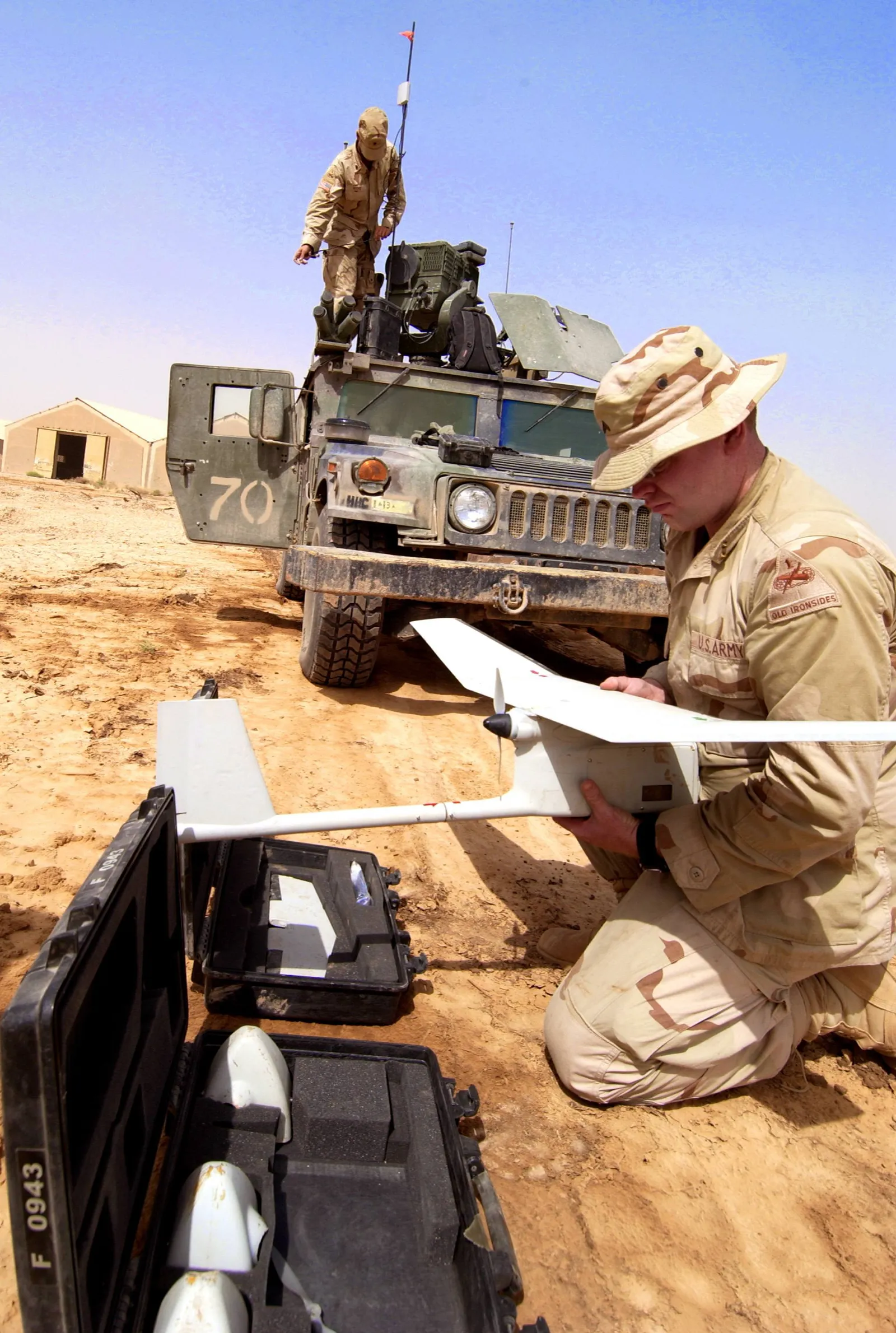


U.S. Army reporting from Forward Operating Base Salerno in 2010 says Task Force Leader soldiers had used the Raven in Afghanistan to locate enemy forces, including insurgents fleeing after a mortar attack.
Role detailsAircraft & UAVs
RQ-11 Raven UAV
Also known as
- RQ-11 Raven
- RQ-11A Raven
- RQ-11A
- RQ-11B Raven
- RQ-11B
- Raven B
- Flashlight SUAV
- Raqeep
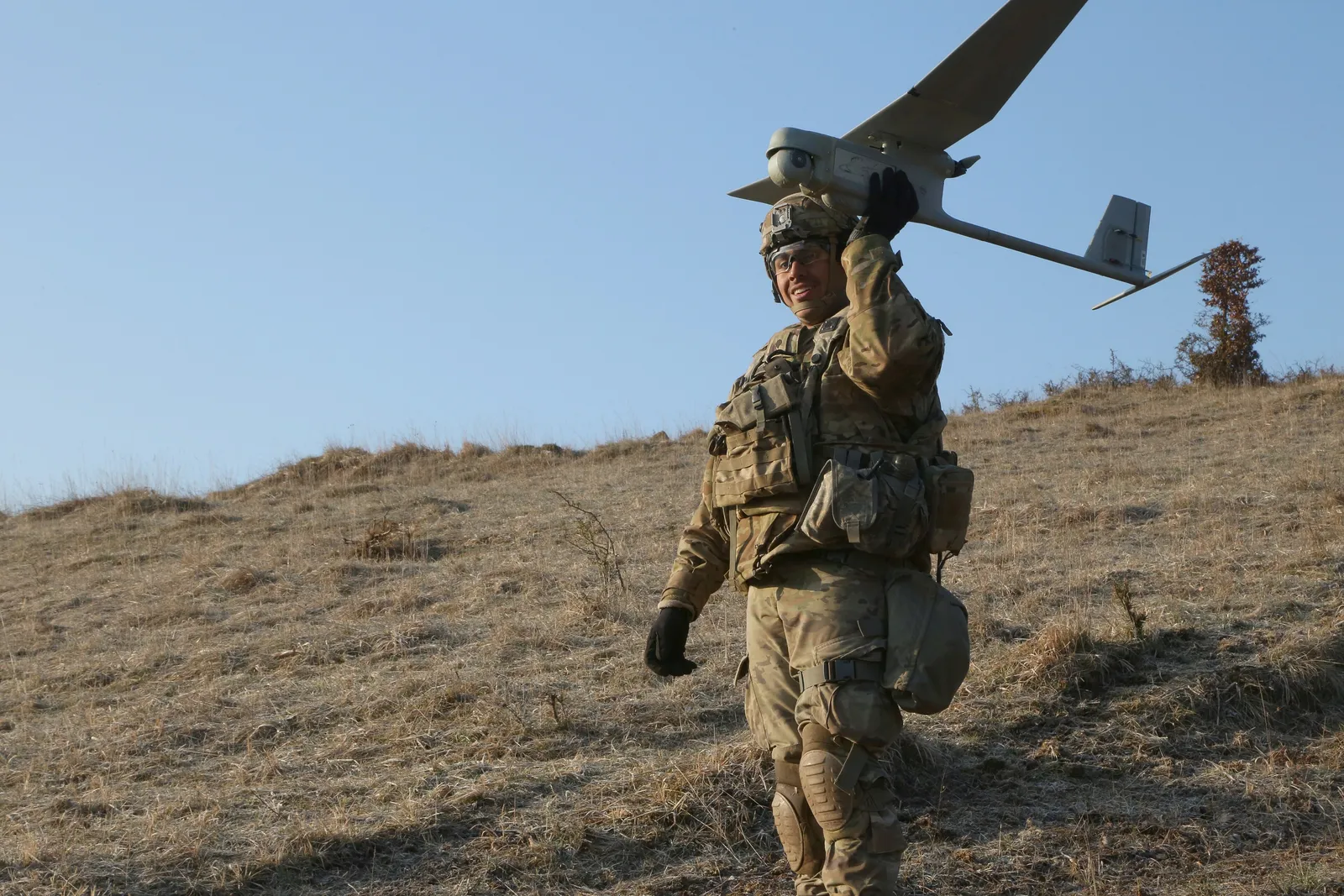
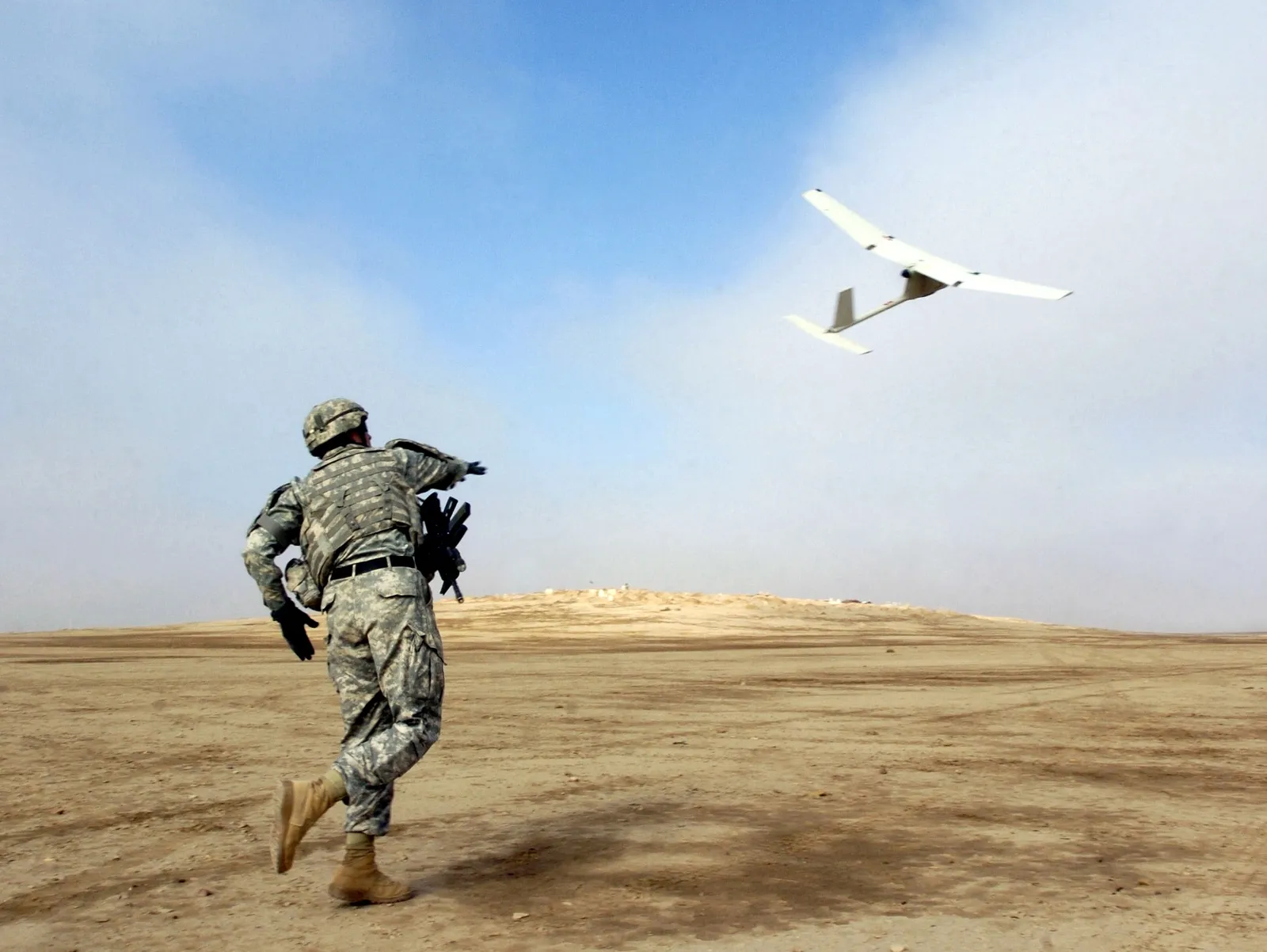
The RQ-11 Raven is a hand-launched AeroVironment small unmanned aircraft system for tactical ISR, derived from earlier Pointer-related work into a smaller backpackable design. The RQ-11A designation covered the early Raven air vehicle, while the RQ-11B/Raven B became the Army-selected upgraded SUAV with improved control-system, sensor, endurance, targeting, and interoperability features. Current AeroVironment material describes Raven B as a lightweight Group 1 system with a stabilized EO/IR payload, 10 km range, and more than 75 minutes of endurance, while 2023 U.S. Army reporting still described upgraded Ravens in training for reconnaissance and call-for-fire support.
Role in Conflicts
A U.S. Army article on the Raven program says a 101st Airborne soldier flew the Raven in combat in Iraq in 2007-2008 for reconnaissance and forward-observer support.
Role details
The U.S. Army's Mosul Study Group described RQ-11 Raven and RQ-20 Puma tactical UAS as full-motion-video platforms that thickened coverage across Mosul despite launch-and-recovery limits in dense urban terrain.
- Side
- Ukraine

A 2015 U.S. defense contract covered RQ-11B Raven systems for Ukraine, and Reuters reporting in 2016 said 72 U.S.-supplied Raven RQ-11B Analog mini-drones had reached Ukraine for field surveillance use but disappointed Ukrainian officials under Russian-backed separatist jamming and hacking conditions.
Role details
In the 2014 Yemen Civil War, Oryx lists the RQ-11 Raven as 'Raqeep' used by Houthi-aligned forces from pre-war Yemeni Army stocks.
Role detailsProfile / Specs
Profile
- Origin
- United States
- Built by
- AeroVironment
- Type
- Small unmanned aircraft system
- Service note
- 2001-present
- Designed
- Flashlight proof-of-concept flew in October 2001; Raven development followed in 2002 under the Army Pathfinder ACTD.
- Unit cost
- Approximately $260,000 for the full system; a 2024 Army article says a single RQ-11 air vehicle was about $35,000.
- Produced
- Low-rate initial production Block I deliveries began in May 2003; Raven B low-rate initial production was contracted in 2005.
Specifications
- Launch method
- Hand-launched
- Endurance
- 75+ minutes in current AeroVironment summary; key features describe 60-90 minutes and Army reporting describes about one hour
- Operational range
- 10 km (6.2 mi)
- Aircraft weight
- 4.8 lbs (2.2 kg)
- Payload
- Stabilized electro-optical/infrared payload on current Raven B; Army reporting also describes a 360-degree camera for day/night ISR
- Control
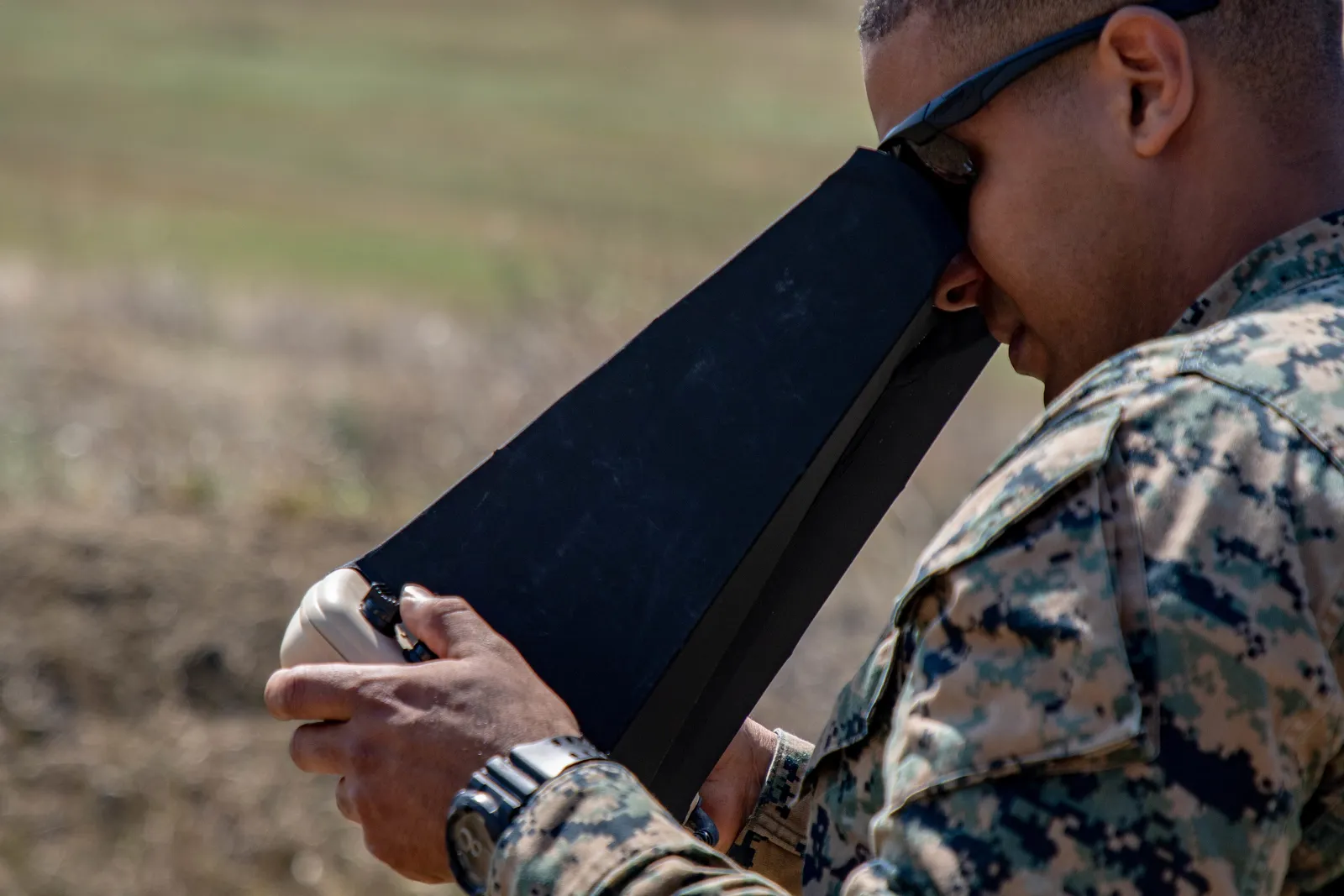
- Portable ground controller; Army reporting describes manual control or predesignated computer checkpoints
- Recovery
- Autonomous deep-stall recovery without specialized gear
- Mission tasks
- Low-altitude reconnaissance, surveillance, target spotting, route scouting, force protection, and call-for-fire support
- Armament
- None
- Crew
- At least two operators
Design And Raven B Changes
Raven began as a smaller successor to Pointer-related Army demonstration work, then split into early RQ-11A Raven and upgraded RQ-11B/Raven B terminology.
| Step | Designation | Source-backed distinction |
|---|---|---|
| Concept | Flashlight SUAV | Proof-of-concept aircraft first flown in October 2001 before the Army Pathfinder ACTD refined it into Raven. |
| Early production | Block I Raven | First low-rate production version delivered in May 2003, with an interchangeable payload nose but launch and stability issues in testing. |
| Corrected model | Block II / RQ-11A | Delivered from September 2003 after Block I corrections and later assigned the RQ-11A air-vehicle designation. |
| Upgrade | RQ-11B / Raven B | Army-selected 2005 SUAV upgrade with lighter ground control equipment, better day/night sensing, targeting, endurance, and interoperability; later procurement added stabilized Mantis EO/IR gimbaled payloads. |
Variants
RQ-11 Raven designations distinguish the early Raven air vehicle from the later Raven B upgrade; source terminology also uses Block I and Block II for pre-RQ-11A development steps.
| Variant | Configuration | Designation notes |
|---|---|---|
| Flashlight SUAV | Proof-of-concept demonstrator | A smaller aircraft and ground-station concept that first flew in October 2001 before Raven development under the Pathfinder ACTD. Sources: AeroVironment RQ-11 Raven |
| Block I Raven | Low-rate initial production version | First delivered in May 2003 with a revised fuselage and interchangeable payload nose, but testing showed launch and stability shortcomings. Sources: AeroVironment RQ-11 Raven |
| Block II Raven / RQ-11A | Early designated Raven air vehicle | Block II addressed Block I shortcomings, was delivered to the Army from September 2003, and later received the RQ-11A designation. Sources: AeroVironment RQ-11 Raven |
| RQ-11B Raven / Raven B | Upgraded backpackable SUAV | Selected for the Army SUAV program in 2005 and described as an RQ-11A upgrade with lighter next-generation ground control, laser illuminator, better day/night sensors, endurance, targeting, and network interoperability. Sources: AeroVironment RQ-11 Raven |
Timeline
RQ-11 Raven UAV Key Events
Pointer experience starts the chain
The Army bought AeroVironment FQM-151 Pointer UAVs for a MOUT ACTD; their utility and bulky ground station led to a smaller aircraft and station effort.
Sources: AeroVironment RQ-11 Raven
Flashlight proof-of-concept flies
Designation-Systems.Net traces Raven to the smaller Flashlight SUAV proof-of-concept, which first flew in October 2001.
Sources: AeroVironment RQ-11 Raven
Pathfinder ACTD development
Flashlight was developed into Raven under the Army Pathfinder ACTD, moving the concept toward a hand-launched small UAV.
Sources: AeroVironment RQ-11 Raven
Block I low-rate delivery
The first low-rate initial production Block I Raven was delivered with an interchangeable payload nose, but tests identified launch and stability problems.
Sources: AeroVironment RQ-11 Raven
Block II delivery
Block II Raven corrected the Block I issues and was first delivered to the Army in September 2003.
Sources: AeroVironment RQ-11 Raven, Game of Drones: Sill Soldiers awarded at NTC
RQ-11A designation
The Raven air vehicle received the official RQ-11A designation in late 2004.
Sources: AeroVironment RQ-11 Raven
Raven B selected
After an Army SUAV competition, AeroVironment's Raven B was selected and placed under low-rate initial production contract.
Sources: AeroVironment RQ-11 Raven
RQ-11B designation
Designation-Systems.Net identifies Raven B as the upgraded RQ-11B, with a lighter next-generation ground control system and sensor, targeting, endurance, and interoperability improvements.
Sources: AeroVironment RQ-11 Raven
Upgraded Army Raven training in Romania
U.S. Army reporting from Smardan, Romania described 101st Airborne Division soldiers training with upgraded RQ-11B Ravens for reconnaissance, target spotting, and call-for-fire support.
Sources: Upgrading US Army's UAV technology - The Raven
Marine Corps fixed-wing SUAS divestment reported
Seapower reported that the Marine Corps had retired fixed-wing RQ-11B Raven and RQ-12A Wasp IV small UAS in favor of VTOL systems better suited to hover-and-stare missions and constrained launch areas.
Sources: Marine Corps Replacing Fixed-Wing Small UAS with VTOL Types
Media
RQ-11 Raven UAV Videos
Related Weapon Systems


Sources
AeroVironment Raven BPublisher: AeroVironment | Note: Supports manufacturer background and the Raven B's Group 1, hand-launched, battery-powered tactical ISR design; stabilized EO/IR payload; real-time imagery and geolocation data; 75+ minute/60-90 minute endurance; 10 km range; 4.8 lb aircraft weight; portable controller; and deep-stall recovery. | Accessed: 2026-07-03AeroVironment RQ-11 RavenPublisher: Designation-Systems.Net | Note: Supports Raven design history from Pointer/MOUT and Flashlight through Pathfinder ACTD, Block I, Block II/RQ-11A, and Raven B/RQ-11B; includes first-flight, early delivery, LRIP, designation, and variant-feature claims. | Accessed: 2026-07-03RQ-11B Raven fact sheetPublisher: U.S. Air Force | Note: Supports the RQ-11B Raven payload, mission, system cost, deployment date, range, endurance, and aircraft and ground-control-station weight figures. | Accessed: 2026-07-03Game of Drones: Sill Soldiers awarded at NTCPublisher: U.S. Army | Note: Supports the Raven's first-introduced-in-2003 statement, hand-launched and battery-powered description, 4-pound weight, 10 km range, one-hour endurance, manual or predesignated-checkpoint control, unarmed status, 360-degree camera, live video, GPS data, and the approximately $35,000 air-vehicle cost figure. | Accessed: 2026-07-03AeroVironment Receives $13.5 Million Order from United States Army for RQ-11B Raven Small Unmanned Aircraft Systems and Gimbaled PayloadsPublisher: AeroVironment | Note: Supports RQ-11B Raven as a 4.5-pound backpackable, hand-launched sensor platform with wireless day/night real-time video to a portable ground control station, stabilized Mantis EO/IR gimbaled payload with laser illuminator, typical three-aircraft/two-ground-control-station system composition, and 2013 Army procurement context. | Accessed: 2026-07-03Air, Land, Sea: 22nd MEU BLT utilizes UASs to increase capabilitiesPublisher: U.S. Marine Corps | Note: Supports 2013 Marine Raven sustainment training, two-backpack transport, at least two-operator handling, live video range, and the reconnaissance role with ground sensor platoons. | Accessed: 2026-07-03Upgrading US Army's UAV technology - The RavenPublisher: U.S. Army | Note: Supports 2023 U.S. Army use of upgraded RQ-11B Ravens in Romania for reconnaissance, target spotting, call-for-fire support, gimbaled-payload training, 10 km flight distance, manual or autonomous navigation, and color/infrared imagery to ground-control and remote-viewing stations. | Accessed: 2026-07-06Marine Corps Replacing Fixed-Wing Small UAS with VTOL TypesPublisher: Seapower Magazine | Note: Supports the 2023 Marine Corps divestment of fixed-wing RQ-11B Raven and RQ-12A Wasp IV small UAS in favor of VTOL small UAS such as Skydio X2D and FLIR Systems R80 SkyRaider. | Accessed: 2026-07-06RPA provides Soldiers bird's eye view of battlefieldPublisher: U.S. Army | Note: In the 2001 War in Afghanistan, U.S. Army reporting says Task Force Leader soldiers at Forward Operating Base Salerno used the Raven in Afghanistan to locate enemy forces, including insurgents fleeing after a mortar attack. | Accessed: 2026-07-03Raven Takes Flight For NorthPublisher: U.S. Army | Note: In the 2003 Iraq War, U.S. Army reporting says a 101st Airborne soldier flew the Raven in combat in Iraq in 2007-2008 for reconnaissance and forward-observer support. | Accessed: 2026-07-03Mosul Study GroupPublisher: U.S. Army Training and Doctrine Command | Note: In the 2013 War in Iraq, the Mosul Study Group describes RQ-11 Raven tactical UAS as full-motion-video platforms used across Mosul by U.S., coalition, and partner forces. | Accessed: 2026-07-03Contracts For Sep. 14, 2015Publisher: U.S. Department of Defense | Note: In the 2014 Russia-Ukraine War, the contract notice documents a foreign military sales contract for RQ-11B Raven systems for Ukraine. | Accessed: 2026-07-03US-Supplied Drones Disappoint Ukraine On Front LinesPublisher: Small Wars Journal / Reuters | Note: In the 2014 Russia-Ukraine War, Reuters reporting republished by Small Wars Journal says 72 U.S.-supplied Raven RQ-11B Analog mini-drones reached Ukraine for field surveillance use but disappointed Ukrainian officials under Russian-backed separatist jamming and hacking conditions. | Accessed: 2026-07-03Houthi Drone And Missile HandbookPublisher: Oryx | Note: In the 2014 Yemen Civil War, Oryx lists the RQ-11 Raven as 'Raqeep' used by Houthi-aligned forces from pre-war Yemeni Army stocks. | Accessed: 2026-07-03Raven UAV.jpgPublisher: Wikimedia Commons | Note: Supports image provenance for the primary RQ-11 Raven photo. | Accessed: 2026-07-03Launching the RQ-11 Raven UAV (6601770).jpgPublisher: Wikimedia Commons | Note: Supports image provenance for a launch view of the RQ-11 Raven. | Accessed: 2026-07-03RQ-11 Raven 2.jpgPublisher: Wikimedia Commons | Note: Supports image provenance for an additional RQ-11 Raven field image. | Accessed: 2026-07-03RQ-11 Raven flown during exercise Agile Spirit 19 (5637507).jpgPublisher: Wikimedia Commons | Note: Supports image provenance for a flying RQ-11 Raven image. | Accessed: 2026-07-03