Air Defense

Merops counter-drone interceptor

Also known as
  • MEROPS
  • Merops anti-drone system
  • Merops counter-UAS system
  • Merops drone interceptor
  • AS3 Surveyor
  • AS-3 Surveyor
  • Surveyor interceptor
  • Surveyor interceptor drone

Merops is a U.S.-developed mobile counter-drone system from Perennial Autonomy that launches Surveyor interceptor drones from a truck-portable package. Public reporting ties the system to Ukrainian counter-Shahed use, NATO eastern-flank fielding in Poland and Romania, and U.S. deployment during the 2026 Iran War. Its profile centers on AI-assisted guidance in jammed environments, pickup-truck mobility, and a roughly $15,000 interceptor cost.

Role in Conflicts

Defense News reported that Ukrainian forces first used Merops in June 2024 against Russian-operated systems including Shaheds, while NATO and Business Insider reporting described large-scale Russian or Shahed-type drone intercepts in Ukraine.

Role details

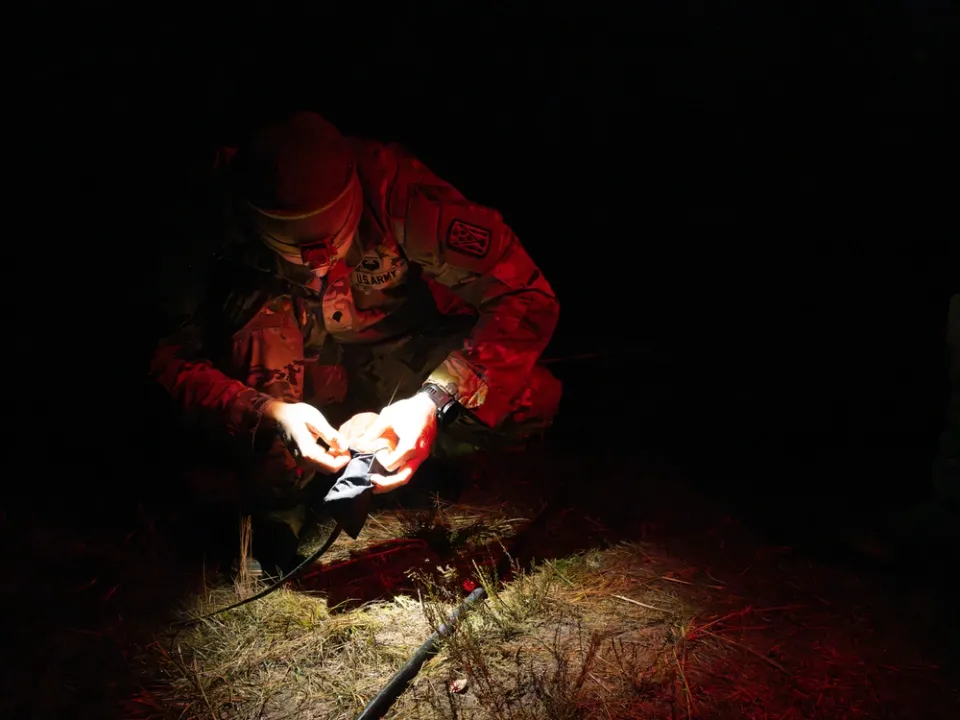
AP and Army reporting said Merops was sent to the Middle East during the 2026 Iran War to bolster defenses against Iranian drones; Business Insider later reported U.S. soldiers operating Merops complexes at two regional sites, with no confirmed Iranian-drone kills disclosed as of April 13, 2026.

Launcher And Interceptor

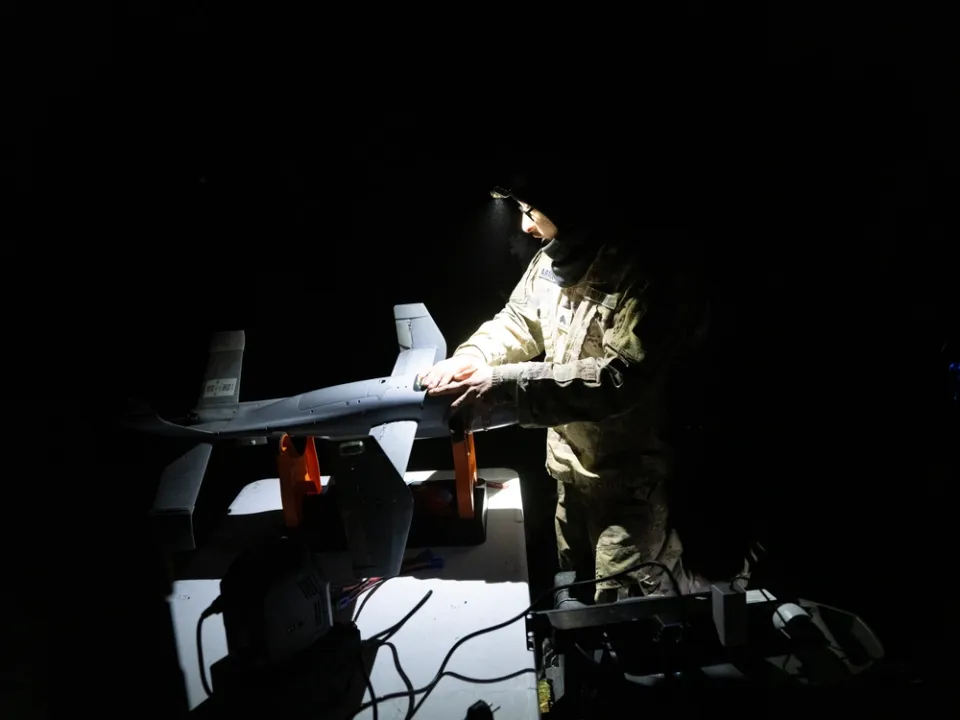
Public sources describe Merops as an operational complex built around a small Surveyor interceptor, launch equipment, a ground control station, radar, and supporting sensors.

Interceptor

Surveyor is reported as a few-feet-long propeller-driven interceptor that can be carried by a single soldier and launched from a truck-portable package.

Supported by Business Insider and Inside Unmanned Systems reporting.

Engagement

Sources describe AI-assisted navigation in jammed environments, radar/RF/thermal or electro-optical targeting inputs, and either direct collision or proximity-effect defeat of hostile drones.

Supported by AP, NATO, Defense News, and Business Insider reporting.

Deployment

Merops can be launched from pickup-mounted or fixed launch stations, giving operators a lower-cost counter-UAS layer for Shahed-type one-way attack drones.

Supported by NATO, Army, AP, and Business Insider reporting.
Profile / Specs

Profile

Origin
United States
Type
Counter-drone interceptor system
Service note
2020s-present
Designer
Project Eagle
Unit cost
About $15,000 per interceptor; Defense News reported officials expected scale production could reduce the unit cost below $10,000.

Specifications

System components
Surveyor interceptor drone, launcher or launch stations, ground control station, radar, and supporting sensors
Transport
Small enough to fit in the back of a midsize pickup truck; launchers can be pickup-mounted or fixed at defended sites
Launch method
Truck-mounted or ground-station launcher for small propeller-driven interceptor drones
Interceptor
Surveyor is a few-feet-long fixed-wing interceptor carried by a single soldier
Speed
Reported at more than 175 mph
Guidance
Uses AI navigation and terminal guidance when satellite and electronic communications are jammed
Sensing
Public sources describe radio-frequency, radar, thermal, electro-optical, and onboard-sensor targeting inputs
Crew
Business Insider reported a four-person crew with commander, pilot, and two technicians
Recovery
Surveyor can deploy a parachute for retrieval if it misses a target
Mission
Low-cost short-range counter-UAS defense against Shahed-type and other one-way attack drones
Timeline

Merops counter-drone interceptor Key Events

  1. Defense News reports first Ukrainian use

    Defense News reported that Ukrainian forces first used Merops in June 2024 against Russian-operated systems including Shahed drones.

    Sources: Defense News Ukraine-tested Merops report

  2. NATO and U.S. Army demonstrate Merops in Poland

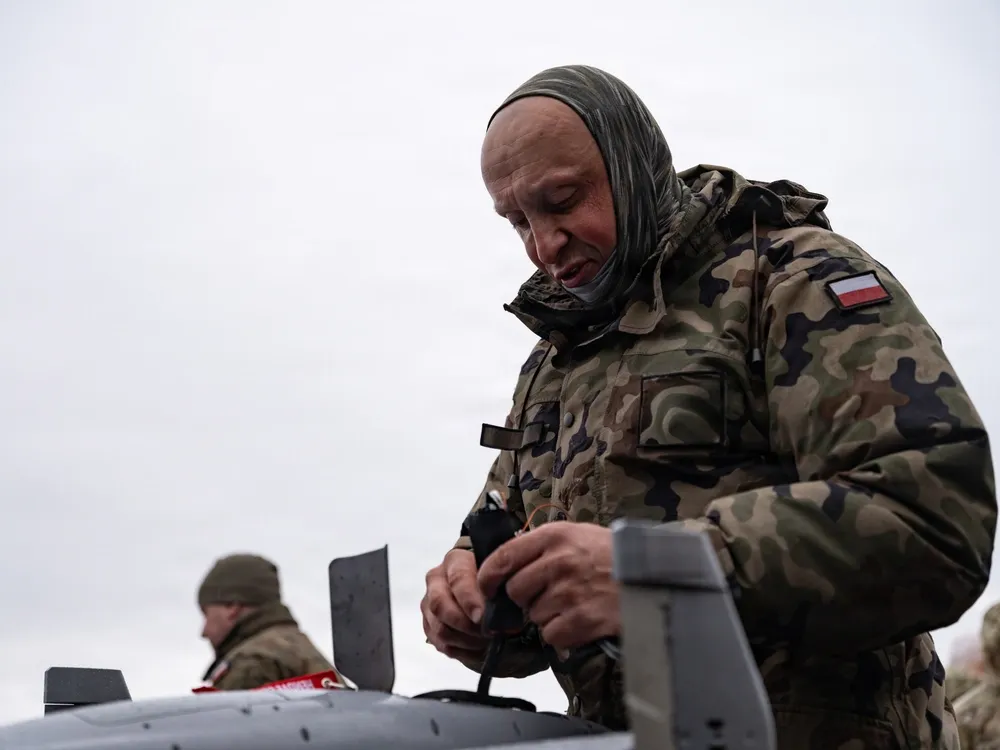
    NATO said Polish, Romanian, and U.S. forces demonstrated Merops in Poland, linking the system to Eastern Sentry and NATO eastern-flank airspace defense after Russian drone incursions.

    Sources: NATO Merops eastern flank video page

  3. Business Insider reports Middle East deployment and interceptor cost

    Business Insider said the U.S. Army was deploying Merops to the Middle East after more than 1,000 Shahed-type intercepts in Ukraine, and reported the system's roughly $15,000 interceptor cost.

    Sources: Business Insider Merops Middle East interceptor report

  4. Army reports expansion to NATO's eastern flank and the Middle East

    Army reporting said Merops had been deployed to Poland and Romania, trained on by U.S., Polish, and Romanian forces, and rapidly expanded to the Middle East as conflict with Iran escalated.

    Sources: Army G-TEAD Merops fielding article

  5. Business Insider reports U.S. soldiers operating Merops complexes

    Business Insider reported that U.S. soldiers were operating Merops complexes at two Middle East locations during the Iran war and that no Iranian-drone kills by the system had yet been disclosed.

    Sources: Business Insider Merops Middle East training deployment

Media
Related Weapon Systems
SkyFall P1-SUN, Counter-UAS interceptor drone, Air DefenseAir DefenseSkyFall P1-SUNCounter-UAS interceptor droneSkyFall P1-SUN is a Ukrainian counter-UAS interceptor drone built for low-cost defense against Shahed-type one-way attack UAVs and similar aerial targets. SkyFall designed the compact FPV aircraft around a modular, partly 3D-printed airframe, small explosive payload, high-speed pursuit, and mass production, while the P1-SUN Long upgrade adds AI-assisted terminal detection for Ukraine's fast-growing interceptor layer in the 2014 Russia-Ukraine War.
RIFF anti-drone system, Portable and mobile counter-UAV jamming system, Electronic WarfareElectronic WarfareRIFF anti-drone systemPortable and mobile counter-UAV jamming systemRIFF is an InterProInvest counter-UAV jamming family built around portable, mobile, and stationary configurations. The Ukrainian system is designed to disrupt drone control, video, and satellite-navigation links against rotary-wing and fixed-wing UAVs, with RIFF-P packaged as a shoulder-fired jammer derived from the Malyuk/Vulcan small-arms chassis and documented in Ukrainian army service context during the Russia-Ukraine War.

Sources