Air Defense

ZIRKA

Also known as
  • ZIRKA interceptor
  • Zirka interceptor drone
  • ZIRKA UAV
  • ZIRKA drone interceptor

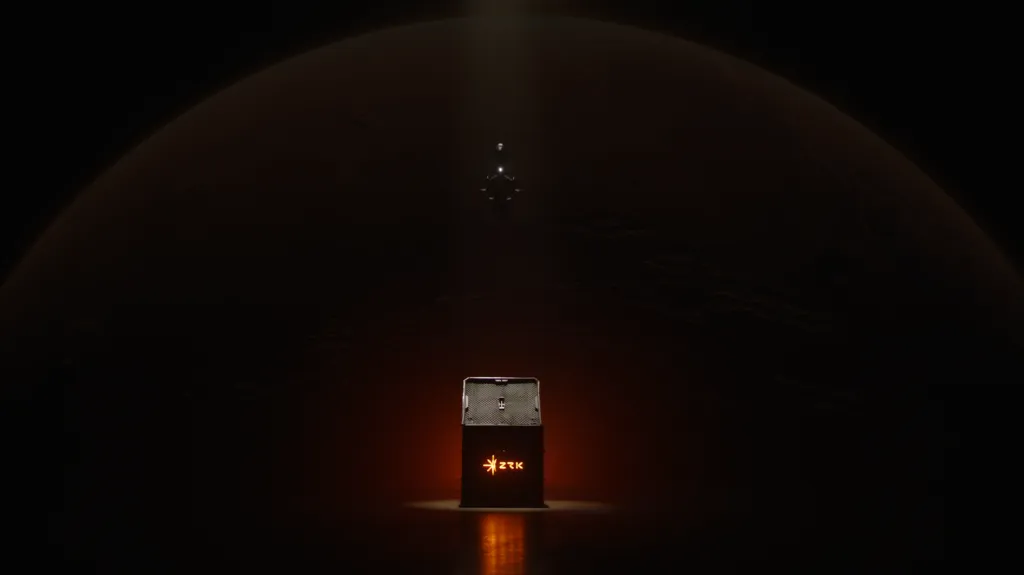
ZIRKA is a Ukrainian high-speed counter-UAV interceptor drone developed by NOCTIS with investment and scaling support from Vyriy Industries. Publicly presented in June 2026, it is designed to automate detection, tracking, and terminal engagement against Shahed-type strike drones and other fast aerial threats.

Role in Conflicts

Mezha reported a NOCTIS representative's statement that ZIRKA drones had been actively used since May and, after operator visual contact and target confirmation, destroyed the target in automatic mode in nine of ten cited cases.

Profile / Specs

Profile

Origin
Ukraine
Type
Counter-UAV interceptor drone
Service note
Unveiled in 2026
Designer
NOCTIS
Designed
Publicly presented in June 2026
Unit cost
Up to $2,000 per interceptor, according to the developers
Produced
Publicly presented in 2026; serial production status not independently confirmed in the cited sources

Specifications

Role
Counter-UAV interceptor for Shahed-type strike drones and fast aerial threats
Top speed
Over 340 km/h
Operating altitude
Up to 6 km
Operational radius
Up to 30 km from the launch point
Endurance
Up to 20 minutes
Guidance and automation
Automatic target detection, tracking, and terminal guidance
Design basis
Developed from real counter-UAV combat experience, including input from the Darknode anti-Shahed battalion
Development roles
NOCTIS handles interception technology, software, automation, product development, sales, implementation, and support; Vyriy Industries provides investment and production-scaling expertise
Public status
Publicly unveiled in Kyiv on 2026-06-30; operational-use evidence is a NOCTIS statement relayed by Mezha, while cited sources do not report government codification or serial production
Variants

Public reporting identifies ZIRKA 2.0 as the planned next iteration rather than a separate fielded model.

VariantConfigurationDesignation notes
ZIRKA 2.0Planned upgraded interceptor

NOCTIS described the next version as adding automated movement into the target detection zone, improved thermal imaging, refined detection and guidance algorithms, communications updates, and automatic near-target warhead detonation.

Sources: Vyriy ZIRKA public presentation, Babel ZIRKA report

Timeline

ZIRKA Key Events

  1. Company statement says ZIRKA drones were active

    Mezha reported a NOCTIS representative's statement that ZIRKA drones had been actively used since May, with automatic-mode destruction after operator visual contact and target confirmation in most reported contacts.

    Sources: Mezha Defense ZIRKA report

  2. ZIRKA publicly presented in Kyiv

    Vyriy Industries announced the public presentation of ZIRKA, describing NOCTIS as developer and Vyriy as investor and scaling partner.

    Sources: Vyriy ZIRKA public presentation

  3. Initial public specifications reported

    Ukrainian media reported the claimed 340-plus km/h speed, 6 km operating altitude, 30 km radius, 20 minute endurance, and sub-$2,000 unit cost.

    Sources: Babel ZIRKA report, RBC-Ukraine ZIRKA specifications

Automation And Upgrade Path

ZIRKA's public material presents the interceptor as a low-cost autonomous engagement layer for the Shahed-defense problem rather than a manually flown FPV drone. The cited reports keep the current platform and the planned ZIRKA 2.0 upgrade distinct.

Current automation

Vyriy says the fielded design combines automatic target detection, target tracking, and terminal guidance toward fast aerial threats.

Sources: Vyriy ZIRKA public presentation; Babel ZIRKA report.

Combat-experience basis

The developers cite practical counter-Shahed experience, including Darknode anti-Shahed battalion input, as part of the design background.

Sources: Vyriy ZIRKA public presentation; UNITED24 Media ZIRKA report.

ZIRKA 2.0 plan

Planned upgrades include automated movement into the detection zone, stronger thermal imaging for machine-vision detection at 2 km, updated detection and guidance algorithms, communications and positioning additions, and automatic near-target warhead detonation.

Sources: Vyriy ZIRKA public presentation; Babel ZIRKA report; Mezha Defense ZIRKA report.
Related Weapon Systems
1L13-3 Nebo-SV, Mobile VHF two-coordinate air-surveillance radar, Air DefenseAir Defense1L13-3 Nebo-SVMobile VHF two-coordinate air-surveillance radarThe 1L13-3 Nebo-SV is a Soviet/Russian mobile meter-band radar for ground-forces air defense, built to search for aircraft, helicopters, UAVs, and other air targets and pass range-and-bearing data to command posts or missile batteries. It is a two-coordinate predecessor to the 1L119 Nebo-SVU: sources describe it with a 72-element VHF antenna array, separate IFF interrogator, six-person crew, and fighter-target detection figures reaching roughly 350 km at high altitude.
2K22 Tunguska, Tracked self-propelled gun-missile air defense system, Air DefenseAir Defense2K22 TunguskaTracked self-propelled gun-missile air defense systemThe 2K22 Tunguska is a Soviet-designed tracked short-range air defense system that combines twin 30 mm autocannons, 9M311-family surface-to-air missiles, search and tracking radars, and a protected self-propelled chassis. Built to cover maneuver formations against low-flying aircraft, helicopters, cruise missiles, and later unmanned threats, it appears in the 2014 Russia-Ukraine War on both Russian and Ukrainian sides, with Russian combat losses and Ukrainian missile firings documented in open sources.
30N6 engagement radar, S-300-family engagement and missile-guidance radar, Air DefenseAir Defense30N6 engagement radarS-300-family engagement and missile-guidance radarThe 30N6 is the S-300P-family engagement radar lineage known by NATO as Flap Lid and, on later export configurations, Tomb Stone. The 5N63S Flap Lid B branch is the self-propelled S-300PS-era configuration, giving S-300P, S-300PS, S-300PMU, and S-300PMU-2 batteries target tracking, illumination, and missile-guidance functions rather than serving as a standalone weapon. Direct conflict records place Flap Lid-family radars in Ukraine and Nagorno-Karabakh losses, and satellite-based analysis identified a 30N6/30N6E radar as the probable S-300 component hit near Isfahan in April 2024.
36D6 / ST-68U surveillance radar, Mobile three-coordinate air-surveillance radar, Air DefenseAir Defense36D6 / ST-68U surveillance radarMobile three-coordinate air-surveillance radarThe 36D6 / ST-68U Tin Shield family is a mobile Soviet-legacy three-coordinate surveillance radar used to detect and track low-, medium-, and high-altitude air targets for air-defense command posts, SAM units, and air-traffic-control tasks. Ukrainian sources identify Iskra as the enterprise behind ST-68U/19Zh6 development history and later 35D6/36D6M modernization, while open technical references describe the 36D6 as an S-band radar with 360-degree azimuth coverage, four beams, 350 kW peak transmitter power, and target-data output to automated air-defense users. In the 2014 Russia-Ukraine War, visually documented loss lists and General Staff-derived reporting place 36D6/ST-68U radars on both sides of the air-defense fight.
76N6 Clam Shell, S-300-family low-altitude acquisition radar, Air DefenseAir Defense76N6 Clam ShellS-300-family low-altitude acquisition radarThe 76N6 Clam Shell is a Soviet/Russian S-300-family low-altitude acquisition radar built to find small, low-flying targets such as cruise missiles and terrain-following aircraft. It supplements the S-300 battery's wider search and fire-control radars by improving coverage near the radar horizon, often from a 40V6M or 40V6MD mast. Direct Ukraine-war evidence identifies Clam Shell-family equipment in Slovakia's S-300PMU transfer to Ukraine and a 76N6 radar destroyed with Russian S-300 equipment at Voronezh in August 2025.

Sources