Aircraft & UAVs

Blyskavka

Also known as
  • Blyskavka strike UAV
  • Bliskavka
  • Блискавка

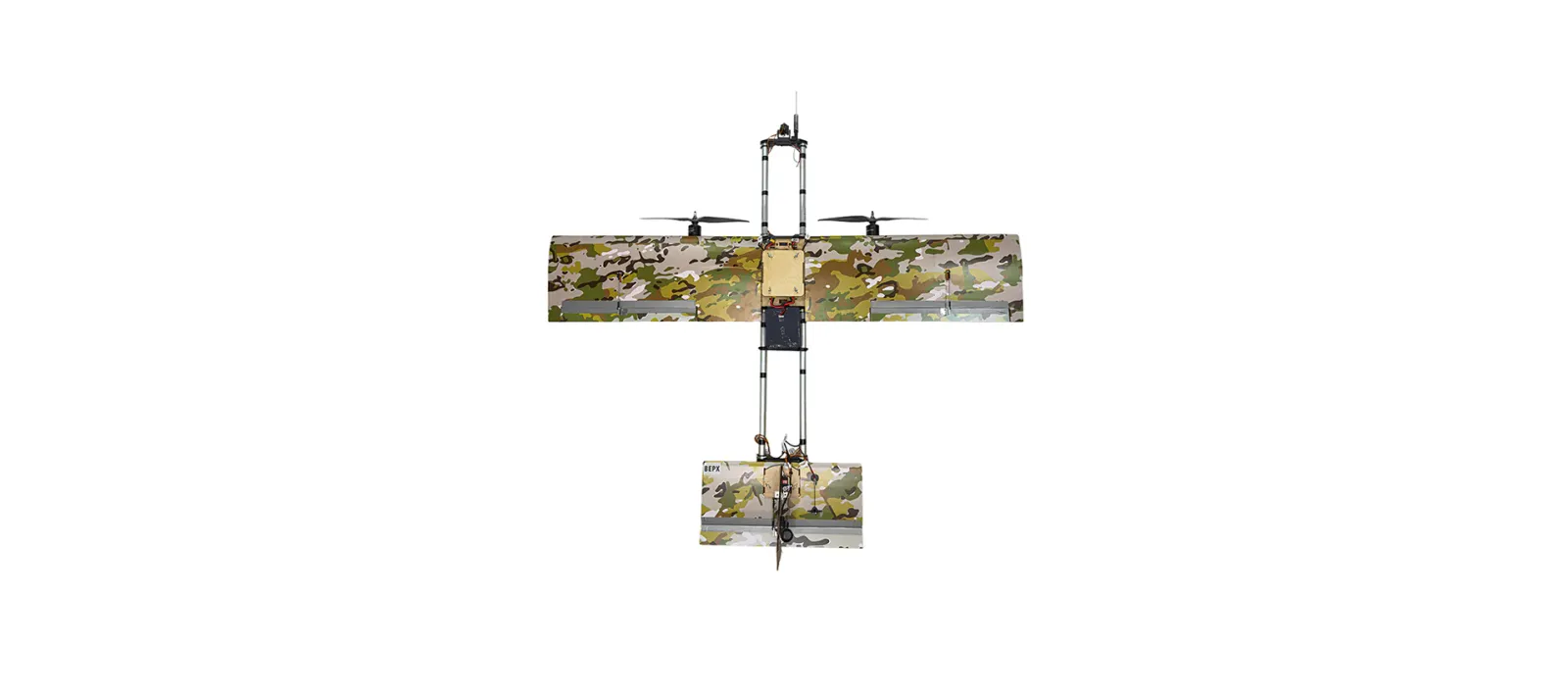
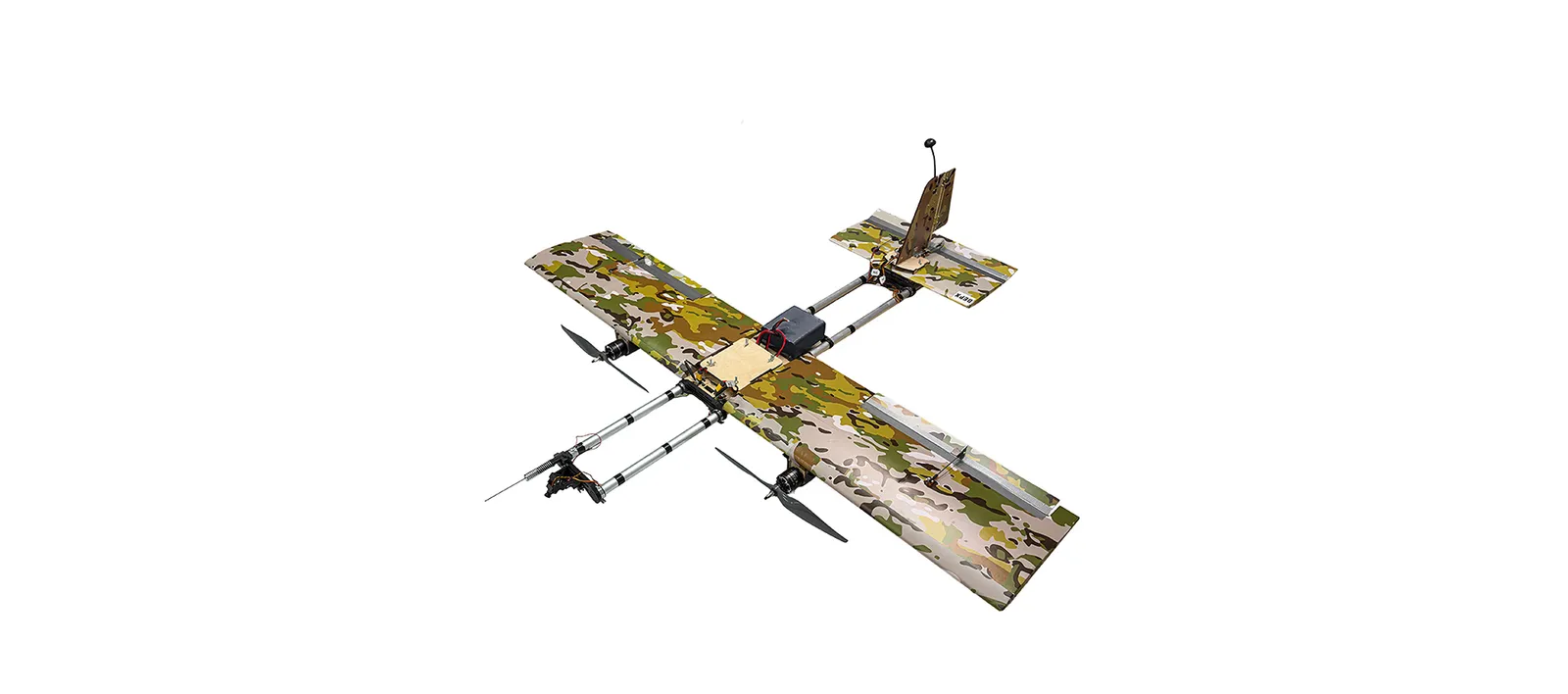
Blyskavka is a Ukrainian fixed-wing strike UAV from Vyriy Industries, developed from captured Russian Molniya-family design ideas but rebuilt with Ukrainian electronics, warheads, and production standardization. Sources document Ukrainian Special Operations Forces deliveries, Ukrainian Defense Forces fielding, a 40 km recorded combat-use strike with a 9 kg warhead, and a later aerodynamic fairing that increased range while retaining a low-cost catapult-launched twin-propeller airframe.

Role in Conflicts

Profile / Specs

Profile

Origin
Ukraine
Type
Fixed-wing strike UAV
Service note
Publicly fielded and marketed in 2025-2026
Designer
Vyriy Industries
Unit cost
UAH 35,000 reported in December 2025 marketplace coverage; UAH 38,500 reported in May 2026 upgrade coverage
Produced
Codified and marketplace-listed in 2025; publicly marketed by Vyriy in 2026
Developed from
Captured Russian Molniya-family strike UAV design concepts

Specifications

UAV type
Fixed-wing, twin-propeller strike UAV
Maximum payload
8 kg listed in official specifications; product prose describes payload above 7 kg, and reporting cites 9 kg combat-use and delivery payload figures
Maximum range
Up to 80 km with a repeater; up to 40 km tactical radius reported for marketplace and delivery context
Operating altitude
300-500 m
Maximum altitude
2,000 m
Cruise speed
85-110 km/h reported in marketplace coverage; 110 km/h listed on the official product page
Maximum speed
140 km/h
Endurance
Up to 60 minutes, depending on warhead weight
Launch method
Pneumatic catapult
Guidance
Manual targeting with automatic target lock/re-lock capability listed by Vyriy and optional automatic capture or additional guidance functions reported in Ukrainian coverage
Accuracy claim
Official page lists 2 m root mean square target deviation
Electro-optical equipment
Analog video camera
Control and video links
ELRS control channel and analog video channel, each with frequency on request
Anti-jamming features
Vyriy lists FHSS use and automatic-mode passage through electronic-warfare zones
Deployment time
10 minutes to deploy and 5 minutes to pack down reported from Vyriy statement
Compatibility
Reported compatible with a ground control station and repeaters
Initiation subsystem
POPCORN board reported by Mezha as installed across Vyriy products, including Blyskavka
Control And Launch Package

Public sources describe Blyskavka as a catapult-launched fixed-wing FPV system with ground-control and repeater compatibility, rather than a hand-launched quadcopter-style FPV drone.

Launch

Vyriy lists pneumatic-catapult launch; its DOT-Chain/Brave1 blog reports 10 minutes for deployment and 5 minutes for packing down.

Control links

The official page lists ELRS control and analog video channels with frequencies on request; Vyriy adds compatibility with company ground stations and repeaters.

Targeting

Vyriy lists manual targeting with automatic target lock/re-lock capability, while the marketplace blog described optional automatic capture and guidance functions.

Sources: Vyriy Blyskavka product page; Vyriy DOT-Chain Blyskavka blog.

Timeline

Blyskavka Key Events

  1. Reverse-engineered Ukrainian counterpart reported

    UNITED24 Media reported that Ukrainian engineers had reverse-engineered Russia's Molniya loitering munition into a Ukrainian Blyskavka version intended for low-cost strike missions.

    Sources: UNITED24 Blyskavka clone report

  2. SOF delivery announced

    Ukrainian World Congress reported delivery of 200 Ukrainian-made Blyskavka fixed-wing FPV strike drones to a Ukrainian Special Operations Forces unit.

    Sources: Ukrainian World Congress SOF delivery

  3. Marketplace listing and fielding reported

    Vyriy reported that Blyskavka had been codified, admitted to DOT-Chain Defence and Brave1 Market sales channels, and used by more than 60 units.

    Sources: Vyriy DOT-Chain Blyskavka blog

  4. POPCORN integration reported

    Mezha reported that Vyriy's codified POPCORN initiation board was being installed on all company products, specifically naming the Blyskavka strike UAV.

    Sources: Mezha POPCORN report

  5. Official product specifications published

    Vyriy's official Blyskavka page listed public specifications including payload, speed, altitude, launch method, electro-optical equipment, automatic target lock/re-lock capability, and anti-jamming features.

    Sources: Vyriy Blyskavka product page

  6. Aerodynamic fairing upgrade reported

    Ukrainska Pravda and Mezha reported that an upgraded Blyskavka with an aerodynamic fairing was presented at the Wild Drones exhibition and that the fairing increased estimated range by about 30%.

    Sources: Ukrainska Pravda Blyskavka upgrade report, Mezha Blyskavka upgrade report

Design Lineage And Fielding

Blyskavka is best read as a Ukrainian wartime adaptation of the same low-cost fixed-wing strike-drone problem represented by Russia's Molniya, not as a direct catalog variant of that Russian system. Vyriy and Ukrainian reporting describe a trophy-derived concept reworked with Ukrainian electronics, warhead options, codification, and serial-production changes.

Fielded users

UWC reported a 200-drone delivery to a Ukrainian Special Operations Forces unit; Vyriy reported use by more than 60 units.

Sources: Ukrainian World Congress SOF delivery; Vyriy DOT-Chain Blyskavka blog.

Target set

Vyriy describes the system for protected targets including shelters, fortifications, warehouses, stationary communications nodes, and other hardened objects.

The conflict row uses this as Ukrainian fielding evidence, not as proof of every individual strike.

Upgrade path

May 2026 reporting described an aerodynamic fairing that improved control and increased estimated range by about 30%, while keeping the platform in a low-cost segment.

Sources: Ukrainska Pravda Blyskavka upgrade report; Mezha Blyskavka upgrade report.

Media
Related Weapon Systems
Molniya, One-way attack UAV, Aircraft & UAVsAircraft & UAVsMolniyaOne-way attack UAVMolniya is a Russian low-cost fixed-wing FPV UAV family used in the 2014 Russia-Ukraine War for one-way attacks, reconnaissance, targeting support, and experimental carrier roles. Ukrainian intelligence, UNITED24, and Business Insider reporting describe a modular aircraft-type design built from inexpensive materials, with Molniya-2 emerging as the enlarged twin-engine baseline for later Lightning 2 export branding, Molniya-2R reconnaissance, fiber-optic, machine-vision, Lightning 13 / Molniya-13, and Lightning P / Molniya-P adaptations attributed in 2026 reporting to Atlant Aero.
Bober, Long-range one-way attack UAV / loitering munition, Aircraft & UAVsAircraft & UAVsBoberLong-range one-way attack UAV / loitering munitionThe Bober, also known as the UJ-26 Beaver, is a Ukrainian long-range one-way attack UAV associated with deep-strike missions against Russian military infrastructure. Open sources describe it as a pusher-propeller, canard-layout loitering munition with roughly 800 to 1,000 km of reported range, an approximately 20 kg warhead, and later catapult-launched examples, giving Ukraine an indigenous strike option for targets far beyond the front line.
Punisher, Reusable strike and reconnaissance UAV, Aircraft & UAVsAircraft & UAVsPunisherReusable strike and reconnaissance UAVThe Punisher is a Ukrainian reusable fixed-wing strike UAV from UA Dynamics, designed for small-unit reconnaissance and precision bomb drops against rear-area targets. UA Dynamics presents the system as a compact airstrike complex with a 45 km maximum combat range, modular bomb/container payloads, and rapid field turnaround. In the 2014 Russia-Ukraine War, Ukrainian units have used it for armed reconnaissance and attacks on command posts, electronic-warfare equipment, ammunition sites, and other stationary or semi-fixed targets.

Sources