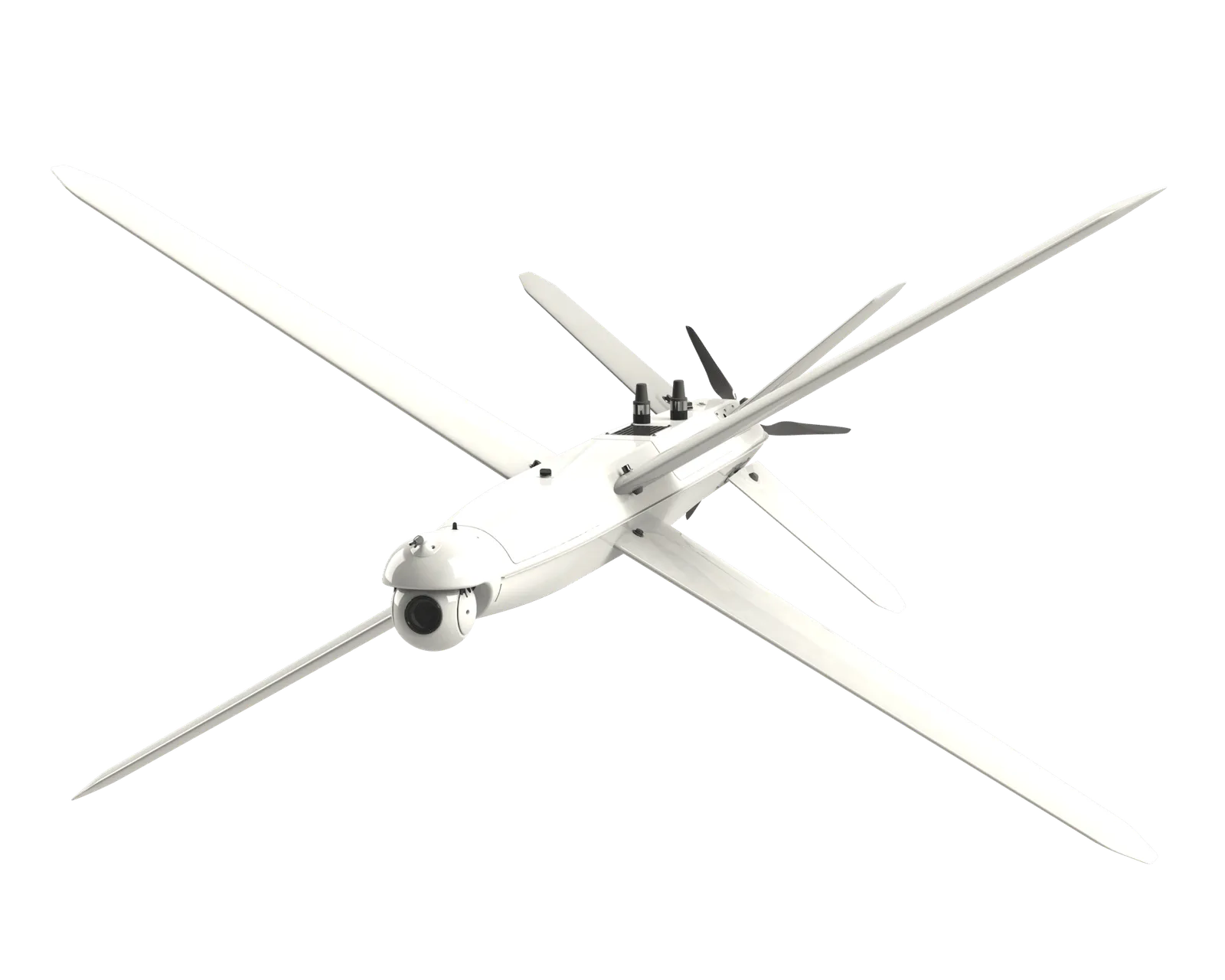
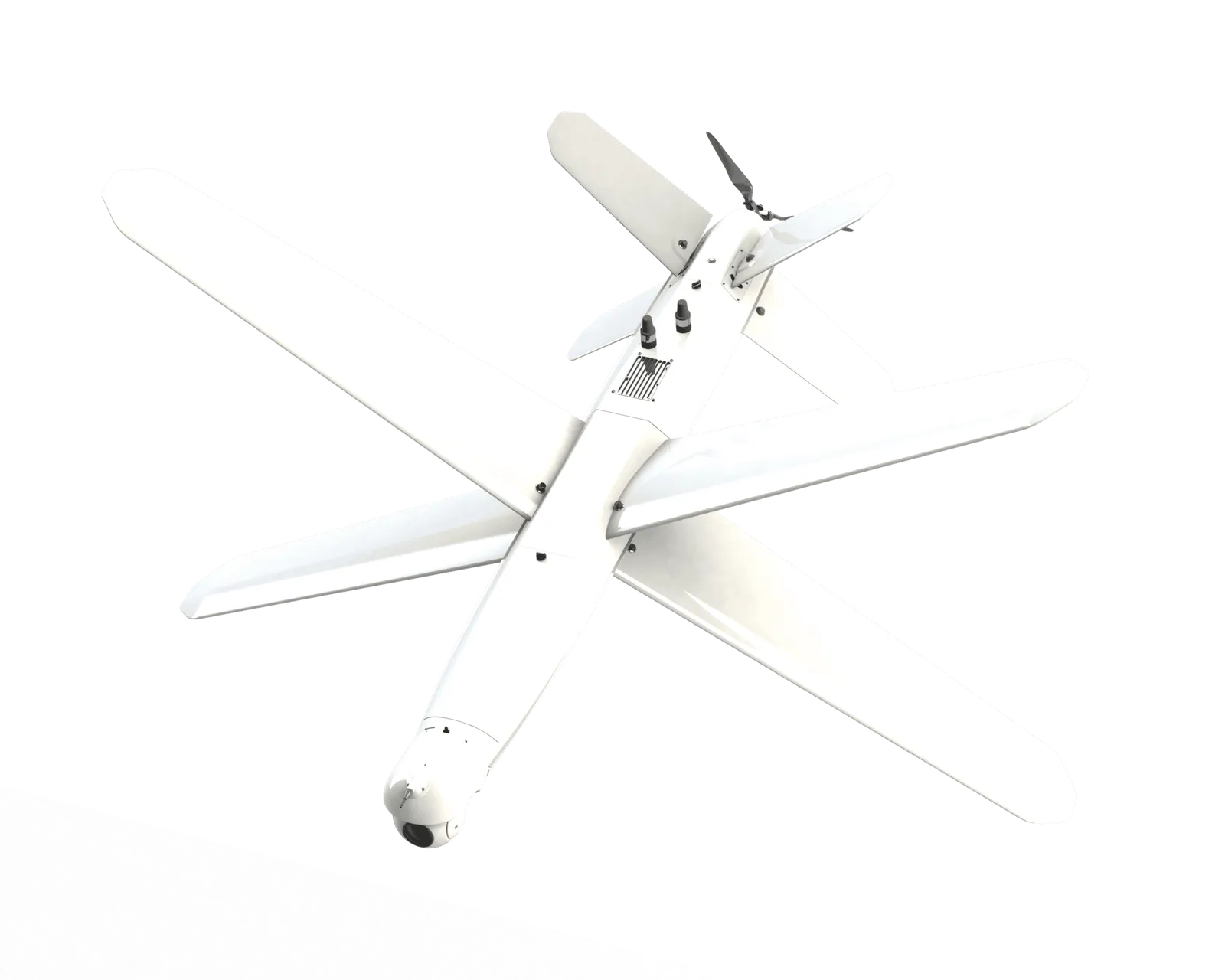
Ukrainian forces field Bulava in the 2014 Russia-Ukraine War as a DeViRo middle-strike loitering munition for rear-area fixed and moving targets; RFE/RL reported Ukrainian crew testing in spring 2025 and Ukrainska Pravda reported 2026 remote-control and M2V upgrade work for field crews.
Role detailsBulava UAS
- Bulava
- Mace
- Bulava M2V
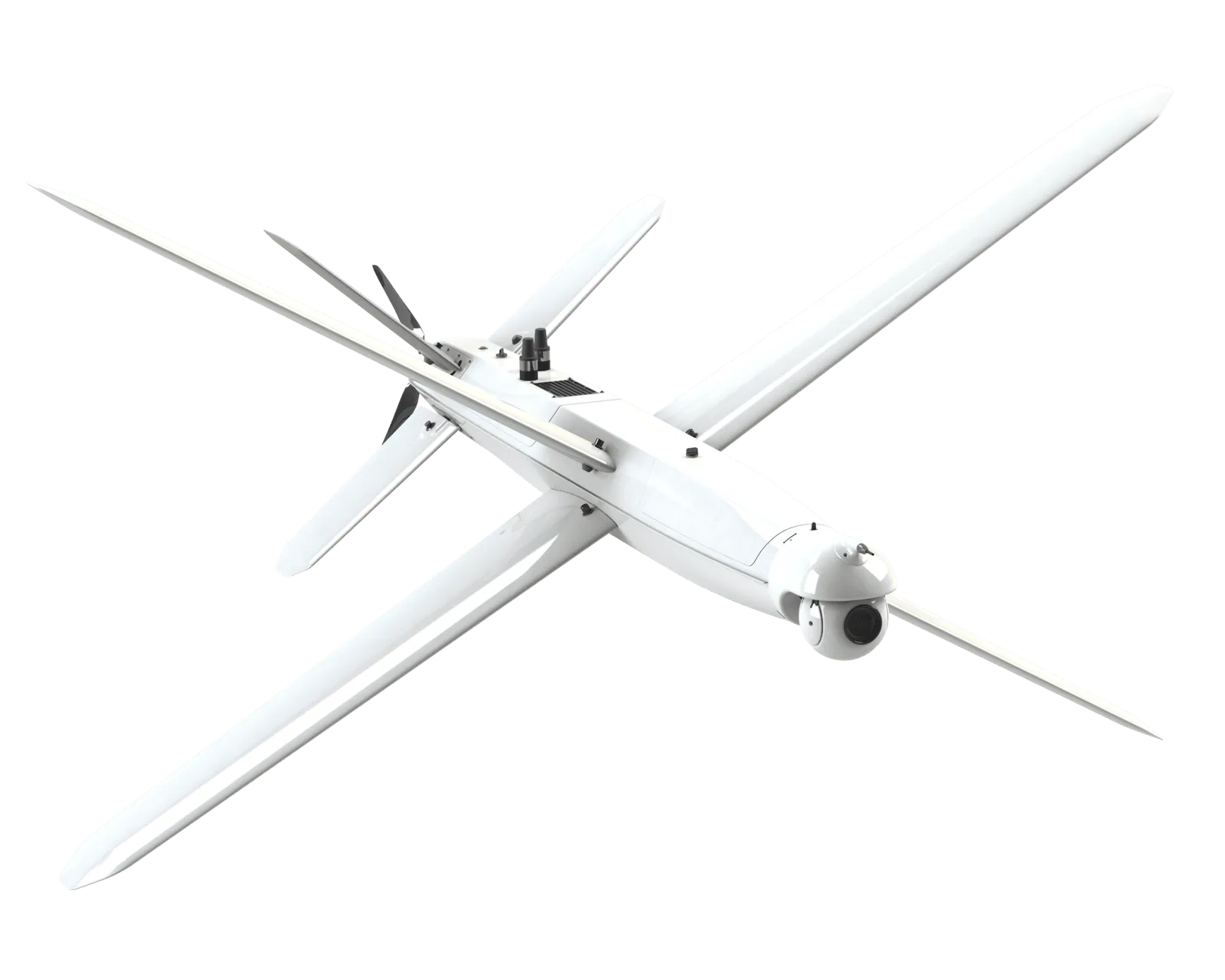
Bulava UAS is a Ukrainian DeViRo strike-and-reconnaissance loitering munition developed during the 2014 Russia-Ukraine War. DeViRo presents the baseline system as an 80 km, 3.6 kg-warhead middle-strike drone, while later reporting describes combat-unit fielding, Leleka-family reconnaissance support, remote-control upgrades, and a Bulava M2V beta configuration with greater range, endurance, and warhead weight.
Role in Conflicts
Middle-Strike Role
RFE/RL's Donbas Realii reporting places Bulava in Ukraine's middle-strike category: loitering munitions intended to reach beyond the immediate line of contact and attack targets that shape Russian logistics, air defense, electronic-warfare coverage, artillery, and command links.
| Use factor | Reader context | Source-backed relevance |
|---|---|---|
| Depth band | Middle-strike missions are described as sitting between close FPV use and strategic deep strike. | RFE/RL cited Ukrainian specialists describing targets tens to hundreds of kilometers from the line of contact, depending on mission and terminology. |
| Target set | Representative targets include artillery, electronic-warfare assets, air defense, logistics, and control nodes. | The same report frames these as rear-area systems whose loss can affect the battlefield even when they are not directly engaging infantry. |
| Terminal guidance | Target capture is important when radio links, terrain, masking, and jamming complicate operator control. | A Ukrainian servicemember told RFE/RL that Bulava prototype testing included camouflaged target approaches and target-lock behavior. |
| Upgrade path | Remote-control and M2V changes point to longer reach and safer crew operation. | Ukrainska Pravda reported remote-control options and a beta M2V configuration with 130 km potential strike range, 95-minute endurance, and 5 kg warhead weight. |
Profile / Specs
Profile
- Origin
- Ukraine
- Built by
- DeViRo
- Type
- Strike-and-reconnaissance loitering munition
- Service note
- 2014 Russia-Ukraine War era
- Designer
- DeViRo
- Designed
- Design work began in 2022; Ukrainian crew prototype testing was reported in spring 2025
- Unit cost
- Estimated $6,000-$10,000 per round
- Produced
- First production units reportedly reached combat units in 2024; front-line appearance was publicly announced in June 2025
- Number built
- Not publicly disclosed
- Developed from
- Leleka-100
Specifications
- Takeoff weight
- 11.5 kg
- Wingspan
- 160 cm
- Wing configuration
- X-wing (quad-surface)
- Maximum speed
- 100 km/h cruise
- Official product-page range
- 80 km
- Reported wartime range
- 100 km class
- Bulava M2V reported strike range
- 130 km beta-test configuration
- Endurance
- 75 minutes reported; 95 minutes reported for Bulava M2V beta
- Maximum altitude
- 2,000 m
- Launch method
- Pneumatic catapult
- Official product-page warhead
- 3.6 kg
- Reported M2V warhead
- 5 kg
- EW resistance
- High; CRPA and encrypted MESH
- Primary navigation
- GPS + INS + MESH relay
- Control upgrade
- Remote-control option reported for crews with stable internet connection
- Crew requirement
- 2 operators
- Night capable
- Yes
Configuration Notes
Public sources use Bulava for the DeViRo loitering munition family and identify Bulava M2V as an upgraded beta-test configuration reported in 2026.
| Configuration | Publicly reported status | Documented distinction |
|---|---|---|
| Bulava | Baseline public product configuration | DeViRo's product page describes an 80 km strike-and-reconnaissance loitering munition with a 3.6 kg warhead. |
| Bulava M2V | Upgraded beta-test configuration | Ukrainska Pravda reported 130 km potential strike range, 95-minute endurance, and a 5 kg warhead for the M2V upgrade. |
Reconnaissance Support
Bulava is described as part of a two-drone strike package, with a companion reconnaissance system handling target finding and designation.
| Compatible item | Item type | Compatibility evidence |
|---|---|---|
![]() | Reconnaissance UAV | The Drone Office analysis says Bulava works with Leleka-100M reconnaissance drones so the Leleka family can find and designate targets before Bulava executes the strike; DeViRo also frames Bulava as carrying forward Leleka reconnaissance-drone combat experience. Sources: Ukraine vs Western drone costs: why the price gap is structural, Bulava product page |
Operational Setup
The current Bulava package is built around a small launch team, a dedicated operator station, and a relayed reconnaissance-to-strike workflow.
| Topic | Source-backed detail |
|---|---|
| Launch team | The Drone Office describes Bulava as needing a light vehicle or two-person team for deployment, while later reporting says the launch team may still work 15-20 km from the front before moving away. |
| Control chain | A dedicated operator station works with the Bulava drone while a Leleka-family drone handles target finding and designation. |
| Communications | A MESH relay network extends communications range, and Starlink or internet-backed remote-control options have been reported as later additions. |
| Night use | Thermal imaging optics support night operations, matching the system's reported GPS-independent navigation and EW resistance. |
Timeline
Bulava UAS Key Events
Design work begins
The Drone Office says Bulava design work began in 2022 as a wartime response to the lack of a Ukrainian loitering munition that could match the Lancet.
Sources: Ukraine vs Western drone costs: why the price gap is structural
First production units reach combat units
The Drone Office reports that the first production Bulava units reached combat units in 2024, with wider deployment following later that year.
Sources: Ukraine vs Western drone costs: why the price gap is structural
Front-line appearance reported
RFE/RL reported Mykhailo Fedorov's June announcement that a Ukrainian Lancet analogue, the DeViRo Bulava strike-and-reconnaissance system, had appeared at the front.
Sources: RFE/RL Bulava middle-strike report
Prototype testing described
RFE/RL's Donbas Realii report cited a Ukrainian servicemember saying his crews had tested a Bulava prototype in spring 2025 and discussed the system's target-lock behavior against camouflaged targets.
Sources: RFE/RL Bulava middle-strike report
Updated performance and cost are reported
The Drone Office's April 2026 analysis describes Bulava at roughly 100 km range, 75-minute endurance, a 5 kg warhead, and an estimated $6,000-$10,000 unit cost.
Sources: Ukraine vs Western drone costs: why the price gap is structural
Remote control and M2V upgrade reported
Ukrainska Pravda reported that DeViRo had added remote-control options to Leleka and Bulava and described Bulava M2V as a beta-test upgrade with longer range, greater endurance, and a heavier warhead.
Sources: Ukrainian Leleka and Bulava drones get remote control function
Media
Related Weapon Systems