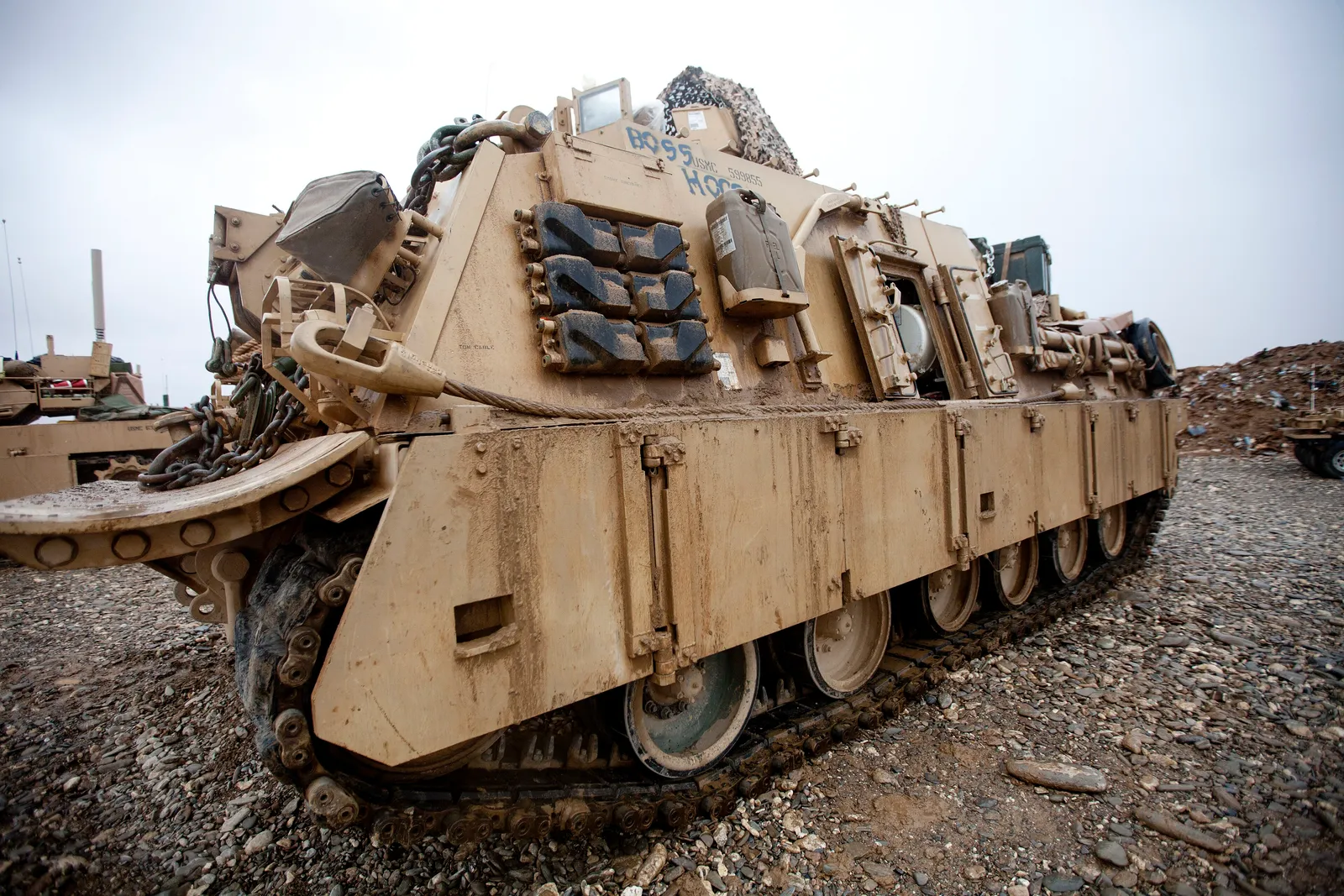

BAE Systems describes the M88A2 HERCULES as the primary 70-ton recovery system during Operation Iraqi Freedom and identifies the vehicle used by U.S. troops to pull down Saddam Hussein's statue in Baghdad on April 9, 2003.
Role detailsSupport Equipment
M88 recovery vehicle
Also known as
- M88
- M88 ARV
- M88 armored recovery vehicle
- M88 armoured recovery vehicle
- M88A1
- M88A2
- M-88A2
- M88A2 Hercules
- M-88A2 HERCULES
- HERCULES
- Heavy Equipment Recovery Combat Utility Lift and Evacuation System
- Heavy Equipment Recovery Combat Utility Lifting Evacuation System
The M88 recovery vehicle is a U.S.-origin tracked armored recovery family built to tow, winch, lift, and repair disabled tanks and armored vehicles near the battlefield. The M88A2 HERCULES branch was developed around the 70-ton Abrams recovery problem, while Ukraine-war transfers and documented M88A1/M88A2 losses show the family continuing to support heavy mechanized forces.
Role in Conflicts
- Side
- Ukraine

SIPRI records a 2023 U.S. aid transfer of eight M-88A2 armored recovery vehicles to Ukraine; the U.S. Defense Department separately announced eight M88 recovery vehicles with Abrams tanks, and Oryx later visually documented Ukrainian M88A1 and M88A2 recovery-vehicle losses in the full-scale war.
Role detailsProfile / Specs
Profile
- Origin
- United States
- Built by
- FMCUnited DefenseBAE Systems
- Type
- Tracked armored recovery vehicle
- Service note
- Cold War armored-recovery family with M88A2 and M88A3 modernization for heavy tracked forces
- Designer
- Bowen McLaughlin York for the original M88 family
- Designed
- 1950s-1961 original M88 development; M88A2 entered service in 1997
- Produced
- 1961-present across M88, M88A1, M88A2, and modernization programs
- Number built
- More than 1,690 across all variants, according to museum summary data
- Developed from
- M48 Patton and M60 tank automotive components and chassis lineage
Specifications
- Crew
- 3 crew on the M88A2 HERCULES, with compartment space for 4 recovered-vehicle crew members
- Combat weight
- 140,000 lb / 63,500 kg gross vehicle weight for the M88A2 HERCULES
- Recovery capacity
- Single-vehicle recovery and evacuation of Abrams and other combat vehicles up to 70 tons
- Winch and boom
- 140,000 lb constant-pull main winch with 280 ft cable; auxiliary 3-ton winch; 35-ton A-frame boom on M88A2 HERCULES
- Engine
- Continental AVDS-1790 series V12 diesel; BAE datasheet and museum summary list 1,050 hp for M88A2 HERCULES
- Armament
- .50 caliber machine gun for self-protection
- Protection
- Armored hull; DoD lists protection against small arms fire, artillery fragments, and anti-personnel mines
- Mobility
- Fully tracked armored recovery vehicle; BAE datasheet lists 26-30 mph speed and 300 mile range for M88A2 HERCULES
Recovery Equipment
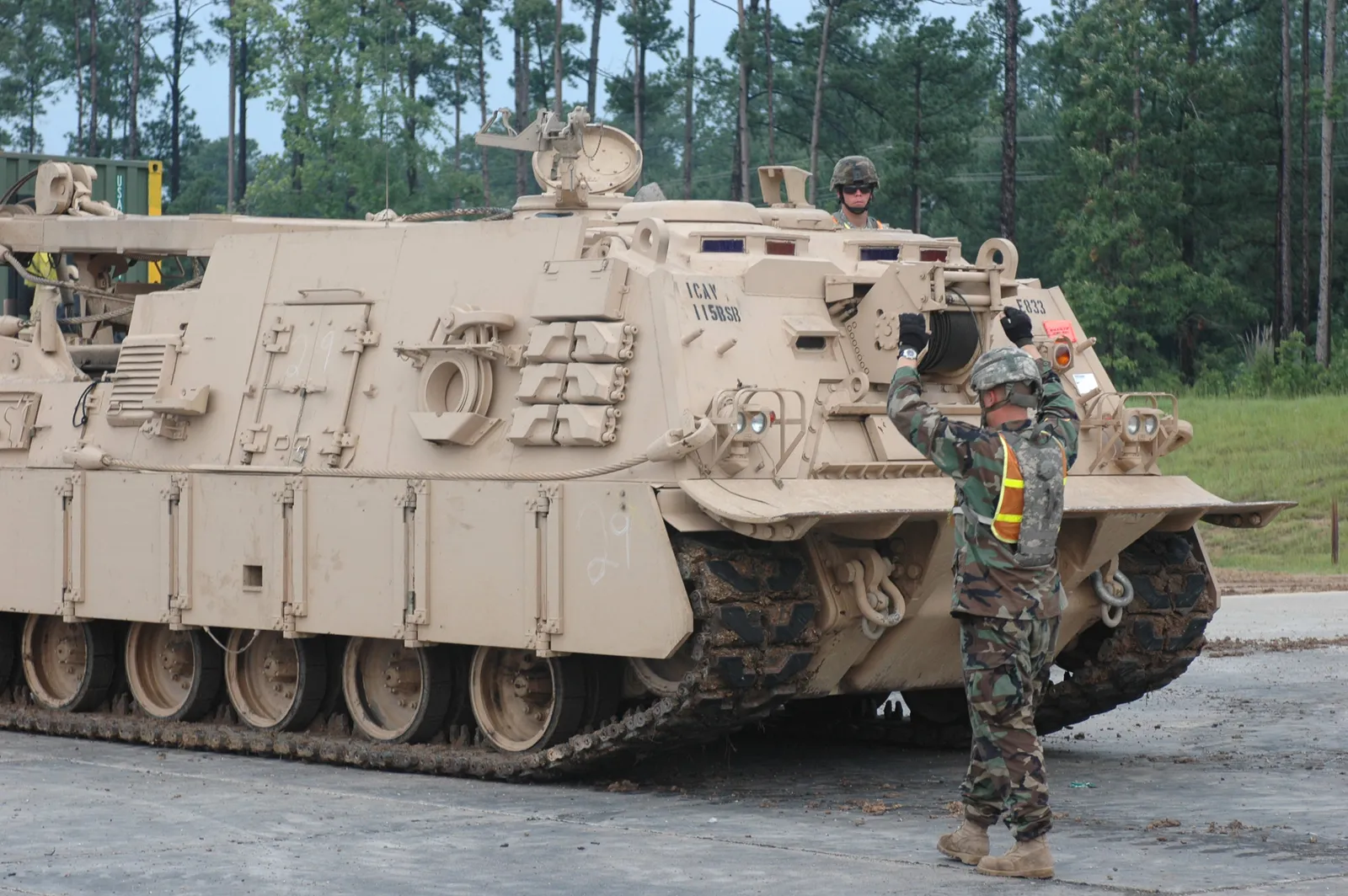
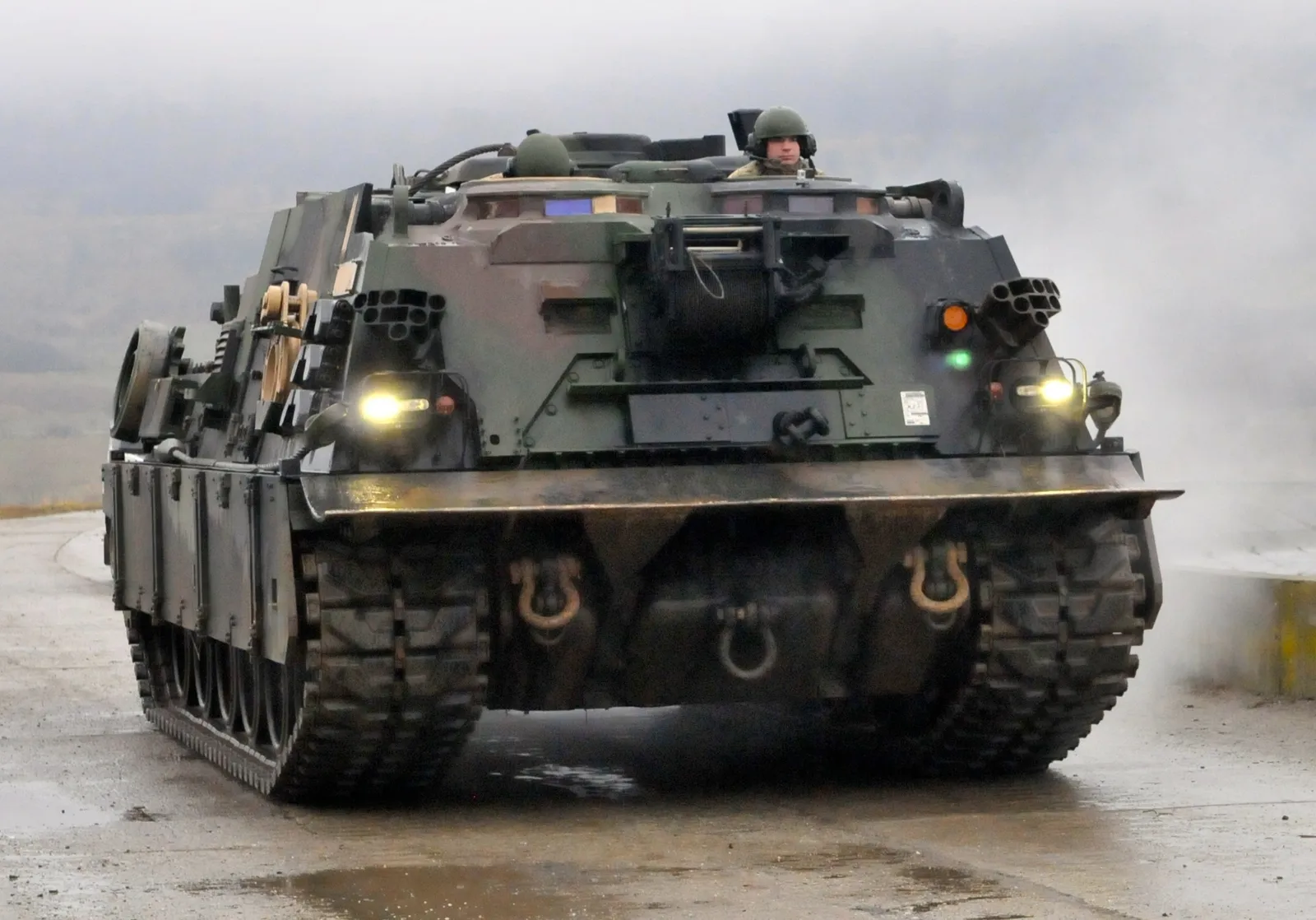
The M88A2 HERCULES package centers on battlefield recovery rather than assault. DoD and BAE describe a protected tracked vehicle with winching, lifting, towing, spade, auxiliary-power, and self-protection equipment for disabled armored systems.
Main winch
140,000 lb constant-pull main winch with 280 ft of cable, backed by an auxiliary 3-ton winch for cable deployment.
Boom and spade
35-ton A-frame boom, improved spade, tow bars, and multiple winches support lifting, anchoring, towing, and recovery work.
Power and protection
Auxiliary power supports backup hydraulic and electrical power, refueling, and fuel transfer; armor protects against small arms, fragments, and anti-personnel mines.
Variants
The M88 family is defined by rising recovery capacity: the original M88 and diesel M88A1 served medium tank and early Abrams-era recovery needs, while M88A2 HERCULES and the tested M88A3 branch address heavier Abrams recovery requirements.
| Variant | Configuration | Designation notes |
|---|---|---|
| M88A1 | Diesel-powered recovery variant | The M88A1 is the pre-HERCULES diesel branch that remained close enough to the M88A2 fleet for BAE to cite M88A2 logistics and training commonality with existing M88A1 vehicles. Sources: BAE M88A2 Product Page |
| M88A2 HERCULES | 70-ton heavy recovery vehicle | DoD acquisition reporting describes the M88A2 as a 70-ton, armored, full-tracked diesel recovery vehicle based on the M88A1 chassis and intended for Abrams and other combat vehicles up to 70 tons. Sources: DoD M88A2 SAR 2019 |
| M88A3 HERCULES | Modernized 80-ton recovery-capacity branch | U.S. Army reporting says M88A3 testing adds a modernized powertrain, seventh road wheel, hydro-pneumatic suspension, and an 80-ton towing-capacity goal for heavier Abrams recovery. Sources: U.S. Army M88A3 Testing |
Supported Heavy Armor
M88 recovery vehicles are support platforms for tracked armored formations; the HERCULES branch is especially tied to keeping Abrams-class vehicles recoverable without using tanks as recovery assets.
| Compatible item | Item type | Compatibility evidence |
|---|---|---|
 | Main battle tank | DoD acquisition reporting says the M88A2 provides single-vehicle recovery, evacuation, and battle-damage repair for the Abrams main battle tank and other combat vehicles up to 70 tons. Sources: DoD M88A2 SAR 2019 |
 | Main battle tank family | Museum summary data traces the M88 design to M48 and M60 tank automotive components, placing the vehicle in the Patton-family support ecosystem before the heavier HERCULES branch. Sources: Tucson M88A2 Exhibit |
Timeline
M88 recovery vehicle Key Events
Original M88 enters service
Museum summary data dates the original M88's entry into service to 1961 and identifies Bowen McLaughlin as the initial builder.
Sources: Tucson M88A2 Exhibit
M88A2 HERCULES branch enters service
Museum and acquisition references identify the M88A2 HERCULES as the heavy recovery branch introduced for 70-ton combat-vehicle recovery.
Sources: Tucson M88A2 Exhibit, DoD M88A2 SAR 2019
M88A2 used in Baghdad statue toppling
BAE Systems and museum summaries identify an M88A2 HERCULES as the vehicle U.S. troops used to pull down Saddam Hussein's statue in Baghdad during Operation Iraqi Freedom.
Sources: BAE M88A2 Product Page, Tucson M88A2 Exhibit
United States announces M88s for Ukraine
The Defense Department said eight M88 recovery vehicles would be shipped with the 31 Abrams tanks announced for Ukraine.
Sources: Defense Department Abrams Ukraine Announcement
Army reports M88A3 testing
The U.S. Army reported reliability and maintainability testing for the M88A3 variant, with an 80-ton towing-capacity goal and upgrades for heavier modern Abrams recovery.
Sources: U.S. Army M88A3 Testing
Media
M88 recovery vehicle Videos
M88 recovery vehicle Images
Related Weapon Systems


Sources
BAE M88A2 Product PagePublisher: BAE Systems | Note: Supports M88A2 manufacturer/product background, HERCULES recovery equipment, M88A1 commonality, and direct 2003 Iraq War Operation Iraqi Freedom use by U.S. troops. | Accessed: 2026-07-08BAE M88A2 DatasheetPublisher: BAE Systems | Note: Supports M88A2 HERCULES crew, personnel capacity, gross vehicle weight, horsepower, range, speed, auxiliary power, refueling support, auxiliary winch, main winch, and boom specifications. | Accessed: 2026-07-08DoD M88A2 SAR 2019Publisher: Office of the Secretary of Defense | Note: Supports M88A2 mission, 70-ton recovery role, protection, crew, boom, winch, and Abrams recovery context. | Accessed: 2026-07-08Defense Department Abrams Ukraine AnnouncementPublisher: U.S. Department of Defense | Note: Supports 2014 Russia-Ukraine War direct transfer context: eight M88 recovery vehicles shipped to Ukraine with Abrams tanks. | Accessed: 2026-07-08SIPRI Arms Transfers DatabasePublisher: Stockholm International Peace Research Institute | Note: Supports 2014 Russia-Ukraine War direct transfer context: SIPRI records a U.S. aid transfer of eight M-88A2 armored recovery vehicles to Ukraine, ordered and delivered in 2023. | Accessed: 2026-07-08Oryx Ukrainian Equipment LossesPublisher: Oryx | Note: Supports 2014 Russia-Ukraine War direct fielded-loss context for Ukrainian M88A1 and M88A2 armored recovery vehicles, including destroyed, captured, damaged, and abandoned entries. | Accessed: 2026-07-08Tucson M88A2 ExhibitPublisher: Tucson Military Vehicle Museum | Note: Supports M88 family development, variant/service chronology, basic specifications, production succession, and 2003 Iraq War direct use by U.S. Marines in the Baghdad Saddam Hussein statue removal. | Accessed: 2026-07-08U.S. Army M88A3 TestingPublisher: U.S. Army | Note: Supports M88A3 testing, upgrade goals, and M88A2 recovery-capability limits for newer heavier Abrams variants. | Accessed: 2026-07-08Wikimedia M88A2 Helmand ImagePublisher: Wikimedia Commons | Note: Supports primary image provenance and public-domain U.S. military licensing for the M88A2 HERCULES image. | Accessed: 2026-07-08Wikimedia M88 Track Recovery Vehicle ImagePublisher: Wikimedia Commons | Note: Supports additional gallery image provenance and public-domain U.S. Army image licensing. | Accessed: 2026-07-08Wikimedia M88 Cincu ImagePublisher: Wikimedia Commons | Note: Supports additional gallery image provenance for an M88 HERCULES recovery vehicle image. | Accessed: 2026-07-08