Infantry Weapons

M14

Also known as
  • U.S. Rifle, Caliber 7.62 mm, M14
  • Rifle, 7.62-mm, M14
  • M14 rifle

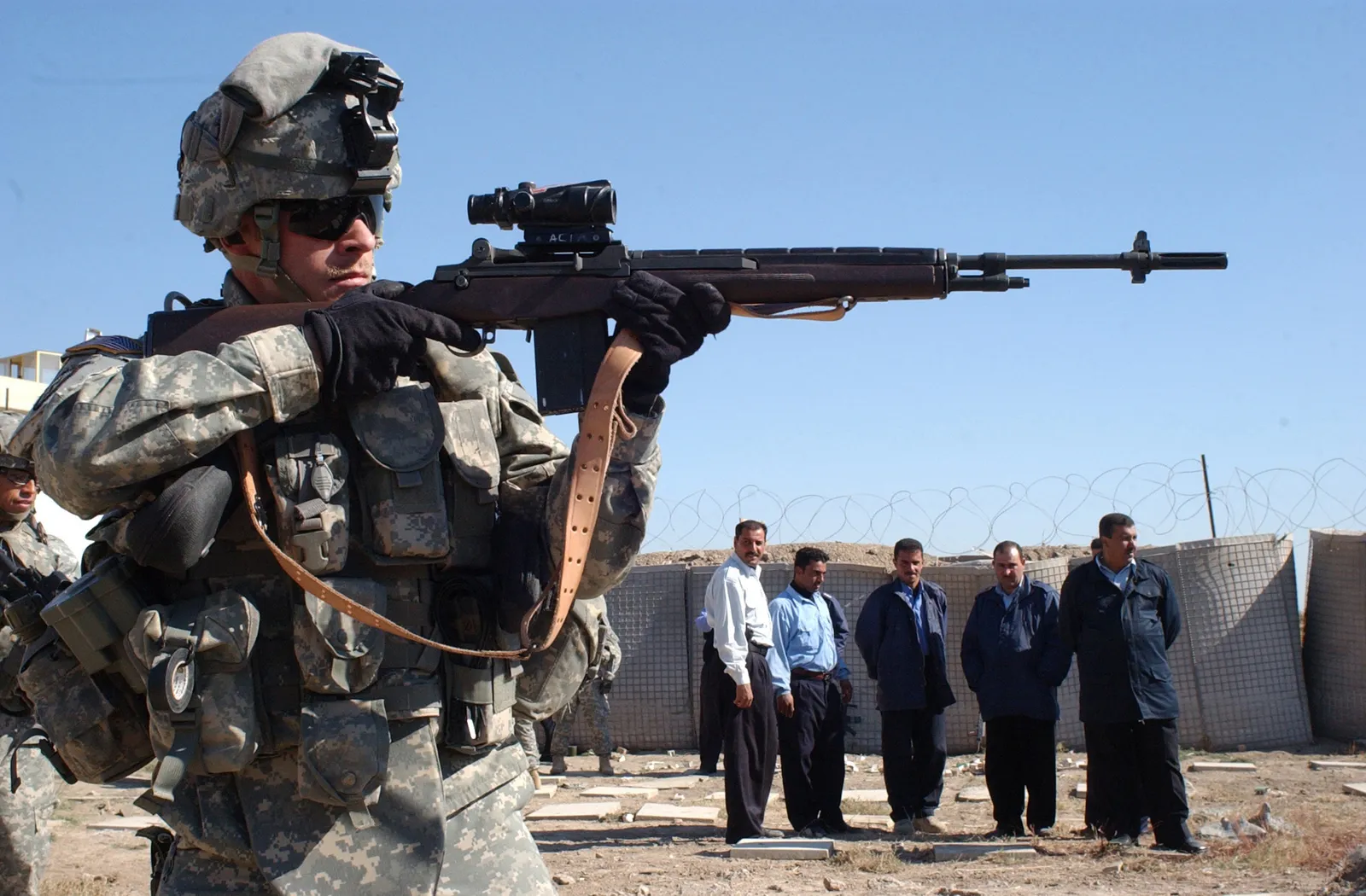
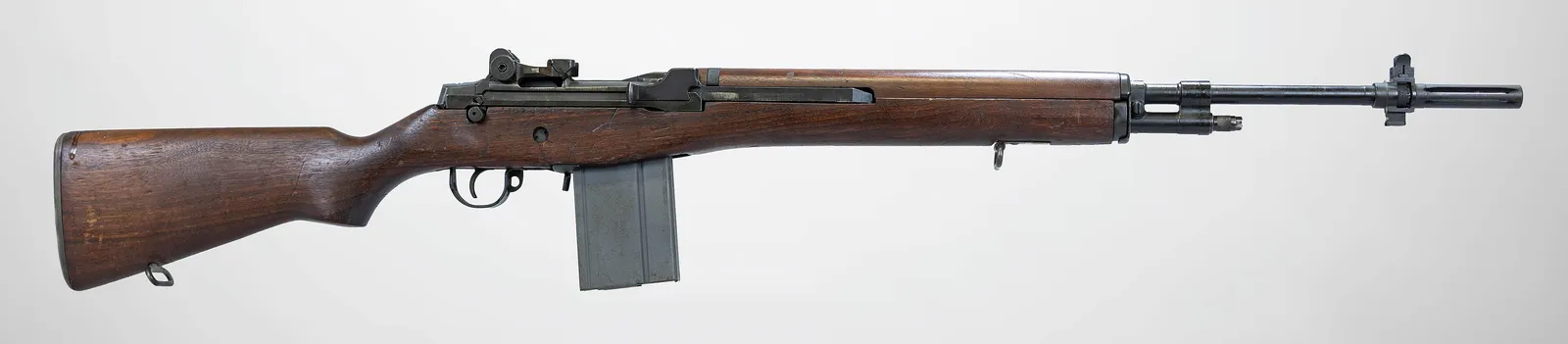
The M14 is a U.S.-origin 7.62x51 mm NATO battle rifle developed from the M1 Garand lineage and fielded by U.S. and Marine Corps forces in Vietnam before later marksman variants kept the family in service. Direct conflict evidence in this entry ranges from Vietnam-era Marine small-unit use to M21 and M14 EBR employment in Iraq and Afghanistan and recovered insurgent rifles in Nigeria and Marawi.

Role in Conflicts

Side
United States and South Vietnam

Marine Corps source material places the M14 in Vietnam-era Marine rifle service, while the official 1967 Marine Corps small-unit history from Vietnam includes M14 rifles among Marine small arms used in the 1966 combat narratives.

Profile / Specs

Profile

Origin
United States
Type
7.62 mm battle rifle
Service note
Cold War design with continuing use as a battle rifle and designated marksman rifle
Designer
Springfield Armory
Designed
1950s
Produced
1959-1964 for main U.S. military production
Developed from
M1 Garand and T44 test-rifle lineage

Specifications

Cartridge
7.62x51 mm NATO
Action
Gas-operated, rotating bolt
Feed system
20-round detachable box magazine
Barrel length
22 in / 559 mm
Weight
About 9.2 lb / 4.2 kg empty
Overall length
44.3 in / 1,126 mm
Variants

The M14 family splits between the baseline 7.62 mm service rifle, the M14A1 automatic-rifle configuration, accurized M21 sniper rifles, and later chassis-stock Enhanced Battle Rifle / Mk 14 configurations.

VariantConfigurationDesignation notes
M14A1Automatic-rifle configuration

The Army operator manual treats the M14A1 as a separate equipped configuration with automatic-rifle furniture, stabilizer parts, selector equipment, and a heavier equipped weight than the baseline M14.

Sources: TM 9-1005-223-10: Operator's Manual for Rifle, 7.62-mm, M14

M21 sniper weapon systemAccurized National Match M14 sniper system

Army sniper training material identifies the M21 as a National Match M14 rifle and scope, accurized with selected and hand-fitted parts.

Sources: TC 23-14 Sniper Training and Employment

M14 Enhanced Battle RifleArmy chassis-stock designated-marksman rebuild

Army reporting describes TACOM assembly of M14 EBRs with an aluminum railed stock, adjustable comb and buttstock, Harris bipod, pistol grip, and variable-power optic.

Sources: AMC Deputy Chief of Staff on Target with M14 Enhanced Battle Rifle

Mk 14 Mod 0 / Mod 1Navy and special-operations EBR branch

NSWC Crane material separates Mk 14 Mod 0 and Mod 1 configurations and documents the M14-to-Mk 14 changes, including chassis, barrel, sights, gas-cylinder lock, flash suppressor, and accessory changes.

Sources: M14 to MK 14: Evolution of a Battle Rifle

Ammunition Fired

Army manuals and cartridge sources tie the M14 family to 7.62 mm NATO ammunition.

AmmunitionAmmunition typeFiring evidence
7.62x51mm NATO cartridge, NATO-standard rifle and machine-gun cartridge, Munitions7.62x51mm NATO cartridge7.62x51mm NATO cartridge

TM 9-1005-223-10 lists authorized 7.62 mm NATO rounds for use in the M14 and M14A1 rifles.

Sources: TM 9-1005-223-10: Operator's Manual for Rifle, 7.62-mm, M14

Timeline

M14 Key Events

  1. T44E4 approved as M14

    The Secretary of the Army approved the T44E4, which the National Park Service identifies as the M14 intended to replace the M1 rifle, M2 carbine, and M3A1 submachine gun.

    Sources: Post WWII Rifle Development

  2. Production begins

    National Park Service and American Rifleman accounts place the start of M14 production in 1959 after the T44E4 approval.

    Sources: Post WWII Rifle Development, A Look Back at the M14 Rifle

  3. Main U.S. production run ends

    American Rifleman reports that Springfield Armory, Winchester, Harrington & Richardson, and TRW produced 1,376,031 M14 service rifles through 1964.

    Sources: A Look Back at the M14 Rifle

  4. M21 still documented during M24 transition

    Army TC 23-14 described the M21 as the current U.S. Army sniper weapon system while noting replacement by the M24.

    Sources: TC 23-14 Sniper Training and Employment

  5. Army reports M14 EBR assembly

    Army reporting from Rock Island said TACOM had assembled more than 400 M14 EBRs and had awarded a contract for another 2,300 component sets.

    Sources: AMC Deputy Chief of Staff on Target with M14 Enhanced Battle Rifle

Media
Related Weapon Systems
M4/M4A1 carbine, Carbine, Infantry WeaponsInfantry WeaponsM4/M4A1 carbineCarbineThe M4/M4A1 carbine is a U.S.-origin 5.56mm service-rifle family built around a shorter M16 lineage, a collapsible stock, and modular accessory mounting. Conflict-specific evidence documents M4-family use by U.S. forces in Iraq and Afghanistan, coalition and Iraqi partner forces during anti-ISIS operations, Philippine Marines at Marawi, Israeli wartime replenishment, and Ukrainian special-operations transition from Soviet-pattern rifles during the 2014 Russia-Ukraine War.
M16 rifle, Assault rifle, Infantry WeaponsInfantry WeaponsM16 rifleAssault rifleThe M16 is a U.S.-origin 5.56x45mm assault-rifle family that evolved from 1955 Vietnam War service into the M16A1, M16A2 and M16A4 lineage. Current Army and FN references describe the M16A4 as a gas-operated, shoulder-fired, 20-inch-barrel rifle with rail and optics compatibility, while conflict-specific sources document continued use from Marawi and Afghanistan to Israeli wartime response teams, Iraqi partner-force training and Colombian FARC dissident seizures.
M2010 Enhanced Sniper Rifle, Bolt-action sniper rifle, Infantry WeaponsInfantry WeaponsM2010 Enhanced Sniper RifleBolt-action sniper rifleThe M2010 Enhanced Sniper Rifle is the U.S. Army's .300 Winchester Magnum rebuild of the M24 Sniper Weapon System, developed to give sniper teams longer reach in Afghanistan's mountainous terrain. Remington converted the long-action M24 into a suppressed, magazine-fed precision rifle with a folding adjustable chassis, extended-range optic, night-sight compatibility, and a 1,200-meter effective range; later imagery from 2014 Operation Inherent Resolve shows the rifle still serving in U.S. patrol overwatch in northeast Syria.
Rifle grenades, Rifle-launched grenade family, Infantry WeaponsInfantry WeaponsRifle grenadesRifle-launched grenade familyRifle grenades are a broad family of grenades projected from service rifles by rod, cup, spigot, muzzle-device, bullet-trap, or shoot-through launch methods. World War I examples extended infantry grenade reach with explosive, smoke, signal, message, and emerging anti-tank payloads, while postwar HEAT designs such as the British No. 94 Energa and U.S. M31 used shaped charges for short-range anti-armor fire. The cataloged conflict record spans rifle-launched use, recovered ammunition, and modern reuse of rifle-grenade munitions as drone payloads in Myanmar and Ukraine.

Sources