Aircraft & UAVs

Ka-27

Also known as
  • Kamov Ka-27
  • Ka-27 Helix
  • Helix-A
  • Helix-D
  • Ka-27PL
  • Ka-27PS
  • Ka-27M
  • Ka-28

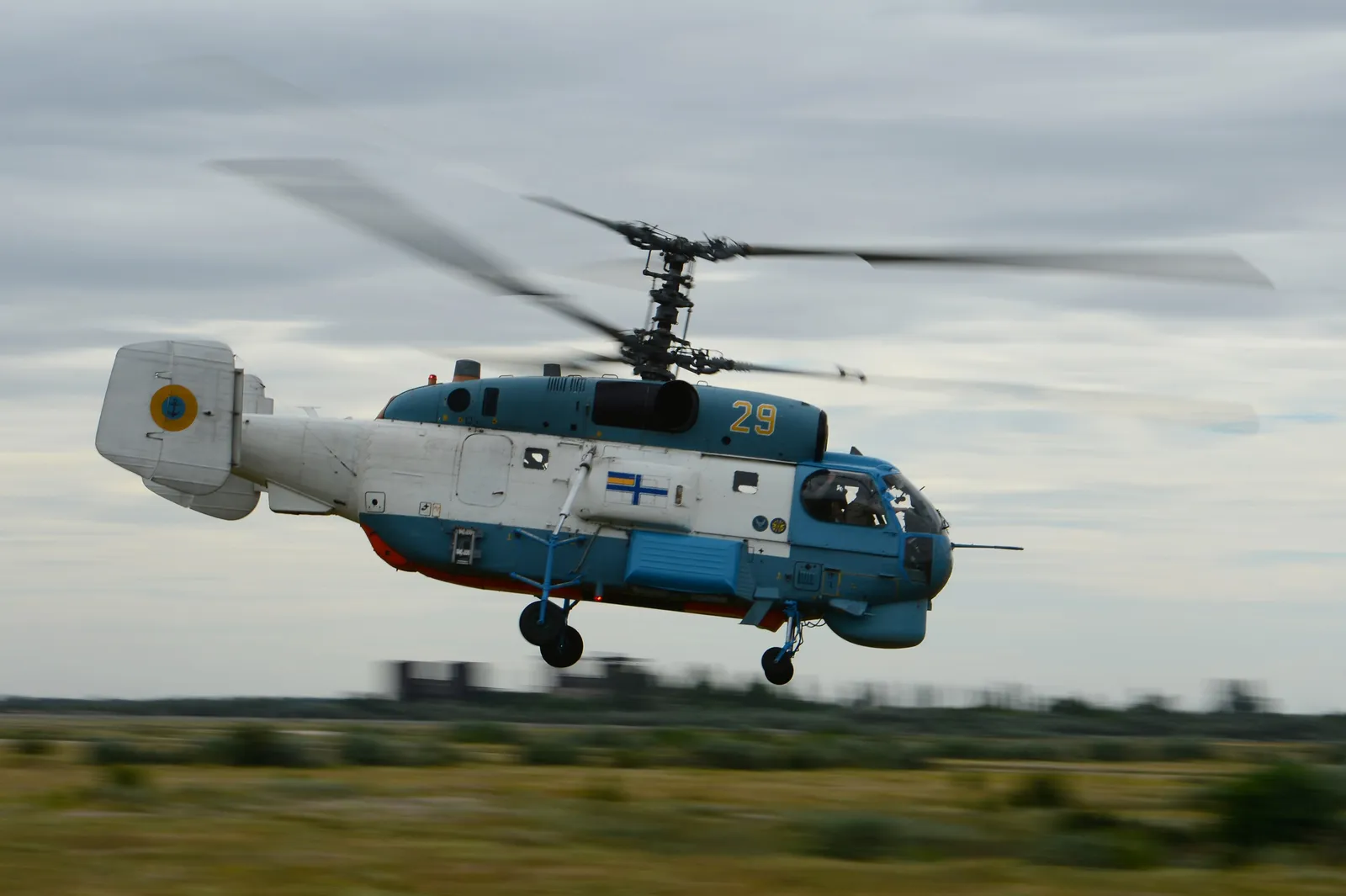
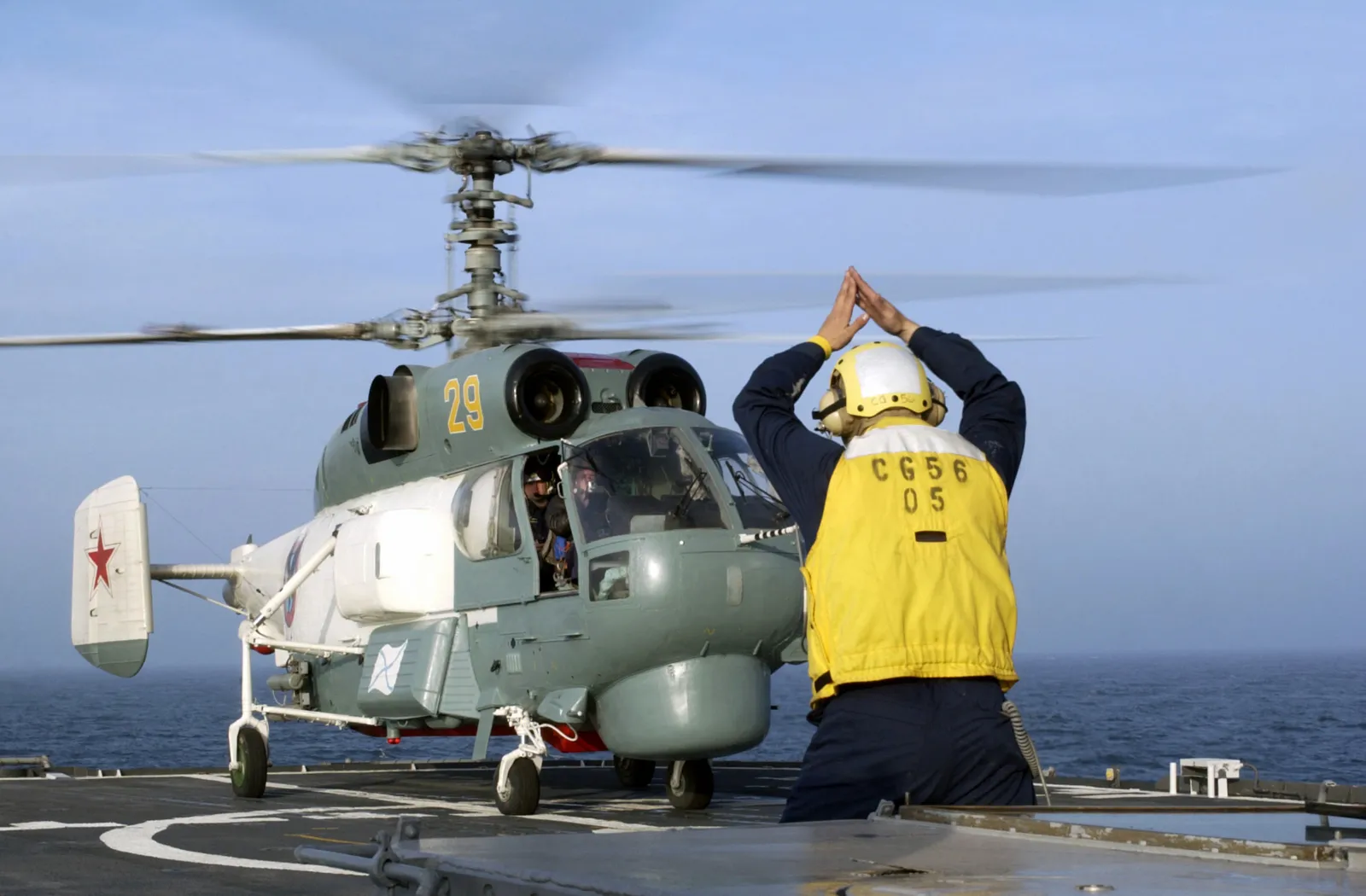
The Ka-27 is Kamov's coaxial-rotor naval helicopter family, built around compact shipboard anti-submarine, maritime search, rescue, and utility missions. Russian naval aviation used the type around the Black Sea during the 2014 Russia-Ukraine War, where Ukrainian naval reporting and independent coverage documented a Russian Ka-27 destroyed during a March 2026 strike on forces at the Syvash drilling platform.

Role in Conflicts

Profile / Specs

Profile

Origin
Soviet Union / Russia
Built by
Kamov
Type
Shipborne anti-submarine and search-and-rescue helicopter
Service note
Entered Soviet naval service in the early 1980s; still operated by Russian naval aviation and export users.
Designer
Kamov Design Bureau
Designed
Late 1960s to 1970s development; prototype flight reported on 24 December 1973.
Produced
Series production began in 1979 at Kumertau; later Ka-27M modernization work continued for Russian naval aviation.
Developed from
Kamov Ka-25 shipborne helicopter family

Specifications

Crew
Typically 3 on Ka-27PL: pilot, navigator, and sonar/operator station.
Rotor system
Coaxial counter-rotating main rotors; no tail rotor.
Powerplant
Two Klimov/Isotov TV3-117-series turboshaft engines.
Rotor diameter
15.8 m.
Length
11.3 m.
Height
5.5 m.
Maximum takeoff weight
About 12,000 kg.
Maximum speed
About 270 km/h.
Range
About 980 km in common reference figures; operational ASW radius depends on payload and mission profile.
Sensors and payload
Ka-27PL associated with maritime radar, dipping sonar or magnetic-anomaly detection, sonobuoys, one lightweight torpedo, and depth or marker bombs.
Ka-27M upgrade package
Modernized Ka-27M helicopters received a tactical command system combining acoustic, magnetometric, radio-reconnaissance, information-computation, and active phased-array radar components.
Museum-displayed Ka-27PL figures
Oleg Antonov State Aviation Museum lists a 3-person crew, two TV3-117VK engines rated at 2,225 hp each, 12,000 kg maximum takeoff weight, and up to 2 h 40 min flight duration for its Ka-27PL.
Shipboard role
Deck helicopter for frigates, destroyers, cruisers, and other larger naval vessels.
Shipboard Design Context

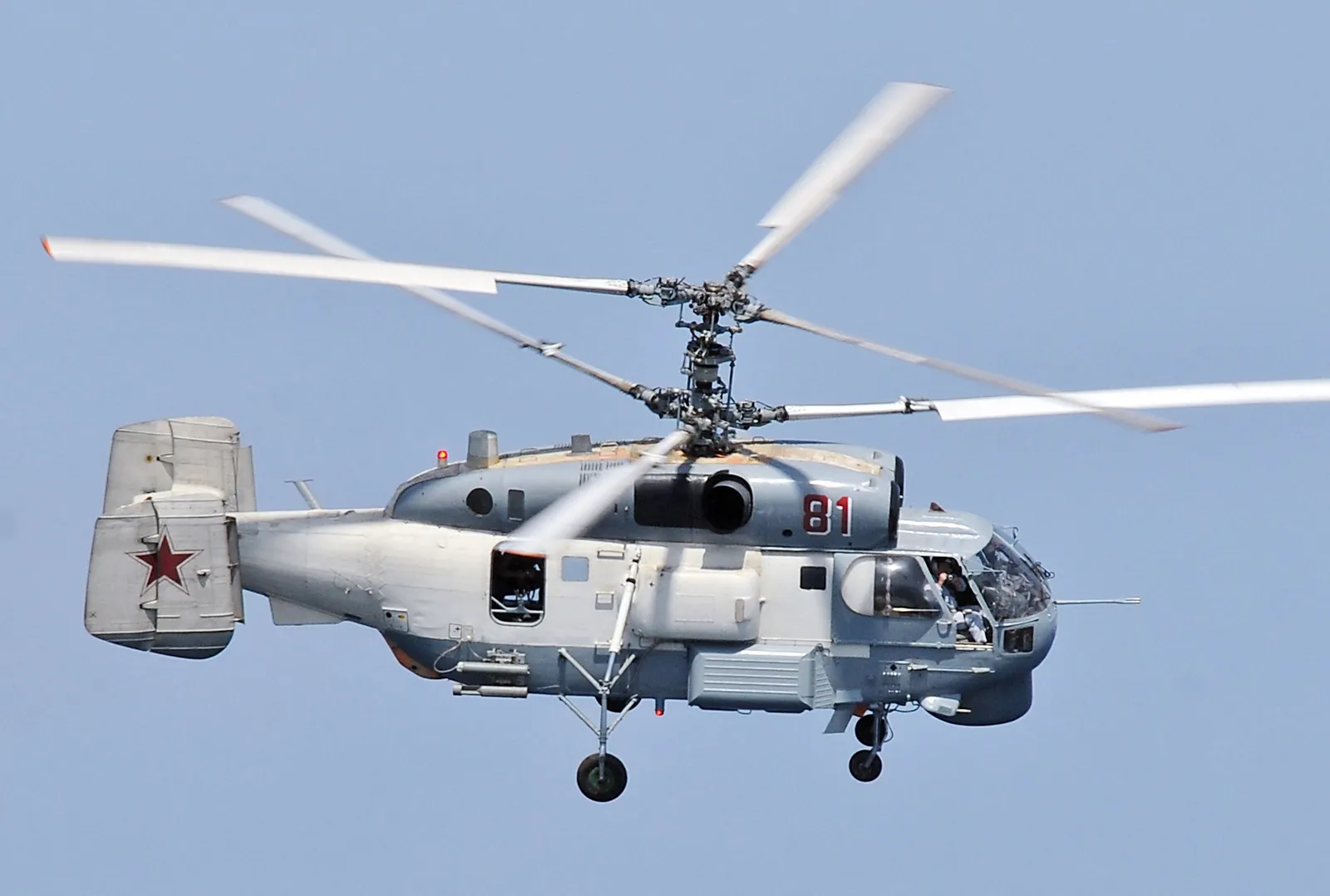
The Ka-27 family uses Kamov's coaxial rotor layout to keep the helicopter compact for ship decks and eliminate a tail rotor. In naval use, the baseline anti-submarine version combined maritime radar with underwater search sensors and expendable stores, while the rescue version traded the ASW package for hoist and recovery equipment.

Primary naval role

Anti-submarine search, surface search, maritime surveillance, and rescue support from larger warships.

Sources: ODIN Ka-27 Helix Profile; State Aviation Museum Ka-27PL.

Layout

Twin-engine coaxial helicopter with no tail rotor, suited to compact flight decks and hover work over water.

Sources: Wikipedia Ka-27 Overview; Airforce Technology Helix Profile.

Modernization lane

Ka-27M upgrades added new radar, avionics, communications, and command-system links for Russian naval aviation.

Sources: TASS Ka-27M Delivery; AIN Ka-27M Modernization; Aero-News Ka-27M Serial Delivery.

Variants

The Ka-27 family separates anti-submarine, search-and-rescue, export, assault-transport, civil, and modernized naval configurations around the same compact coaxial shipboard layout.

VariantConfigurationDesignation notes
Ka-27PLAnti-submarine warfare version

Baseline naval ASW model associated with radar, dipping sonar or magnetic-anomaly detection, sonobuoys, torpedoes, and depth charges.

Sources: Wikipedia Ka-27 Overview, Deagel Ka-27M Profile

Ka-27PSSearch-and-rescue version

Search-and-rescue configuration with ASW equipment removed and a rescue hoist fitted.

Sources: Wikipedia Ka-27 Overview

Ka-27MModernized Russian naval aviation configuration

Modernized model with updated radar, avionics, communications, and tactical systems delivered to Russian naval aviation from the late 2010s.

Sources: TASS Ka-27M Delivery, AIN Ka-27M Modernization

Ka-28Export anti-submarine variant

Export designation for the Ka-27 anti-submarine family, documented in foreign naval use.

Sources: Wikipedia Ka-27 Overview, Deagel Ka-27M Profile

Ka-29, Shipborne assault transport helicopter, Aircraft & UAVsKa-29Assault transport derivative

Armored assault-transport member of the Helix family with troop carriage and external weapon stations, adjacent to but distinct from the Ka-27 ASW/SAR versions.

Sources: Wikipedia Ka-27 Overview, Airforce Technology Helix Profile

Ka-32Civil and utility derivative

Civil and utility branch of the family used for transport, firefighting, and specialized lift roles.

Sources: Wikipedia Ka-27 Overview

Timeline

Ka-27 Key Events

  1. Development starts

    Kamov began developing the Ka-27 as a compact shipborne successor to the Ka-25 for Soviet naval missions.

    Sources: Wikipedia Ka-27 Overview

  2. Prototype flight

    The Ka-27 prototype is reported to have first flown on 24 December 1973.

    Sources: Wikipedia Ka-27 Overview, Helis Ka-27 Database

  3. Series production begins

    Series production started at Kumertau, establishing the Ka-27 as the Soviet Navy's next-generation deck helicopter.

    Sources: Wikipedia Ka-27 Overview

  4. Soviet Navy service entry

    The Ka-27 entered Soviet Navy service in the early 1980s for anti-submarine, maritime patrol, and rescue tasks.

    Sources: Wikipedia Ka-27 Overview, Deagel Ka-27M Profile

  5. First Ka-27M batch delivered

    Russia's Defense Ministry reported the first eight modernized Ka-27M deck helicopters arriving for naval aviation.

    Sources: TASS Ka-27M Delivery

  6. Ka-27M serial modernization cleared

    A Russian Helicopters release republished by Aero-News said documentation for Ka-27M serial modernization had been validated and that Kumertau would carry out the upgrade work.

    Sources: Aero-News Ka-27M Serial Delivery

  7. Russian Ka-27 hit near Kamyshly

    Ukraine's General Staff said Ukrainian forces struck a Russian shipborne Ka-27 near Kamyshly in occupied Crimea and recorded a direct hit.

    Sources: NV Ka-27 Kamyshly Strike

  8. Russian Ka-27 destroyed over the Black Sea

    Ukrainian naval reporting said Navy and Special Operations Forces struck Russian forces at the Syvash drilling platform and destroyed a Russian Ka-27.

    Sources: Ukrinform Ka-27 Black Sea, Ukrainska Pravda Ka-27 Syvash, NV Ka-27 Black Sea, UNITED24 Ka-27 FPV Strike, Defense Express Ka-27 FPV Strike

Media
Related Weapon Systems
Ka-29, Shipborne assault transport helicopter, Aircraft & UAVsAircraft & UAVsKa-29Shipborne assault transport helicopterThe Ka-29 is a Kamov shipborne assault transport helicopter derived from the Ka-27 naval helicopter family, combining troop carriage with rockets, gun pods, machine guns, and Shturm anti-tank missile provisions. In the 2014 Russia-Ukraine War it appears mainly in the Black Sea naval-air-defense problem set, where Russian Ka-29 crews have been reported hunting Ukrainian uncrewed surface vessels and one aircraft was downed near Anapa during a large Ukrainian drone attack in June 2024.
SH-60 Seahawk helicopter, Shipboard maritime helicopter family, Aircraft & UAVsAircraft & UAVsSH-60 Seahawk helicopterShipboard maritime helicopter familyThe SH-60 Seahawk is the U.S. Navy's shipboard H-60 maritime helicopter family, spanning legacy SH-60B/F and HH-60H aircraft and the MH-60R/S successors now used from cruisers, destroyers, littoral combat ships, carriers, and other aviation-capable vessels. Navy and NAVAIR sources describe a family built around anti-submarine warfare, surface warfare, search and rescue, mine countermeasures, cargo lift, special operations support, and maritime force protection.
Mi-14, Amphibious anti-submarine helicopter, Aircraft & UAVsAircraft & UAVsMi-14Amphibious anti-submarine helicopterThe Mi-14 is a Soviet Mil/Kazan amphibious maritime helicopter derived from the Mi-8 but rebuilt around a boat-like hull, retractable landing gear, naval sensors, and anti-submarine, minesweeping, or search-and-rescue configurations. Its modern conflict record is narrow but direct: Ukrainian Naval Aviation lost a Mi-14PS during a May 2022 search-and-rescue mission in the 2014 Russia-Ukraine War, and Syrian government forces used Mi-14s for improvised mine and bombing roles in the Syrian Civil War.
Kh-32, Supersonic air-launched anti-ship and land-attack cruise missile, ArtilleryArtilleryKh-32Supersonic air-launched anti-ship and land-attack cruise missileThe Kh-32 is a Russian supersonic air-launched cruise missile derived from the Kh-22 family for long-range attacks on ships and fixed ground targets. Built by the Raduga design bureau within Russia's Tactical Missiles Corporation network, it is carried by Tu-22M3-series bombers and combines a high-altitude flight profile, inertial navigation, and terminal radar homing. Russia has used the Kh-22/Kh-32 family against Ukraine, where its speed, steep terminal profile, and anti-ship design heritage make interception difficult and raise accuracy risks when fired at urban land targets.
Sikorsky SH-3 Sea King, Anti-submarine warfare and utility helicopter, Aircraft & UAVsAircraft & UAVsSikorsky SH-3 Sea KingAnti-submarine warfare and utility helicopterThe Sikorsky SH-3 Sea King is the U.S. Navy H-3/S-61 maritime helicopter family built around twin turboshaft engines, an amphibious boat hull, dipping sonar, and carrier-deck folding features. Designed as a Cold War anti-submarine platform, it also became a rescue, utility, minesweeping, astronaut-recovery, and presidential-transport airframe, with direct Vietnam War combat-search-and-rescue documentation and later U.S. Navy service lasting until the last operational UH-3H retirement in 2009.
Su-27, Twin-engine air-superiority fighter, Aircraft & UAVsAircraft & UAVsSu-27Twin-engine air-superiority fighterThe Su-27, NATO reporting name Flanker, is a Soviet-designed twin-engine air-superiority fighter built around long range, high speed, and heavy air-to-air armament. Its combat record extends from Abkhazia and the 1998 Eritrean-Ethiopian War to Angola, Tigray, and the 2014 Russia-Ukraine War, where operators used it for air superiority, air-to-air combat, and adapted strike missions that now include Western precision and anti-radiation munitions.
Black Hawk helicopter, Medium-lift military utility helicopter family, Aircraft & UAVsAircraft & UAVsBlack Hawk helicopterMedium-lift military utility helicopter familyThe Black Hawk is Sikorsky's twin-engine medium-lift military utility helicopter family, developed from the U.S. Army's 1972 UTTAS requirement and fielded from 1978-79. The cataloged family covers utility, special-operations, armed, and HH-60G Pave Hawk rescue variants, with directly documented use from the 1993 Battle of Mogadishu to NATO combat search and rescue over Kosovo, U.S.-led operations in Afghanistan and Iraq, and Ukrainian Defence Intelligence Black Hawk missions during the Russia-Ukraine war.

Sources