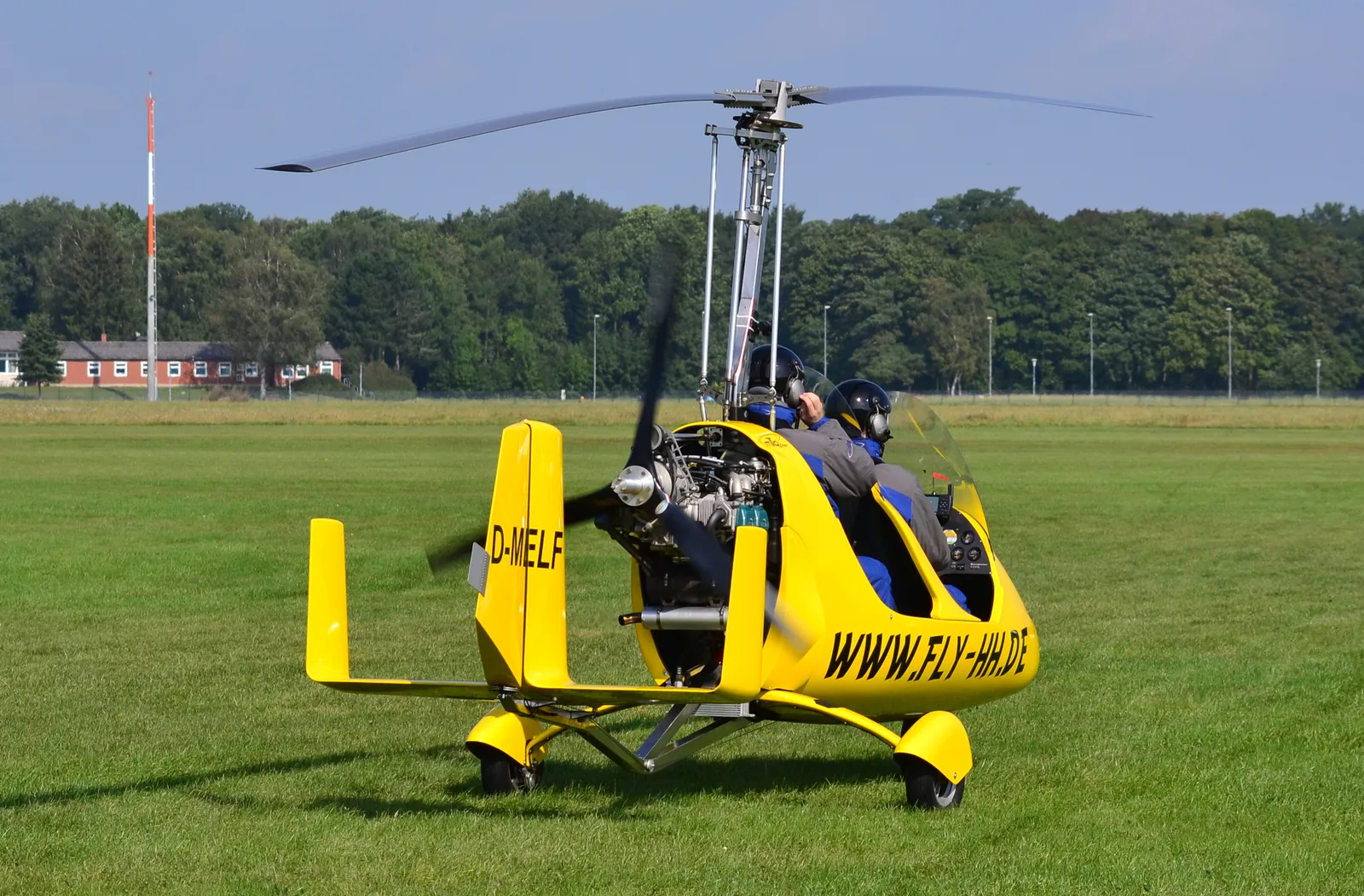
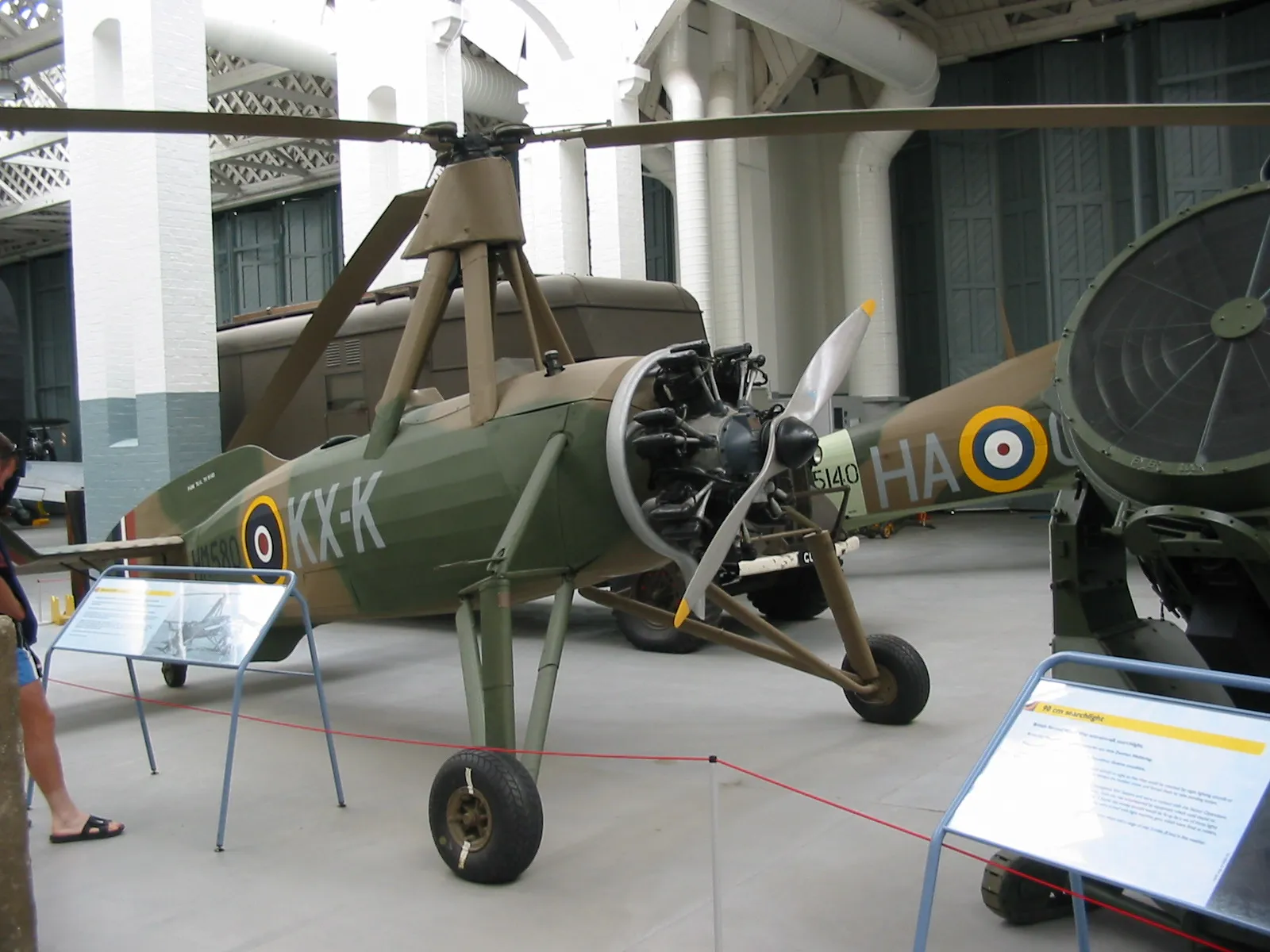
Fortify Rights documented a junta gyrocopter attack on a hospital in Salingyi Township on January 4, 2026, and later reporting described broader low-altitude bombing attacks on civilians and opposition forces.
Gyrocopters
- autogiro
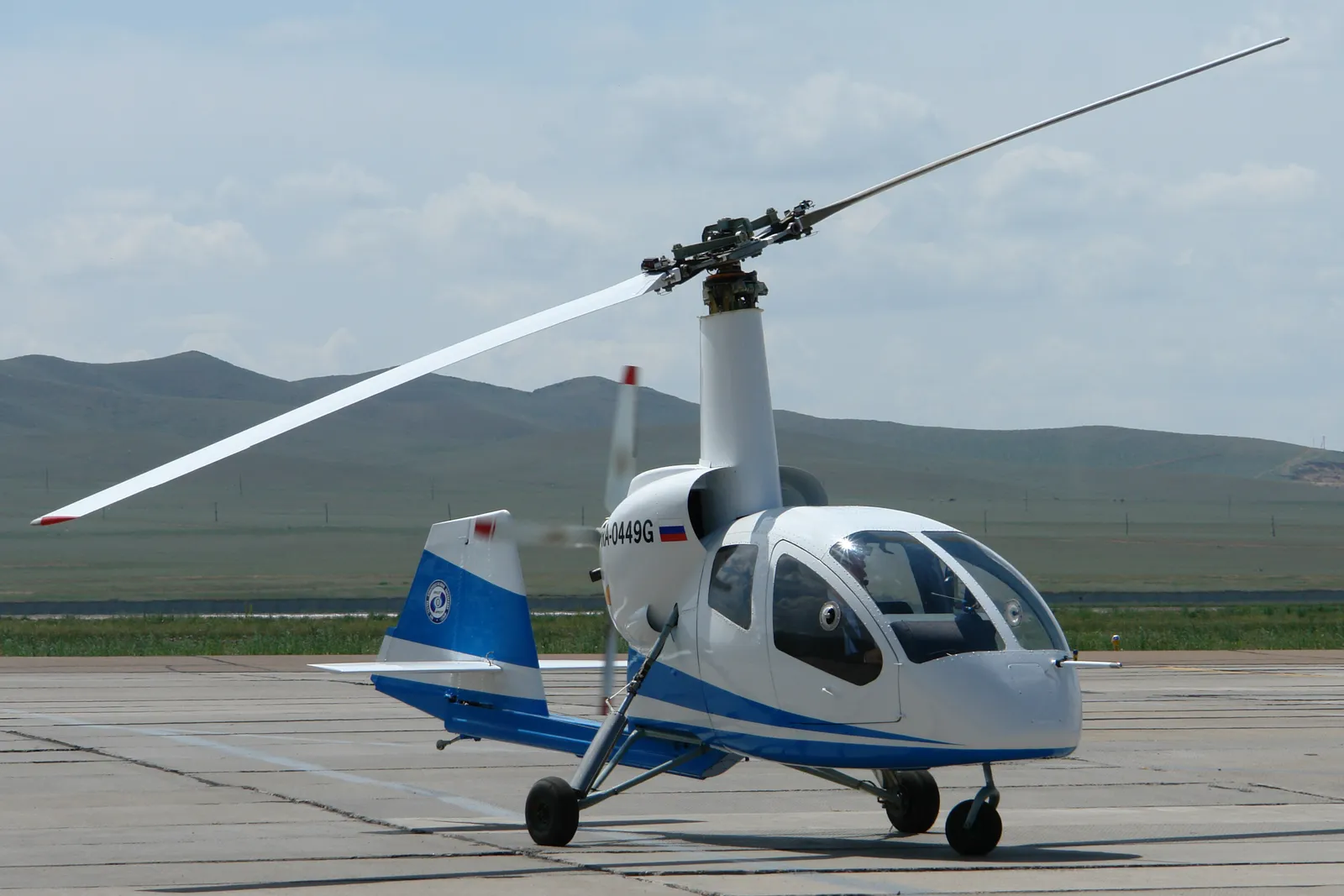
Gyrocopters are light rotorcraft that use an unpowered rotor in autorotation and a propeller for thrust, making them useful for short-field work and steep landings. In Myanmar's civil war, junta forces have used commercial gyrocopters to drop bombs in low-altitude attacks.
Role in Conflicts
Design Notes
Gyrocopters sit between airplanes and helicopters: the rotor is not engine-driven, so the aircraft cannot hover, but the autorotating rotor gives it short-field flexibility and steep descent capability.
| Feature | Source-backed detail | Why it matters |
|---|---|---|
| Rotor | Unpowered rotor in autorotation | Lift comes from airflow through the blades rather than direct rotor drive. |
| Thrust | Engine-driven propeller | The propeller provides forward motion while the rotor freewheels. |
| Handling | Cannot hover, but can land in tight spaces | Useful for short-field operations and observation work. |
| Development path | First flown in 1923; first U.S. flight in 1928; public U.S. demonstrations followed in 1931 | Shows how the design moved from experiment to limited commercial use. |
Profile / Specs
Profile
- Origin
- International
- Built by
- Various manufacturers
- Type
- Gyroplane / autogyro
- Service note
- 20th century-present
- Designer
- Juan de la Cierva
- Designed
- 1920s
- Unit cost
- Not publicly standardized; varies by model and equipment.
- Produced
- 1920s-present
- Number built
- Not publicly aggregated across the whole family
Specifications
- Crew
- 1-3
- Rotor
- Unpowered rotor in autorotation
- Propulsion
- Engine-driven propeller
- Flight behavior
- Cannot hover; can land steeply in tight spaces
- Takeoff
- Requires forward motion and a short takeoff roll
- Role
- Light aircraft for observation, sport flying, and niche utility use
Variants
- Autogyro
- Gyroplane
Carried Munitions
AP reporting described gyrocopters carrying mortar shells for hand-release attacks in Myanmar.
| Carried item | Item type | Carriage evidence |
|---|---|---|
![]() | Mortar shell | AP reported that Myanmar military gyrocopters could remain aloft while carrying 30 to 40 mortar shells for hand release, and Fortify Rights described the same attack pattern as a low-altitude bombing method. Sources: AP report on Myanmar gyrocopters |
Timeline
Gyrocopters Key Events
First autogiro flight
Smithsonian Magazine says Juan de la Cierva became the first person to fly an autogiro on January 9, 1923.
Sources: Smithsonian autogiro first flight article
First autogiro flight in the United States
Smithsonian Magazine says Harold Pitcairn's imported C.8W flew above the United States for the first time on December 18, 1928.
Sources: Smithsonian autogiro production article
White House lawn landing
Smithsonian Magazine reports that Pitcairn's first sales model landed on the White House lawn in 1931, marking one of the aircraft's best-known public demonstrations.
Sources: Smithsonian autogiro production article
Junta gyrocopter attack on a hospital
Fortify Rights documented a junta gyrocopter attack on a hospital in Salingyi Township, showing the platform in an improvised strike role during Myanmar's civil war.
Sources: Fortify Rights report on paramotors and gyrocopters
Myanmar Light-Aircraft Context
Fortify Rights and The Guardian describe gyrocopters and paramotors as parallel improvised aircraft in Myanmar's air campaign. Reading them together helps show how the junta diversified from conventional airpower into cheap low-altitude attack platforms.
| Platform | Reported role | Reader takeaway |
|---|---|---|
![]() | Used in low-altitude bombing attacks on civilians and opposition forces. | The family was repurposed as a strike aircraft in a civil-war setting. |
![]() | Used in similar improvised attacks, often at night, with bombs carried by two or three soldiers. | The broader campaign relied on more than one light-aircraft type. |
Related Weapon Systems