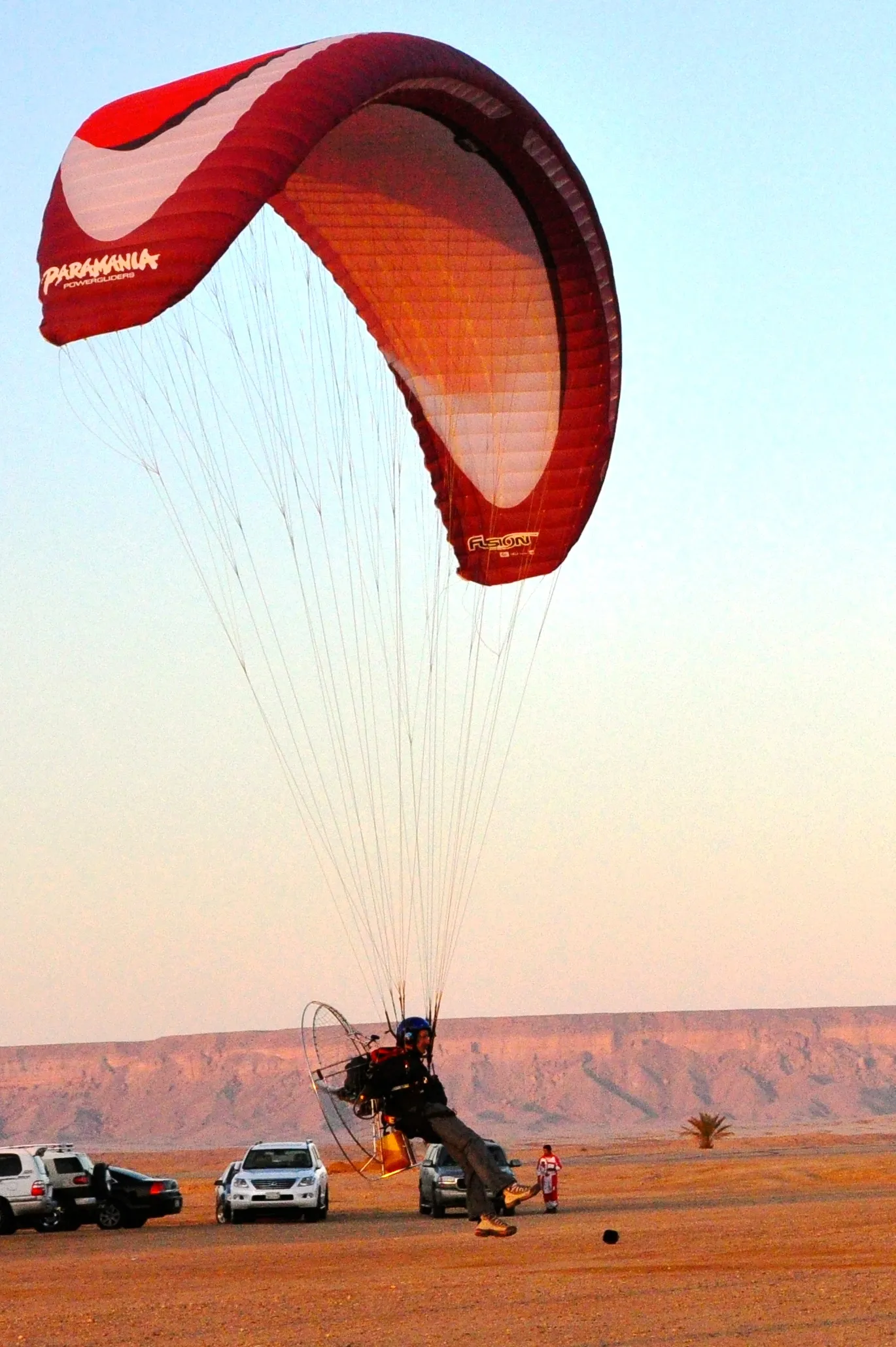

Used by Hamas fighters in the 2023 Israel-Hamas War during the October 7, 2023 assault, when airborne militants flew into southern Israel on powered paragliders.
Role detailsAircraft & UAVs
Powered paraglider/paramotor assault platform
Also known as
- paramotor
- powered paraglider
- motorized paraglider
- motorised paraglider
- PPG
Powered paragliders, or paramotors, are backpack ultralights that can launch from open ground without a runway. FAI traces the class to the early 1980s, while Hamas used them for the October 7, 2023 assault into southern Israel and Myanmar junta forces later used commercial paramotors for low-altitude bombing.
Role in Conflicts
- Side
- State Administration Council and allied forces

Fortify Rights and AP reported that Myanmar junta forces used commercial paramotors for low-altitude bombing in the 2021 Myanmar Civil War, including deadly attacks on civilian gatherings and opposition areas.
Conflict Employment Patterns
The same civilian aviation class appears in two very different conflict roles: cross-border assault insertion in southern Israel and low-altitude bombing in Myanmar.
| Conflict | Reported use | Source-backed detail |
|---|---|---|
| 2023 Israel-Hamas War | Airborne assault insertion | AP reported airborne militants entering southern Israel on paragliders during the October 7, 2023 assault. |
| 2021 Myanmar Civil War | Low-altitude bombing | Fortify Rights, AP, ACLED, and The Guardian reported junta use of commercial paramotors to drop bombs or mortar shells on civilian and opposition targets. |
Profile / Specs
Profile
- Origin
- International civilian aviation
- Built in
- Multiple countries
- Type
- Powered paraglider / paramotor
- Service note
- Early-1980s civilian ultralight aviation, weaponized in the 2023 Israel-Hamas War and 2021 Myanmar Civil War
- Designer
- Mike Byrne
- Designed
- 8 June 1980; commercial development spread from around 1986
- Unit cost
- Current Parajet U.S. listings run from $8,238 for Zenith Ultralight to $13,000 for Maverick 2 LE, with other Maverick 2 variants starting at $8,850, $9,178, $10,500, and $11,995.
- Produced
- 1980s-present
Specifications
- Frame
- Backpack frame, protective cage, and paraglider-style wing
- Engine
- Typical modern units use an 80-350 cc two-stroke engine
- Weight
- Most modern units weigh about 20-34 kg
- Fuel burn
- Around 2.5-4.2 litres per hour in current Parajet examples
- Launch
- Foot-launched from level ground without a runway; trike launch is also used
- Reported attack payload
- AP, citing the Myanmar light-aircraft campaign, reported such aircraft can stay aloft roughly three hours while carrying 30 to 40 mortar shells for hand release or crude release mechanisms.
Why Civilian Paramotors Became Weapons
Paramotors were designed as compact civilian ultralights, not battlefield aircraft. That made them attractive for irregular warfare because they are portable, can launch from open ground without a runway, and are built from commercially available components.
| Trait | Operational value |
|---|---|
| Backpack frame | Easy to transport and stage close to the front. |
| Foot launch | No runway is required for takeoff. |
| Commercial parts | Fortify Rights said Myanmar junta forces used commercial paramotors assembled from readily available components. |
| Low acoustic and visual profile | The Guardian described night attacks in which crews could switch engines off and glide low before dropping explosives. |
Variants
This entry covers civilian powered-paragliding configurations adapted or reported for conflict use rather than one factory weapon model.
| Variant | Configuration | Designation notes |
|---|---|---|
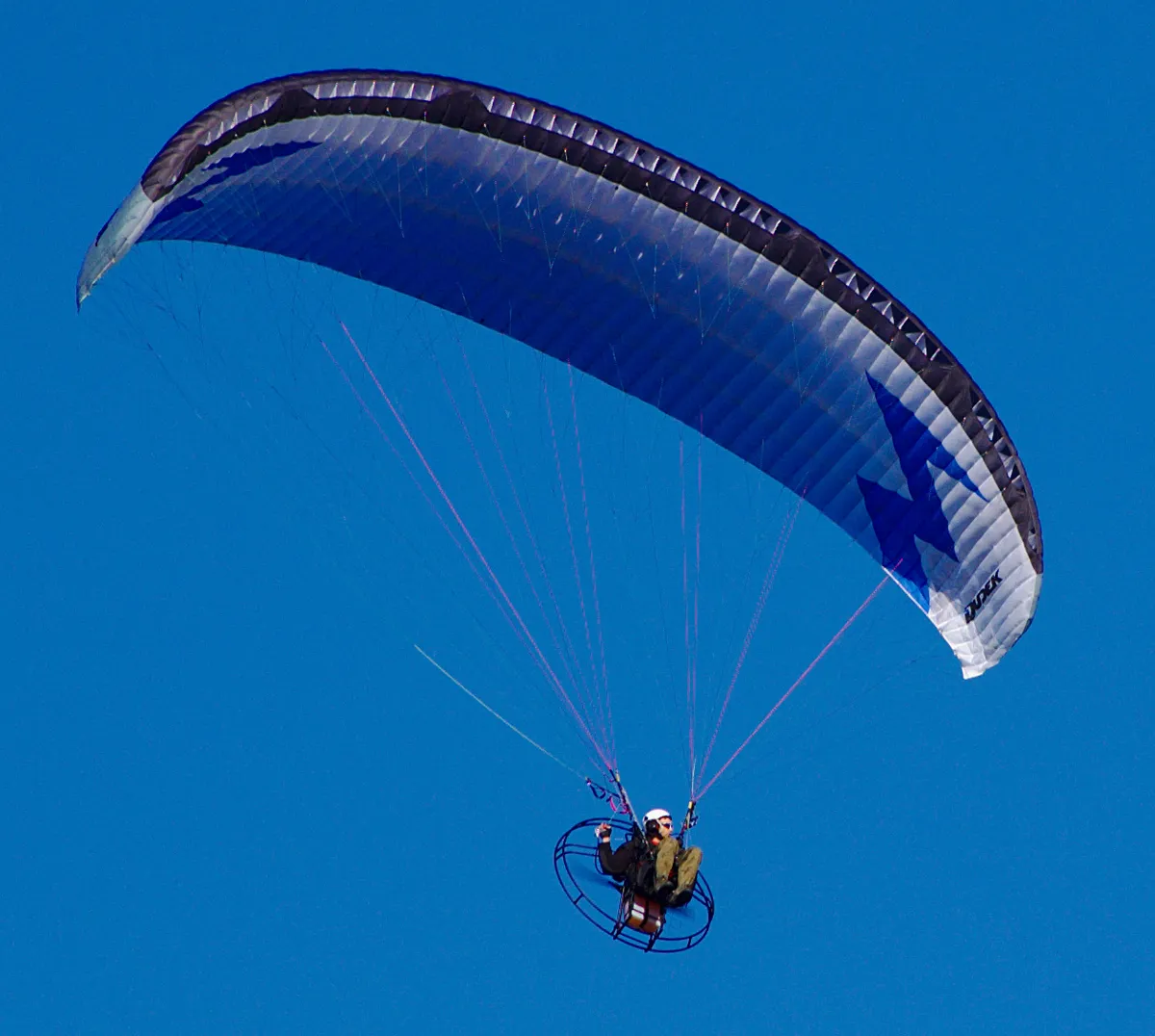
| Foot-launched backpack paramotor | Personal ultralight configuration | FAI describes the core class as a foot-launched paraglider with a motor, fuel tank, propeller, and cage worn by the pilot. Sources: FAI Paramotors |
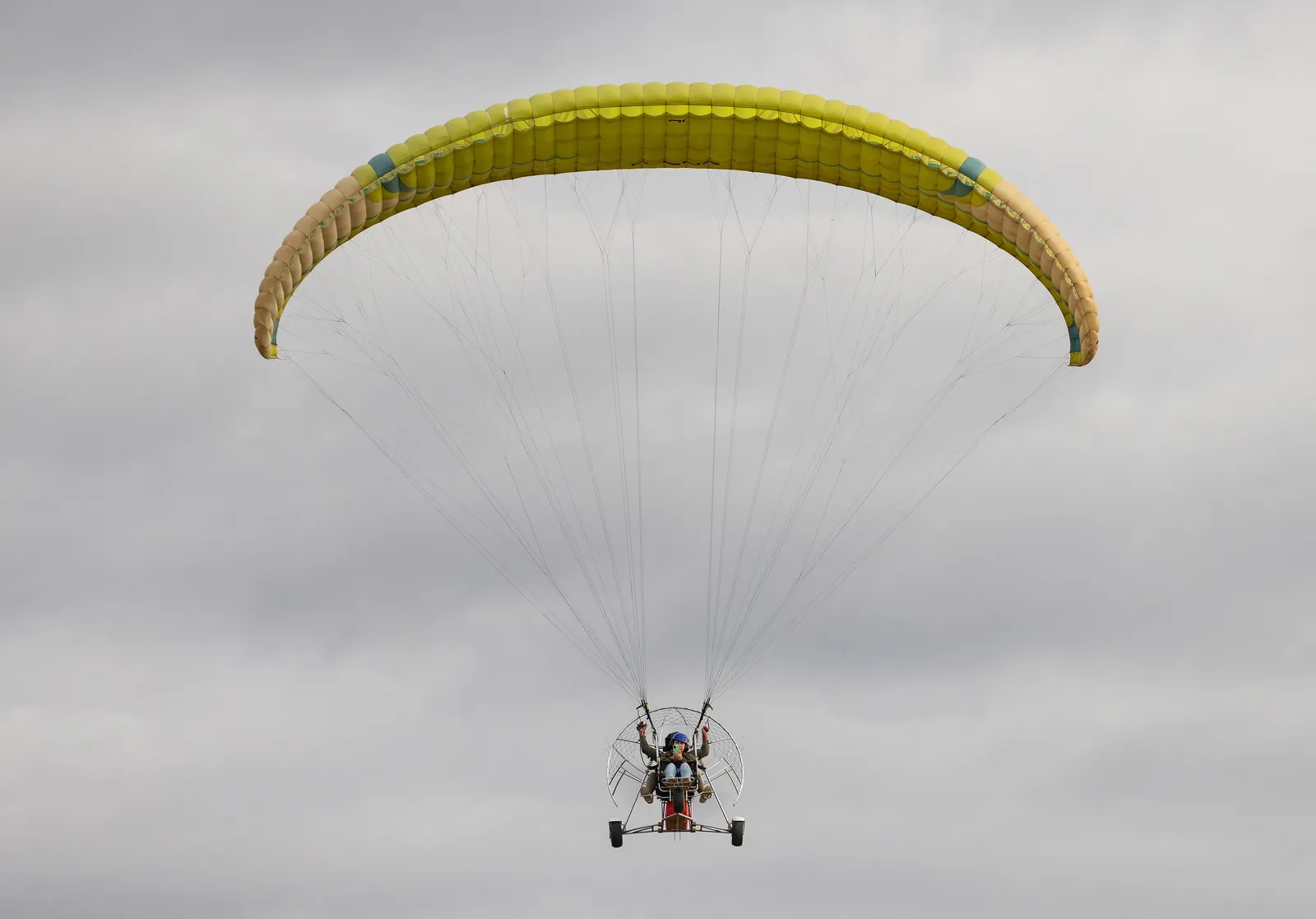
| Wheeled trike or quad paramotor | Small wheeled configuration | Fortify Rights described junta paramotors in Myanmar as commercial light aircraft that could include wheeled trike forms recovered after attacks. |
| Multi-seat attack configuration | Crewed bombing configuration | ACLED described Myanmar military paramotors as power-motored paragliders seating up to three soldiers and able to fire on or drop bombs on ground targets. Sources: ACLED war from the sky report |
Carried Munitions
Myanmar reporting identifies mortar shells as the hand-released payload for some paramotor and related light-aircraft attacks.
| Carried item | Item type | Carriage evidence |
|---|---|---|
 | Improvised airborne payload | AP reported that commercial paramotors and gyrocopters in Myanmar could carry 30 to 40 mortar shells, and Fortify Rights described paramotor crews dropping mortar-launcher shells by hand from above. Sources: AP Myanmar paramotor attacks, Fortify Rights Myanmar paramotors report |
Timeline
Powered paraglider/paramotor assault platform Key Events
First recorded paramotor flight
FAI says Mike Byrne flew the first powered paraglider on 8 June 1980, establishing the basic civilian paramotor concept.
Sources: FAI Paramotors
Commercial term spreads in France
FAI says the French term 'paramoteur' became common around 1986 as La Mouette began adapting engines to paraglider wings.
Sources: FAI Paramotors
Hamas uses paragliders in the October 7 attack
AP reported airborne militants flying into southern Israel on paragliders during Hamas's October 7, 2023 assault.
Sources: AP Hamas paragliders and Israel attack
Myanmar paramotor attacks begin
Fortify Rights said the Myanmar military junta's paramotor attacks began with a December 2024 strike in Mandalay Region.
Sources: Fortify Rights Myanmar paramotors report
Deadly candle-lighting attack reported
Fortify Rights documented a paramotor attack on a candle-lighting gathering in Myanmar that killed at least 24 civilians.
Sources: Fortify Rights Myanmar paramotors report
Media
Powered paraglider/paramotor assault platform Videos
Powered paraglider/paramotor assault platform Images
Related Weapon Systems


Related News
Sources
FAI ParamotorsPublisher: Fédération Aéronautique Internationale | Note: Supports powered paraglider background, the 8 June 1980 first flight, the 1986 spread of the French term 'paramoteur', and current specs such as backpack construction, typical weight, fuel burn, and foot-launch method. | Accessed: 2026-07-01Parajet US storePublisher: Parajet | Note: Supports current civilian paramotor retail examples, representative product families, price examples from $8,238 to $13,000, and engine/fuel-consumption figures used for unitCost and specs. | Accessed: 2026-06-27AP Hamas paragliders and Israel attackPublisher: Associated Press | Note: Supports 2023 Israel-Hamas War direct conflict-use: used by Hamas fighters in the 2023 Israel-Hamas War on October 7, 2023, when airborne militants flew into southern Israel on paragliders. | Accessed: 2026-07-01Fortify Rights Myanmar paramotors reportPublisher: Fortify Rights | Note: Supports 2021 Myanmar Civil War direct conflict-use: the Myanmar military junta used commercial paramotors for low-altitude bombing, beginning with a December 2024 attack, including a deadly October 2025 strike on civilians, and using mortar shells as hand-released bombs. | Accessed: 2026-07-01AP Myanmar paramotor attacksPublisher: Associated Press | Note: Supports 2021 Myanmar Civil War direct conflict-use: Myanmar military forces used commercial paramotors and gyrocopters to attack civilians and anti-government forces, with mortar shells dropped by hand or crude release mechanisms. | Accessed: 2026-07-01ACLED war from the sky reportPublisher: ACLED | Note: Supports 2021 Myanmar Civil War direct conflict-use: used by State Administration Council and allied forces in the 2021 Myanmar Civil War to drop bombs or fire on targets from paramotors. | Accessed: 2026-07-01Guardian Myanmar paramotor raidsPublisher: The Guardian | Note: Supports 2021 Myanmar Civil War direct conflict-use: used by State Administration Council and allied forces in the 2021 Myanmar Civil War to bomb villages, schools, hospitals, and religious sites from paramotors. | Accessed: 2026-07-01Wikimedia Aliparamotor photoPublisher: Wikimedia Commons | Note: Image licensing and provenance page for the Aliparamotor powered paraglider photo, listed on Wikimedia Commons. | Accessed: 2026-06-20Wikimedia Dudek paramotor photoPublisher: Wikimedia Commons | Note: Image licensing and provenance page for the Dudek Paragliders paramotor photo, listed on Wikimedia Commons. | Accessed: 2026-06-20Wikimedia two-seat paramotor photoPublisher: Wikimedia Commons | Note: Image licensing and provenance page for the two-seater paramotor in-flight photo, listed on Wikimedia Commons. | Accessed: 2026-06-20