Support Equipment

Global Positioning System III / GPS Block III

Also known as
  • GPS III
  • GPS Block III
  • GPS III space vehicle
  • GPS Block III space vehicle

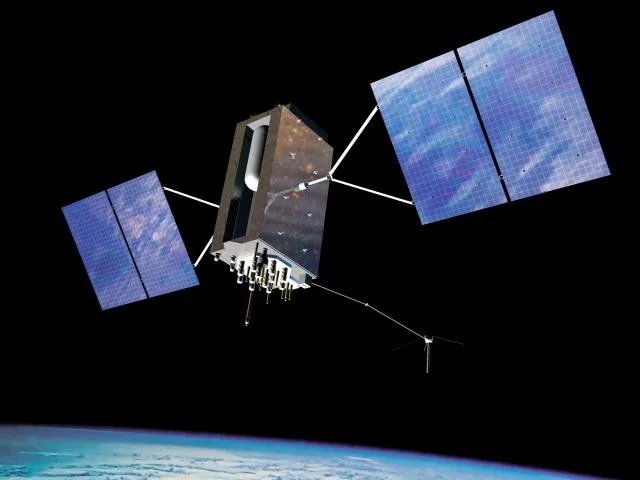
Global Positioning System III / GPS Block III is the Lockheed Martin-built U.S. military navigation-satellite block that modernized the GPS constellation with M-code, the L1C civil signal, higher accuracy, and stronger anti-jamming performance. The ten-space-vehicle series launched from 2018 through 2026, reached full operational acceptance in May 2026, and is treated here as a relationship-only precision position, navigation, and timing space system rather than a direct battlefield weapon.

Profile / Specs

Profile

Origin
United States
Type
Military navigation satellite family
Service note
2018-2026 launches
Designer
Lockheed Martin Space Systems Corporation
Number built
10 GPS III space vehicles (SV01-SV10), with SV10 delivered to orbit on April 21, 2026
Developed from
GPS Block IIF
Developed into
GPS III Follow-On (IIIF)

Specifications

System type
Military navigation satellite family
Orbit
Medium Earth orbit with a roughly 12-hour orbital period
Signals
M-code military signals and the L1C civil signal
Accuracy
Three times greater positional accuracy than prior GPS generations
Anti-jamming
Up to eight times improved resistance to jamming
Design life
15 years
Satellite mass
5,003 lb / 2,269 kg for GPS III satellites
Operational status
Ten GPS III satellites declared operational; SV10 operational acceptance occurred on May 12, 2026
Operational constellation
32 GPS satellites set healthy as of the June 2026 public GPS status presentation
Production block
SV01 through SV10, followed by GPS III Follow-On / GPS IIIF
Final vehicle demonstrations
SV10 carried an optical crosslink demonstration payload, a new space-qualified atomic clock, a Laser Retroreflector Array, and a first-use 3D-printed Omni antenna
Variants

GPS III Block III uses sequential space-vehicle designations for the ten-satellite production block, followed by the GPS III Follow-On / GPS IIIF line.

  • GPS III SV01-SV10
  • GPS III Space Vehicle 09 / SV09
  • GPS III Space Vehicle 10 / SV10
Launch Vehicles

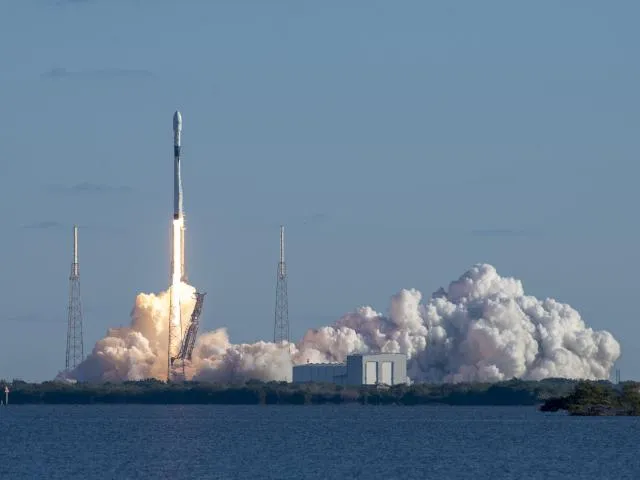
GPS III launch history includes Delta IV Medium+ (4,2) and Falcon 9 missions.

LauncherLauncher typeLaunch evidence
Delta IV Medium+ (4,2), Medium-lift orbital launch vehicle, Support EquipmentDelta IV Medium+ (4,2)Medium-lift orbital launch vehicle

ULA says a Delta IV Medium+ (4,2) rocket delivered the second GPS III spacecraft, Magellan, from Space Launch Complex-37 to medium Earth orbit.

Sources: Delta IV GPS III - United Launch Alliance (ULA) Rocket Launch

Falcon 9, Reusable two-stage orbital rocket, Support EquipmentFalcon 9Reusable two-stage orbital rocket

Space Systems Command records Falcon 9 launches for later GPS III missions including SV09 in January 2026 and SV10 in April 2026, the final GPS III satellite.

Sources: GPS III SV09 launch - Space Systems Command, U.S. Space Force delivers final GPS III to orbit

Program Context

GPS III is best read here as a space-enabled military support system. Official sources describe a ten-vehicle Block III production run that strengthens position, navigation, and timing services for military and civil users, but the sources reviewed for this entry do not identify a GPS III space vehicle as a direct weapon used in a named armed conflict.

Block boundary

SV01 through SV10 make up the GPS III block, with GPS III Follow-On / GPS IIIF identified as the next generation.

Military signal

GPS III is the first GPS satellite generation described by SSC as broadcasting M-code, the encrypted military GPS signal for more secure and jam-resistant service.

Operational closeout

SV10 completed the block in April 2026, and GPS public status material records operational acceptance on May 12, 2026.
Timeline

Global Positioning System III / GPS Block III Key Events

  1. First GPS III satellite launched

    The Air Force and mission partners launched the first GPS III satellite from Cape Canaveral on SpaceX's Falcon 9, opening the GPS III era.

    Sources: First GPS III satellite successfully launched

  2. First GPS III satellite set healthy and active

    GPS.gov's space-segment chronology records the first GPS III satellite as healthy and active to users in January 2020 after on-orbit checkout.

    Sources: Space Segment | GPS.gov

  3. Fifth GPS III satellite reaches healthy status

    GPS.gov records the fifth GPS III satellite as healthy and usable, showing the family moving deeper into operational service.

    Sources: Space Segment | GPS.gov

  4. GPS III SV09 launched

    Space Systems Command and Combat Forces Command launched the Lockheed Martin-built GPS III SV09 on a Falcon 9 from Cape Canaveral, adding another M-code satellite to the constellation.

    Sources: GPS III SV09 launch - Space Systems Command

  5. Final GPS III satellite delivered to orbit

    Space Systems Command delivered GPS III-8, Space Vehicle 10, to orbit on Falcon 9, completing the ten-satellite GPS III block and adding demonstrations for crosslinks, timing, laser ranging, and antenna technology.

    Sources: U.S. Space Force delivers final GPS III to orbit

  6. GPS III SV10 reaches operational acceptance

    The 2026 GPS Public Interface Control Working Group presentation records SV10 operational acceptance on May 12, 2026 and lists ten GPS III satellites declared operational.

    Sources: 2026 GPS Public ICWG Presentation

Media

Global Positioning System III / GPS Block III Images

Related Weapon Systems
Space-Based Infrared System / SBIRS, Missile-warning satellite constellation, Support EquipmentSupport EquipmentSpace-Based Infrared System / SBIRSMissile-warning satellite constellationSpace-Based Infrared System (SBIRS) is the U.S. Space Force space-based missile-warning constellation that replaced Defense Support Program coverage with geosynchronous satellites, highly elliptical orbit payloads, and consolidated ground processing. Lockheed Martin led the space and ground system, Northrop Grumman supplied infrared payloads, and official reporting says SBIRS provided early warning during Iran's April 2024 missile and drone attack on Israel.
AGM-158 JASSM, Air-launched standoff cruise missile, MunitionsMunitionsAGM-158 JASSMAir-launched standoff cruise missileThe AGM-158 Joint Air-to-Surface Standoff Missile is Lockheed Martin's low-observable, subsonic air-launched cruise missile family built to let bomber and fighter aircraft strike defended, high-value targets from standoff range. Its documented combat record includes baseline AGM-158A launches from B-1B bombers in the 2018 Syria missile strikes, AGM-158B use after the 2019 Baghdadi raid, reported Operation Rough Rider use against Houthi targets, and large-scale JASSM-family employment during the 2026 Iran War.
Lockheed Martin QuadStar (NGSRI), Developmental short-range air-defense interceptor, Air DefenseAir DefenseLockheed Martin QuadStar (NGSRI)Developmental short-range air-defense interceptorLockheed Martin's QuadStar is a U.S. Army Next-Generation Short-Range Interceptor candidate for M-SHORAD Increment 3, the program intended to replace the FIM-92 Stinger with a soldier-portable fire-and-forget short-range air-defense missile. Public sources place the missile in competitive development and flight testing, with Army budget documents and production-planning reporting tying NGSRI to SGT STOUT compatibility, dismounted air-defense use, and future procurement planning rather than confirmed combat fielding.

Sources