Support Equipment

iSpace

Also known as
  • Intelligent Space Awareness
  • iSpace system
  • Lockheed Martin iSpace

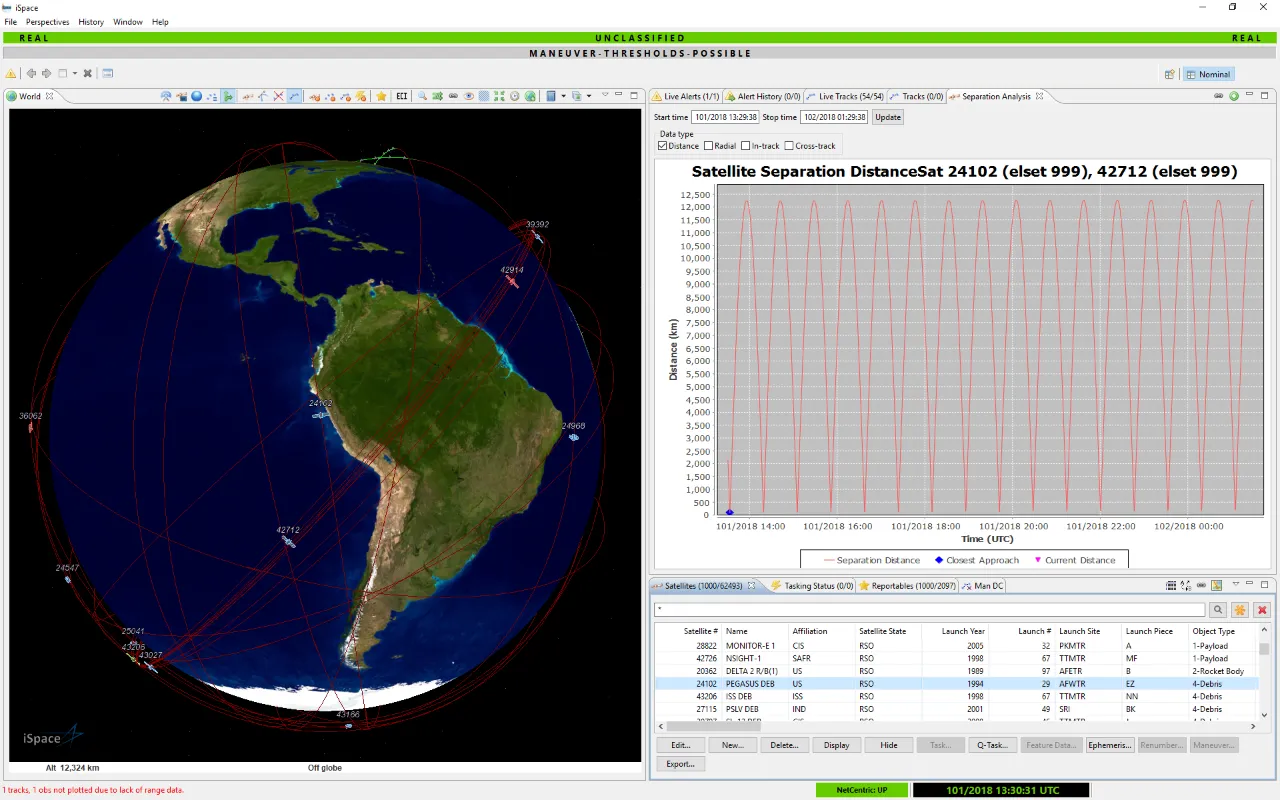
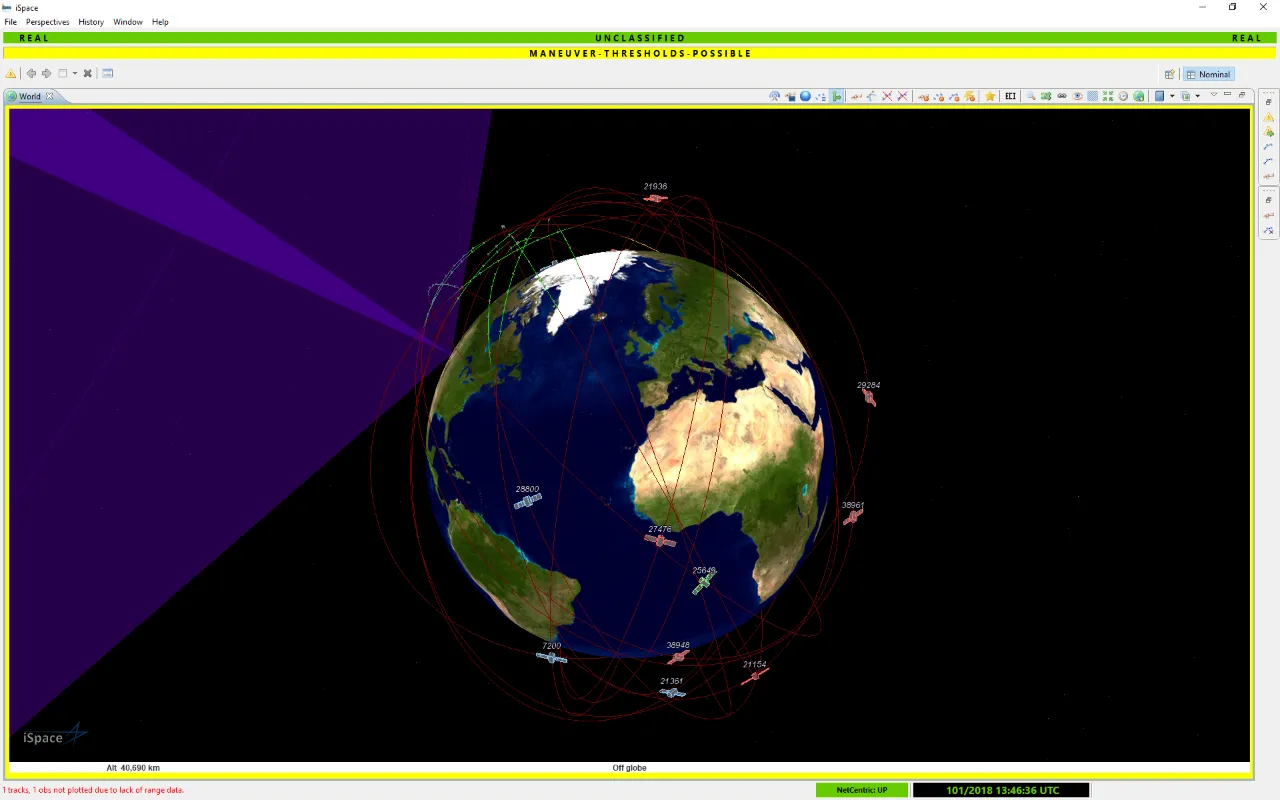
Lockheed Martin iSpace is a U.S. space situational-awareness and command-and-control software suite introduced in 2017. Lockheed Martin says it fuses government, commercial, and scientific sensor data to track objects, process space events, and support battle-management decisions, and public releases show deployments for the Commonwealth of Australia and the German Space Agency at DLR.

Documented Service Context

Lockheed Martin's public releases show iSpace moving from a space-protection product introduction to customer deployments in Australia and Germany, with one related Space Fence program link also documented.

YearDocumented contextSource
2017Lockheed Martin debuted iSpace to protect space assets and support space situational awareness, sensor data processing, command and control, and battle management.Lockheed Martin Debuts System to Protect Space Assets
2018The Commonwealth of Australia chose iSpace as a training and demonstration mission system for the Australian Space Operations Center.Lockheed Martin Provides Commonwealth of Australia with Space Situational Awareness System
2021The German Space Agency at DLR selected iSpace for space situational awareness, real-time object tracking, event processing, and sensor tasking.German Space Agency Selects Lockheed Martin iSpace System for Space Situational Awareness
2021Lockheed Martin said iSpace expertise was leveraged when it developed the Space Fence space situational awareness mission subsystem.German Space Agency Selects Lockheed Martin iSpace System for Space Situational Awareness
Profile / Specs

Profile

Origin
United States
Type
Space situational awareness and command-and-control software suite
Service note
2017-present
Designed
2017
Unit cost
Not publicly documented
Produced
2017-present
Number built
Not publicly documented

Specifications

Core functions
Real-time space object tracking, space event processing, and sensor tasking
Sensor inputs
Government, commercial, and scientific sensors from multiple networks
Event coverage
Collisions, maneuvers, break-ups, launches, and co-orbital threats
Architecture
Net-centric, open, and scalable for modeling, simulation, experimentation, or operational use
Deployment context
Space situational awareness and command-and-control mission planning
Timeline

iSpace Key Events

  1. Lockheed Martin debuts iSpace

    Lockheed Martin introduced iSpace as a system to protect space assets and described it as a space situational-awareness mission tool for tracking objects and processing sensor data.

    Sources: Lockheed Martin Debuts System to Protect Space Assets

  2. Commonwealth of Australia selects iSpace

    Lockheed Martin said the Commonwealth of Australia chose iSpace as a training and demonstration mission system for the Australian Space Operations Center.

    Sources: Lockheed Martin Provides Commonwealth of Australia with Space Situational Awareness System

  3. German Space Agency selects iSpace

    Lockheed Martin announced that the German Space Agency selected iSpace for space situational awareness, describing it as a system that tracks objects, processes events, and supports sensor tasking.

    Sources: German Space Agency Selects Lockheed Martin iSpace System for Space Situational Awareness

Media
Related Weapon Systems
Space-Based Infrared System / SBIRS, Missile-warning satellite constellation, Support EquipmentSupport EquipmentSpace-Based Infrared System / SBIRSMissile-warning satellite constellationSpace-Based Infrared System (SBIRS) is the U.S. Space Force space-based missile-warning constellation that replaced Defense Support Program coverage with geosynchronous satellites, highly elliptical orbit payloads, and consolidated ground processing. Lockheed Martin led the space and ground system, Northrop Grumman supplied infrared payloads, and official reporting says SBIRS provided early warning during Iran's April 2024 missile and drone attack on Israel.
CMS 330, Naval combat management system, Naval SystemsNaval SystemsCMS 330Naval combat management systemCMS 330 is a Canadian naval combat management system from Lockheed Martin Canada, originally developed for the Royal Canadian Navy's Halifax-class frigates and later exported or adapted across allied surface fleets. Public Canadian sources describe it as the central software layer that integrates ship sensors, weapons, communications, and information sources for situational awareness and combat-system coordination, with current users or planned integrations including Canada, New Zealand, Chile, and Germany.

Sources