- Side
- Israel

U.S.-operated SBIRS provided early warning during Iran's April 13, 2024 missile and drone attack on Israel, helping U.S., Israeli, and allied forces track and intercept inbound threats.
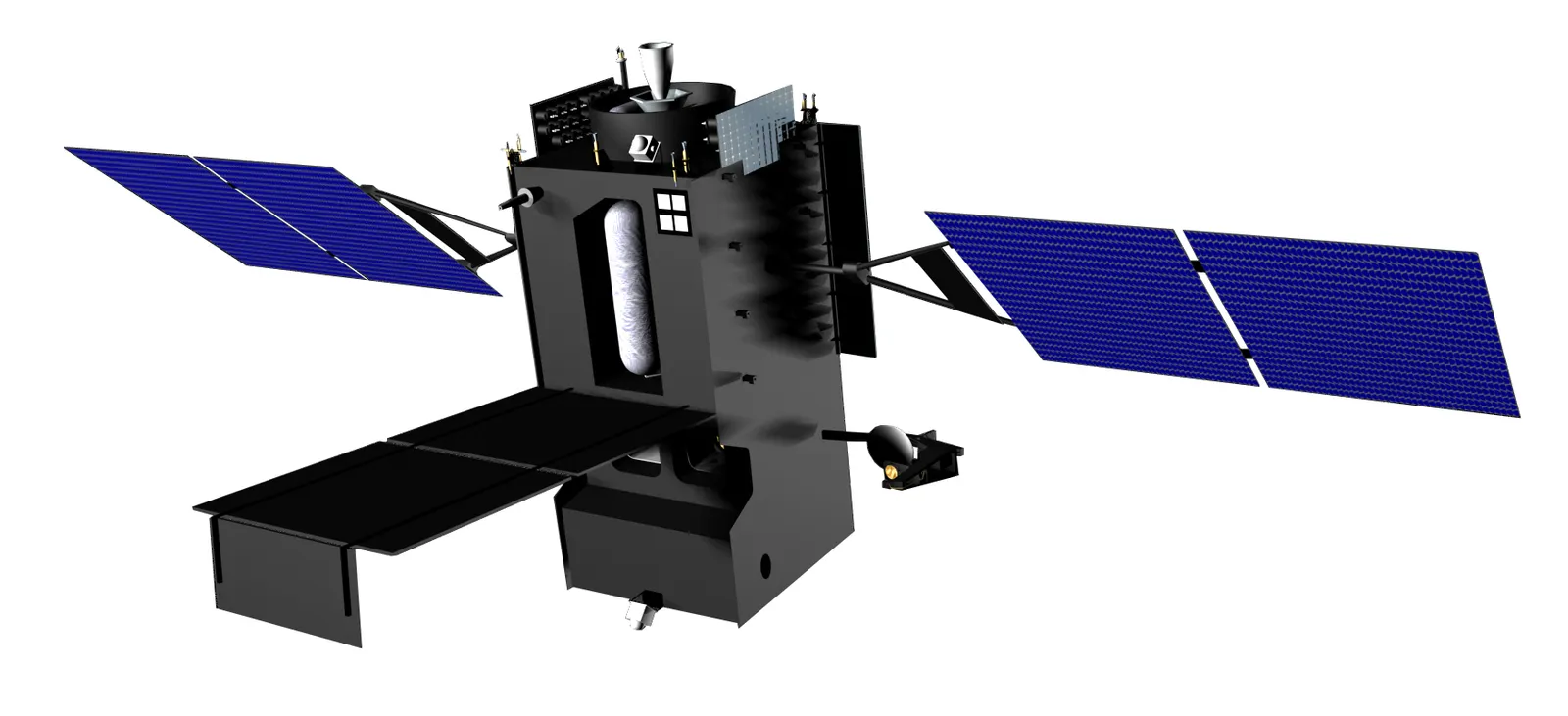
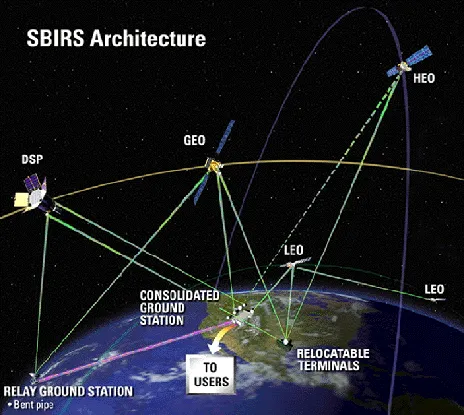
Space-Based Infrared System (SBIRS) is the U.S. Space Force space-based missile-warning constellation that replaced Defense Support Program coverage with geosynchronous satellites, highly elliptical orbit payloads, and consolidated ground processing. Lockheed Martin led the space and ground system, Northrop Grumman supplied infrared payloads, and official reporting says SBIRS provided early warning during Iran's April 2024 missile and drone attack on Israel.
U.S.-operated SBIRS provided early warning during Iran's April 13, 2024 missile and drone attack on Israel, helping U.S., Israeli, and allied forces track and intercept inbound threats.
Public sources describe SBIRS High as the operational GEO and HEO warning architecture after SBIRS Low was transferred to the Missile Defense Agency and renamed the Space Tracking and Surveillance System.
| Variant | Configuration | Designation notes |
|---|---|---|
| SBIRS GEO | Geosynchronous warning satellites | The Space Force fact sheet lists six GEO satellite launches from May 2011 through August 2022 and describes GEO satellites as part of the space segment managed through the SBIRS Mission Control Station. Sources: Space Based Infrared System |
| SBIRS HEO | Hosted infrared payloads in highly elliptical orbit | Space Systems Command reported four HEO payloads carried on host satellites for polar-region tracking, with the first HEO payload delivered to its host in 2004. Sources: SBIRS GEO-6 Launch Closes Out Two Decades of Progress in Missile Warning and Tracking |
| SBIRS GEO-5 and GEO-6 | Modernized final GEO spacecraft | The final two GEO satellites used Lockheed Martin's modernized LM 2100 spacecraft bus, while Space Systems Command described GEO-6 as the sixth and final planned SBIRS GEO satellite. Sources: SBIRS GEO-5 Space Vehicle Enters Critical Thermal Vacuum Testing, SBIRS GEO-6 Launch Closes Out Two Decades of Progress in Missile Warning and Tracking |
| SBIRS Low / STSS | Transferred midcourse-tracking branch | Space Systems Command says the SBIRS Low branch was transferred to the Missile Defense Agency in 2001 and renamed the Space Tracking and Surveillance System. Sources: SBIRS GEO-6 Launch Closes Out Two Decades of Progress in Missile Warning and Tracking |
SBIRS is best read as a strategic warning layer inside a larger missile-defense and overhead persistent infrared architecture.
| Compatible item | Item type | Compatibility evidence |
|---|---|---|
 | Battle management and communications network | Lockheed Martin describes C2BMC as fusing sensor and threat data across the missile-defense architecture, including space-based warning sources such as SBIRS. Sources: C2BMC future upgrades |
 | Successor missile-warning satellite family | Space Systems Command describes Next Gen OPIR as the follow-on missile-warning constellation, while FORGE is intended to process data from SBIRS and the next-generation satellites. Sources: SBIRS GEO-6 Launch Closes Out Two Decades of Progress in Missile Warning and Tracking |
Space Systems Command says the first SBIRS HEO payload was delivered to its host in 2004, extending warning coverage through highly elliptical orbit payloads.
Sources: SBIRS GEO-6 Launch Closes Out Two Decades of Progress in Missile Warning and Tracking
The Space Force fact sheet lists May 7, 2011 as the first SBIRS geosynchronous satellite launch.
Sources: Space Based Infrared System
Air Force Space Command accepted GEO-4 for operations, with the satellite sending data to the Mission Control Station at Buckley.
Sources: SBIRS GEO-4 Successfully Achieves Operational Acceptance
The Space Force reported that GEO-5 and GEO-6 were based on Lockheed Martin's modernized LM 2100 spacecraft bus as GEO-5 entered thermal-vacuum testing.
Sources: SBIRS GEO-5 Space Vehicle Enters Critical Thermal Vacuum Testing
Lockheed Martin reported that the first modernized SBIRS missile-warning satellite was under U.S. Space Force control after launch and early on-orbit checkout.
Sources: Lockheed Martin's First Modernized SBIRS Missile Warning Satellite Now Under U.S. Space Force Control
Lockheed Martin announced the sixth and final SBIRS missile-warning satellite had launched and was under Space Force control.
Sources: Lockheed Martin's Sixth and Final SBIRS Missile Warning Satellite Successfully Launched, Now Under U.S. Space Force Control
Space Systems Command said SBIRS Survivable Endurable Evolution replaced the legacy Mobile Ground System with a transportable ground station for SBIRS and nuclear-detection data processing.
Sources: USSF reinforces resilience of National missile warning architecture through SBIRS S2E2