Support Equipment

Mobile User Objective System (MUOS)

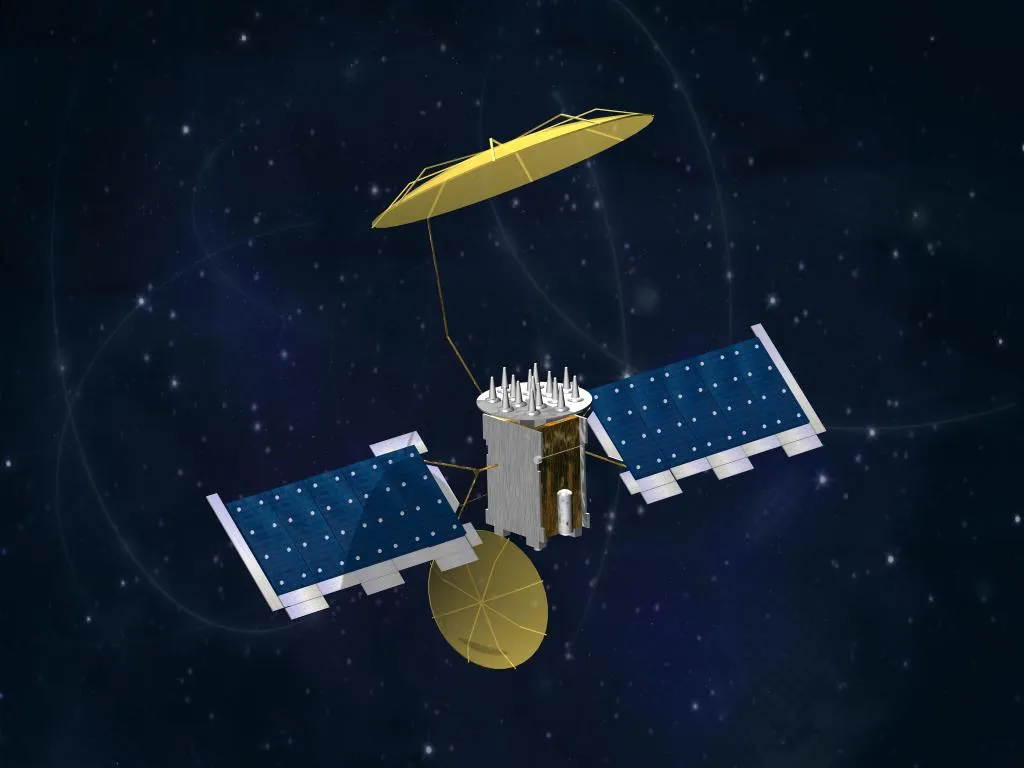
MUOS is a U.S. narrowband military satellite communications system built by Lockheed Martin Space for mobile forces. Its five-satellite geosynchronous constellation uses a UHF WCDMA waveform to deliver beyond-line-of-sight voice, data, and mission traffic while preserving interoperability with legacy UHF terminals.

Profile

Origin
United States
Built by
Lockheed Martin Space
Type
Narrowband military satellite communications system
Service note
2010s-present
Designer
Lockheed Martin Space Systems
Designed
2004
Unit cost
Initial contract: $2.1 billion; total potential value for five satellites: $3.26 billion
Produced
2004-2016 initial constellation
Number built
5 satellites
Variants
MUOS-1, MUOS-2, MUOS-3, MUOS-4, MUOS-5
Developed from
Ultra High Frequency Follow-On (UFO) SATCOM system

Also Known As

  • MUOS
  • Mobile User Objective System
communicationssatcomspaceuhfwcdma

Specifications

System type
Narrowband military satellite communications system
Constellation
Five satellites total: four operational plus one on-orbit spare
Band
UHF
Waveform
WCDMA (3G-derived)
Capacity
About 10x the communications capacity of the legacy UHF SATCOM system
Connectivity
Voice, data, video, and mission traffic beyond line of sight
Compatibility
Interoperates with legacy UHF terminals

Service And Conflict Use

Service History

In service
Declared ready for full operational use in 2019, with a later service-life extension program intended to keep MUOS available into the 2030s.
Used by
United States Department of Defense, Canada Department of National Defence
Wars
Various Conflicts

Conflict Usage

Side
🏳️Unspecified

Exact model: Mobile User Objective System (MUOS) satellite communications system. It supports military communications, but I found no public source tying the system itself to a specific conflict use as a weapon system.

Timeline

Mobile User Objective System (MUOS) Key Events

  1. Lockheed Martin-led MUOS team announced

    Lockheed Martin announced a team to build MUOS for the U.S. Navy, describing it as an advanced narrowband tactical satellite communications system based on 3G-style cellular technology.

    Sources: Lockheed Martin MUOS contract announcement

  2. MUOS-1 launched

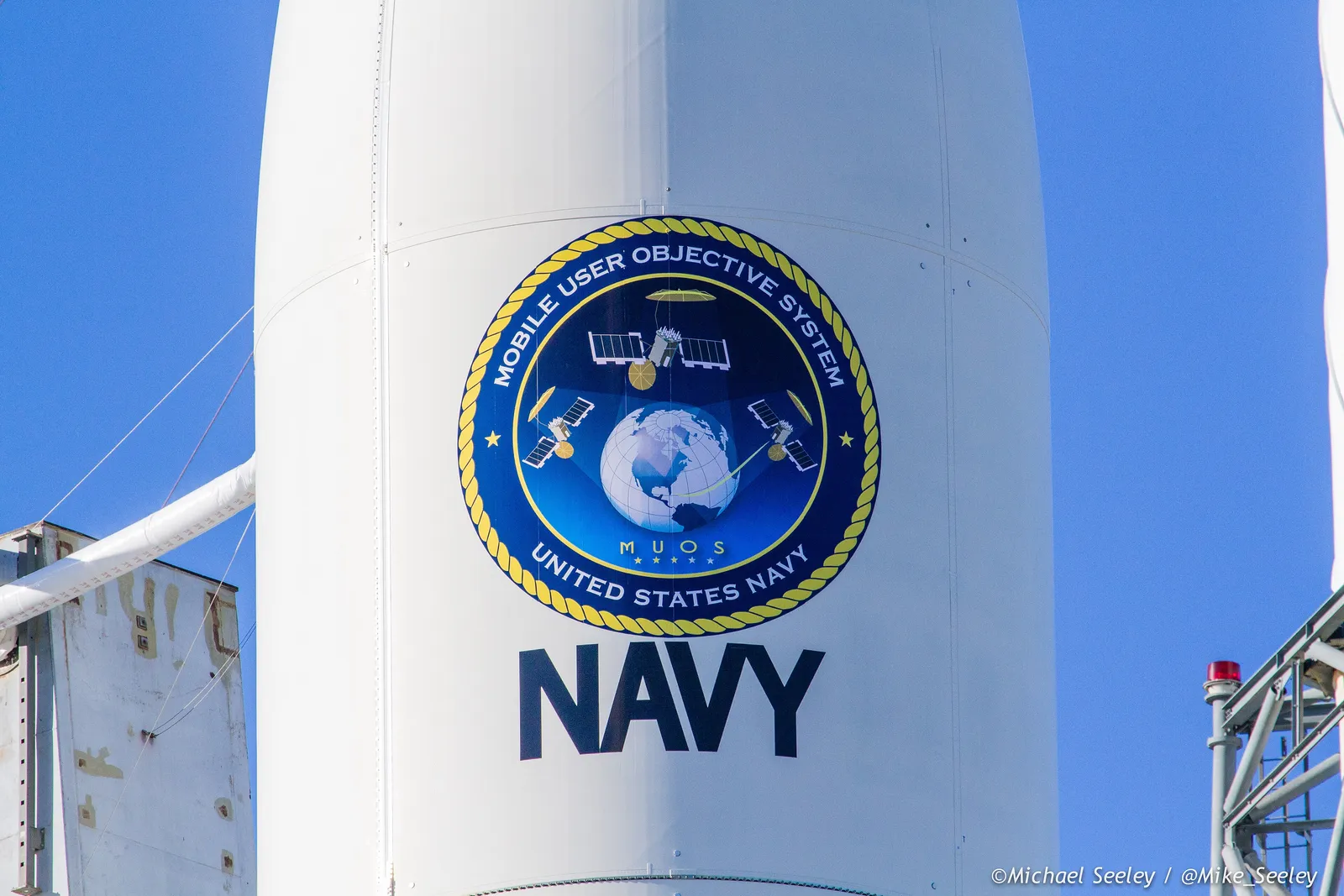
    The U.S. Space Force's 45th Space Wing supported the Atlas V launch of MUOS-1 from Cape Canaveral, beginning on-orbit deployment of the constellation.

    Sources: 45th Space Wing MUOS-1 launch

  3. Navy declared MUOS ready for full operational use

    Navy reporting on the system's testing and evaluation said MUOS had completed the key test phase and was ready for unrestricted operational use.

    Sources: Navy MUOS full operational use

  4. Canada successfully accessed MUOS

    Space Systems Command reported that Canada became the first partner nation to successfully access the MUOS narrowband global SATCOM system.

    Sources: MUOS Canada demonstration

Mobile User Objective System (MUOS) Images

Related Weapon Systems

Global Positioning System III / GPS Block III, Military navigation satellite family, Support EquipmentSupport EquipmentGlobal Positioning System III / GPS Block IIIMilitary navigation satellite familyGlobal Positioning System III / GPS Block III is the Lockheed Martin-built U.S. military navigation-satellite family that modernizes the GPS constellation with M-code, the L1C civil signal, improved accuracy, and stronger anti-jamming performance. It is the generation launched from 2018 onward before the GPS III Follow-On line, and it serves as a precision position, navigation, and timing space vehicle rather than a battlefield weapon in the catalog sense.
iSpace, Space situational awareness and command-and-control software suite, Support EquipmentSupport EquipmentiSpaceSpace situational awareness and command-and-control software suiteLockheed Martin iSpace is a U.S. space situational-awareness software suite for managing assets in orbit. Lockheed Martin says the system fuses optical, radar, infrared, and radio sensor data from government, commercial, and scientific networks to track objects, process space events, and support command-and-control and battle-management decisions for defense, international, commercial, and civil users. The German Space Agency selected iSpace for space situational awareness in 2021.
Next Generation Overhead Persistent Infrared / Next Gen OPIR, Missile-warning satellite family, Support EquipmentSupport EquipmentNext Generation Overhead Persistent Infrared / Next Gen OPIRMissile-warning satellite familyNext Generation Overhead Persistent Infrared (Next Gen OPIR) is the U.S. Space Force's next-generation missile-warning satellite family. Lockheed Martin is building the GEO component on an LM 2100 Combat bus, Northrop Grumman is building the polar satellites, and the program is intended to replace SBIRS with more resilient infrared sensing for ballistic, hypersonic, and counter-space threats.

Sources