Support Equipment

AMOS communications satellites

Also known as
  • AMOS satellites
  • AMOS communication satellites
  • AMOS-3
  • AMOS-4
  • AMOS-6
  • AMOS-17
  • AMOS-4000
  • AMOS 4000
  • AMOS-60
  • Affordable Modular Optimized Satellite

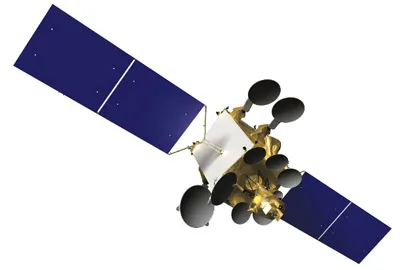
The AMOS communications satellites are a Spacecom-operated Israeli geostationary communications family built mainly around Israel Aerospace Industries AMOS bus designs, with AMOS-17 built by Boeing on the 702 platform. IAI describes AMOS-4000 as a modular 3-6 ton GEO platform for flexible communications payloads, and its Operation Rising Lion account says AMOS satellites maintained essential Israeli operational communications during the 2025 Israel-Iran Conflict.

Role in Conflicts

Profile / Specs

Profile

Origin
Israel
Type
Geostationary communications satellite family
Service note
1990s-present Israeli commercial and government communications-satellite family
Designer
Israel Aerospace Industries space division for the AMOS bus family; Boeing Satellite Systems for AMOS-17
Designed
AMOS family introduced with AMOS-1 in the 1990s; AMOS-4000 product line public as a modular modern GEO platform
Unit cost
Public contract values vary by spacecraft; AMOS-3 was reported at about $170 million, AMOS-4 at about $365 million, AMOS-6 at about $195 million, and AMOS-17 at about $161 million
Produced
1990s-present family, with AMOS-17 launched in 2019 and AMOS-4000 offered as a current IAI communications-satellite platform
Number built
Multiple AMOS spacecraft launched or built, including AMOS-3, AMOS-4, AMOS-6, and Boeing-built AMOS-17

Specifications

System type
Geostationary communications-satellite family and bus line
Operator
Spacecom operates AMOS satellite services; conflict-use statement comes from IAI's description of Israeli operational support
Orbit class
Geostationary Earth orbit
Documented orbital slots
SatBeams lists AMOS-3 at 4 degrees west, AMOS-4 at 65 degrees east, and AMOS-17 at 17 degrees east
Known buses
Public references identify IAI AMOS Bus and AMOS-4000-generation spacecraft in the family, while AMOS-17 uses Boeing's 702/BSS-702MP platform
AMOS-4000 mass class
IAI advertises a modular 3-6 ton GEO satellite system
AMOS-4000 lifetime
At least 15 years in orbit according to IAI
AMOS-4000 payload scale
Up to 9 kW payload power, about 1.2-ton payload mass, and up to 10 steerable antennas including four large deployable reflectors
Propulsion options
Classic, hybrid, or electric propulsion options on the AMOS-4000 line
Communications bands
Public AMOS variants include Ku-band and Ka-band payloads; AMOS-17 adds C-band coverage
Launch identifiers
AMOS-3 is cataloged as NORAD 32794 / COSPAR 2008-022A, AMOS-4 as NORAD 39237 / COSPAR 2013-045A, and AMOS-17 as NORAD 44479 / COSPAR 2019-050A
AMOS-17 mass
About 6,500 kg in technical reference reporting
Operational support role
Continuous essential communications for operational support across all theaters during Operation Rising Lion, according to IAI
Space Communications Role

AMOS is a communications layer rather than a kinetic weapon. Its military relevance in this catalog comes from the directly sourced Operation Rising Lion statement: IAI says AMOS satellites kept essential communications available for Israeli operational support while other IAI space, radar, aircraft, and air-defense systems contributed to the campaign.

Operational support

Continuous essential communications across theaters during Operation Rising Lion.

Source: IAI Operation Rising Lion systems.

Commercial backbone

Spacecom operates AMOS services at geostationary orbital slots, while IAI and Boeing sources describe the spacecraft as communications satellites for broadcast, internet, data, and government-style connectivity.

Sources: IAI AMOS-4000; Boeing AMOS-17 release.

Family boundary

The AMOS entry groups the named satellite family because the conflict source does not identify which individual AMOS spacecraft carried the operational traffic.

Variant details should be read as family context, not proof that every AMOS satellite was used in the conflict.

Variants

The AMOS name covers several geostationary communications spacecraft and the IAI AMOS-4000 bus line rather than a single military payload. The catalog groups them because the conflict source identifies AMOS communications satellites as an operational support layer.

VariantConfigurationDesignation notes
AMOS-3AMOS-60 / 4 degrees west Ku/Ka-band communications satellite

Gunter's Space Page identifies AMOS-3 as an IAI-built Spacecom satellite intended to replace AMOS-1; SatBeams lists it as AMOS-3 (AMOS-60), launched in 2008 for the 4 degrees west slot with Ku- and Ka-band transponders.

Sources: Gunter AMOS 3, SatBeams AMOS-3 details

AMOS-465 degrees east AMOS-4000-generation satellite

Spacecom and Gunter sources describe AMOS-4 as an IAI-built satellite using the AMOS-4000/AMOS-HP generation, with Ku- and Ka-band service aimed at Asia, Russia, the Middle East, and Europe.

Sources: Spacecom AMOS-4 launch release, Gunter AMOS 4, SatBeams AMOS-4 details

AMOS-6Lost IAI-built replacement satellite

Gunter's Space Page describes AMOS-6 as an IAI-built Spacecom spacecraft intended for Ku-, Ka-, and S-band communications before it was destroyed during the Falcon 9 pad accident in 2016.

Sources: Gunter AMOS 6, SatBeams AMOS-6 details

AMOS-17Boeing-built high-throughput satellite

Boeing and Spacecom described AMOS-17 as a Boeing 702-based, multi-band high-throughput satellite for Africa, Europe, and the Middle East.

Sources: Boeing AMOS-17 release, Gunter AMOS 17, SatBeams AMOS-17 details

AMOS-4000IAI modular GEO communications-satellite platform

IAI presents AMOS-4000 as a 3-6 ton GEO satellite system with classic, hybrid, or electric propulsion, flexible payload options, and at least 15 years of on-orbit life.

Sources: IAI AMOS-4000

Launch Vehicle

The AMOS family used several launch vehicles; the linked catalog record covers the Falcon 9 launch vehicle documented for AMOS-17.

LauncherLauncher typeLaunch evidence
Falcon 9, Reusable two-stage orbital rocket, Support EquipmentFalcon 9AMOS-17 launch vehicle

SatBeams lists AMOS-17 as a Spacecom satellite launched on a Falcon 9 from Cape Canaveral on August 6, 2019; Boeing separately announced the same-day Cape Canaveral launch of the Boeing-built AMOS-17 satellite.

Sources: SatBeams AMOS-17 details, Boeing AMOS-17 release

Timeline

AMOS communications satellites Key Events

  1. AMOS-3 contract announced

    Spacecom contracted Israel Aircraft Industries to build AMOS-3 as a higher-capacity successor to AMOS-1 at the 4 degrees west orbital slot.

    Sources: Gunter AMOS 3

  2. AMOS-4 launched

    Spacecom announced the successful launch of IAI-built AMOS-4, calling it the largest and most sophisticated communications satellite built in Israel to that date.

    Sources: Spacecom AMOS-4 launch release

  3. AMOS-6 lost before launch

    AMOS-6 was destroyed during a Falcon 9 static-fire pad accident before its planned launch, leaving Spacecom to lease replacement interim capacity.

    Sources: Gunter AMOS 6

  4. AMOS-17 launched

    Boeing announced that its 702-platform AMOS-17 satellite launched from Cape Canaveral to provide communications services across Africa, Europe, and the Middle East.

    Sources: Boeing AMOS-17 release

  5. IAI cites AMOS communications support in Operation Rising Lion

    After the June 2025 Israel-Iran war, IAI said AMOS communications satellites provided continuous essential communications for operational support during Operation Rising Lion.

    Sources: IAI Operation Rising Lion systems

Media

AMOS communications satellites Videos

Related Weapon Systems
Boeing 707 Re'em, Aerial refueling tanker and transport aircraft, Support EquipmentSupport EquipmentBoeing 707 Re'emAerial refueling tanker and transport aircraftThe Boeing 707 Re'em is Israel's locally converted Boeing 707 tanker and transport aircraft, operated by the Israeli Air Force's 120th Squadron for aerial refueling, long-range support, and communications roles. Built from civil 707 airframes and modified by Israel Aerospace Industries, the Re'em enabled Israeli long-range air operations in the 2023 Red Sea Crisis and the 2025 Israel-Iran Conflict, including documented Yemen strike support and hundreds of refueling connections during Operation Rising Lion.
Ofek reconnaissance satellites, Military reconnaissance satellite family, Support EquipmentSupport EquipmentOfek reconnaissance satellitesMilitary reconnaissance satellite familyOfek is Israel's indigenous military observation-satellite family, built around compact low-Earth-orbit reconnaissance spacecraft launched mainly by Shavit rockets and operated through the Israeli defense establishment. Public releases describe electro-optical and synthetic-aperture-radar Ofek satellites feeding Unit 9900 and Israeli decision-makers with imagery for strategic intelligence, targeting support, battle-damage assessment, and persistent regional surveillance.
IAI Heron UAV, Medium-altitude long-endurance UAV, Aircraft & UAVsAircraft & UAVsIAI Heron UAVMedium-altitude long-endurance UAVThe IAI Heron is an Israeli medium-altitude long-endurance UAV family built for persistent ISR, target acquisition, maritime patrol, and multi-sensor surveillance missions. IAI describes Heron 1, known in Israeli service as Shoval, and Heron Mk II as SATCOM-capable MALE platforms with automatic taxi, takeoff, and landing, while conflict sourcing ties the family to Israeli operations in Gaza and Iran, Azerbaijani reconnaissance and targeting in Nagorno-Karabakh, and Indian Heron Mk II operations during Operation Sindoor.
Barak MX, Integrated air and missile defense system, Air DefenseAir DefenseBarak MXIntegrated air and missile defense systemBarak MX is Israel Aerospace Industries' modular air and missile defense system for land, naval, and mobile deployment, built around networked battle management, radars, launchers, and the Barak SR, MR, LR, and ER interceptor family. Its Israeli Navy configuration is publicly described as Barak Magen on Sa'ar 6 missile ships, where IDF and IAI reporting tied LRAD interceptions to Operation Rising Lion during the 2025 Israel-Iran Conflict; export reporting and official releases also document Barak MX sales or deliveries to Slovakia, Thailand, Cyprus, Morocco, and Azerbaijan.
IAI Heron TP, Strategic medium-altitude long-endurance UAV, Aircraft & UAVsAircraft & UAVsIAI Heron TPStrategic medium-altitude long-endurance UAVThe IAI Heron TP is the large strategic member of Israel Aerospace Industries' Heron UAV family, known in Israeli Air Force service as Eitan. It is built for long-range, high-altitude intelligence, surveillance, target acquisition, reconnaissance, and multi-payload missions, with official specifications listing a 5,670 kg maximum takeoff weight, more than 30 hours endurance, beyond-line-of-sight SATCOM operation, and payload capacity far above the smaller Heron 1. Conflict sourcing ties the type to Israeli Operation Cast Lead ISR, Iron Swords surveillance sorties, and Operation Rising Lion missions over Iran, while official German program sources document a customized German Heron TP configuration for Bundeswehr ISR service.
Gulfstream G500 Nachshon Shavit, Signals-intelligence and electronic-reconnaissance aircraft, Aircraft & UAVsAircraft & UAVsGulfstream G500 Nachshon ShavitSignals-intelligence and electronic-reconnaissance aircraftThe Gulfstream G500 Nachshon Shavit is Israel's Gulfstream V/G500-based special electronic missions aircraft, converted for Israeli Air Force 122 Squadron with IAI/ELTA mission systems for signals intelligence, electronic reconnaissance, and long-range ISR support. Official IAI material describes Shavit as the Nachshon fleet's SIGINT aircraft for monitoring the electromagnetic spectrum, while public image and fleet sources identify it as the earlier Gulfstream V/G500 member alongside the G550 Eitam and Oron aircraft.

Sources