Profile
- Origin
- United States
- Built by
- SpaceX
- Type
- Reusable two-stage orbital rocket
- Service note
- 2010-present
- Unit cost
- US$74 million (standard payment plan through 2026)
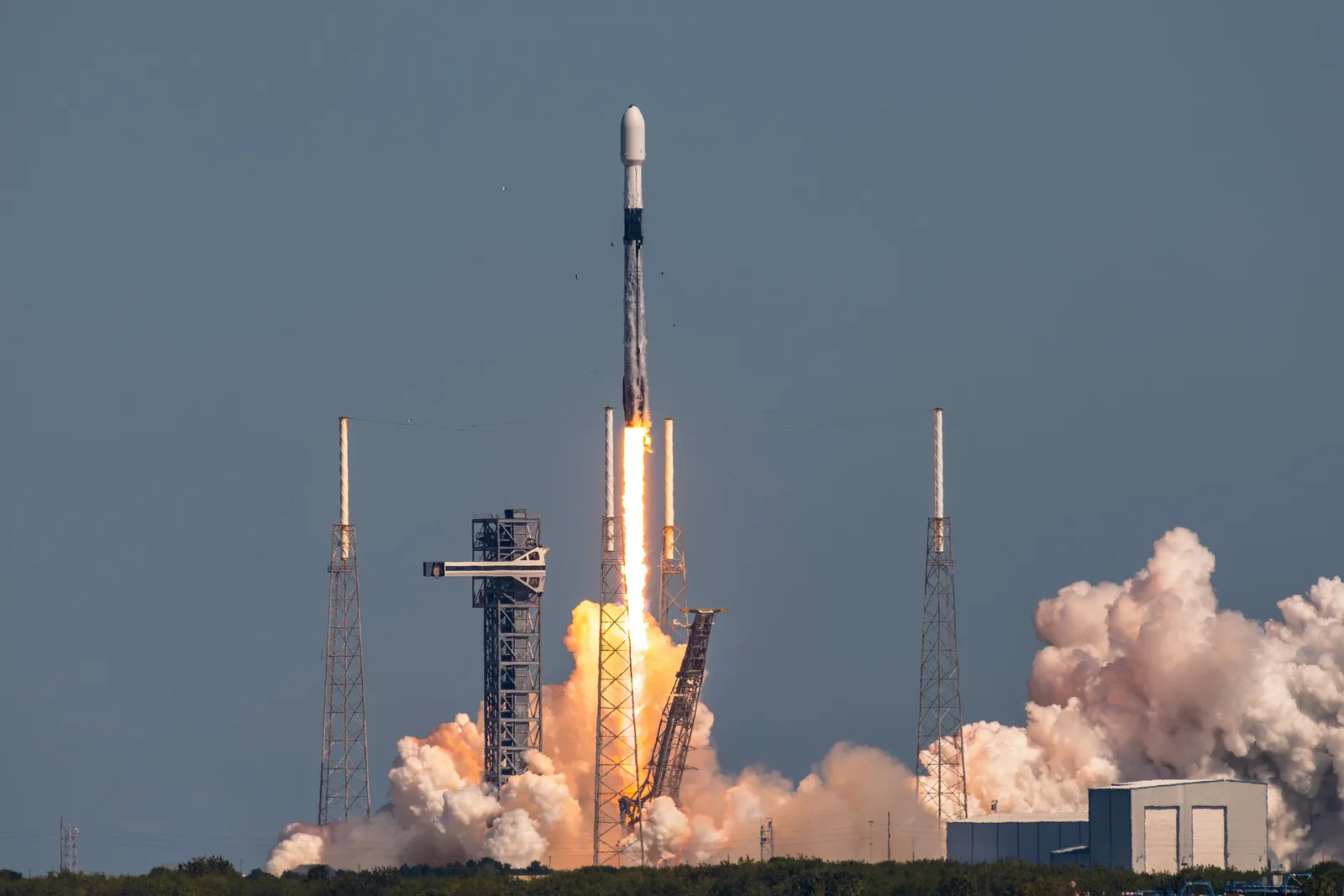
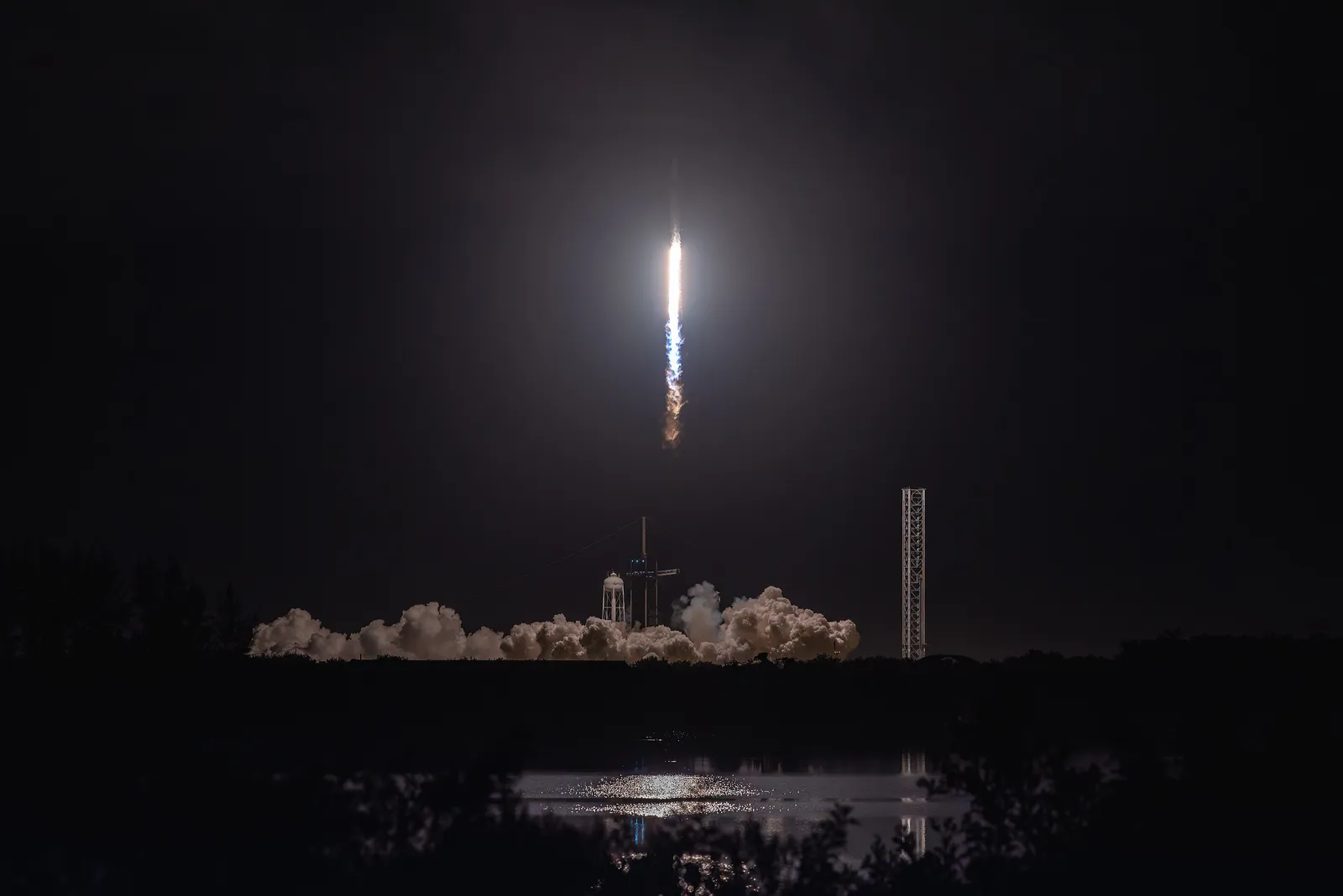
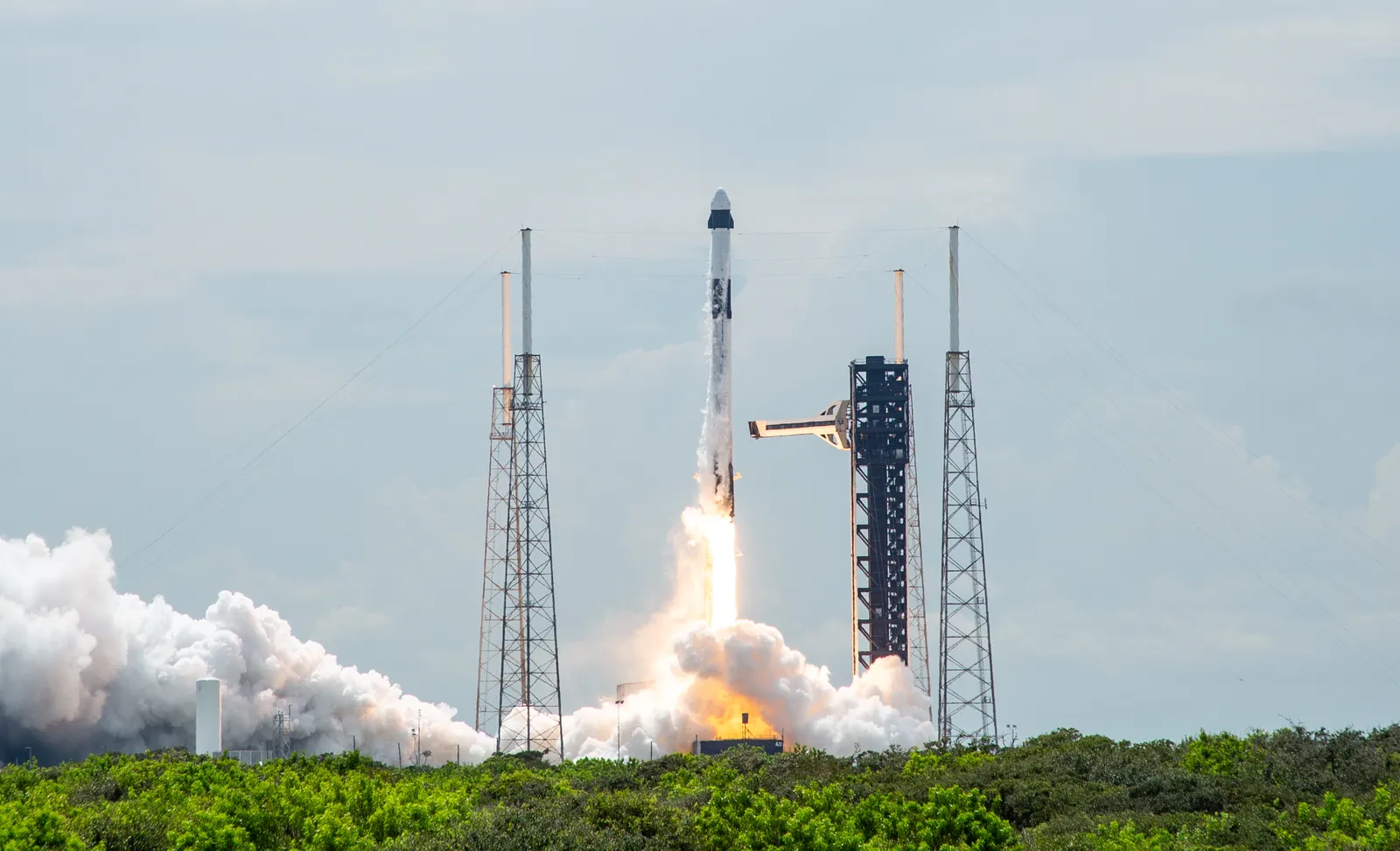
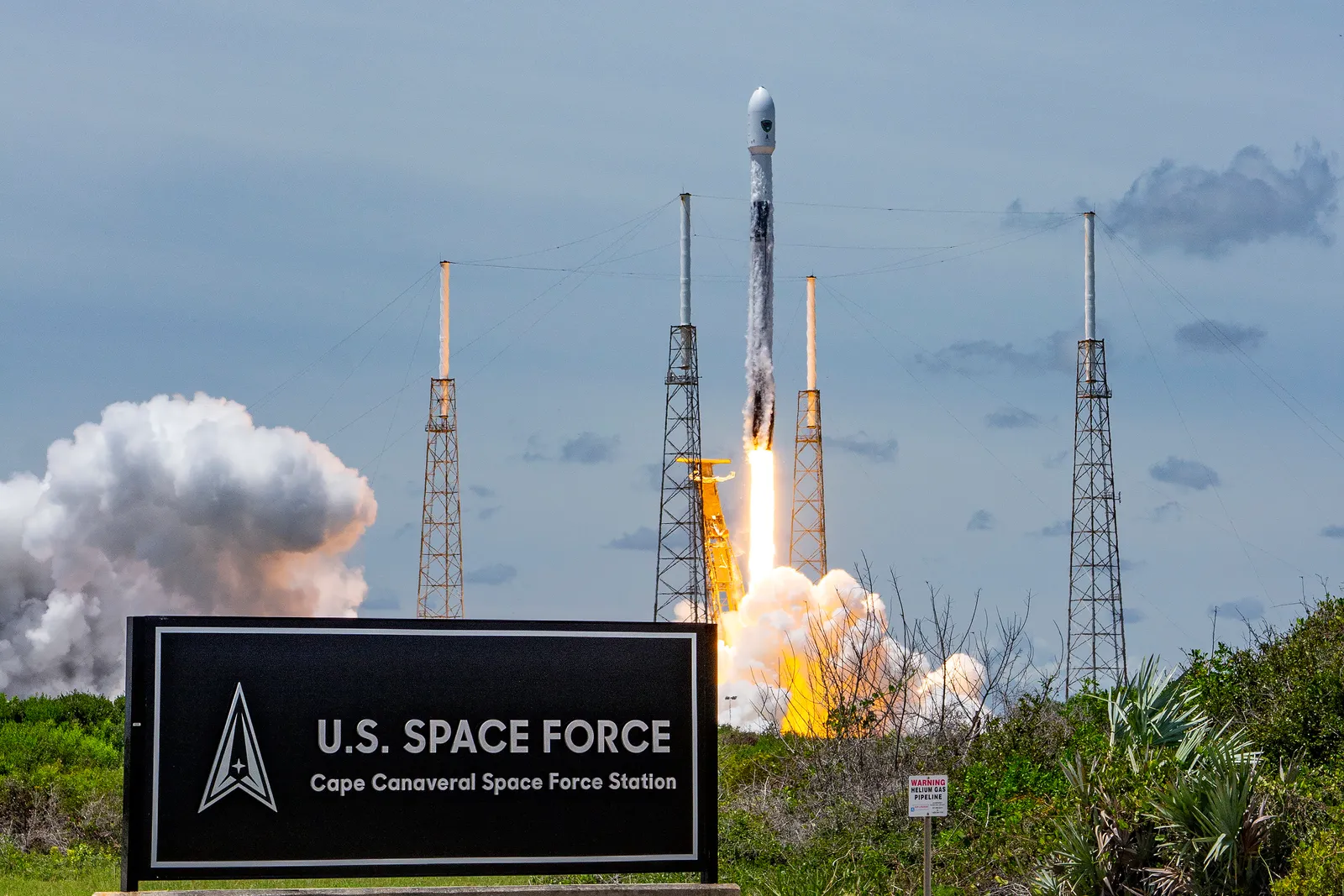
Falcon 9 is SpaceX's reusable two-stage orbital rocket for crew, cargo, commercial-satellite, and national-security launches from the United States. NASA describes it as the first orbital-class rocket capable of reflight, while U.S. Space Force and Space Development Agency sources document Falcon 9 launches for GPS III and Proliferated Warfighter Space Architecture satellite missions.
Falcon 9 evolved from the original and v1.1 vehicles into Full Thrust and Block 5 reusable configurations. SpaceX's current user guide also separates Falcon 9 missions into payload-fairing and Dragon configurations, with common first- and second-stage systems and a mission-specific payload interface.
| Variant | Configuration | Designation notes |
|---|---|---|
| Falcon 9 v1.0 | Original configuration | FAA documentation compares the original Falcon 9 with later v1.1 and Block 5 vehicles and records the first Falcon 9 launch from LC-40 on June 4, 2010. |
| Falcon 9 v1.1 | 2013 to 2015 configuration | SpaceX identifies v1.1 as the configuration flown from 2013 until the Full Thrust update. Sources: Falcon Payload User's Guide |
| Falcon 9 Full Thrust | Reusable Full Thrust configuration | SpaceX says Falcon 9 was updated from v1.1 to Full Thrust before the program's reusable first-stage operations became routine. Sources: Falcon Payload User's Guide |
| Falcon 9 Block 5 | Current reusable production configuration | SpaceX says Block 5 first flew in spring 2018 and focused on performance, reliability, vehicle life, thermal protection, avionics, thrust-structure commonality, and government mission requirements. Sources: Falcon Payload User's Guide |
| Falcon 9 fairing configuration | Payload-fairing launch configuration | SpaceX's user guide says Falcon 9 can fly with a payload fairing for satellite missions, using common stage systems with the Dragon configuration. Sources: Falcon Payload User's Guide |
| Falcon 9 Dragon configuration | Dragon spacecraft launch configuration | SpaceX's user guide says Falcon 9 can fly with Dragon, with the second-stage payload interface changing from the fairing configuration. Sources: Falcon Payload User's Guide |
Falcon 9 has launched U.S. national-security satellite families documented by Space Systems Command, GPS.gov, and the Space Development Agency.
| Launched item | Item type | Launch evidence |
|---|---|---|
 | Military navigation satellite family | Space Systems Command records Falcon 9 launches for GPS III space vehicles including SV09 in January 2026 and SV10 in April 2026. Sources: GPS III SV09 launch - Space Systems Command, U.S. Space Force delivers final GPS III to orbit |
 | Proliferated LEO communications and missile-tracking architecture | SDA records Falcon 9 launches for PWSA Transport and Tracking Layer space vehicles, including Tranche 0 demonstration satellites and Tranche 1 Transport Layer satellites. Sources: SDA completes first Tranche 1 satellite launch, ON ORBIT - Space Development Agency, SDA and MDA announce Tranche 0 Tracking and HBTSS launch |
SpaceX launched the Falcon 9 Demo mission to low Earth orbit from Cape Canaveral, marking the rocket's first flight.
Sources: Falcon 9 Demo Mission - SpaceX
Falcon 9 launched ORBCOMM-2 and its first stage returned for a successful landing after stage separation.
Sources: ORBCOMM-2 Mission - SpaceX
Falcon 9 launched SES-10 in March 2017; SpaceX's user guide identifies 2017 as the program's first reflight of an orbital-class rocket.
Sources: SES-10 Mission - SpaceX, Falcon Payload User's Guide
Falcon 9 launched Bangabandhu Satellite-1 in May 2018, matching SpaceX's account that the Full Thrust Block 5 configuration first flew in spring 2018.
Sources: Bangabandhu Satellite-1 Mission - SpaceX, Falcon Payload User's Guide
The U.S. Air Force launched the first GPS III satellite, Vespucci, aboard a SpaceX Falcon 9 from Space Launch Complex 40.
Sources: First GPS III satellite successfully launched
NASA's Demo-2 mission launched astronauts Robert Behnken and Douglas Hurley on Crew Dragon and Falcon 9 from Kennedy Space Center.
Sources: SpaceX Demo-2 Mission Launches into History
The U.S. Space Force launched GPS III SV05 on a Falcon 9 Block 5 vehicle and later described it as the first National Security Space Launch on a previously flown Falcon 9 booster.
Sources: GPS III SV05 Receives Operational Acceptance
The Space Development Agency reported that a Falcon 9 delivered 21 Tranche 1 Transport Layer satellites for the Proliferated Warfighter Space Architecture.
Sources: SDA completes first Tranche 1 satellite launch
Space Systems Command reported that Falcon 9 launched GPS III SV10, the final GPS III satellite, from Cape Canaveral for the National Security Space Launch program.
Sources: U.S. Space Force delivers final GPS III to orbit