Profile
- Origin
- United States
- Built by
- SpaceX
- Type
- Partially reusable heavy-lift orbital launch vehicle
- Service note
- 2018-present
- Designer
- SpaceX
- Designed
- 2000s-2010s
- Produced
- 2010s-present
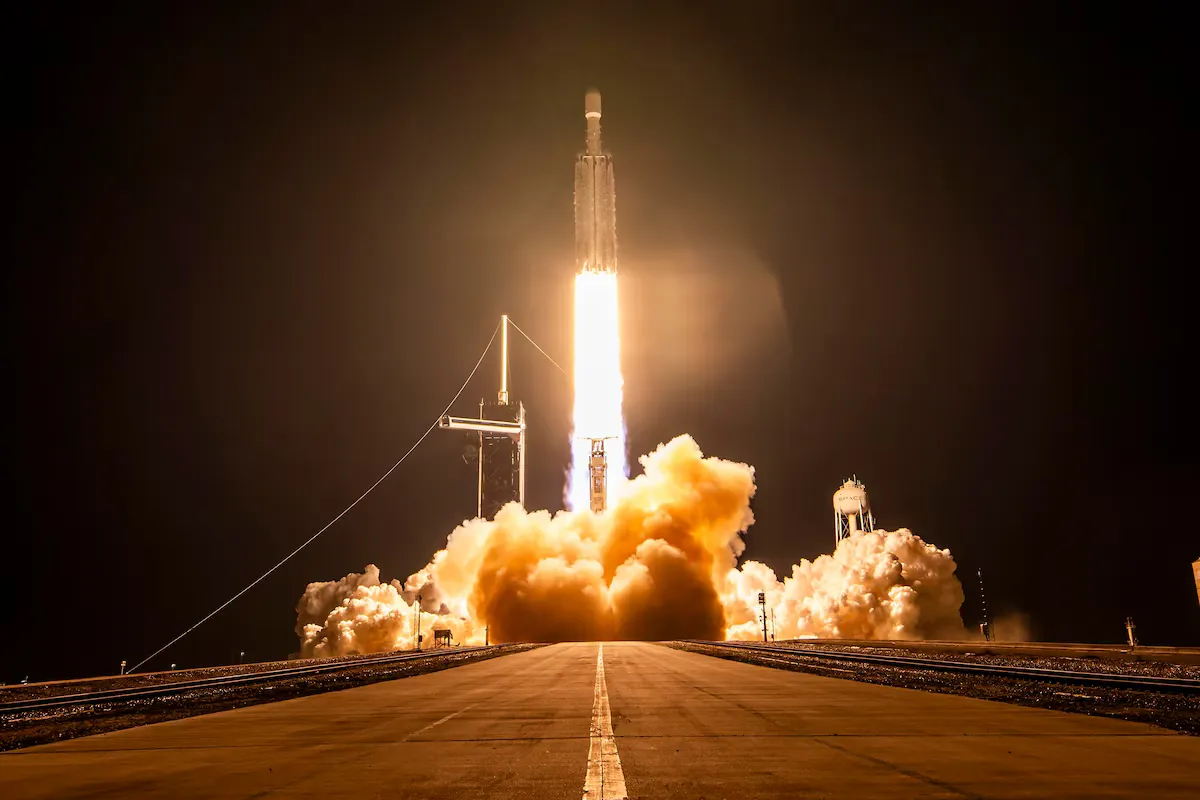
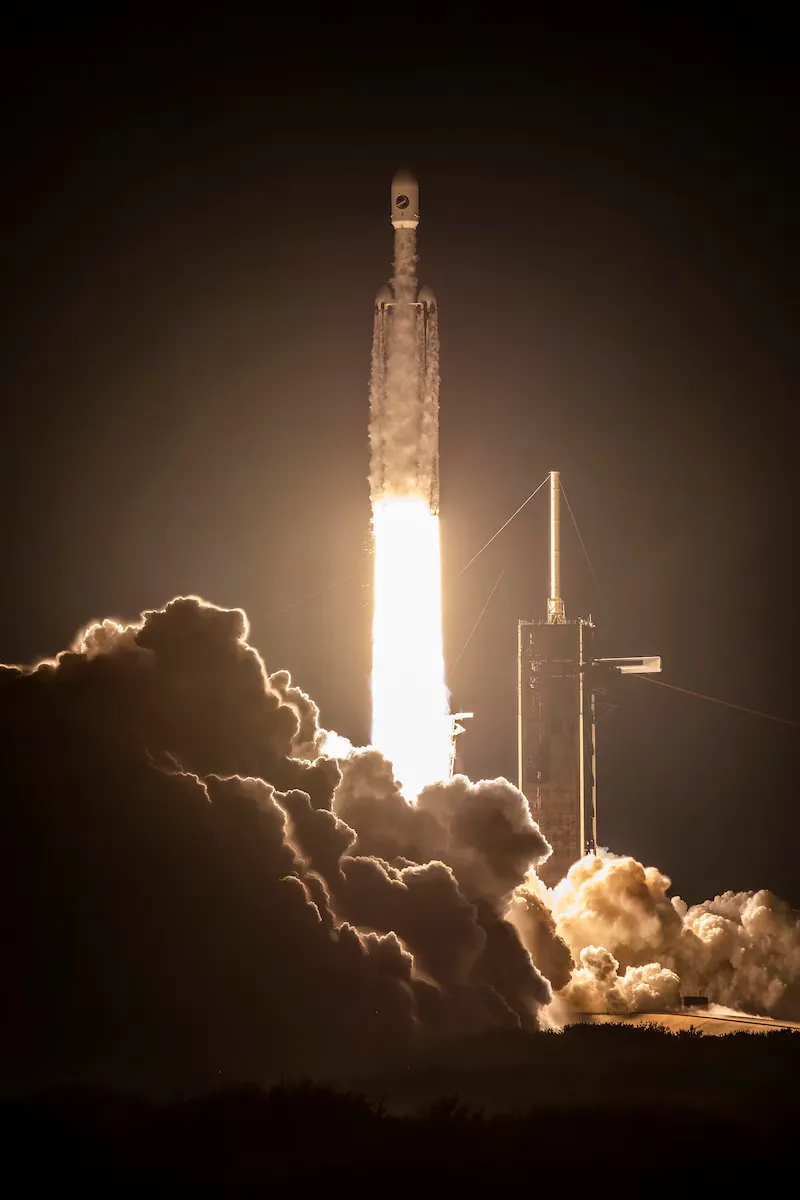
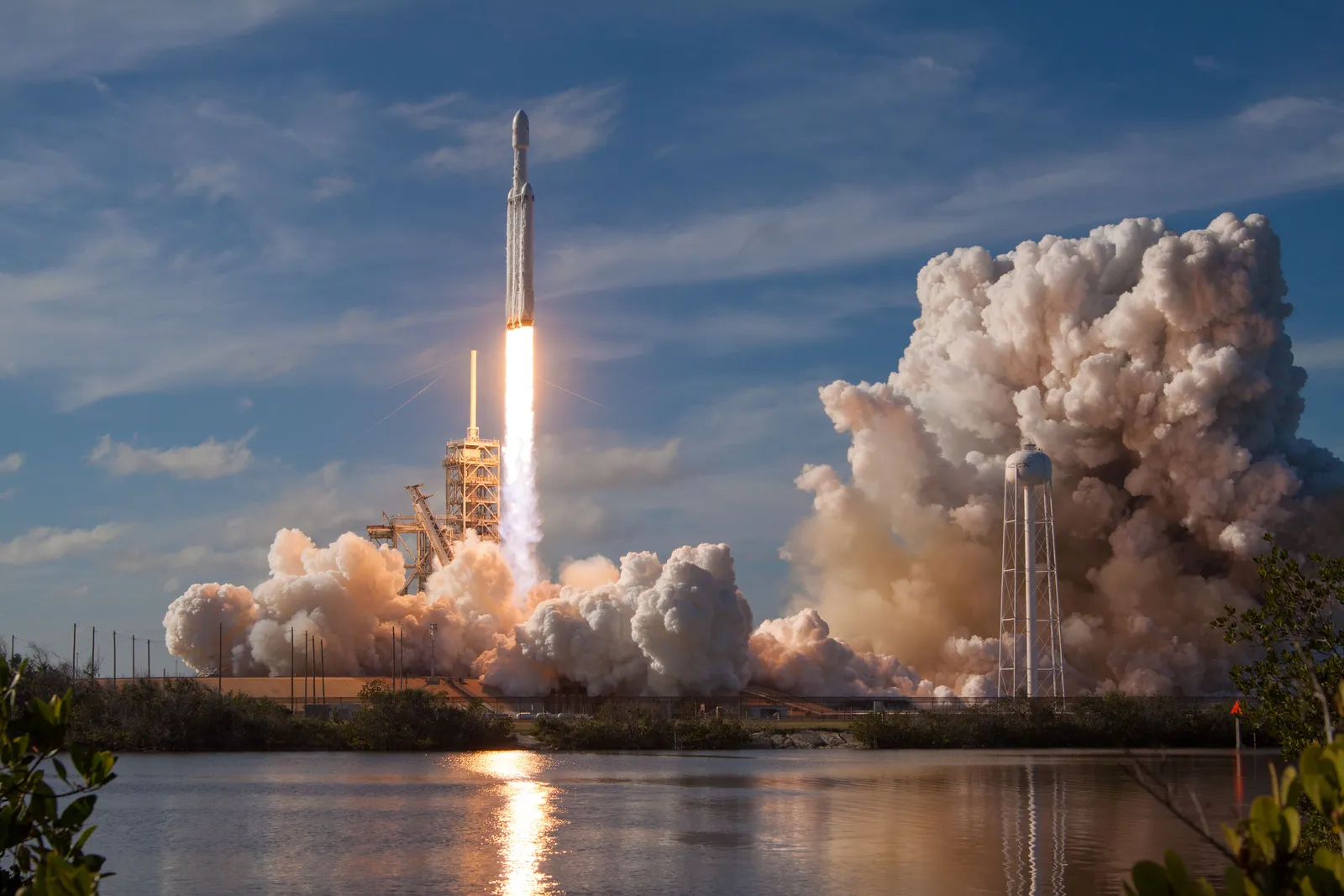
Falcon Heavy is SpaceX's partially reusable heavy-lift orbital launch vehicle, built from a center core and two Falcon-derived side boosters. Its catalog relevance is as launch support for U.S. national-security space systems: Space Systems Command identifies USSF-44 as the first National Security Space Launch mission on Falcon Heavy, and USSF-52 used Falcon Heavy to launch the X-37B OTV-7 mission.
Falcon Heavy's directly documented national-security launch role includes classified and experimental U.S. Space Force payloads carried under the National Security Space Launch program.
| Launched item | Item type | Launch evidence |
|---|---|---|
 | Reusable unmanned orbital test vehicle | USSF-52 launched the seventh X-37B mission on Falcon Heavy, marking the first X-37B flight on that launch vehicle. Sources: USSF seventh X-37B launch, DAF X-37B Mission 7 preparation |
Falcon Heavy scales the reusable Falcon launch family by combining a center core with two Falcon 9-derived side boosters. The resulting first-stage stack uses 27 Merlin engines at liftoff, while the upper-stage and payload-interface architecture remains part of the Falcon launch-services family.
Falcon 9 is the single-core Falcon launch vehicle; Falcon Heavy uses three Falcon-derived first-stage cores for heavier missions.
SSC treats Falcon Heavy as part of the NSSL launch fleet for demanding payloads rather than as a battlefield weapon.
Falcon Heavy reached orbit on its first flight from Launch Complex 39A, using a three-core Falcon architecture with 27 Merlin engines.
Sources: NASA Falcon Heavy first flight
Space Systems Command described USSF-44 as the first National Security Space Launch mission flown on a Falcon Heavy rocket.
Sources: SSC USSF-44 launch
SSC reported that USSF-67 was the second National Security Space Launch mission for the U.S. Space Force on SpaceX Falcon Heavy.
Sources: SSC USSF-67 launch
The U.S. Space Force launched the seventh X-37B Orbital Test Vehicle mission on Falcon Heavy from Kennedy Space Center Launch Complex 39A.
Sources: USSF seventh X-37B launch
The Falcon Heavy-launched OTV-7 mission began aerobraking after conducting radiation-effects experiments and testing space-domain-awareness technologies in highly elliptical orbit.
Sources: USSF X-37B aerobraking
The X-37B OTV-7 mission landed at Vandenberg Space Force Base after more than 434 days in orbit.
Sources: USSF X-37B OTV-7 conclusion
Space Systems Command awarded SpaceX a National Security Space Launch Phase 3 Lane 2 contract for demanding national-security payloads.
Sources: SSC NSSL Phase 3 Lane 2 contracts