Support Equipment

X-37B Orbital Test Vehicle

Also known as
  • X-37B
  • X-37B OTV
  • X-37
  • Orbital Test Vehicle
  • OTV
  • Boeing X-37B
  • X-37B Mission 7
  • OTV-7
  • X-37B Mission 8
  • OTV-8
  • USSF-36
  • USSF-52

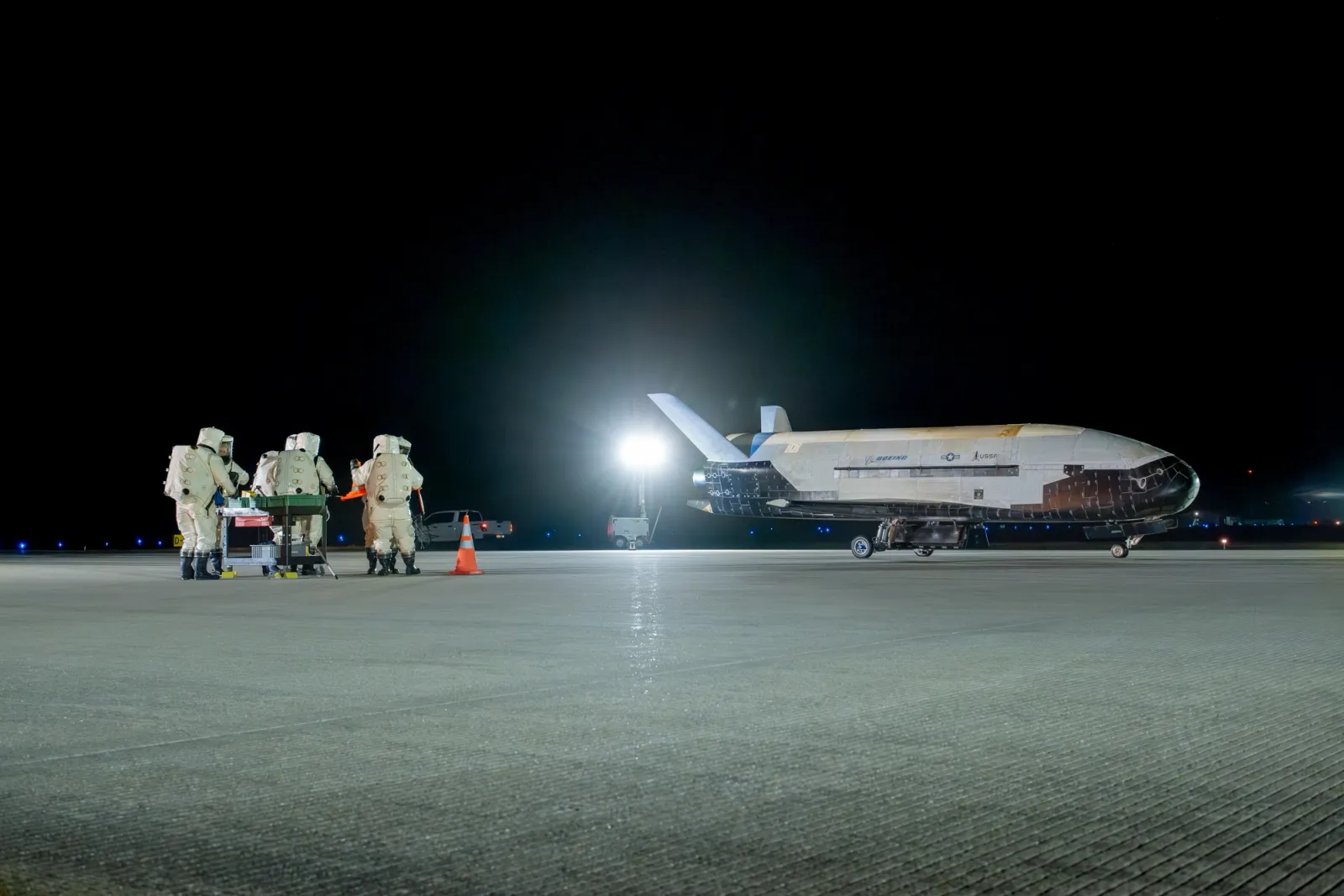
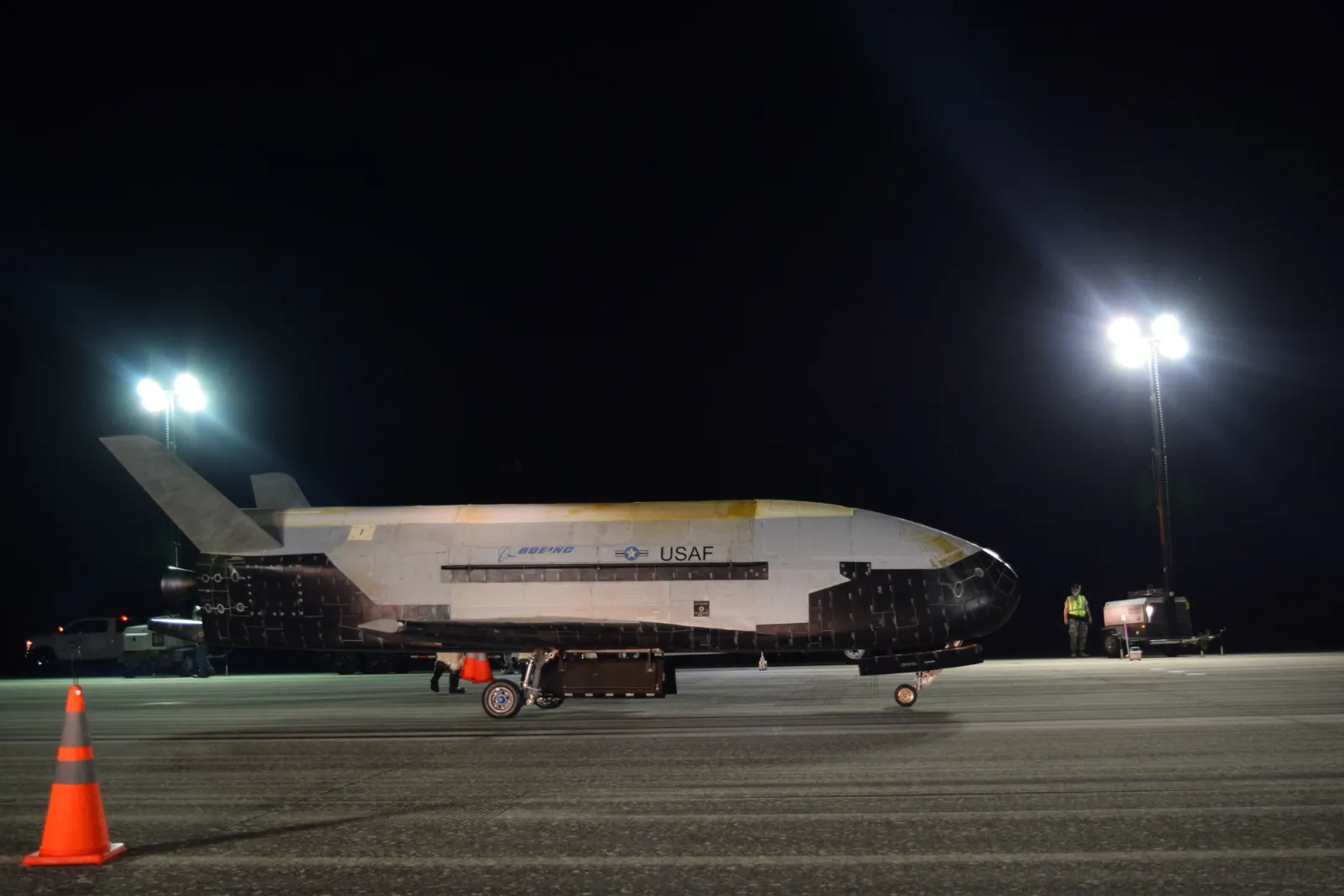
The X-37B Orbital Test Vehicle is a Boeing-built, uncrewed autonomous spaceplane operated for U.S. government orbital experimentation by the Department of the Air Force and U.S. Space Force. Public mission reporting describes it as a returnable test platform that has launched on Atlas V, Falcon 9, and Falcon Heavy rockets, landed autonomously at runway sites, and flown eight missions as of the OTV-8 launch in August 2025.

Profile / Specs

Profile

Origin
United States
Built by
Boeing
Type
Reusable unmanned orbital test vehicle
Service note
2010-present
Designer
Boeing, building on NASA and DARPA X-37 development for the Department of the Air Force Rapid Capabilities Office
Designed
NASA X-37 program began in 1999; transferred to DARPA in 2004; Air Force X-37B orbital missions began in 2010
Produced
2000s-present
Number built
Two X-37B flight vehicles publicly identified by official program reporting

Specifications

Primary mission
Experimental test vehicle for reusable space-vehicle technologies and returnable on-orbit experiments
Prime contractor
Boeing
Crew
Uncrewed / autonomous
Height
9 ft 6 in / 2.9 m
Length
29 ft 3 in / 8.9 m
Wingspan
14 ft 11 in / 4.5 m
Launch weight
11,000 lb / 4,990 kg
Power
Gallium arsenide solar cells with lithium-ion batteries
Design mission duration
About 270 days
Longest completed mission
908 days on OTV-6
Launch vehicles used
Atlas V, Falcon 9, and Falcon Heavy
Landing sites
Kennedy Space Center Shuttle Landing Facility and Vandenberg Space Force Base
Service module
First used on OTV-6 and used again for OTV-8 to expand experiment capacity
Development Lineage

The X-37B sits at the end of a public reusable-spaceplane development line rather than at the start of a standalone battlefield weapon family. NASA began X-37 work in 1999, transferred the program to DARPA in 2004, and retained technical participation while Boeing and government teams matured autonomous landing and reusable orbital-vehicle technologies.

X-40A

Subscale approach-and-landing flights reduced risk for autonomous runway recovery before orbital X-37B missions.

X-37A ALTV

DARPA completed captive-carry and free-flight testing of the approach-and-landing vehicle before the Air Force orbital program.

X-37B OTV

The operational vehicle carries experiments to orbit, returns them to Earth, and is refurbished for later missions.
Variants

The public X-37B program grew out of NASA, DARPA, Air Force, and Boeing reusable-spaceplane demonstrators; precursor vehicles are lineage context rather than separate operational catalog records.

VariantConfigurationDesignation notes
X-40ASubscale autonomous approach-and-landing demonstrator

NASA describes X-40A as an 80-percent subscale X-37 demonstrator used for seven approach-and-landing test flights in 2001.

Sources: NASA X-40A at Armstrong

X-37A ALTVApproach and Landing Test Vehicle

The Air Force fact sheet says DARPA completed the X-37 Approach and Landing Test Vehicle portion in 2006 after captive-carry and free-flight testing.

Sources: DVIDS X-37B Fact Sheet

X-37B OTVOperational orbital test vehicle

The Air Force version built on NASA, DARPA, Air Force, and Boeing work and became the reusable orbital test vehicle flown for Department of the Air Force and Space Force missions.

Sources: DVIDS X-37B Fact Sheet, Boeing X-37B Program Page

Launch Vehicles

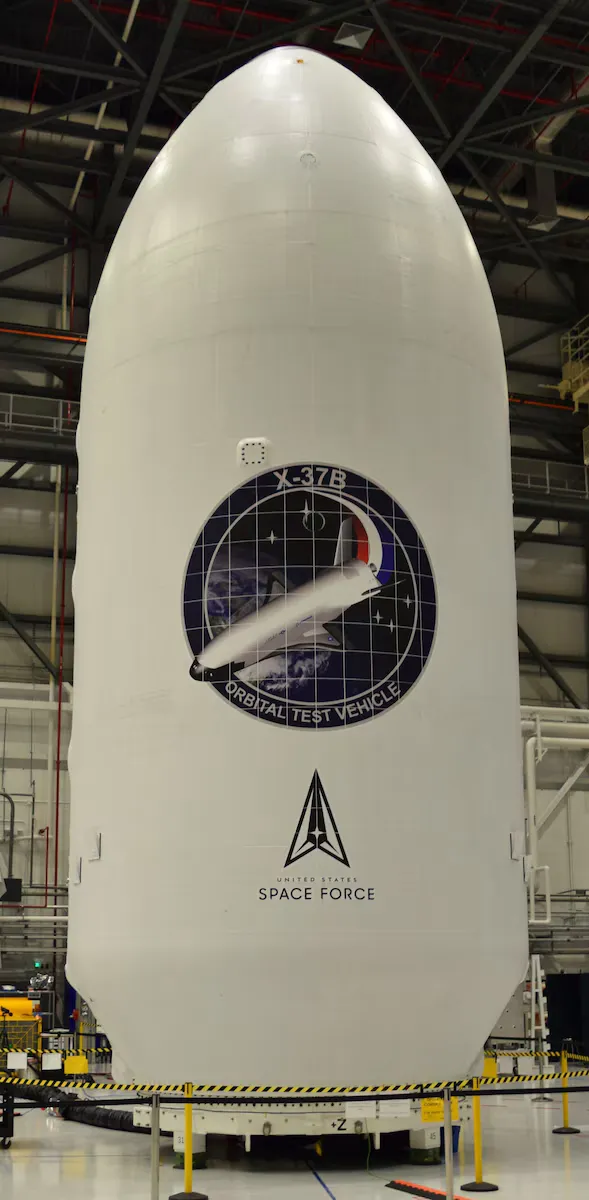
Official program and launch sources document X-37B missions using Atlas V, Falcon 9, and Falcon Heavy launch vehicles as part of U.S. national-security space-launch activity.

LauncherLauncher typeLaunch evidence
Atlas V, Expendable orbital launch vehicle, Support EquipmentAtlas VExpendable orbital launch vehicle

Atlas V launched the first X-37B orbital mission and later USSF-7/OTV-6, tying early X-37B missions to United Launch Alliance's Atlas V launch service.

Sources: DVIDS X-37B Fact Sheet, ULA USSF-7 launch

Falcon 9, Reusable two-stage orbital rocket, Support EquipmentFalcon 9Reusable two-stage orbital rocket

Falcon 9 launched OTV-5 in 2017 and USSF-36/OTV-8 in August 2025, making it the Falcon-family vehicle used for both the first SpaceX X-37B launch and the eighth X-37B mission.

Sources: DVIDS X-37B Feature, USSF OTV-8 Launch

Falcon Heavy, Partially reusable heavy-lift orbital launch vehicle, Support EquipmentFalcon HeavyHeavy-lift orbital launch vehicle

USSF-52 carried X-37B Mission 7 on Falcon Heavy, the first X-37B mission launched by that rocket and the mission that later demonstrated aerobraking from a highly elliptical orbit.

Sources: USSF OTV-7 launch, USSF OTV-7 Landing

Experiment Payload Context

Public X-37B mission descriptions emphasize returnable orbital experimentation. Named examples include NASA and Naval Research Laboratory experiments on OTV-6, space-domain-awareness and radiation-effects work on OTV-7, and laser-communications plus quantum inertial-sensor demonstrations on OTV-8. Many payloads and mission details remain undisclosed in public releases.

  • OTV-6 used a service module and carried named NASA, NRL, and Air Force Academy experiment payloads.
  • OTV-7 tested operations in a highly elliptical orbit and then used aerobraking to change orbit while conserving fuel.
  • OTV-8 was announced with laser-communications and quantum inertial-sensor demonstrations tied to resilience and GPS-denied navigation research.
Timeline

X-37B Orbital Test Vehicle Key Events

  1. NASA begins X-37 work

    NASA's original X-37 program began in 1999 before the program transferred to DARPA in 2004.

    Sources: DVIDS X-37B Fact Sheet, NASA NTRS X-37 Lessons

  2. X-40A conducts autonomous landing tests

    NASA says the 80-percent-scale X-40A demonstrator flew seven approach-and-landing test flights at what is now Armstrong Flight Research Center.

    Sources: NASA X-40A at Armstrong

  3. X-37 transfers to DARPA

    NASA transferred X-37 program ownership to DARPA in 2004, with NASA continuing technical participation.

    Sources: NASA NTRS X-37 Lessons, DVIDS X-37B Fact Sheet

  4. First X-37B orbital mission launches

    The Air Force fact sheet records the first X-37B launch from Cape Canaveral Air Force Station in April 2010.

    Sources: DVIDS X-37B Fact Sheet

  5. USSF-7 launches OTV-6 on Atlas V

    United Launch Alliance launched the sixth X-37B mission for the U.S. Space Force on an Atlas V 501 rocket, and Boeing later identified OTV-6 as the first X-37B mission with a service module.

    Sources: ULA USSF-7 launch, USSF OTV-6 Landing

  6. OTV-6 completes 908-day mission

    The sixth X-37B mission landed at Kennedy Space Center after 908 days on orbit, the program's longest completed mission in public reporting.

    Sources: USSF OTV-6 Landing, Boeing X-37B Program Page

  7. USSF-52 launches on Falcon Heavy

    The U.S. Space Force launched X-37B Mission 7 on Falcon Heavy from Kennedy Space Center Launch Complex 39A.

    Sources: USSF OTV-7 launch

  8. OTV-7 begins aerobraking

    The Space Force announced that OTV-7 would use aerobraking to change orbit while conserving propellant after conducting experiments in a highly elliptical orbit.

    Sources: USSF OTV-7 aerobraking

  9. OTV-7 lands at Vandenberg

    Mission 7 landed at Vandenberg Space Force Base after more than 434 days in orbit and after demonstrating aerobraking and space-domain-awareness experiments.

    Sources: USSF OTV-7 Landing

  10. USSF-36 launches OTV-8 on Falcon 9

    The Space Force launched the eighth X-37B mission on a Falcon 9 from Kennedy Space Center Launch Complex 39A, with public objectives including laser communications and quantum inertial-sensor experimentation.

    Sources: USSF OTV-8 Launch, USSF OTV-8 Preparation

Media
Related Weapon Systems
Sikorsky S-70UAS U-Hawk, Autonomous cargo utility helicopter UAS, Aircraft & UAVsAircraft & UAVsSikorsky S-70UAS U-HawkAutonomous cargo utility helicopter UASThe Sikorsky S-70UAS U-Hawk is a 2025 autonomous UH-60L Black Hawk conversion that removes the cockpit, adds clamshell doors and a rear ramp, and turns the helicopter into a cargo-first UAS. Sikorsky said it completed the redesign in 10 months and showed payload options ranging from palletized cargo to a HIMARS rocket pod and Naval Strike Missile loads; no direct conflict use or public first-flight confirmation was found in sources checked through July 4, 2026.
LampreyMMAUV, Multi-mission autonomous undersea vehicle, Naval SystemsNaval SystemsLampreyMMAUVMulti-mission autonomous undersea vehicleLockheed Martin's LampreyMMAUV is a plug-and-play autonomous undersea vehicle publicly unveiled in 2026 for covert access, sea denial, ISR, and seabed-warfare missions. Official material describes a 24 cubic foot internal payload bay, host-ship or submarine attachment, battery recharge while attached, optional UAV launch tubes, and mission kits for torpedoes, decoys, sensors, or other payloads; public sources reviewed for this entry document development and exercise activity rather than confirmed armed-conflict use.
Aeronautics Orbiter 3 UAV, Small tactical unmanned aircraft system, Aircraft & UAVsAircraft & UAVsAeronautics Orbiter 3 UAVSmall tactical unmanned aircraft systemThe Aeronautics Orbiter 3 is a fully electric, runway-independent small tactical UAS built for ISTAR missions and modular payloads. Aeronautics now advertises up to 10 hours of endurance, launcher-and-parachute recovery or an add-on VTOL kit, and payload options that include EO/IR, ELINT, COMINT, EW, SAR, VMD, and MTI. Azerbaijan fielded Orbiter 3s in the Nagorno-Karabakh conflict, and Aeronautics later announced Greek procurement activity in 2023.

Sources