Profile
- Origin
- United States
- Built by
- United Launch Alliance
- Type
- Medium-lift orbital launch vehicle
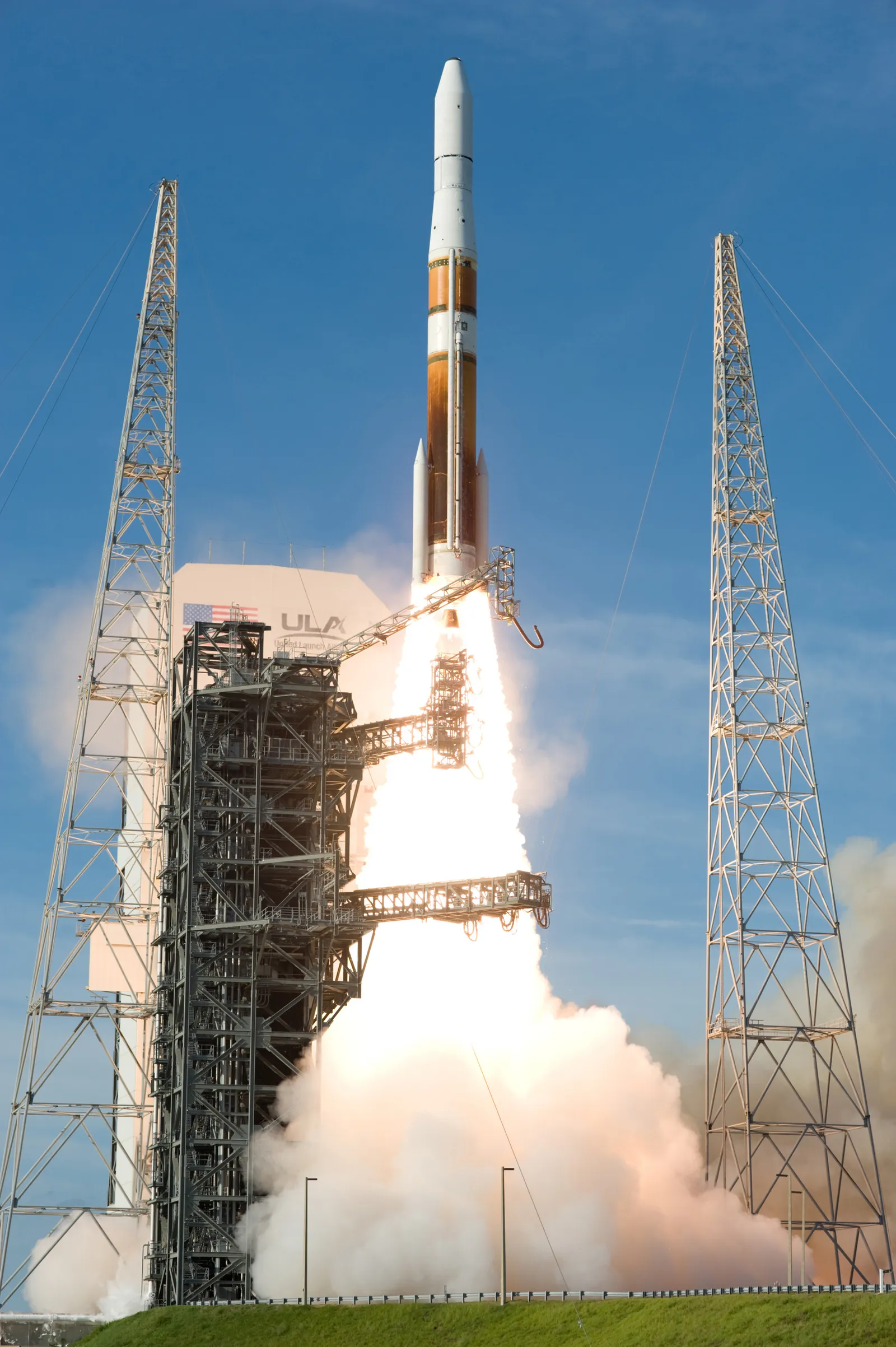
Delta IV Medium+ (4,2) was United Launch Alliance's two-solid-motor, four-meter-fairing Delta IV Medium+ configuration. Built around one Common Booster Core, a Delta Cryogenic Second Stage, and a composite payload fairing, it launched national-security, civil weather, science, and GPS payloads, including the GPS III SV02 Magellan mission that closed the Delta IV Medium line in 2019.
This Delta IV configuration carried the GPS III SV02 mission to medium Earth orbit.
| Launched item | Item type | Launch evidence |
|---|---|---|
 | Military navigation satellite family | ULA says this configuration delivered the second GPS III spacecraft, Magellan, to medium Earth orbit for the U.S. Air Force Space and Missile Systems Center. Sources: Delta IV GPS III - United Launch Alliance (ULA) Rocket Launch |
ULA described the Delta IV Medium+ (4,2) as a four-meter-fairing Medium+ launcher with two strap-on solid rocket motors. Its GPS III SV02 mission booklet summarizes a mixed manifest of national-security, science, and GPS missions, while mission releases document GOES weather, GPS navigation, NRO, and space-surveillance payload work.
One Common Booster Core, two solid rocket motors, one Delta Cryogenic Second Stage, and a 4 m composite payload fairing.
The GPS III Magellan mission separated its payload about 1 hour 55 minutes after liftoff, then continued upper-stage disposal events through end of mission.
The sources reviewed here document launch-service missions and payload delivery; they do not document use of the launcher as a weapon in a named armed conflict.
ULA's GPS III SV02 mission booklet lists November 20, 2002 as the first launch date for the Delta IV Medium+ (4,2) configuration.
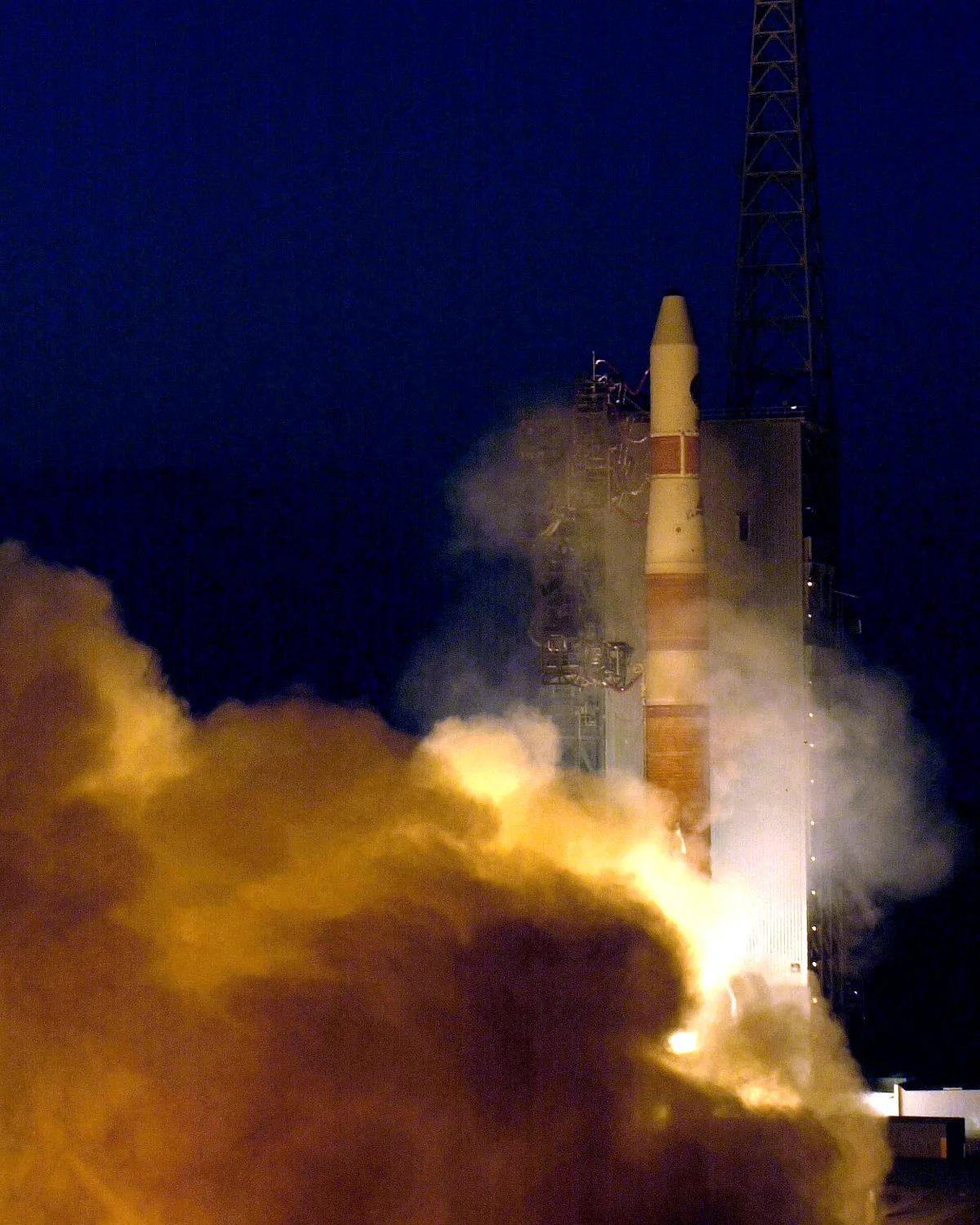
The U.S. Air Force reported the first West Coast launch of Boeing's Delta IV from Vandenberg, carrying a National Reconnaissance Office payload from Space Launch Complex-6.
ULA launched NASA and NOAA's GOES-O weather satellite from SLC-37 and identified the flight as the fourth Delta IV Medium+ (4,2) mission.
ULA's AFSPC-4 booklet says a Delta IV Medium+ (4,2) was assigned to place two GSSAP satellites and the ANGELS satellite near geosynchronous orbit.
ULA used Delta IV Medium+ (4,2) to launch GPS III SV02 Magellan from Cape Canaveral, marking the final Delta IV Medium flight.