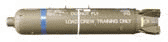
Direct proof of use
U.S. Central Command Air Forces' Operation Iraqi Freedom air-campaign summary listed 818 CBU-103 WCMD munitions among the guided munitions used in Iraq. Human Rights Watch repeated that figure in its Iraq civilian-casualty investigation and identified the CBU-103 as the majority of the coalition cluster bombs documented in the air campaign.
Human Rights Watch also reported physical evidence at specific strike sites. It said the U.S. Air Force dropped at least one CBU-103 on al-Hadaf girls' primary school in al-Hilla around midnight on April 24, 2003, and separately found CBU-103 casings and BLU debris at a chicken farm adjacent to a field with military vehicles in Sichir, near al-Falluja.
Sources: USCENTAF Operation Iraqi Freedom By The Numbers, HRW Off Target Iraq Report
Timeline
The air-campaign summary was dated April 30, 2003 and aggregated Operation Iraqi Freedom air operations from the Combined Forces Air Component Commander's perspective. Its munitions table recorded 818 CBU-103 WCMDs, 88 CBU-105 WCMD Sensor Fuzed Weapons, and two CBU-107 WCMD weapons.
HRW's field investigation added incident-level detail after the major invasion phase. It placed a CBU-103 strike at al-Hadaf girls' primary school in al-Hilla around midnight on April 24, 2003, and also recorded CBU-103 evidence in Sichir near al-Falluja.
Sources: USCENTAF Operation Iraqi Freedom By The Numbers, HRW Off Target Iraq Report
Narrative
In Iraq, the CBU-103 served as an air-delivered cluster munition with a Wind Corrected Munitions Dispenser tail kit. HRW described the CBU-103 as a WCMD-equipped CBU-87 carrying 202 BLU-97 combined-effects bomblets and reported that it represented about 68 percent of the U.S. air-dropped cluster bombs recorded for the campaign.
The documented use was tied to area effects and attacks on vehicles or vehicle routes. HRW reported that a CENTCOM official described common cluster-bomb targets as armored vehicles, guns, tanks, or paths of thin-skinned vehicles, and said most air-strike sites it visited contained military vehicles, missiles, artillery, or similar targets.
The Iraq evidence does not identify every BLU-97 casualty location as a CBU-103 strike. HRW explicitly confirmed CBU-103 evidence at al-Hadaf primary school and in Sichir, while other locations in its report are described as air-dropped BLU-97 or broader cluster-bomb strikes without always distinguishing the exact dispenser model.
Sources: HRW Off Target Iraq Report, USCENTAF Operation Iraqi Freedom By The Numbers