Infantry Weapons

Browning Automatic Rifle

Also known as
  • BAR
  • M1918 BAR
  • M1918A2 BAR
  • Browning Machine Rifle
  • Rifle, Caliber .30, Automatic, Browning, M1918
  • Rifle, Caliber .30, Automatic, Browning, M1918A2
  • FN-D

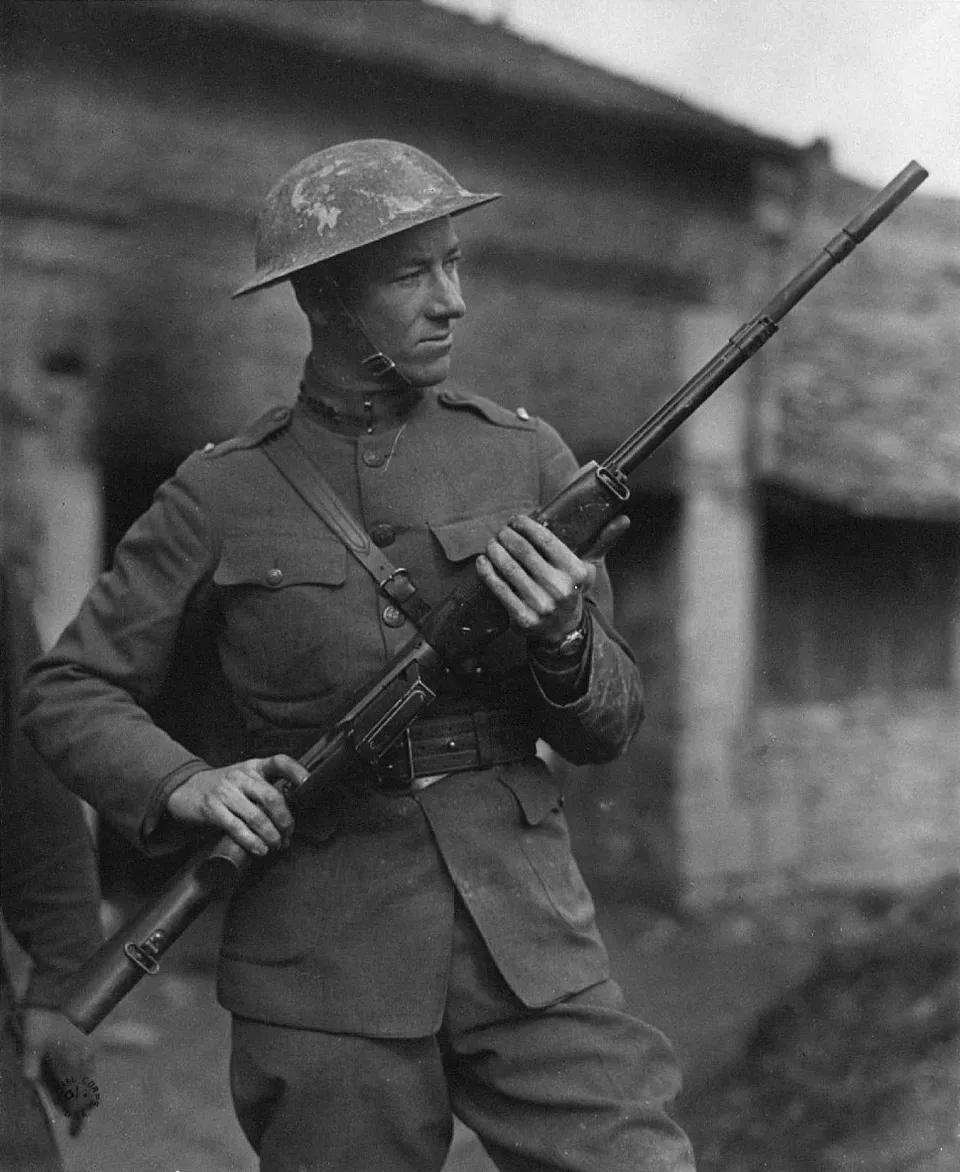
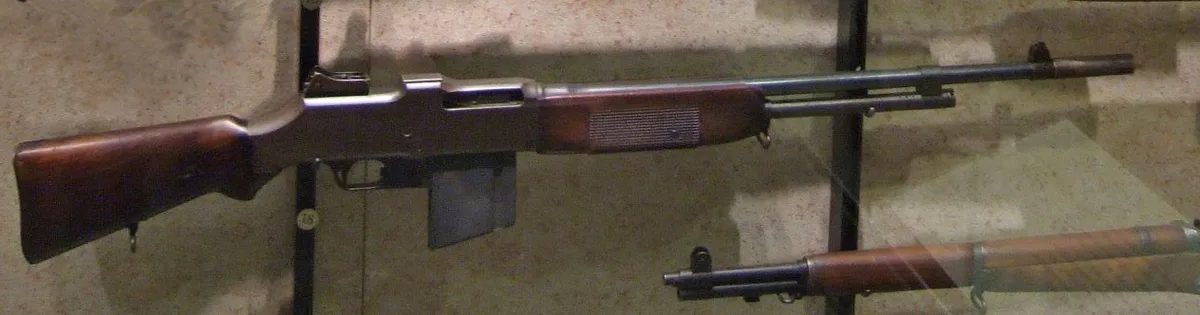
The Browning Automatic Rifle was a U.S. .30-06 automatic rifle designed by John M. Browning for mobile infantry fire and later used as a squad automatic weapon. Cataloged conflict evidence places legacy BARs in the 1955 Vietnam War through ARVN, Montagnard, and Viet Cong use, and in the 2017 Battle of Marawi as captured IS-aligned militant materiel.

Role in Conflicts

Side
United States and South VietnamNorth Vietnam and Viet Cong

Small Arms Review documents BARs in Vietnam on both sides: Viet Cong forces used BARs captured from French stocks or supplied from Communist Chinese captures, while South Vietnamese-side use included ARVN troops and U.S. 5th Special Forces-issued Montagnard fighters.

Profile / Specs

Profile

Origin
United States
Type
Automatic rifle / light machine gun
Service note
Designed in 1917 and fielded from World War I onward; legacy examples remained in Philippine insurgent and militia circulation into the 2010s.
Designer
John M. Browning
Designed
1917
Produced
1917-1960 for original military BAR family production

Specifications

Caliber
.30-06 Springfield / 7.62x63 mm for U.S. M1918 and M1918A2 variants
Feed system
20-round detachable box magazine
Operation
Gas-operated, air-cooled, open-bolt, magazine-fed automatic rifle
M1918 weight
About 16 lb / 7.25 kg
M1918 length
About 47 in / 119.5 cm
M1918A2 weight
Just over 20 lb loaded with a 20-round magazine
M1918A2 cyclic rates
Slow rate about 300-450 rpm; normal rate about 500-650 rpm
Variants

The BAR family moved from Browning's World War I automatic-rifle concept into bipod-equipped U.S. squad automatic variants and export light-machine-gun derivatives.

VariantConfigurationDesignation notes
M1918Original U.S. automatic rifle

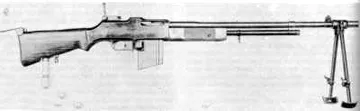
The original .30-06 BAR was a selective-fire, 20-round-magazine automatic rifle without the later M1918A2 bipod and hinged buttplate.

Sources: Browning Automatic Rifle - The Army Historical Foundation, Browning Automatic Rifle M1918

M1918A2Bipod-equipped U.S. squad automatic version

Adopted before World War II, the M1918A2 dropped semiautomatic fire in favor of selectable slow and normal automatic rates, and added a bipod, flash suppressor, and hinged buttplate.

Sources: Browning Automatic Rifle - The Army Historical Foundation, FM 23-15 Basic Field Manual, Browning Automatic Rifle, Caliber .30, M1918A2, with Bipod 1940

FN Model DFN export/development variant

Forgotten Weapons identifies the FN Model D as a 1932 Fabrique Nationale development with pistol grip, shorter quick-change barrel, revised rate reducer, and simplified disassembly.

Sources: FN Model D (BAR)

Colt Monitor R80Law-enforcement commercial BAR derivative

Colt developed the R80 Monitor in 1931 with the M1918 mechanism, a shortened barrel, pistol grip, Cutts compensator, and a lighter law-enforcement configuration.

Sources: Colt Monitor: The FBI's Fighting Rifle

Firing Ammunition

The BAR is documented as a .30-06 automatic rifle.

AmmunitionAmmunition typeFiring evidence
.30-06 Springfield cartridge, Rimless bottleneck rifle cartridge and .30 caliber machine-gun ammunition, Munitions.30-06 Springfield cartridgeRifle cartridge

The Army Historical Foundation says the BAR fired powerful .30-06 ammunition, and American Rifleman describes Browning's original BAR design as a full-sized automatic rifle in .30-06.

Sources: Browning Automatic Rifle - The Army Historical Foundation, The Browning Automatic Rifle: A Combat Chronicle

Timeline

Browning Automatic Rifle Key Events

  1. Browning design adopted

    John M. Browning's automatic-rifle design entered U.S. service development during World War I, with the M1918 adopted for .30-06 infantry automatic fire.

    Sources: Browning Automatic Rifle - The Army Historical Foundation, U.S. Winchester Model of 1918 Browning Automatic Rifle

  2. M1918 wartime production and issue

    Museum and historical sources identify wartime BAR production by Colt, Winchester, and Marlin-Rockwell, with Winchester-built M1918 examples documented in museum collections.

    Sources: Browning Automatic Rifle M1918, U.S. Winchester Model of 1918 Browning Automatic Rifle

  3. Colt Monitor introduced

    Colt introduced the R80 Monitor as a law-enforcement BAR derivative after criminal use of stolen military BARs highlighted the need for police rifles able to defeat cover and vehicles.

    Sources: Colt Monitor: The FBI's Fighting Rifle

  4. FN Model D introduced

    Fabrique Nationale introduced the FN Model D with a quick-change barrel and handling changes intended to address sustained-fire and maintenance limits in the original BAR pattern.

    Sources: FN Model D (BAR)

  5. M1918A2 field manual

    FM 23-15 documented Army training for the Browning Automatic Rifle, Caliber .30, M1918A2, with bipod.

    Sources: FM 23-15 Basic Field Manual, Browning Automatic Rifle, Caliber .30, M1918A2, with Bipod 1940

  6. Depot maintenance manual

    The Department of the Army still maintained a direct-support, general-support, and depot maintenance manual for the M1918A2 decades after initial BAR adoption.

    Sources: TM 9-1005-208-35 Rifle Caliber .30 Automatic Browning M1918A2

Media
Related Weapon Systems
M16 rifle, Assault rifle, Infantry WeaponsInfantry WeaponsM16 rifleAssault rifleThe M16 is a U.S.-origin 5.56x45mm assault-rifle family that evolved from 1955 Vietnam War service into the M16A1, M16A2 and M16A4 lineage. Current Army and FN references describe the M16A4 as a gas-operated, shoulder-fired, 20-inch-barrel rifle with rail and optics compatibility, while conflict-specific sources document continued use from Marawi and Afghanistan to Israeli wartime response teams, Iraqi partner-force training and Colombian FARC dissident seizures.
.30-Caliber Machine Gun, Crew-served medium machine gun, Infantry WeaponsInfantry Weapons.30-Caliber Machine GunCrew-served medium machine gunThe .30-caliber machine gun entry covers model-unspecified crew-served automatic weapons recovered from IS-linked militant contexts in Mindanao. Philippine reporting documented one gun among weapons cleared from Marawi's former Main Battle Area after the 2017 Battle of Marawi, and a later Philippine Army-sourced report listed one .30 caliber machine gun recovered after a 2022 clash with Dawlah Islamiya-Maute Group members in Maguing, Lanao del Sur. The public sources did not identify whether either weapon was a Browning M1919-family gun or another .30-caliber pattern.
AK-47/AKM rifle family, Selective-fire assault rifle family, Infantry WeaponsInfantry WeaponsAK-47/AKM rifle familySelective-fire assault rifle familyAK-47/AKM-family rifles are Kalashnikov-pattern small arms derived from the Soviet AK-47 and 1959 AKM modernization, usually chambered in 7.62 x 39 mm. In the post-2015 catalog they appear with FARC dissidents in Colombia, gangs in Haiti, PKK fighters, GNA scouts in Libya, insurgents in Mali, Islamic State forces in Iraq and Syria, militants in Sinai, RSF units in Sudan, Hamas fighters in Gaza, Taliban fighters in Afghanistan, Boko Haram-linked militants in the Lake Chad basin, and Houthi-linked supply chains in Yemen.
Rifle grenades, Rifle-launched grenade family, Infantry WeaponsInfantry WeaponsRifle grenadesRifle-launched grenade familyRifle grenades are a broad family of grenades projected from service rifles by rod, cup, spigot, muzzle-device, bullet-trap, or shoot-through launch methods. World War I examples extended infantry grenade reach with explosive, smoke, signal, message, and emerging anti-tank payloads, while postwar HEAT designs such as the British No. 94 Energa and U.S. M31 used shaped charges for short-range anti-armor fire. The cataloged conflict record spans rifle-launched use, recovered ammunition, and modern reuse of rifle-grenade munitions as drone payloads in Myanmar and Ukraine.

Sources