Infantry Weapons

AR-15-pattern rifle

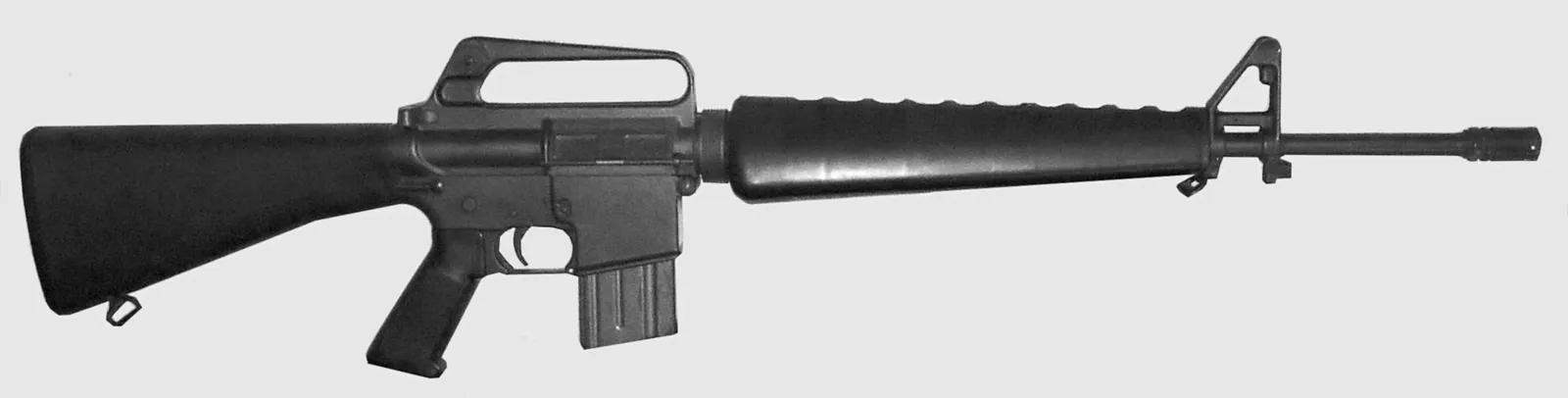
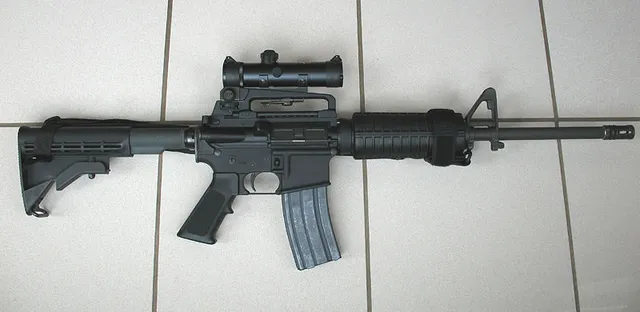
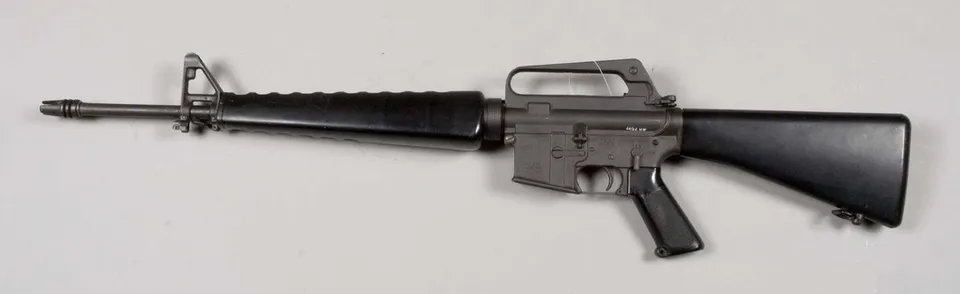
The AR-15-pattern rifle is a lightweight, modular 5.56 mm self-loading rifle family derived from the ArmaLite and Colt AR-15 lineage. In the Battle of Marawi, open-source arms research documented AR-type rifles among weapons captured from IS-aligned Maute Group fighters, making the platform part of the militant small-arms mix used in dense urban fighting.

Conflict side
IS-aligned militantsFARC dissident groupsArmed gangs
Built by
ArmaLiteColtVarious manufacturers
Built in
United States and multiple countries

Profile

Type
5.56 mm self-loading rifle platform
Conflict side
IS-aligned militants
Origin
United States design; globally produced and copied
Service note
Original AR-15 design from the late 1950s; AR-15-pattern rifles remain in global circulation

Service History

In service
Commercial, police, military, and non-state use depending on variant and operator
Used by
Maute Group, Civilian, law-enforcement, and military users worldwide
Wars
Battle of Marawi

Production History

Designer
Eugene Stoner, L. James Sullivan, and Robert Fremont
Designed
1956 design lineage
Built by
ArmaLiteColtVarious manufacturers
Built in
United States and multiple countries
Unit cost
Varies widely by manufacturer, configuration, and market
Produced
1959 onward for Colt AR-15 lineage; later production by many manufacturers
Number built
Millions of AR-15-pattern rifles and derivatives
Variants
ArmaLite AR-15, Colt AR-15, AR-15A4-style rifle, M16 and M4 military derivatives, Commercial AR-type carbines

Specifications

Caliber
Commonly 5.56x45 mm NATO or .223 Remington, with many other AR-pattern chamberings
Action
Gas-operated, rotating-bolt self-loading action in standard direct-gas AR-15 layouts
Feed system
Typically detachable STANAG-pattern box magazines, commonly 20 or 30 rounds
Barrel length
Representative Colt AR15A4 rifle uses a 20 in barrel; carbine variants commonly use shorter barrels
Configuration
Modular upper/lower receiver platform with fixed or adjustable stocks and iron, optical, or rail-mounted sights

Conflict Usage

Battle of Marawi
Side: IS-aligned militantsRole: Small-unit rifle armament in urban defensestrike

ARES reported that a June 2017 Marawi arms seizure from the Maute Group included commercial and military AR-type self-loading rifles, and assessed that the group made extensive use of AR-15-pattern small arms from black-market, captured, and locally made sources.

Colombian FARC Dissident Conflict
Side: FARC dissident groupsRole: Dissident fighter rifle armament in raids and clashesstrike

In the Colombian FARC Dissident Conflict, Caracol Radio reported a 2020 operation against Ferley González's FARC dissident structure that recovered an AR-15 rifle among the group's weapons.

Haitian Gang Conflict
Side: Armed gangsRole: Gang rifle armament for urban attacks and territorial controlstrike

In the Haitian Gang Conflict, UNODC said United States-made AR-15s were part of the trafficked firearms used by gangs behind sniper attacks, looting, kidnappings, and prison attacks.

AR-15-pattern rifle Images

Related Weapon Systems

AK-47/AKM rifle family, Selective-fire assault rifle family, Infantry WeaponsInfantry WeaponsAK-47/AKM rifle familySelective-fire assault rifle familyAK-47/AKM-family rifles are Kalashnikov-pattern small arms derived from the Soviet AK-47 and 1959 AKM modernization, usually chambered in 7.62 x 39 mm. In the post-2015 archive they appear with FARC dissidents in Colombia, gangs in Haiti, PKK fighters, GNA scouts in Libya, insurgents in Mali, Islamic State forces in Iraq and Syria, militants in Sinai, RSF units in Sudan, Taliban fighters in Afghanistan, and Houthi-linked supply chains in Yemen.
Galil assault rifle, Selective-fire assault rifle family, Infantry WeaponsInfantry WeaponsGalil assault rifleSelective-fire assault rifle familyThe Galil is an Israeli Kalashnikov-derived assault rifle family originally produced by Israel Military Industries and later modernized by Israel Weapon Industries as the Galil ACE line. Recent conflict reporting places Galil or Galil ACE rifles in irregular small-arms stocks from the Lake Chad Basin to FARC dissident operations in Colombia and trafficked gang arsenals in Haiti, where they appear as portable infantry weapons rather than heavy support systems.

Sources