- Side
- United States and South Vietnam


USAF A-37As flew Combat Dragon close air support, night interdiction, and forward air control missions over South Vietnam and southern Laos; later A-37Bs were supplied to the South Vietnamese Air Force.
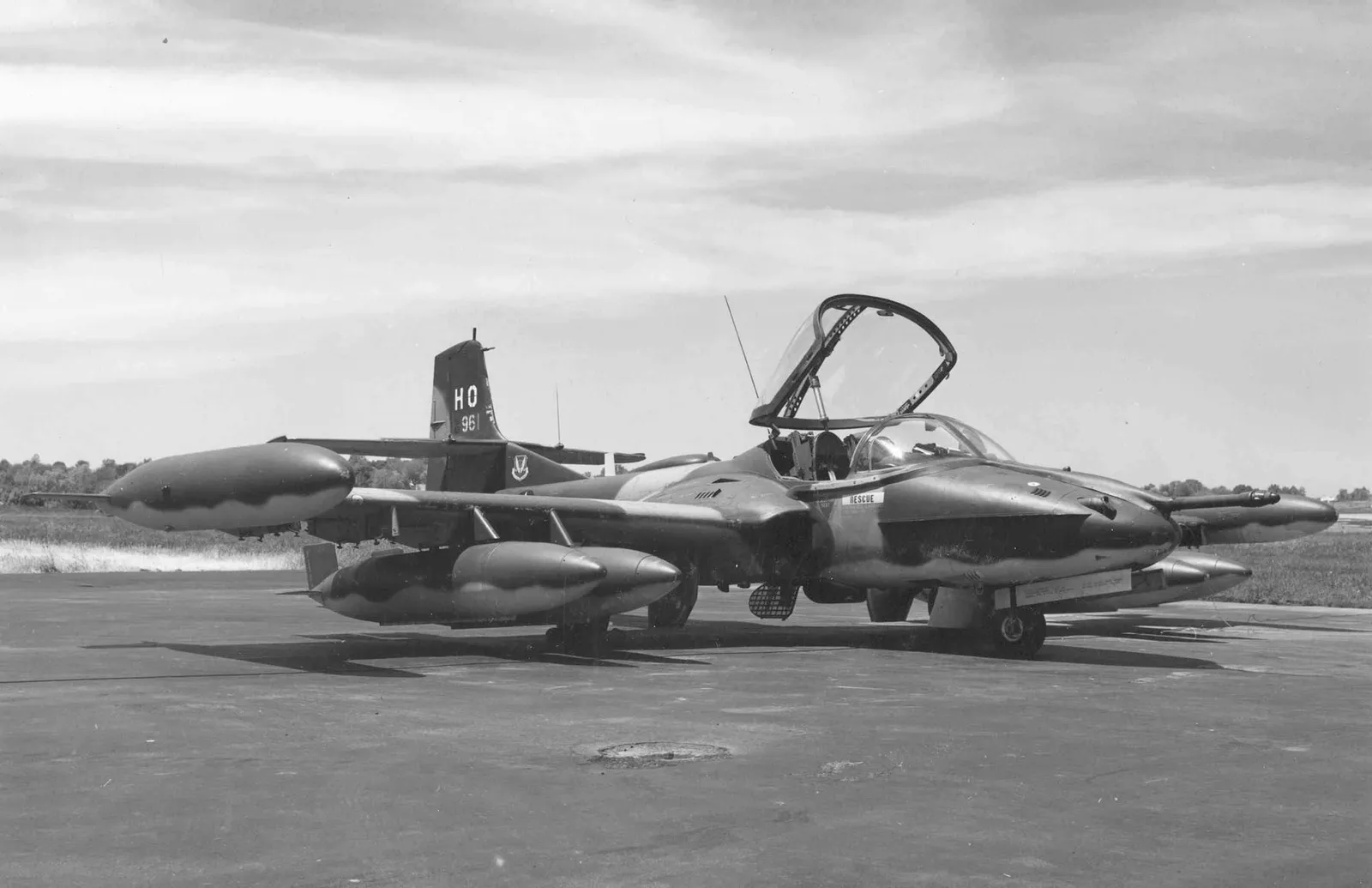
The Cessna A-37 Dragonfly was a U.S. light attack aircraft adapted from the T-37 trainer for counterinsurgency, close-air-support, interdiction, and forward-air-control work. Combat Dragon sent A-37As into Vietnam War operations in 1967, and the stronger A-37B added armor, refueling provision, more powerful J85 engines, and expanded South Vietnamese Air Force service.
USAF A-37As flew Combat Dragon close air support, night interdiction, and forward air control missions over South Vietnam and southern Laos; later A-37Bs were supplied to the South Vietnamese Air Force.
Combat Dragon tested a compact jet attack aircraft in the same theater that drove the requirement: South Vietnam and the Laos border area. The production A-37B kept the small T-37-derived airframe but added protection, fuel, refueling provision, and stronger structure for sustained attack use.
Close air support, night interdiction, armed and visual reconnaissance, and forward air control.
Supported by the National Museum and Hurlburt Field fact sheets.
Cockpit armor, redundant flight controls, aerial-refueling provision, strengthened airframe, and more powerful engines.
These changes distinguish the new-build A-37B from the converted A-37A evaluation aircraft.
The USAF provided 254 A-37Bs to the South Vietnamese Air Force to replace A-1 Skyraiders.
The Royal Australian Air Force heritage page also documents A-37B use supporting Australian ground forces.
The A-37 family began with two modified T-37 prototype airframes, then moved through converted A-37A combat-evaluation aircraft to newly built A-37B and OA-37B service variants.
| Variant | Configuration | Designation notes |
|---|---|---|
| YAT-37D | Prototype COIN attack/reconnaissance conversion | The National Museum identifies two modified T-37 trainers evaluated from 1964 to 1966 as YAT-37D prototypes for Southeast Asia use. Sources: Cessna A-37 Dragonfly - National Museum of the USAF |
| YA-37A | Prototype redesignation | The museum aircraft was recalled for final A-37 design testing and retired again in July 1970 as the YA-37A. Sources: Cessna A-37 Dragonfly - National Museum of the USAF |
| A-37A | T-37B conversion for Combat Dragon | USAF contracted Cessna to modify 39 T-37Bs into A-37As in 1967, then sent 25 to Southeast Asia for Combat Dragon evaluation. Sources: Cessna A-37 Dragonfly - National Museum of the USAF |
| A-37B | New-build light attack production model | The A-37B strengthened the airframe, added cockpit armor, redundant flight controls, refueling provision, and more powerful engines; 577 were built. Sources: Cessna A-37 Dragonfly - National Museum of the USAF, OA-37B Dragonfly - Hurlburt Field |
| OA-37B | Observation and forward-air-control service designation | USAF reserve and Air National Guard aircraft later served as observation/attack aircraft under the OA-37B designation before U.S. retirement in the early 1990s. Sources: Cessna A-37 Dragonfly - National Museum of the USAF, 911 ARS Red Eagles |
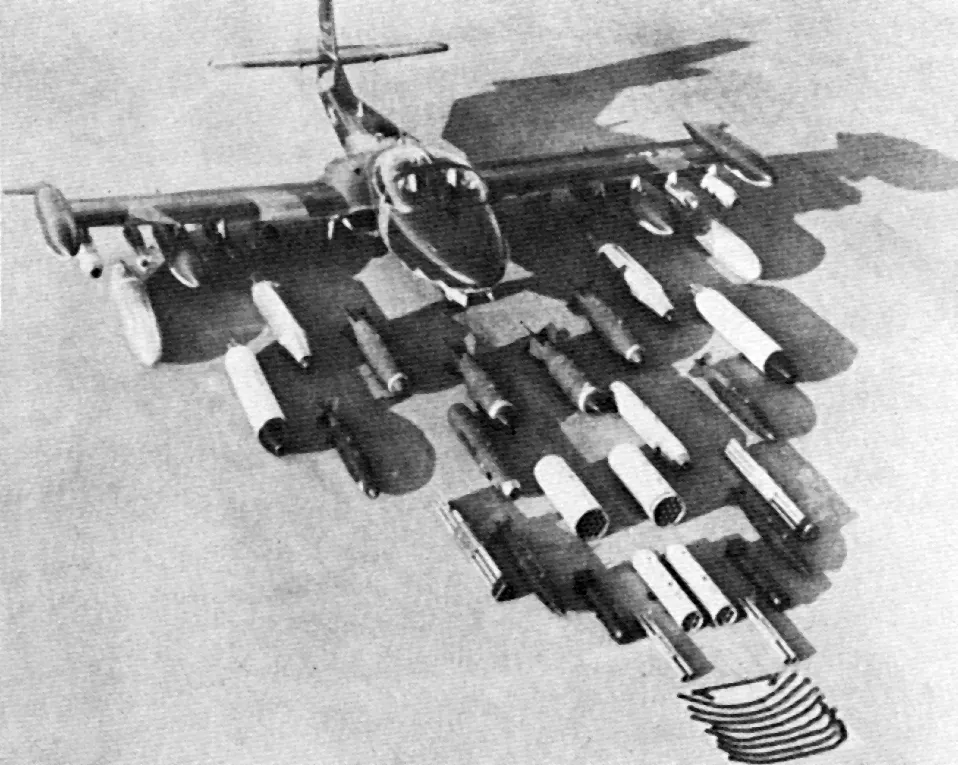
Sources document the Dragonfly's eight underwing hardpoints and representative stores for light attack, interdiction, and armed observation missions.
| Carried item | Item type | Carriage evidence |
|---|---|---|
 | Air-to-air missile | The OA-37B Dragonfly fact sheet lists Sidewinder missiles as one of the aircraft's external-store loadout options. Sources: OA-37B Dragonfly - Hurlburt Field |
 | 250-pound bomb | March Field Air Museum lists the A-37 bomb fit as including the 250 lb Mark 81. |
 | 500-pound bomb | March Field Air Museum lists the A-37 bomb fit as including the 500 lb Mark 82, and Smithsonian reporting describes Vietnam sorties carrying 500-pound bombs. Sources: A-37 Dragonfly - March Field Air Museum, Legends of Vietnam: Super Tweet - Smithsonian |
 | 750-pound bomb | March Field Air Museum lists the A-37 bomb fit as including the 750 lb M117. |
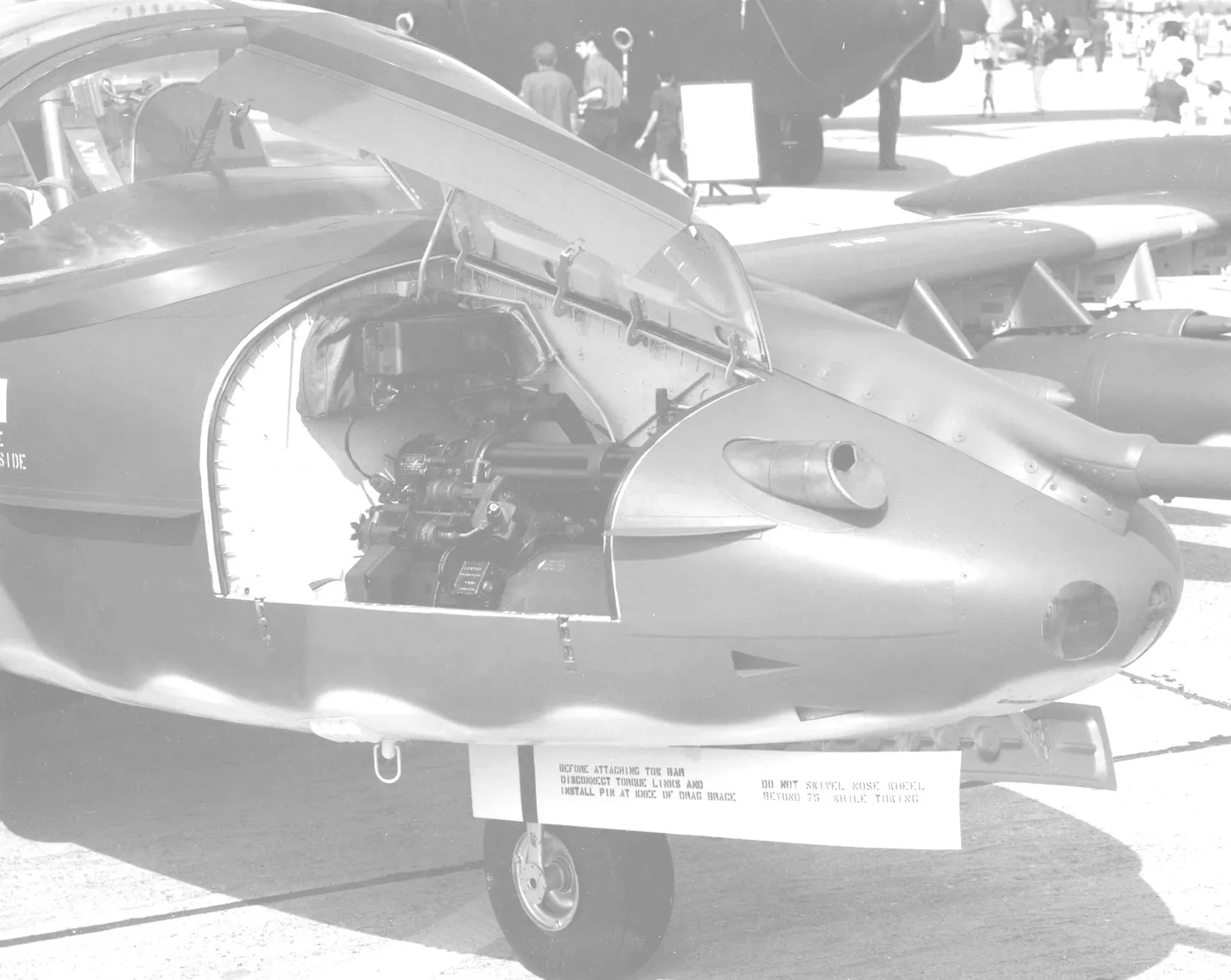
 | SUU-11/A gun pod | March Field Air Museum lists provision for SUU-11/A gun pods under the wings. |
 | 2.75-inch rocket pod | Hurlburt Field lists a rocket configuration for the A-37, and March Field identifies LAU-3/A rocket pods among the Dragonfly's stores. Sources: OA-37B Dragonfly - Hurlburt Field, A-37 Dragonfly - March Field Air Museum |
The National Museum says the Air Force evaluated modified T-37 trainers as YAT-37D counter-insurgency prototypes between 1964 and 1966.
Sources: Cessna A-37 Dragonfly - National Museum of the USAF
The Air Force sent 25 A-37As to Southeast Asia under Combat Dragon, where they flew close air support, night interdiction, and forward air control missions over South Vietnam and southern Laos.
Sources: Cessna A-37 Dragonfly - National Museum of the USAF, OA-37B Dragonfly - Hurlburt Field
The National Museum says the USAF provided 254 A-37Bs to the South Vietnamese Air Force, while Hurlburt Field notes that A-37B training supported the military assistance program.
Sources: Cessna A-37 Dragonfly - National Museum of the USAF, OA-37B Dragonfly - Hurlburt Field, Cessna A-37B Dragonfly - Royal Australian Air Force
A Seymour Johnson Air Force Base fact sheet says an OA-37 Dragonfly flew close air support sorties during Operation Just Cause in Panama.
Sources: 911 ARS Red Eagles
The National Museum says the last A-37 in Air Force Reserve or Air National Guard use was retired in 1992.
Sources: Cessna A-37 Dragonfly - National Museum of the USAF