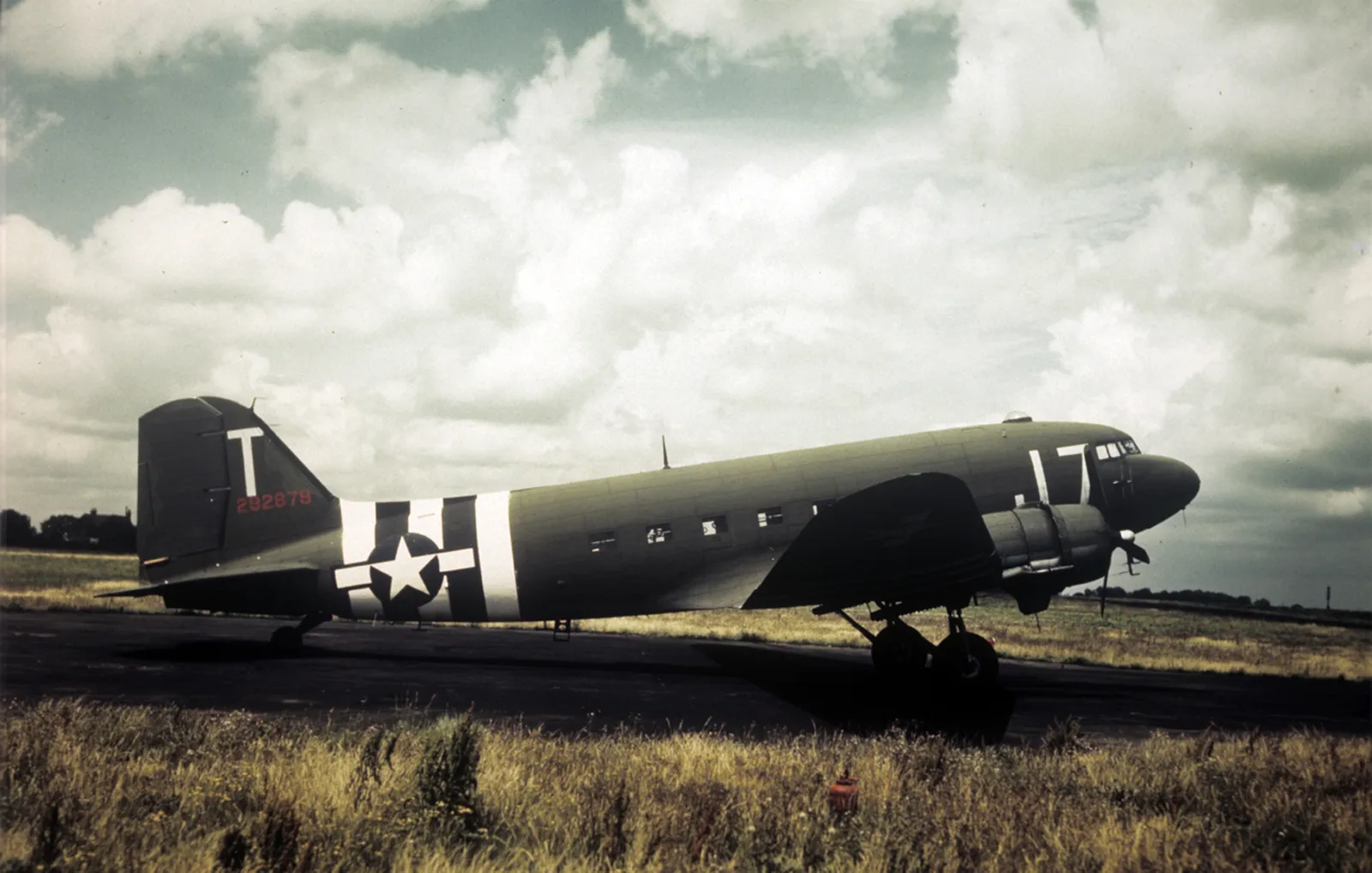
Allied C-47s carried personnel and cargo, towed gliders, dropped paratroops, and evacuated wounded during the Second World War.
Aircraft & UAVs
C-47 Skytrain
Also known as
- Douglas C-47
- Douglas C-47 Skytrain
- Dakota
- Gooney Bird
- C-53 Skytrooper
- AC-47 Spooky
- C-47D Skytrain
- R4D
The Douglas C-47 Skytrain is the military transport derivative of the DC-3 airliner, built for cargo, personnel, paratroop, glider-towing, and medical-evacuation work. Allied forces used it heavily in the Second World War, and U.S. and South Vietnamese service later included transport, reconnaissance, psychological-warfare, and AC-47 gunship missions in the Vietnam War.
Role in Conflicts
- Side
- United States and South Vietnam


U.S. Air Force C-47s served in Southeast Asia as transports and in converted gunship, reconnaissance, and psychological-warfare missions.
Profile / Specs
Profile
- Origin
- United States
- Built by
- Douglas Aircraft Company
- Type
- Twin-engine military transport aircraft
- Service note
- World War II and postwar service
- Designed
- U.S. Army Air Corps first ordered C-47s in 1940
- Produced
- World War II production
- Number built
- 9,348 procured by the U.S. Army Air Corps by the end of World War II
- Developed from
- Douglas DC-3
Specifications
- Engines
- Two Pratt & Whitney R-1830 engines of 1,200 hp each
- Maximum speed
- 232 mph
- Range
- 1,513 miles
- Payload
- 28 passengers, 18-22 fully equipped paratroopers, about 6,000 lb of cargo, or 18 stretchers and three medical personnel
- Role
- Military transport adapted from the Douglas DC-3 airliner
- Crew
- Three: pilot, copilot, and radio operator
- Wingspan
- 95 ft 6 in
- Length
- 63 ft 9 in
- Airframe changes
- Military DC-3 adaptation with stronger rear fuselage, large port-side cargo doors, and a reinforced cabin floor for cargo handling
- Landing gear and wing layout
- Twin-engine, low-wing transport with tailwheel landing gear
- Postwar mission growth
- Transport, Berlin Airlift service, Korean War supply and evacuation work, flare dropping, reconnaissance, psychological warfare, and gunship conversion
Transport Design Changes
The C-47 kept the DC-3's basic twin-engine, low-wing transport layout but adapted it for military cargo and airborne work. Sources emphasize the practical changes: more powerful R-1830 engines, a stronger rear fuselage, a reinforced cabin floor, and large cargo doors on the port side.
Cargo access
Large port-side cargo doors and reinforced flooring made the airliner-derived fuselage useful for freight, equipment, and casualty-evacuation loads.
Airborne work
The same airframe supported personnel transport, paratroop drops, and glider towing, with 18-22 fully equipped paratroopers listed in the Air Force museum payload note.
Conversion potential
Later mission fits used the durable transport as a reconnaissance, psychological-warfare, flare-dropping, and AC-47D gunship platform.
Variants
The C-47 family centered on militarized DC-3 transports, with service designations and later conversions reflecting cargo, troop-carrier, naval, and gunship roles.
| Variant | Configuration | Designation notes |
|---|---|---|
| C-47 | Baseline military transport | The C-47 added military cargo and troop-carrier features to the DC-3 airframe for personnel, cargo, parachute, glider-towing, and casualty-evacuation missions. Sources: National Museum of the U.S. Air Force C-47D Skytrain, National WWII Museum Douglas C-47 Skytrain |
| C-47A | Wartime transport variant | Museum examples and wartime markings document C-47A aircraft in troop-carrier and D-Day-related service. Sources: National Museum of the U.S. Air Force C-47D Skytrain, Air Mobility Command Museum C-47A Skytrain |
| C-47B | Wartime transport variant | The National WWII Museum describes C-47B-type production and use within the broader C-47 wartime transport family. |
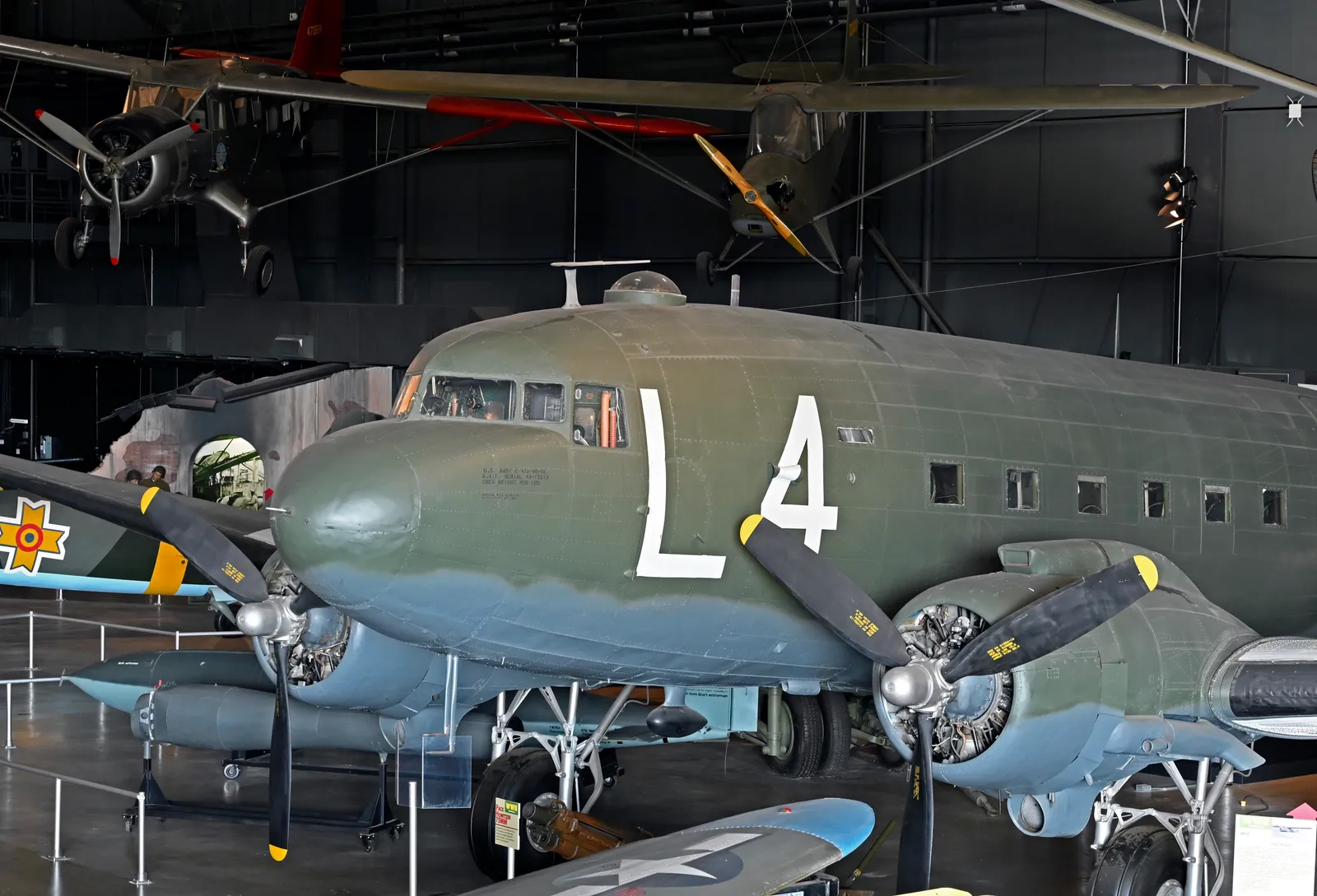
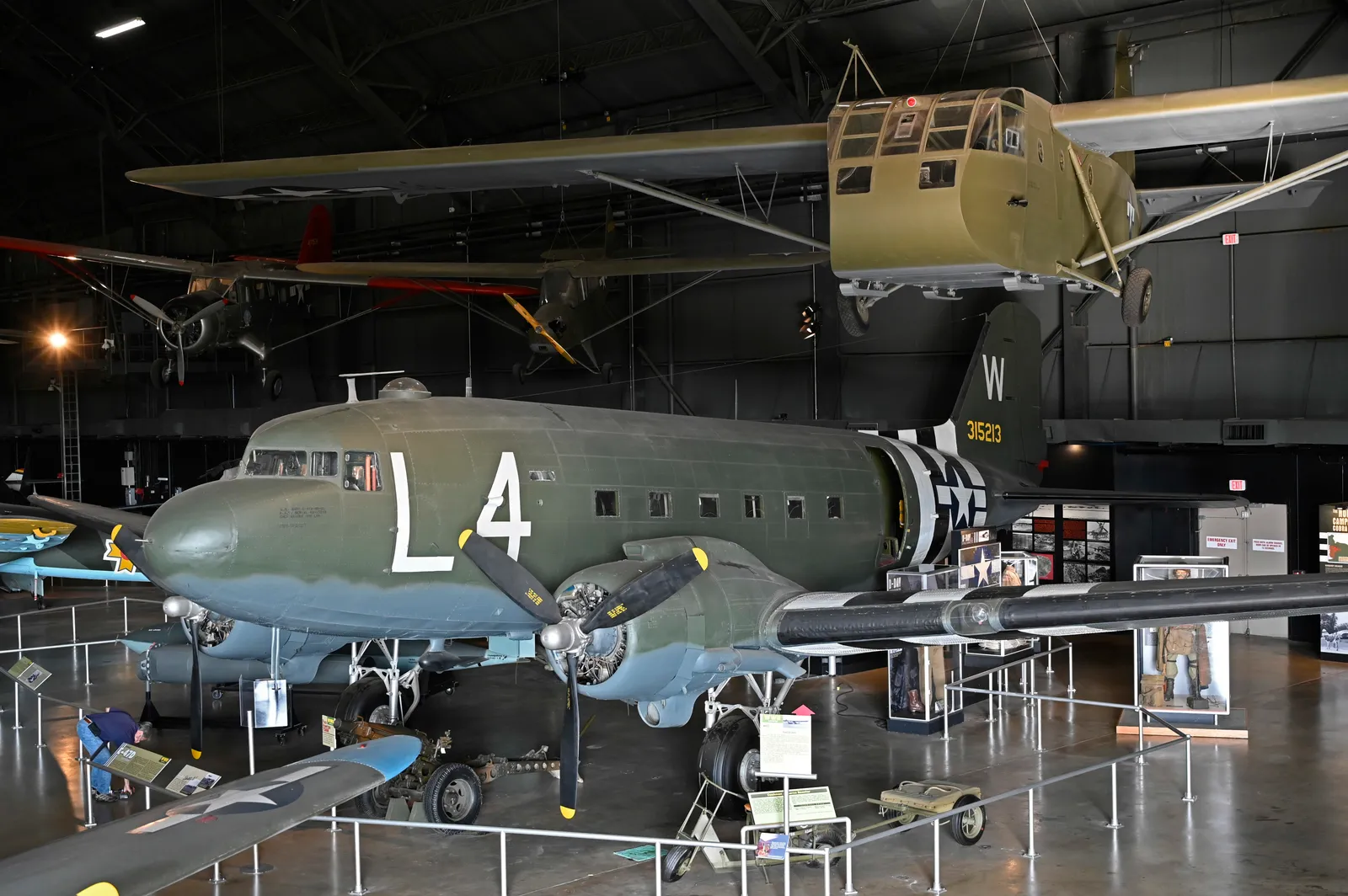
| C-47D | Postwar redesignation and service variant | The National Museum of the U.S. Air Force display aircraft is a C-47D, preserved to represent wartime C-47A service and routine postwar USAF use. Sources: National Museum of the U.S. Air Force C-47D Skytrain |
| C-53 Skytrooper | Troop transport derivative | Smithsonian material identifies the C-53 as a military derivative of the DC-3 alongside the C-47. |
| R4D | U.S. Navy and Marine Corps designation | Air Mobility Command Museum material and Boeing Images identify R4D as the Navy designation for C-47-family aircraft. Sources: Air Mobility Command Museum C-47A Skytrain, Boeing Images Final C-47 Built at Douglas Long Beach Factory |
| Dakota | British and Australian designation | Boeing Images identifies Dakota as the British and Australian designation for the C-47. Sources: Boeing Images Final C-47 Built at Douglas Long Beach Factory |
| AC-47 Spooky | Side-firing gunship conversion | The AC-47 was based on the C-47 cargo aircraft and armed with side-firing 7.62 mm miniguns for Vietnam War gunship missions. Sources: National Museum of the U.S. Air Force Gunship I Spooky |
Timeline
C-47 Skytrain Key Events
U.S. Army Air Corps orders C-47
The U.S. Army Air Corps ordered the first C-47s in 1940 as military transports adapted from the Douglas DC-3.
Sources: National Museum of the U.S. Air Force C-47D Skytrain
Large-scale airborne use begins
C-47 troop-carrier operations were used over Sicily during Operation Husky before further airborne operations in Italy, France, the Netherlands, and Germany.
Sources: National WWII Museum Douglas C-47 Skytrain
Normandy airborne assault
More than 1,000 C-47s transported U.S. paratroopers during the Normandy invasion, making the aircraft central to Allied airborne movement on D-Day.
Sources: National WWII Museum Douglas C-47 Skytrain, Smithsonian D-Day and the Douglas C-47
AC-47 combat missions begin
The first AC-47 combat missions took place in December 1964, after C-47 airframes were converted into side-firing gunships for South Vietnam missions.
Sources: National Museum of the U.S. Air Force Gunship I Spooky
Last routine USAF C-47 reaches museum
The C-47D now displayed by the National Museum of the U.S. Air Force flew to the museum in 1975 after routine USAF service.
Sources: National Museum of the U.S. Air Force C-47D Skytrain
Related Weapon Systems


Sources
National Museum of the U.S. Air Force C-47D SkytrainPublisher: National Museum of the United States Air Force | Note: Supports C-47 background, transport roles, procurement total, specifications, public-domain image provenance, C-47s used by Allied forces in the Second World War, and C-47s used by U.S. forces in the 1955 Vietnam War. | Accessed: 2026-07-13National WWII Museum Douglas C-47 SkytrainPublisher: The National WWII Museum | Note: Supports C-47 military airframe changes plus Allied use in the Second World War for airborne drops, theater cargo service, and China-Burma-India airlift missions. | Accessed: 2026-07-13National Museum of the U.S. Air Force Gunship I SpookyPublisher: National Museum of the United States Air Force | Note: Supports C-47-derived AC-47 gunships used by U.S. forces in the 1955 Vietnam War, including South Vietnam combat missions for local defense, convoy escort, and close air support. | Accessed: 2026-07-13Air Mobility Command Museum C-47A SkytrainPublisher: Air Mobility Command Museum | Note: Supports C-47A use by Allied forces in the Second World War, including D-Day troop-carrier service and related wartime transport missions. | Accessed: 2026-07-13Smithsonian D-Day and the Douglas C-47Publisher: National Air and Space Museum | Note: Supports C-47 use in the Normandy airborne assault and broader Allied Second World War airlift context. | Accessed: 2026-07-13Smithsonian National Air and Space Museum DC-3Publisher: National Air and Space Museum | Note: Supports Douglas DC-3 manufacture, first flight, and C-47/C-53 military derivative context. | Accessed: 2026-07-13Tinker History Douglas C-47 SkytrainPublisher: Tinker Air Force Base | Note: Supports C-47 airframe configuration, Oklahoma City production, crew-count caveat, in-service dates, mission breadth, and AC-47D Spooky gunship conversion context. | Accessed: 2026-07-13Boeing Images Final C-47 Built at Douglas Long Beach FactoryPublisher: Boeing Images | Note: Supports Long Beach production context, R4D and Dakota designation notes, Allied service breadth, and postwar Berlin Airlift, Korean War, and Vietnam War background. | Accessed: 2026-07-13Wikimedia Commons C-47A Skytrain ImagePublisher: Wikimedia Commons | Note: Supports public-domain image provenance for the C-47 image. | Accessed: 2026-07-13National Museum of the U.S. Air Force C-47D Gallery ImagePublisher: National Museum of the United States Air Force | Note: Supports public-domain image provenance for the C-47D Skytrain gallery image. | Accessed: 2026-07-13National Museum of the U.S. Air Force C-47D and Waco Glider ImagePublisher: National Museum of the United States Air Force | Note: Supports public-domain image provenance for the C-47D Skytrain and Waco CG-4A gallery image. | Accessed: 2026-07-13