- Side
- United States and South Vietnam


U.S. Army CH-47s supported Vietnam War airmobility by moving artillery, supplies, troops, casualties, and heavy equipment in terrain where road movement was limited.
The Boeing CH-47 Chinook is a U.S. tandem-rotor heavy-lift transport helicopter family used for cargo, troop movement, casualty evacuation, aircraft recovery, and special operations. Official and archival records place Chinooks in Vietnam, the Falklands, Afghanistan, and Iraq, where the type's rear ramp, external sling-load capacity, and high-altitude lift made it a recurring battlefield mobility asset.
U.S. Army CH-47s supported Vietnam War airmobility by moving artillery, supplies, troops, casualties, and heavy equipment in terrain where road movement was limited.
RAF Chinook HC1 ZA718, call sign Bravo November, operated with 18 Squadron in the Falklands; RAF and IWM records document supply transport and post-surrender duties around Teal Inlet, San Carlos, and Port Stanley.
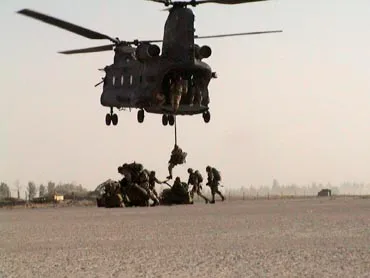
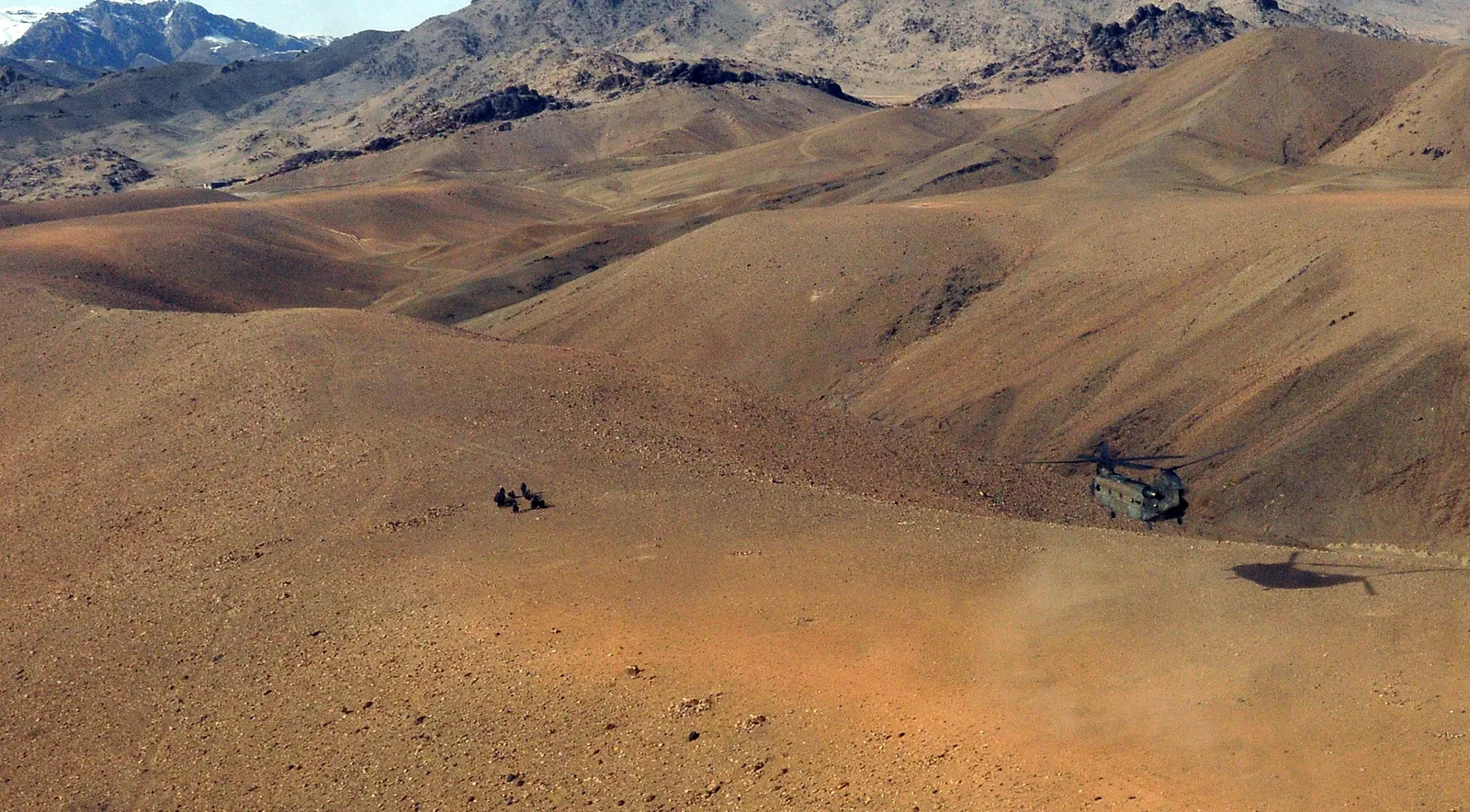
U.S. Army CH-47F helicopters operated from Bagram in Operation Freedom's Sentinel personnel-recovery work, carrying Air Force rescue teams for high-altitude rescue, casualty-recovery, and combat search-and-rescue missions.
Role detailsU.S. Army records place 101st Airborne Division CH-47 Chinooks crossing into Iraq in March 2003, and later Army aviation survivability reporting ties a November 2003 Chinook missile loss to Iraq and Afghanistan helicopter protection upgrades.
Role detailsThe Chinook's tandem-rotor layout and rear cargo ramp make it a transport aircraft rather than a conventional attack helicopter, but the design details explain why it appears so often in battlefield mobility records.
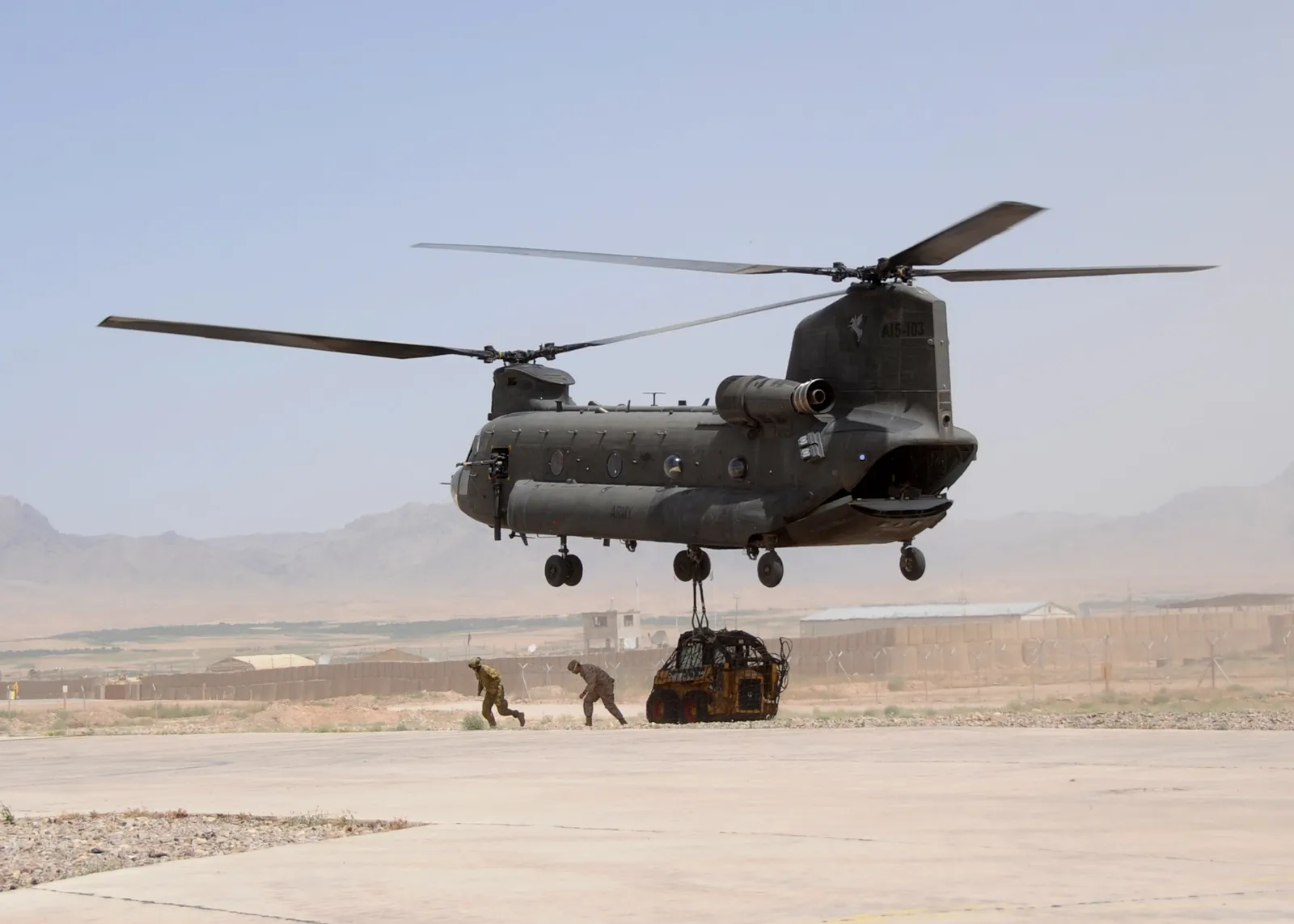
Boeing highlights rear-ramp access, internal and external load carriage, and high-altitude operation; RAF guidance adds a triple-hook external-load system, cargo winch, and roller conveyor fit for vehicles or freight.
Supported by H-47 Chinook | Boeing and RAF Chinook Current Aircraft.
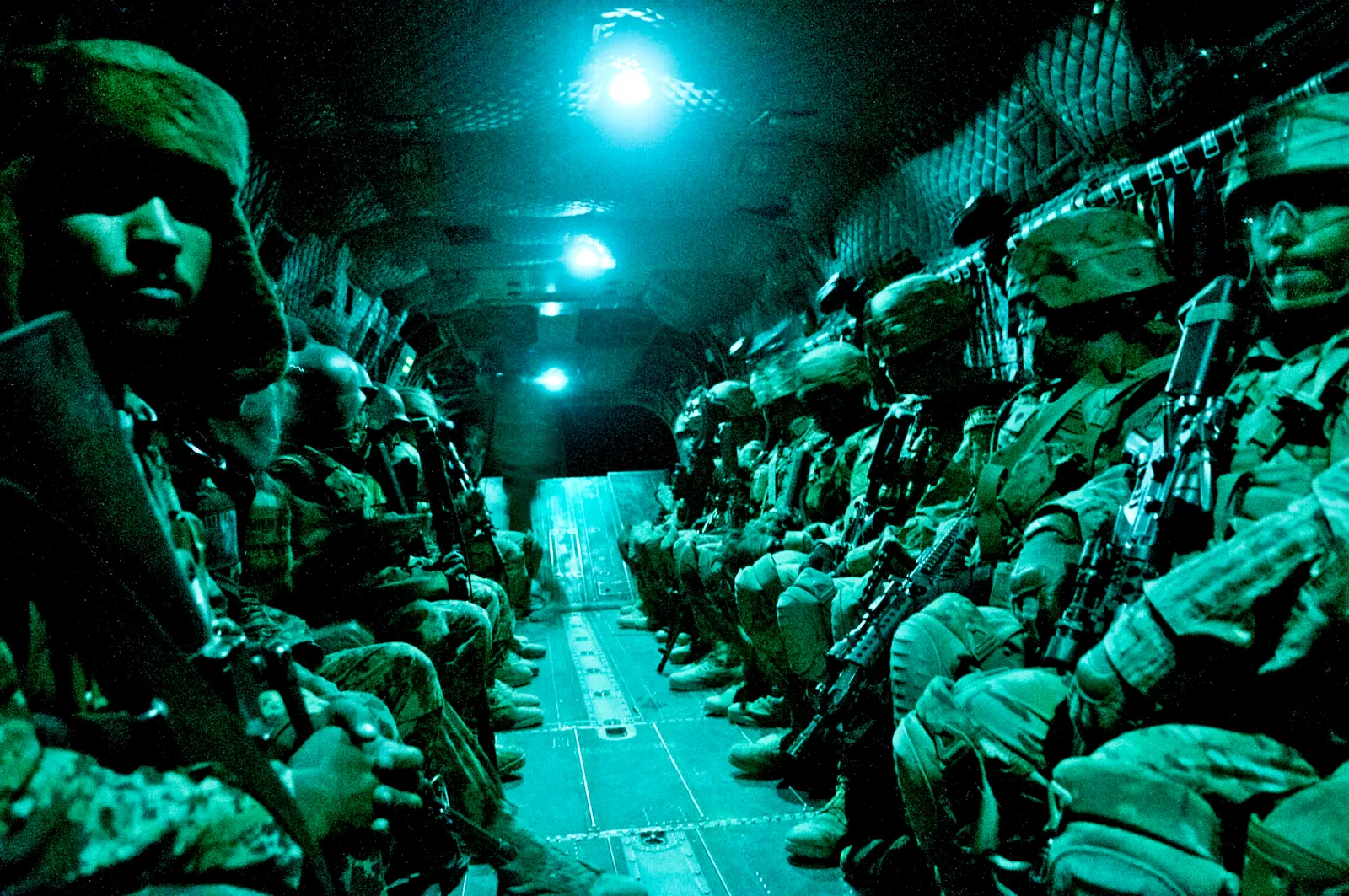
Official U.S. and RAF sources describe troop transport, resupply, casualty evacuation, aircraft recovery, combat search and rescue, special operations, and disaster-relief missions.
Those roles align with the conflict rows where direct theater evidence exists.
Block II adds structural, drivetrain, fuel, and avionics changes for greater lift and range, while RAF Mk5/Mk6/Mk6A aircraft use digital cockpits and DAFCS for handling in dust, snow, and other degraded visual conditions.
Supported by Boeing, U.S. Army Block II reporting, and RAF aircraft guidance.
The Chinook record covers the wider H-47 family: early U.S. Army CH-47A/B/C aircraft, later CH-47D and CH-47F cargo models, special-operations MH-47 aircraft, modern CH-47F Block II production, and RAF HC-mark support helicopters.
| Variant | Configuration | Designation notes |
|---|---|---|
| CH-47A/B/C Chinook | Early U.S. Army cargo helicopter variants | The original production family entered U.S. Army service in 1962 and proved its heavy-lift utility during the Vietnam War. Sources: RAF Chinook Current Aircraft |
| CH-47D Chinook | Modernized cargo helicopter | The D model is represented in the Army fact sheet's CH-47D-era payload, speed, and external-load data and formed the baseline for many later fleet upgrades. Sources: CH-47 Chinook helicopter | U.S. Army |
| CH-47F Chinook | Digital cockpit cargo helicopter | The F model family is the current U.S. Army cargo baseline and underpins later Block II modernization. Sources: H-47 Chinook | Boeing, U.S. Army Chinook Block II Rapid Fielding |
| CH-47F Block II Chinook | Modernized heavy-lift variant | Block II adds a reinforced structure, redesigned fuel tanks, improved drivetrain, and open avionics architecture; U.S. Army reporting gives the variant a 54,000-pound maximum gross weight. Sources: H-47 Chinook | Boeing, U.S. Army Chinook Block II Rapid Fielding, U.S. Army CH-47F Block II Lot 6 |
| MH-47G Chinook | Special operations variant | Boeing identifies U.S. Special Operations Command as a Chinook customer, and its program page describes special-operations transport and infiltration/extraction roles within the H-47 family. Sources: H-47 Chinook | Boeing |
| RAF Chinook HC.Mk 4/5/6/6A | United Kingdom support-helicopter marks | The RAF describes its current operational fleet as Mk5, Mk6, and Mk6A aircraft with digital glass cockpits and DAFCS, following earlier HC1, HC2/2A, Mk3, and Project Julius upgrade paths. Sources: RAF Chinook Current Aircraft |
The National Museum of the United States Air Force says the C-5A Galaxy can accommodate three CH-47 Chinook helicopters.
| Carrier | Carrier type | Carriage evidence |
|---|---|---|
 | Outsize cargo transport aircraft | The National Museum of the United States Air Force says the C-5A Galaxy can accommodate three CH-47 Chinook helicopters. Sources: National Museum C-5A Galaxy |
The first CH-47A entered U.S. Army service in 1962, beginning the Chinook's long heavy-lift service life.
Sources: Museum of Flight CH-47D Chinook
The U.S. Army fact sheet lists the CH-47F first-unit-equipped milestone in fourth quarter fiscal year 2007 after operational testing earlier that fiscal year.
Sources: CH-47 Chinook helicopter | U.S. Army
Boeing delivered the first new-build MH-47G configured Chinook to U.S. Army Special Operations Aviation Command.
Sources: Boeing First New-Build MH-47G
The Army said CH-47F Block II rapid fielding would modernize two Combat Aviation Brigades with higher gross weight, increased payload, extended range, and updated avionics architecture.
Sources: U.S. Army Chinook Block II Rapid Fielding
The Army announced a Lot 6 contract for six remanufactured CH-47F Block II cargo helicopters, continuing rapid fielding of the modernized heavy-lift variant.
Sources: U.S. Army CH-47F Block II Lot 6