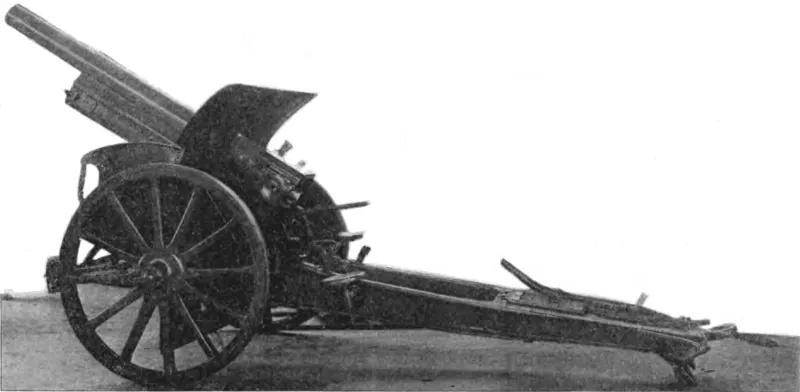
Australian and Western Australian museum records identify leFH 16 howitzers captured from German or Central Powers positions in 1917-1918, including a 5th Battalion AIF capture near Lihons and a 10th Light Horse-linked gun captured during the Palestine campaign.
Artillery
10.5 cm leFH 16
Also known as
- 10.5cm leFH 16
- 10.5 cm leichte Feldhaubitze 16
- 10.5cm leichte Feldhaubitze 16
- 10.5cm leFH-16
- leFH 16
- 10.5 cm le.FH.16
- 10.5cm le.FH.16
- 10.5 cm l.F.H. 16
- 10.5cm l.F.H. 16
- l.F.H. 16
- 10.5cm FH 16
- 10.5 cm FH 16
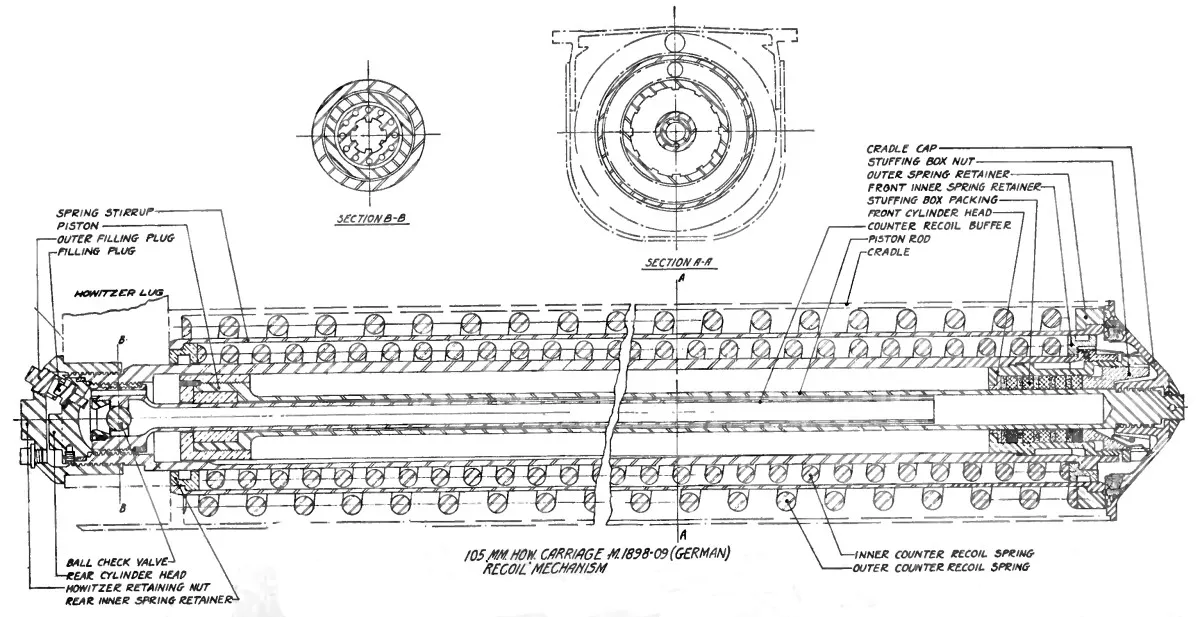
The 10.5 cm leFH 16 was a German light field howitzer introduced in 1916 as a longer-ranged successor to the 10.5 cm Feldhaubitze 98/09. Museum records tie surviving examples to German divisional artillery, to Australian captures in France and Palestine, and to interwar modernization before the type became reserve, training, or conversion stock in later German service.
Role in Conflicts
Profile / Specs
Profile
- Origin
- German Empire
- Built by
- RheinmetallVarious manufacturers
- Built in
- Germany
- Type
- 105 mm towed light field howitzer
- Service note
- First World War German field artillery design with later interwar and Second World War reuse
- Designer
- German artillery designers associated with Rheinmetall and Krupp production
- Designed
- 1914-1916
- Produced
- 1916 and wartime production
- Number built
- At least 13,004 in service at the end of the First World War, according to the Australian Army Museum of Western Australia record
Specifications
- Caliber
- 105 mm
- Projectile weight
- 15.7 kg in the Australian Army Museum of Western Australia record; 14.81 kg in the Royal Canadian Artillery Museum record
- Maximum range
- 10.2 km in the Australian Army Museum of Western Australia record; 9,225 m in the Royal Canadian Artillery Museum record
- Rate of fire
- 6-8 rounds per minute in the Royal Canadian Artillery Museum record
- Carriage
- Steel box carriage with wooden-spoked wheels on the AWM example
- Interwar modernization
- German 1930s modernization added pneumatic rubber tires for vehicle towing, according to the Royal Canadian Artillery Museum
- Breech
- Sliding Krupp breech block on the AWM example
- Role
- Towed light field howitzer for divisional artillery fire support
Design And Service Notes
The leFH 16 kept the German 105 mm light-howitzer role but pushed beyond the older 98/09 pattern through a longer-ranged First World War design. Museum records are especially useful for this system because surviving trophy guns preserve manufacturer, capture, and theater context: one Western Australian example is identified as Krupp-built, while the same record notes Rheinmetall manufacture for the type. The strongest combat-use evidence here is First World War capture and service context; later Second World War material is included as variant history rather than as a separate conflict row because the current catalog has no exact Eastern Front campaign record matching the cited IWM film.
Divisional issue
RCA Museum context describes German divisions as having three four-gun leFH 16 batteries through the end of the First World War.
First World War role
German and Central Powers field-artillery fire support, documented by captured guns in France and Palestine.
Interwar handling
Versailles retention limits and later pneumatic-tire conversions made the gun a reduced, modernized legacy system before the leFH 18 family superseded it.
Later reuse
Some leFH 16 guns were mounted on captured light-tank chassis for German self-propelled artillery units in 1941-1943 footage.
Sources: AWM 10.5 cm l.F.H. 16; Collections WA German 10.5 cm Field Gun leFH 16; History of War leFH 18; IWM Becker leFH 16 self-propelled film; Royal Canadian Artillery Museum 10.5cm FH 16.
Variants
The leFH 16 name covers the original First World War towed howitzer; later German service also put leFH 16 guns onto captured light tank chassis for self-propelled artillery conversions.
| Variant | Configuration | Designation notes |
|---|---|---|
| 10.5 cm leFH 16 auf FCM(f) | Self-propelled conversion on captured French FCM chassis | Imperial War Museums identifies FCM 10.5 leFH 16 self-propelled guns in late-1943 Sturmgeschutz Abteilung 200 footage. |
| 10.5 cm leFH auf leichter Panzerkampfwagen VI 736(e) | Self-propelled conversion on captured British Vickers light tank chassis | Imperial War Museums identifies Vickers 10.5 cm leFH self-propelled guns with 15th Battery, Artillerie-Regiment 227, during 1941 movement to the Eastern Front and later Russian-campaign footage. |
Successor Family
The leFH 16 sits directly before the later German 105 mm leFH 18 family in catalog context.
| Compatible item | Item type | Compatibility evidence |
|---|---|---|
 | Successor 105 mm German light field howitzer | The leFH 18 record covers the later Rheinmetall-designed split-trail family that replaced the leFH 16 as Germany's standard light field howitzer. Sources: History of War leFH 18 |
Timeline
10.5 cm leFH 16 Key Events
leFH 16 enters German service
The Royal Canadian Artillery Museum describes the FH 16 as a German 1916 introduction that replaced the earlier 10.5 cm Feldhaubitze 98/09.
Sources: Royal Canadian Artillery Museum 10.5cm FH 16
Captured in the Palestine campaign
Collections WA links a Krupp-built leFH 16 trophy gun to artillery captured by the 10th Australian Light Horse after fighting south of Huj during the pursuit from Gaza and Beersheba.
Sources: Collections WA German 10.5 cm Field Gun leFH 16
Captured near Lihons
The Australian War Memorial records a 10.5 cm l.F.H. 16 captured by the 5th Battalion, AIF, near Lihons in France.
Sources: AWM 10.5 cm l.F.H. 16
Versailles retention limit
The Royal Canadian Artillery Museum states that the Treaty of Versailles limited postwar Germany to 87 leFH 16 guns with 800 rounds per gun.
Sources: Royal Canadian Artillery Museum 10.5cm FH 16
Rubber-tire modernization
The Royal Canadian Artillery Museum describes 1930s German modernization work that fitted leFH 16 guns with pneumatic rubber tires for vehicle towing.
Sources: Royal Canadian Artillery Museum 10.5cm FH 16
Self-propelled conversions move east
Imperial War Museums footage records Vickers 10.5 cm leFH self-propelled guns with 15th Battery, Artillerie-Regiment 227, entrained for the Eastern Front and later shown in the Leningrad sector.
Sources: IWM Becker leFH 16 self-propelled film
Media
10.5 cm leFH 16 Images
Related Weapon Systems


Sources
Collections WA German 10.5 cm Field Gun leFH 16Publisher: Collections WA / Australian Army Museum of Western Australia | Note: Supports First World War direct conflict use: identifies a leFH 16 captured during the Palestine campaign, names Krupp and Rheinmetall manufacturer context, and gives projectile weight, range, and end-of-war service quantity. | Accessed: 2026-07-13AWM 10.5 cm l.F.H. 16Publisher: Australian War Memorial | Note: Supports First World War direct conflict use: identifies a 10.5 cm l.F.H. 16 captured by 5th Battalion, AIF, near Lihons on 10 August 1918, and supports carriage and breech details. | Accessed: 2026-07-13Royal Canadian Artillery Museum 10.5cm FH 16Publisher: The Royal Canadian Artillery Museum | Note: Supports background on the 1916 German introduction of the FH 16, replacement of the 10.5 cm Feldhaubitze 98/09, divisional organization, Versailles retention limit, 1930s rubber-tire modernization, later reserve/training use, projectile weight, rate of fire, and range. | Accessed: 2026-07-13IWM Becker leFH 16 self-propelled filmPublisher: Imperial War Museums | Note: Supports background and variant context for leFH 16 self-propelled conversions on captured FCM and Vickers light-tank chassis in German 1941-1943 service footage. | Accessed: 2026-07-13History of War leFH 18Publisher: HistoryOfWar.org | Note: Supports background and relationship context for the leFH 16 as the German standard howitzer of the late First World War and much of the interwar period before the more modern leFH 18 family. | Accessed: 2026-07-1310.5 cm leFH 16 LeftSide1921.jpgPublisher: Wikimedia Commons | Note: Supports image provenance for a public-domain U.S. Ordnance Department photograph of a German 10.5 cm leFH 16 acquired during World War I. | Accessed: 2026-07-1310.5cmleFH16RecoilMechanismDiagram.jpgPublisher: Wikimedia Commons | Note: Supports image provenance for a public-domain U.S. Ordnance Department recoil-mechanism diagram of a German 10.5 cm leFH 16 acquired during World War I. | Accessed: 2026-07-13