
In May 2015, opposition-side footage and reporting showed Syrian rebel fighters loading or firing a leFH 18-family 105 mm howitzer, with Oryx identifying Ahrar al-Sham use near Ariha in Idlib and Washington Post reporting an expert assessment that the piece was likely captured from Syrian Army stocks or a museum.
Artillery
10.5cm leFH 18
Also known as
- 10.5 cm leFH 18
- 10.5 cm leichte Feldhaubitze 18
- leFH 18
- leFH 18M
- 10.5 cm leFH 18M
- 10.5 cm leFH 18/40
- 105 H 33
- 105 H/33
- Haubits m/39
- Obus K 10,5 cm/28 m/941
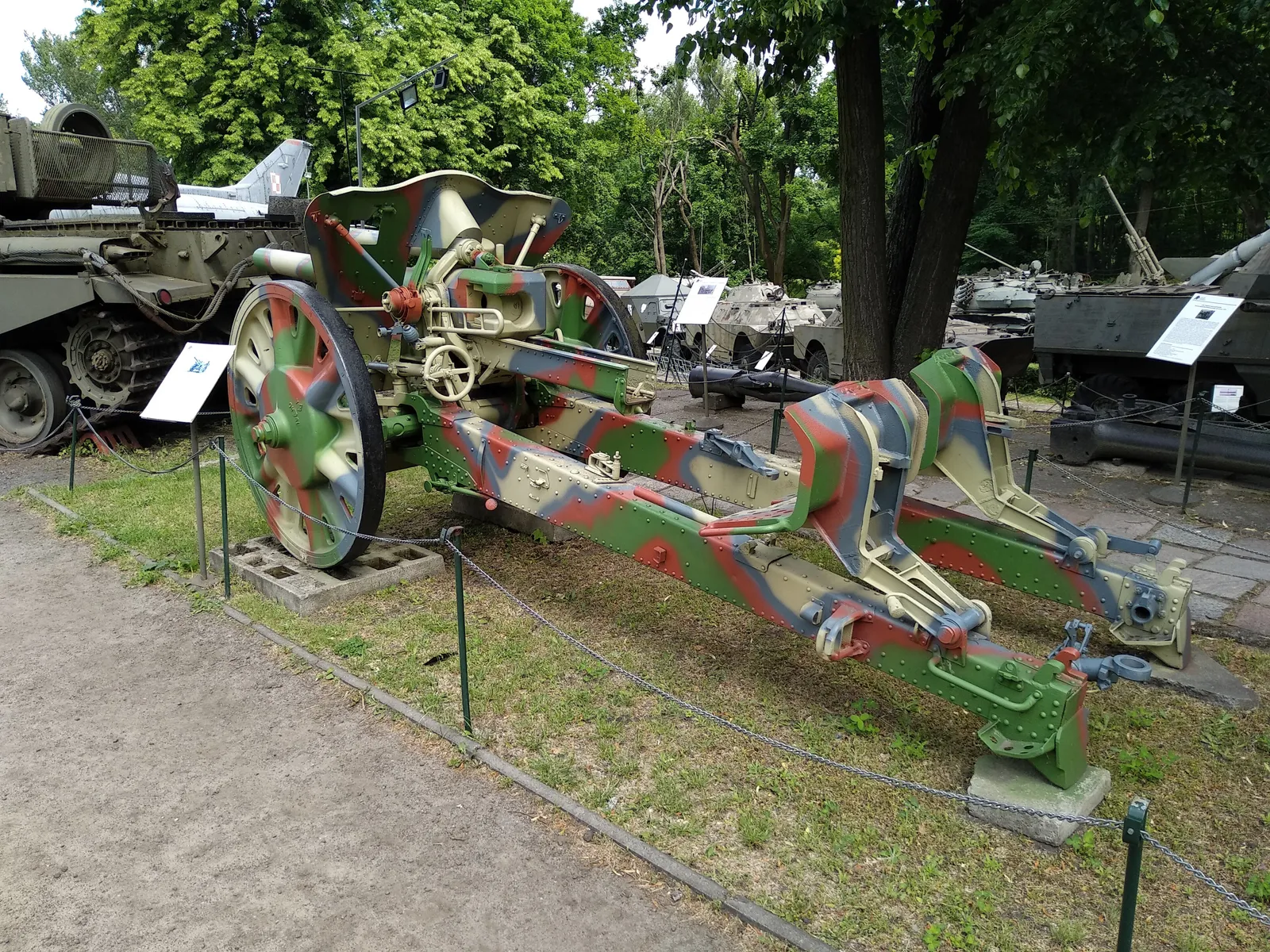
The 10.5cm leFH 18 was Germany's standard Second World War light field howitzer, a Rheinmetall-designed 105 mm split-trail gun that replaced the leFH 16 and then branched into the muzzle-braked leFH 18M and lighter leFH 18/40. The cataloged conflict row focuses on its unusual survival into the Syrian Civil War, where opposition footage and specialist reporting documented leFH 18-family guns being fired after capture or transfer through Syrian stocks.
Role in Conflicts
Profile / Specs
Profile
- Origin
- Germany
- Built by
- Rheinmetall
- Type
- 105 mm towed light field howitzer
- Service note
- 1930s German design with postwar foreign-service survivals
- Designer
- Rheinmetall
- Designed
- 1929-1930
- Unit cost
- 16,400 Reichsmark for a leFH 18M in 1943, according to Weaponsystems.net
- Produced
- 1935-1945
- Number built
- About 6,925 leFH 18/leFH 18M wartime guns plus 10,265 leFH 18/40 variants, with other totals depending on variant grouping
Specifications
- Caliber
- 105 mm
- Configuration
- Towed split-trail light field howitzer
- Crew
- 5 to 6
- Combat weight
- 1,985 kg for the original leFH 18
- Travel weight
- 3.49 t with horse-drawn ammunition limber
- Barrel
- 105 mm L/28 howitzer; 2.94 m gun length
- Ammunition
- Separate-loading 105x155 mmR cased ammunition
- Ammunition types
- High-explosive, smoke, anti-tank, illuminating, propaganda, and gas shells listed by Weaponsystems.net
- Maximum range
- 10,675 m for the original leFH 18 with HE shell; about 12,325 m for leFH 18M
- Muzzle velocity
- 470 m/s for original leFH 18 HE shell; 540 m/s for leFH 18M
- Elevation
- -5 degrees to +42 degrees
- Traverse
- 56 degrees total
- Rate of fire
- About 6 rounds per minute
- Sights
- Direct-fire and indirect-fire sights
- Towing
- Horse drawn, light truck, or half-track; half-tracks such as Sd.Kfz. 10 were preferred for motor towing
Design And Mobility Notes
The leFH 18 was a conventional towed howitzer, but its split-trail carriage gave it a broad traverse for a light divisional gun. The same carriage and limber arrangement also made the system heavy for horse-drawn artillery units, a limitation that the muzzle-braked leFH 18M and PaK 40-carriage leFH 18/40 tried to address in different ways.
Fire-control role
Direct and indirect sights supported field-artillery fire; Weaponsystems.net lists high-explosive, smoke, anti-tank, illuminating, propaganda, and gas shell types.
Mobility
The gun could be horse drawn, truck towed, or half-track towed; the horse-drawn limber carried ammunition and crew seats but nearly doubled travel weight.
Syria caveat
The Syrian Civil War row is based on identified footage and specialist reporting, not a comprehensive inventory of surviving Syrian leFH 18-family guns.
Sources: Weaponsystems.net leFH-18; History of War leFH 18; Oryx Syrian Civil War leFH 18M; Washington Post Syria leFH 18.
Variants
The leFH 18 family kept the same 105 mm divisional howitzer role while wartime variants tried to increase range or reduce carriage weight.
| Variant | Configuration | Designation notes |
|---|---|---|
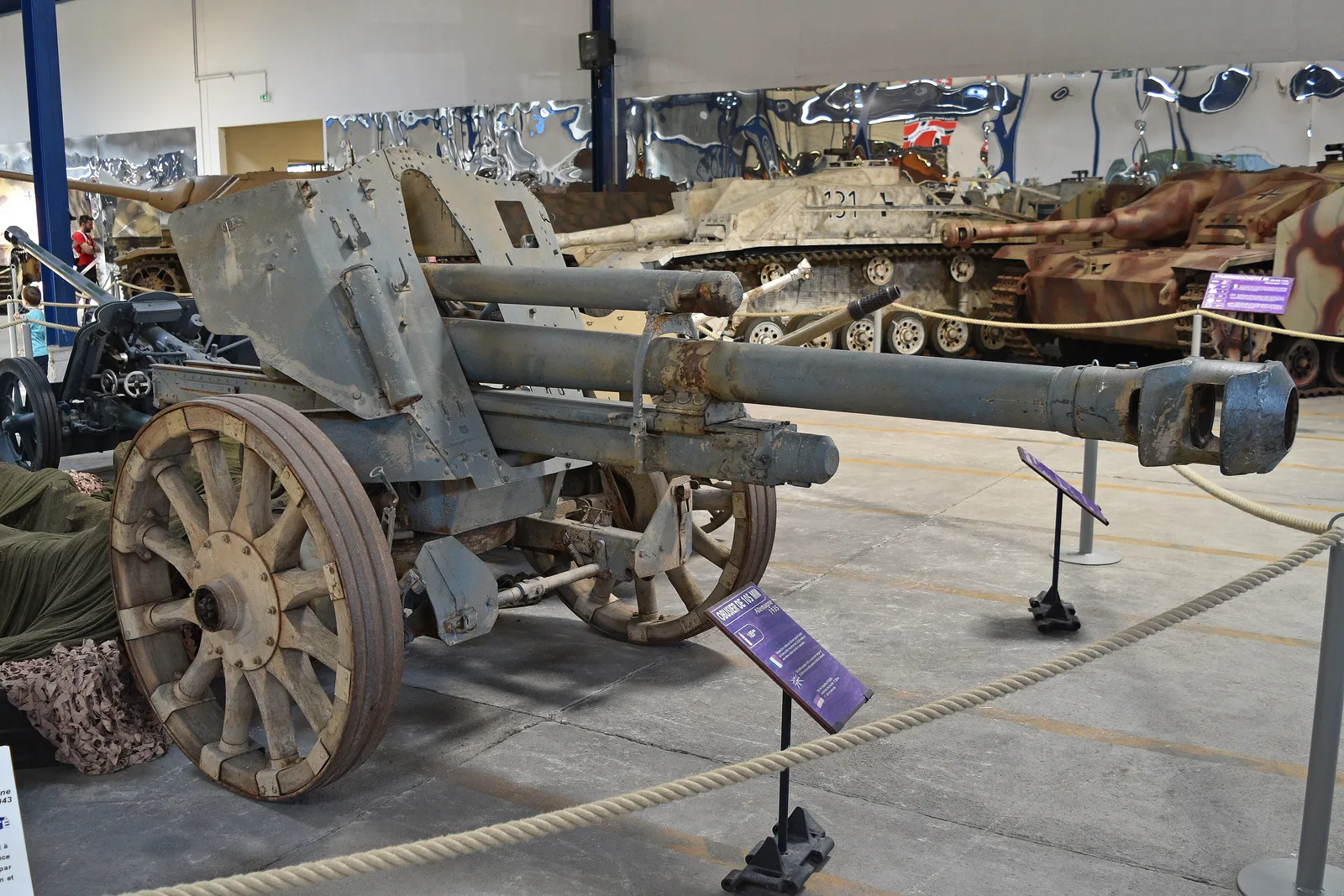
| 10.5cm leFH 18M | Muzzle-brake range-improvement model | The 18M added a double-baffle muzzle brake and used more powerful ammunition to increase maximum range to about 12.3 km. Sources: Weaponsystems.net leFH-18 |
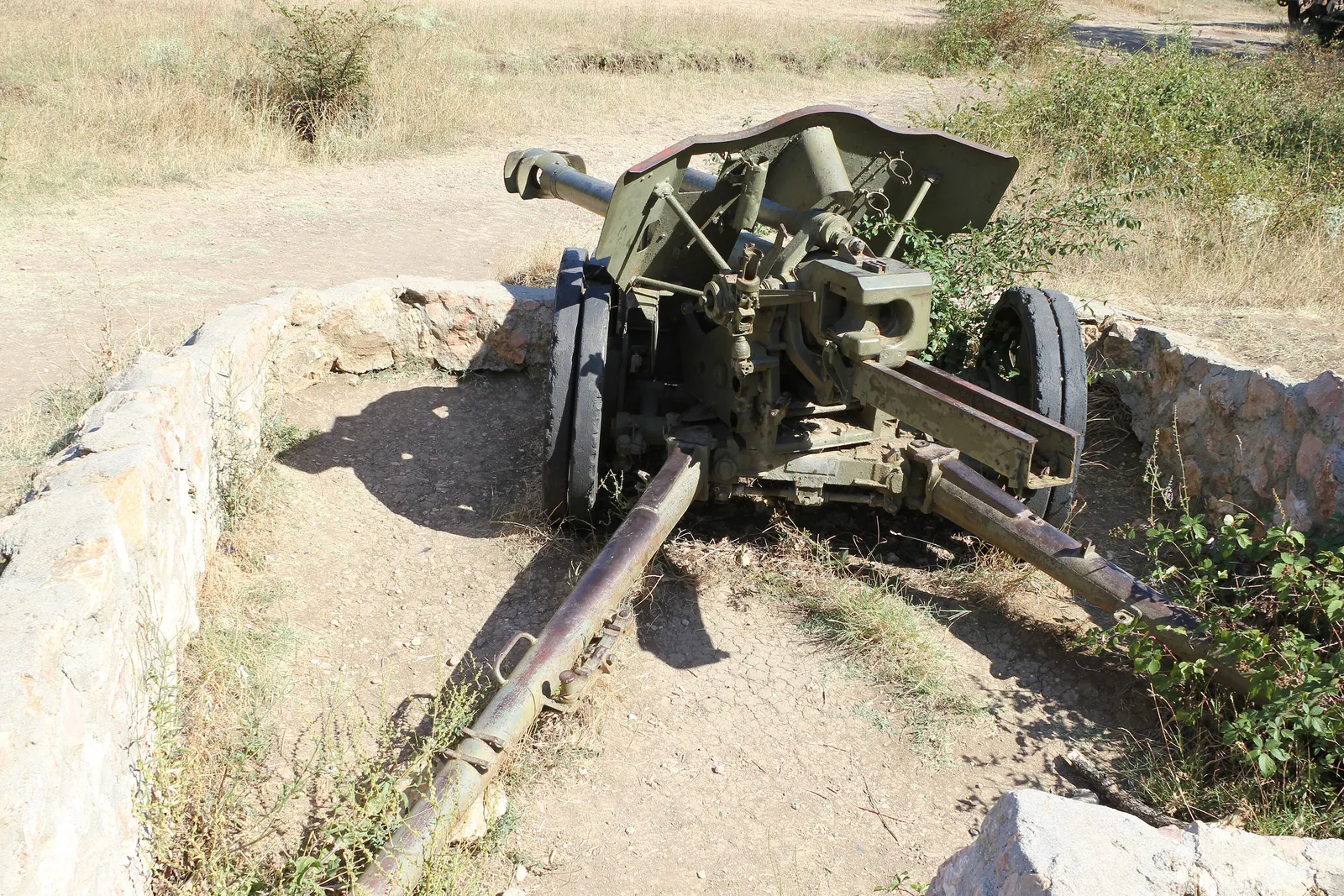
| 10.5cm leFH 18/40 | Lighter wartime carriage model | The 18/40 combined leFH 18M ordnance with a carriage using PaK 40-derived components and became the largest wartime subvariant. Sources: Weaponsystems.net leFH-18, History of War leFH 18/40 |
Design Lineage
The leFH 18 family is cataloged alongside the earlier German 105 mm light howitzer it replaced.
| Compatible item | Item type | Compatibility evidence |
|---|---|---|
 | Predecessor German 105 mm light field howitzer | History of War describes the leFH 16 as the standard German howitzer of the late First World War and interwar period, while Weaponsystems.net notes that the leFH 18 replaced the older leFH 16 as Germany's standard light howitzer. |
Timeline
10.5cm leFH 18 Key Events
German service adoption
The leFH 18 entered German service in 1935 after Rheinmetall design work in 1929-1930.
Sources: World War II Database leFH 18
Muzzle-brake variant appears
The leFH 18M upgrade added a muzzle brake and extended the gun family's range by using more powerful charges.
Sources: World War II Database leFH 18, Weaponsystems.net leFH-18
leFH 18/40 deliveries begin
History of War reports the first ten leFH 18/40 guns delivered in March 1943, with 418 in service by the start of the Battle of Kursk.
Sources: History of War leFH 18/40
Syrian rebel use reported
Oryx and Washington Post reported video evidence of Syrian rebel fighters using a leFH 18-family howitzer during the Syrian Civil War.
Sources: Oryx Syrian Civil War leFH 18M, Washington Post Syria leFH 18
Media
10.5cm leFH 18 Images
Related Weapon Systems


Sources
TM E9-325A German 105-MM Howitzer MaterielPublisher: United States War Department | Note: Supports primary 1944 technical-manual context for German 105 mm howitzer identification, use, maintenance, and available technical information. | Accessed: 2026-07-13World War II Database leFH 18Publisher: World War II Database | Note: Supports leFH 18 origin, Rheinmetall design timing, 1935 service adoption, baseline specifications, export context, and the leFH 18M/leFH 18/40 development summary. | Accessed: 2026-07-13Weaponsystems.net leFH-18Publisher: Weaponsystems.net | Note: Supports detailed specifications, design features, variant distinctions, range values, travel weight, carriage notes, aliases, production totals by variant grouping, unit-cost context, ammunition types, towing context, and leFH 16/Wespe/PaK 40 relationship notes. | Accessed: 2026-07-13History of War leFH 18Publisher: HistoryOfWar.org | Note: Supports leFH 18 development from late-1920s German requirements, Rheinmetall design work, leFH 16 predecessor context, recoil-system description, and baseline range/mobility discussion. | Accessed: 2026-07-13History of War leFH 18/40Publisher: HistoryOfWar.org | Note: Supports leFH 18/40 variant context, production timing, lighter travel configuration, and the March 1943 delivery milestone. | Accessed: 2026-07-13Oryx Syrian Civil War leFH 18MPublisher: Oryx | Note: Supports 2011 Syrian Civil War direct conflict-use context: identifies a German 10.5 cm leFH 18M light field howitzer used by Ahrar al-Sham to target regime-held positions near Ariha, south of Idlib. | Accessed: 2026-07-13Washington Post Syria leFH 18Publisher: The Washington Post | Note: Supports 2011 Syrian Civil War direct conflict-use context: reports footage of Islamic Front fighters loading and firing what appeared to be a 10.5 cm leFH 18 and cites ARES assessment that Syrian Army stocks were known to include limited leFH 18M holdings. | Accessed: 2026-07-13Wikimedia Commons leFH 18 MWP 03Publisher: Wikimedia Commons | Note: Supports image provenance and reuse terms for the primary image: a 10.5 cm leFH 18 displayed at the Polish Army Museum in Warsaw, photographed by Zala and licensed CC BY-SA 4.0. | Accessed: 2026-07-13Wikimedia Commons leFH 18M SaumurPublisher: Wikimedia Commons | Note: Supports image provenance and reuse terms for a 10.5 cm leFH 18M displayed at the Musée des Blindés, Saumur, photographed by Alan Wilson and licensed CC BY-SA 2.0. | Accessed: 2026-07-13Wikimedia Commons leFH 18/40 SapunPublisher: Wikimedia Commons | Note: Supports image provenance and reuse terms for a 10.5 cm leFH 18/40 displayed at the Sapun Mountain Memorial complex, photographed by George Chernilevsky and released to the public domain. | Accessed: 2026-07-13Lone Sentry TM E9-325A leFH 18Publisher: Lone Sentry | Note: Supports archival U.S. War Department technical-manual context for the German 105 mm howitzer identification and wartime technical-reference trail. | Accessed: 2026-07-13