Guerra electrónica

1L111 Fara-1

Also known as
  • Fara
  • Fara-1
  • 1L111
  • 1Л111
  • SBR-5
  • Fara-PV
  • Fara-VR
  • 1L111M

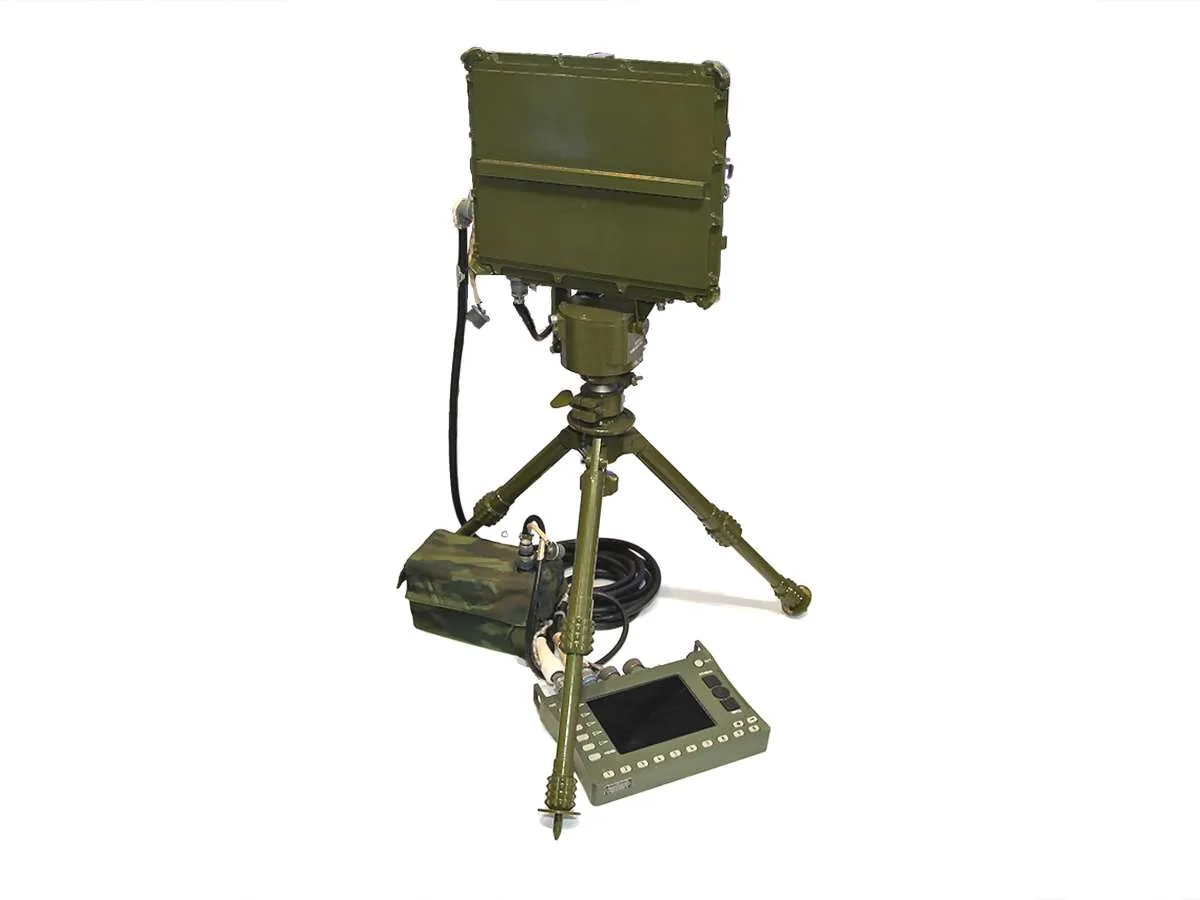
El 1L111 Fara-1 es un radar ruso portátil de vigilancia del campo de batalla y guiado de armas, desarrollado por NPO Strela para detectar personal y vehículos en movimiento y proporcionar indicación de blancos a armas como lanzagranadas automáticos o ametralladoras. Las variantes posteriores de exportación y modernizadas Fara-PV y Fara-VR mantienen la misma función de reconocimiento terrestre de corto alcance, pero añaden presentación panorámica, seguimiento de blancos y características de equipo portátil más ligero; se han documentado ejemplares rusos en Ucrania como sensores de campo de batalla capturados o destruidos.

Role in Conflicts

Profile / Specs

Profile

Origin
Rusia
Built by
Almaz-Antey
Built in
Russia
Type
Radar terrestre de vigilancia portátil
Service note
Familia rusa de radares de reconocimiento terrestre desde finales de la década de 1990 hasta la actualidad
Designer
NPO Strela, Tula
Designed
Década de 1990
Produced
Adoptado por las fuerzas rusas en 1999; variantes posteriores Fara-PV y Fara-VR comercializadas para exportación

Specifications

Función del radar
Radar portátil de vigilancia de blancos móviles y guiado de armas
Banda de frecuencia
Banda Ku para Fara-PV; banda J para Fara-VR / 1L111M
Alcance de detección del Fara-1
Al menos 2 km para un hombre y 4 km para un tanque
Alcance de detección del Fara-PV
3 km para un hombre y 6 km para un automóvil
Alcance de detección del Fara-VR
4 km para un soldado individual, 8 km para un tanque y 10 km para un camión
Sector de exploración
24 a 180 grados en Fara-PV y Fara-VR; 24, 45, 90 o 120 grados en Fara-1
Peso del sistema
16,5 kg para Fara-1; conjunto portátil Fara-PV de 21,5 kg; equipo portátil Fara-VR de 12 kg
Tiempo de emplazamiento
Hasta 3 minutos para Fara-PV y Fara-VR
Autonomía eléctrica
Fara-PV hasta 6 horas en condiciones normales de batería; Fara-VR 12 horas con una batería estándar
Radar Family Notes

Los registros de la familia Fara describen pequeños radares de campo de batalla construidos en torno a la detección de blancos móviles de corto alcance, no a la cobertura de búsqueda aérea. El perfil original del Fara-1 enfatiza la indicación de blancos para armas de las clases AGS-17, Pecheneg y Kord, mientras que las páginas posteriores de Rosoboronexport para el Fara-PV y el Fara-VR enfatizan la vigilancia con presentación panorámica, las trazas de blancos y el reconocimiento terrestre en todo tiempo.

Clase de alcance del Fara-1

GunRF enumera alcances de detección no inferiores a 2 km para una persona y 4 km para un tanque.

Clase de alcance del Fara-PV

Rosoboronexport enumera alcances de detección de blancos móviles de 3 km para un hombre y 6 km para un automóvil.

Clase de alcance del Fara-VR

Rosoboronexport enumera un alcance instrumental de 10 km, con detección de blancos móviles a 4 km para un soldado individual, 8 km para un tanque y 10 km para un camión.
Variants

Las fuentes abiertas usan Fara-1 para la mira radar 1L111 y Fara-PV o Fara-VR para variantes posteriores de vigilancia terrestre de corto alcance con presentación panorámica.

VariantConfigurationDesignation notes
Fara-PVRadar portátil de vigilancia de corto alcance con presentación panorámica

Rosoboronexport describe el Fara-PV como un conjunto con transceptor montado en trípode y consola para vigilancia fronteriza y reconocimiento terrestre en condiciones de baja visibilidad.

Sources: Rosoboronexport Fara-PV

Fara-VR / 1L111MRadar modernizado portátil de vigilancia del campo de batalla

Rosoboronexport enumera el Fara-VR como un radar portátil modernizado que puede detectar personas y vehículos, seguir al menos tres blancos y transmitir datos de blancos a usuarios externos.

Sources: Rosoboronexport Fara-VR, Radartutorial Fara-VR

Related Russian Ground Radars

Fara-1 sits in the same Russian small-unit ground-reconnaissance radar lane as later NPO Strela / Almaz-Antey portable and artillery-reconnaissance systems.

Compatible itemItem typeCompatibility evidence
1L271 Aistyonok, Portable mortar locating reconnaissance radar, Electronic Warfare1L271 AistyonokPortable artillery reconnaissance radar

The cataloged Aistyonok is another Russian NPO Strela / Almaz-Antey portable radar, but its role is mortar locating and artillery fire correction rather than Fara's short-range personnel and vehicle surveillance.

Sources: Rosoboronexport Fara-VR, GunRF Fara-1 profile

1L277 Sobolyatnik, Portable ground reconnaissance radar, Electronic Warfare1L277 SobolyatnikPortable ground reconnaissance radar

The cataloged Sobolyatnik covers the newer portable ground-reconnaissance radar layer; Fara-VR is a lighter short-range member of the same broad battlefield surveillance category.

Sources: Rosoboronexport Fara-VR, Radartutorial Fara-VR

Weapon Cueing Connections

GunRF describes Fara-1 as a radar sight for moving-target detection and weapon guidance, including use with grenade launchers and Pecheneg- and Kord-class machine guns.

Compatible itemItem typeCompatibility evidence
PKP Pecheneg, 7.62 mm general-purpose machine gun, Infantry WeaponsPKP PechenegGeneral-purpose machine gun

GunRF names Pecheneg-class machine guns among the weapons that Fara-1 can guide against moving targets.

Sources: GunRF Fara-1 profile

6P50-2 Kord machine gun, 12.7 mm heavy machine gun, Infantry Weapons6P50-2 Kord machine gunHeavy machine gun

GunRF names Kord-class heavy machine guns among the weapons that Fara-1 can guide against moving targets.

Sources: GunRF Fara-1 profile

Timeline

1L111 Fara-1 Key Events

  1. Fara-1 adoptado

    GunRF informa que el radar portátil 1L111 Fara-1 de vigilancia de múltiples blancos y guiado de armas entró en servicio ruso en 1999.

    Sources: GunRF Fara-1 profile

  2. Captura de un Fara reportada en Ucrania

    Militarnyi informó que personal de operaciones especiales ucraniano había incautado un radar portátil ruso Fara durante la fase de invasión a gran escala de la guerra Rusia-Ucrania.

    Sources: Militarnyi captured Fara report

  3. Fara-PV destruido en el eje sur

    Ukrinform informó que las Fuerzas de Operaciones Especiales ucranianas destruyeron un radar portátil ruso Fara-PV después de que una tripulación de UAV del 73rd Maritime Center detectara el blanco.

    Sources: Ukrinform Fara-PV destruction report

Related Weapon Systems
1L271 Aistyonok, Portable mortar locating reconnaissance radar, Electronic WarfareElectronic Warfare1L271 AistyonokPortable mortar locating reconnaissance radarThe 1L271 Aistyonok is a Russian portable mortar-locating and artillery-reconnaissance radar associated with NPO Strela inside the Almaz-Antey industrial group. Rosoboronexport describes the export system as a modular radar for battalion-to-brigade fire support: detecting 81-120 mm mortar positions, tracking shell bursts for artillery correction, and observing moving ground targets out to 20 km. Specialist radar references describe a 135 kg J-band set, while open-source conflict reporting documents Russian-linked use in Syria and Ukraine plus Armenian/Artsakh wartime fielding problems in the 2020 Nagorno-Karabakh conflict.
9K31 Strela-1, Vehicle-mounted short-range surface-to-air missile system, Air DefenseAir Defense9K31 Strela-1Vehicle-mounted short-range surface-to-air missile systemThe 9K31 Strela-1, NATO reporting name SA-9 Gaskin, is a Soviet BRDM-2-based short-range surface-to-air missile system armed with four ready-to-fire 9M31 or 9M31M missiles. Developed as a regimental low-altitude air-defense vehicle for motor-rifle and tank units, it combined an amphibious armored chassis with optical/infrared missile engagement at short ranges. Open sources document it in several conflict inventories, including Polisario systems supplied by Libya, Iraqi Gulf War air defenses, Chechen inherited stocks, and Houthi-aligned holdings in Yemen; those rows indicate fielding or possession, not necessarily a sourced launch or shootdown.
1K148 Yastreb-AV, Self-propelled counter-battery artillery reconnaissance radar complex, Electronic WarfareElectronic Warfare1K148 Yastreb-AVSelf-propelled counter-battery artillery reconnaissance radar complexThe 1K148 Yastreb-AV is a Russian self-propelled counter-battery radar complex attributed to the Almaz-Antey industrial group and Tula-based NPO Strela. Open reporting describes it as a phased-array artillery reconnaissance system on a BAZ-6910-025 8x8 chassis, built to track incoming shells or rockets and calculate artillery firing positions for counter-battery fire. Russian state-linked reporting announced its use with Russian artillery units in Ukraine in January 2024, while Ukrainian military, government-linked, and independent news coverage later documented the destruction of multiple Russian Yastreb-AV systems.
SQUIRE, Man-portable ground surveillance radar, Electronic WarfareElectronic WarfareSQUIREMan-portable ground surveillance radarSQUIRE is a Thales Nederland man-portable ground surveillance radar built to detect, track, and classify moving ground, low-level air, and maritime targets while supporting artillery and mortar fire adjustment. Dutch parliamentary material identified Squire battlefield surveillance radars among the Netherlands' February 2022 military deliveries for Ukraine, and Janes reported that two Squire 2D ground-surveillance radars were supplied alongside AN/TPQ-36 Firefinder weapon-locating radars.
1B44-1 RPMK-1 Ulybka radiosonde weather radar, Mobile radiosonde weather radar complex, Support EquipmentSupport Equipment1B44-1 RPMK-1 Ulybka radiosonde weather radarMobile radiosonde weather radar complexThe 1B44-1 is the radar and operator vehicle of the RPMK-1 Ulybka mobile radiosonde meteorological complex, an automated support system that tracks free-flight radiosondes and distributes upper-air data for artillery, rocket, missile, aviation, and contamination-area calculations. Rosoboronexport lists the 1B44 set as a three-part complex with 40 km altitude and 200 km range limits, while visual-loss tracking and Ukrainian reporting document both Russian and Ukrainian Ulybka equipment destroyed during the 2014 Russia-Ukraine War.
AN/TWQ-1 Avenger, Self-propelled short-range air defense system, Air DefenseAir DefenseAN/TWQ-1 AvengerSelf-propelled short-range air defense systemThe AN/TWQ-1 Avenger, often captioned in Army imagery as the M1097 Avenger, is a Boeing-developed short-range air-defense system built around a HMMWV-mounted turret with two Stinger missile pods and an M3P .50-caliber machine gun. Boeing records first firing in April 1984 and first delivery on 1988-11-01, with more than 1,100 systems delivered by 2002. The system appears in the catalog through Gulf War service, Iraq War up-gun conversions, Ukrainian mobile air-defense use against Shahed drones, and U.S. coalition force-protection activity at Al-Tanf in Syria.

Sources