- Side
- Ukraine

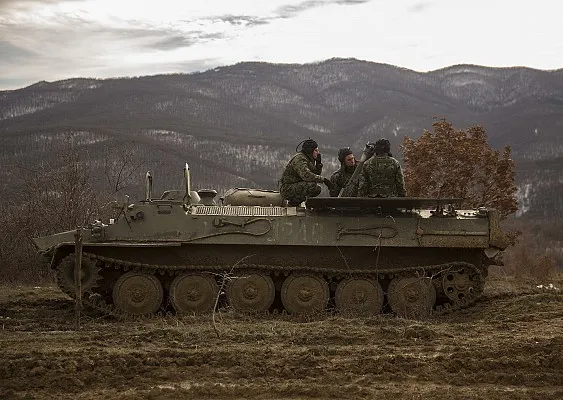
Footage reported in February 2025 showed Ukrainian mortar crews operating Bulgarian Tundzha self-propelled mortars; reporting described an unknown number in Ukrainian service and no previously public transfer announcement.
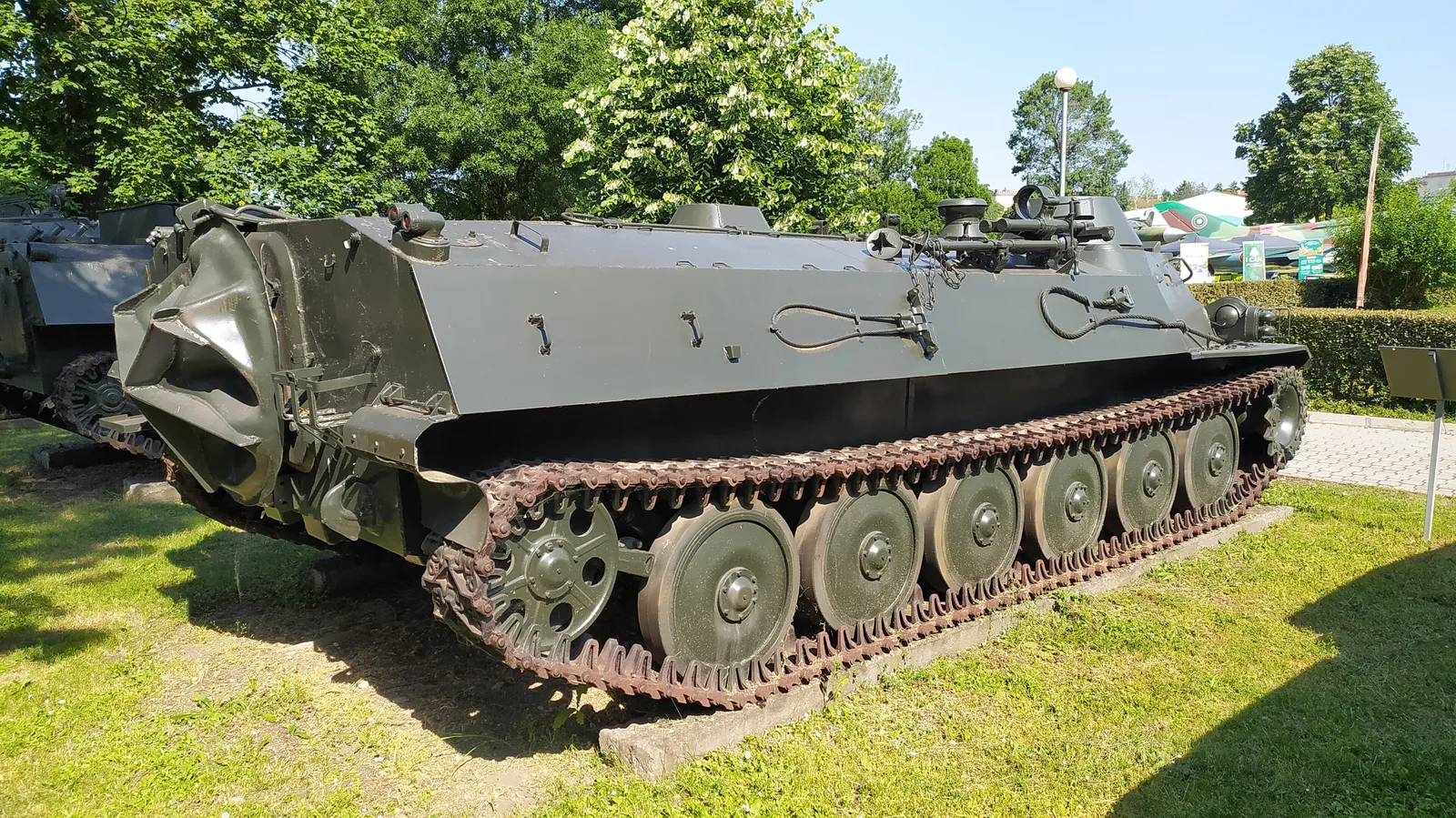
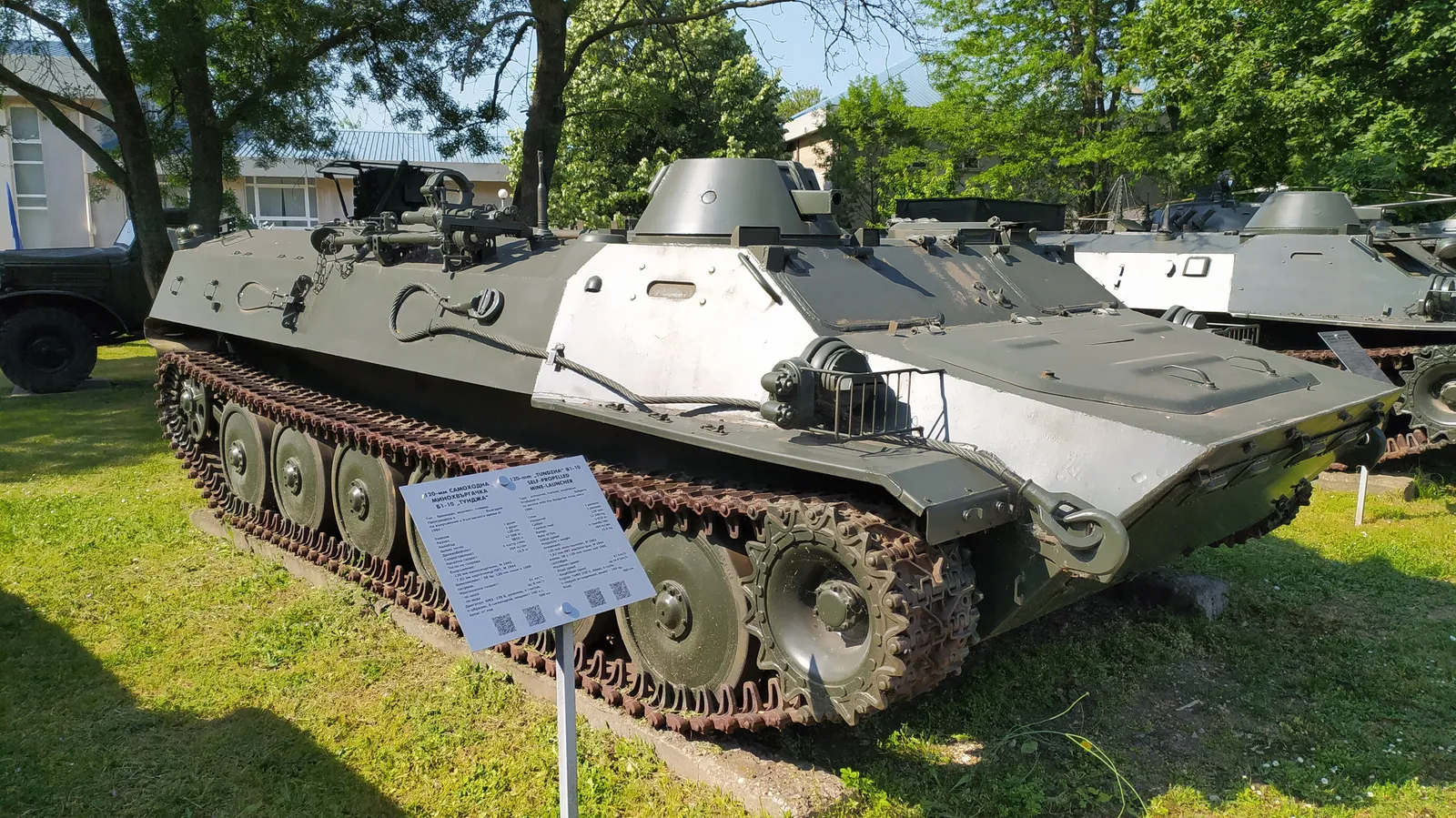
Role detailsTundzha is a Bulgarian 120 mm self-propelled mortar carrier that mounts a PM-43/M-120 or 2B11-family mortar in an MT-LB tracked chassis. The vehicle gives a heavy mortar crew armored mobility, onboard ammunition, and the ability to fire through roof hatches before relocating, with Ukrainian combat use documented during the 2014 Russia-Ukraine War.
Footage reported in February 2025 showed Ukrainian mortar crews operating Bulgarian Tundzha self-propelled mortars; reporting described an unknown number in Ukrainian service and no previously public transfer announcement.
Role detailsThe Tundzha layout places the 120 mm mortar inside the MT-LB hull and fires it through large roof hatches. Specialist descriptions emphasize the recoil-buffered cradle, the option to stow the mortar inside the vehicle, and the exposed crew position while firing.
Mobile indirect-fire support from a tracked armored carrier rather than a towed mortar position.
B1.10 is associated with PM-43/M-120-family mortars; Tundzha-Sani is associated with the 2B11 Sani mortar.
Open reporting documents Ukrainian use in 2025 but does not publicly establish the exact donor route or number delivered.
Open sources distinguish the original B1.10 Tundzha with an older 120 mm mortar from the Tundzha-Sani variant fitted with the newer 2B11 Sani mortar.
| Variant | Configuration | Designation notes |
|---|---|---|
| SMM B1.10 Tundzha | Original 120 mm mortar-carrier version | Described as the baseline Tundzha variant with a 120 mm PM-43 or M-120 mortar and shorter maximum range than the later Sani-equipped version. Sources: WeaponSystems Tundzha profile, GlobalSecurity MT-LB Ukrainian Service |
| SMM 74 B1.10 Tundzha-Sani | 2B11 Sani mortar variant | Identified as the improved Bulgarian MT-LB mortar carrier using the 120 mm 2B11 Sani mortar, with cited maximum range around 7.1 km. Sources: WeaponSystems Tundzha profile, GlobalSecurity MT-LB Ukrainian Service |
Tundzha is cataloged separately from the baseline MT-LB because the mortar installation changes the vehicle's battlefield role.
| Compatible item | Item type | Compatibility evidence |
|---|---|---|
 | Tracked armored chassis | The Tundzha combines the MT-LB tracked vehicle with a roof-fired 120 mm mortar installation, retaining the MT-LB's low-profile tracked mobility while converting it into a mortar carrier. Sources: WeaponSystems Tundzha profile, GlobalSecurity MT-LB Ukrainian Service |
WeaponSystems places Tundzha development in 1976-1981 and identifies NITI Kazanlak as the Bulgarian developer.
Sources: WeaponSystems Tundzha profile
The Tundzha entered service in the 1980s, with Bulgarian production continuing into the mid-1990s according to specialist reference data.
Sources: WeaponSystems Tundzha profile
Reporting on Ukrainian procurement discussions said funds had been allocated for a planned purchase of Tundzha self-propelled mortars before the full-scale invasion, but the acquisition was not completed.
Sources: Defense Express Tundzha in Ukraine, Army Recognition Tundzha Ukraine report
Defense Express reported footage of Ukrainian crews operating Tundzha in Ukraine and noted that no earlier public transfer report had identified the system.
Sources: Defense Express Tundzha in Ukraine