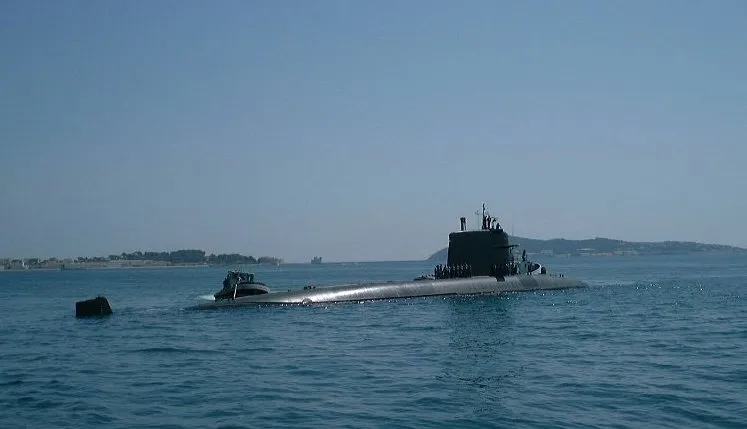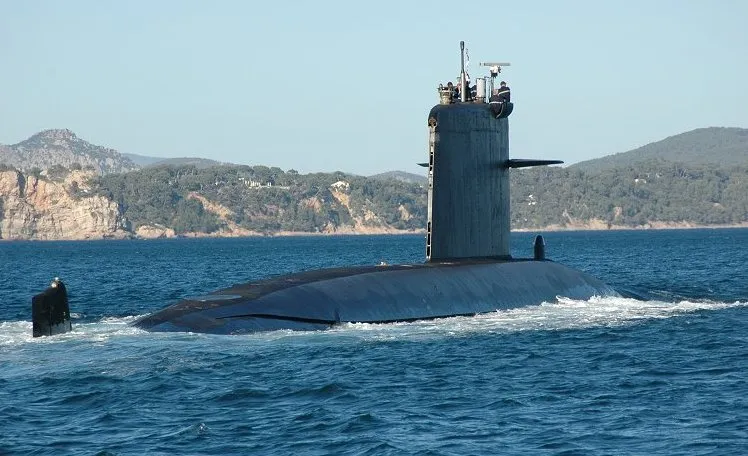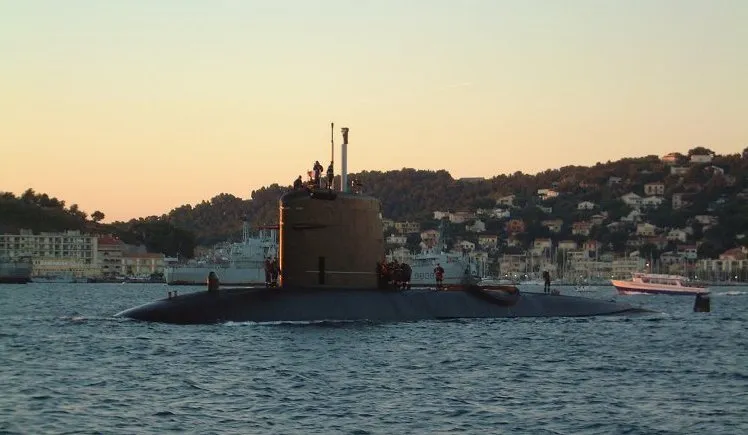
- Side
- NATO

Mer et Marine reports that Rubis-class submarines rotated off the mouths of Kotor during the Kosovo War, using their submerged presence to inhibit Serbian naval movement while supporting NATO's air campaign.
The Rubis class is France's first generation of nuclear-powered attack submarines, built at Cherbourg for the French Navy and later modernized under the Améthyste program. The compact class has documented service in NATO and French operations from Kosovo to Libya, where public sources describe escort, area-denial, surveillance, intelligence, and sea-control roles rather than public missile or torpedo firings.
Mer et Marine reports that Rubis-class submarines rotated off the mouths of Kotor during the Kosovo War, using their submerged presence to inhibit Serbian naval movement while supporting NATO's air campaign.
The French Navy history of Rubis says the submarine protected Task Force 473 in 2002 during the naval component of operations against terrorist networks off Afghanistan.
Role detailsDuring Operation Harmattan off Libya, the French Navy says Rubis was one of three French nuclear attack submarines that rotated on intelligence missions during the conflict; an official 2024 bulletin lists Améthyste, Rubis, and Saphir crews with 2011 Harmattan participation windows.
The French Navy identifies six completed Rubis-class boats, all built at Cherbourg and based in the Toulon attack-submarine squadron.
| Boat | Service entry | Catalog note |
|---|---|---|
| Rubis | 23 February 1983 | Lead boat; second class member retired after Saphir. |
| Saphir | 6 July 1984 | Second boat; retired before Rubis in the replacement sequence. |
| Casabianca | 21 April 1987 | Early-batch boat later refitted to Améthyste standard. |
| Émeraude | 15 September 1988 | Early-batch boat later refitted to Améthyste standard. |
| Améthyste | 3 March 1992 | Final-batch standard that gave the modernization program its name. |
| Perle | 7 July 1993 | Last completed boat of the class. |
The class combines a compact nuclear propulsion plant with a mixed torpedo-tube weapons load for submarine, surface-ship, mine, and intelligence tasks.
| Subsystem | Documented fit |
|---|---|
| Torpedo tubes | Four 533 mm tubes with a mixed capacity of torpedoes, SM39 Exocet missiles, or mines. |
| Torpedoes | F17 Mod 2 heavyweight torpedoes; public reporting also notes the transition path toward F21 on remaining French attack submarines. |
| Anti-ship missile | SM39 Exocet, launched from a torpedo tube in a submerged-change medium capsule. |
| Sonar | Naval Technology describes a DMUX 20 multifunction passive sonar suite with towed-array and DUUG-7 elements. |
| Propulsion | A K48 pressurized-water nuclear reactor and turbo-electric drive give the boats sustained submerged endurance. |
The class began as the SNA 72 / Provence design, then converged on the quieter Améthyste standard: the final two boats were built to that configuration, and the first four were refitted to match it.
| Variant | Configuration | Designation notes |
|---|---|---|
| Original SNA 72 / early Rubis configuration | Lead-batch configuration | Rubis, Saphir, Casabianca, and Émeraude entered service before being refitted between 1989 and 1995 around the quieter Améthyste standard. Sources: Le SNA Rubis va prendre sa retraite |
| Améthyste standard | Acoustic and electronics modernization | The Améthyste refit reshaped and lengthened the hull around the final-batch design and improved acoustic discretion and combat-system fit. Sources: Le SNA Rubis va prendre sa retraite, SSN Rubis Amethyste Class |
| Turquoise derivative | Canceled/export derivative | Naval Technology describes Turquoise as a diesel-propulsion derivative of the Rubis-Améthyste design intended for export rather than a completed French Navy boat. Sources: SSN Rubis Amethyste Class |
The first Rubis boat was laid down in Cherbourg on 11 December 1976, beginning the class's construction run.
Sources: Dernier accostage du SNA Rubis
The French Navy admitted Rubis to active service on 23 February 1983 after its reactor start-up and sea trials.
Sources: Dernier accostage du SNA Rubis
The last boat in the class, Perle, entered active service on 7 July 1993 and completed the Rubis production run.
Sources: Les sous-marins nucléaires d'attaque (SNA) type Rubis
During NATO's 1999 Kosovo air campaign, Mer et Marine reports that Rubis-class submarines rotated off the mouths of Kotor to inhibit Serbian naval movement.
Sources: Le SNA Rubis va prendre sa retraite
Official Harmattan records list Rubis crew participation from 18 March 2011, and later entries for Améthyste, Rubis, and Saphir document multiple Rubis-class crews in the Libya operation.
Sources: Arrêté Harmattan bâtiments et unités 2024, Arrêté Harmattan actions de feu 2026
The French Navy says the first Suffren-class boat entered active service on 1 June 2022, enabling Rubis to complete its final mission before withdrawal.
Sources: Un nouveau et dernier commandant pour le SNA Rubis
Public sources describe the class mainly through covert maritime tasks rather than public weapon firings.
| Role | Documented context | Conflict or operation |
|---|---|---|
| Area denial | Rubis-class submarines rotated near the mouths of Kotor and inhibited Serbian naval movement. | 1999 Kosovo War / Operation Allied Force |
| Carrier task-force protection | Rubis protected Task Force 473 during the French naval component of operations off Afghanistan. | 2001 War in Afghanistan |
| Intelligence and surveillance | Rubis was one of three French SNA that rotated on intelligence missions off Libya; official bulletins list multiple Rubis-class crews in Harmattan. | 2011 First Libyan Civil War |
| Fleet escort | AP reported a remaining Rubis-class submarine preparing to escort Charles de Gaulle during a NATO-commanded Mediterranean operation in 2024. | Neptune Strike training activity |