- Side
- Ukraine

Ukrainian military-media and specialist reporting in 2025 documented the PGW LRT-3 in Ukrainian sniper service, including a reported long-range battlefield engagement and an Army TV segment focused on the rifle.
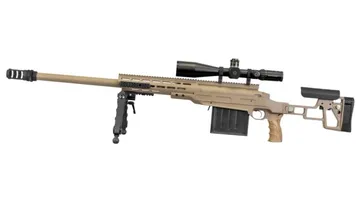
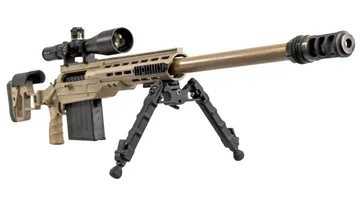
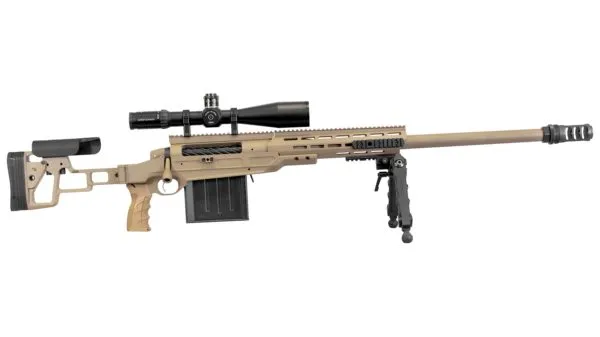
Role detailsThe PGW LRT-3 is a Canadian bolt-action .50 BMG anti-materiel rifle built by PGW Defence Technologies for long-range precision fire against hard and soft targets. Sources link the rifle to Ukrainian sniper service in the 2014 Russia-Ukraine War and to Houthi-aligned forces in Yemen through an ARES-documented battlefield-capture trail, rather than through a documented direct export to the Houthi movement.
Ukrainian military-media and specialist reporting in 2025 documented the PGW LRT-3 in Ukrainian sniper service, including a reported long-range battlefield engagement and an Army TV segment focused on the rifle.
Role detailsARES identified a suppressed PGW LRT-3 in Houthi service after images circulated from June 2015 clashes on the Saudi-Yemeni border, reporting that Houthi forces had seized the rifle alongside other small arms.
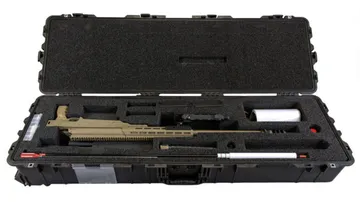
Role detailsOfficial rifle characteristics and conflict-use evidence come from separate source types. PGW documents the rifle as a .50 caliber sniper weapon system with a folding-stock configuration, while conflict sources document battlefield appearance through Ukrainian use and Houthi capture imagery.
| Topic | Evidence |
|---|---|
| SWS designation | PGW describes the LRT-3 as a 50 caliber sniper weapon system, so LRT-3 SWS is retained as an alias rather than a separate model claim. |
| Chambering | The official specification gives .50 BMG / 12.7 x 99 mm NATO chambering, making the rifle a direct-fire anti-materiel platform tied to the 12.7 mm cartridge family. |
| Conflict evidence | Ukraine coverage is based on direct Ukrainian military-media and specialist reporting; the Yemen row is based on ARES identification of a suppressed rifle with Houthi-aligned forces after border clashes. |
PGW lists the LRT-3 as a .50 BMG / 12.7 x 99 mm NATO rifle, linking it to the cataloged heavy-machine-gun cartridge family.
| Ammunition | Ammunition type | Firing evidence |
|---|---|---|
 | 12.7 mm cartridge family | PGW's official LRT-3 specification identifies the rifle's chambering as .50 BMG / 12.7 x 99 mm NATO and lists a 5-round detachable box magazine. Sources: LRT-3 |
ARES linked a suppressed PGW LRT-3 to Houthi-aligned forces after images circulated from June 2015 fighting on the Saudi-Yemeni border.
Sources: North American anti-materiel rifles with Houthi forces in Yemen
Military Times reported that PGW Defence Technologies had been contracted to supply Ukrainian snipers with LRT-3 anti-materiel rifles.
Sources: Military Times Ukraine LRT-3 procurement
Militarnyi reported a Ukrainian sniper engagement using a PGW LRT-3 large-caliber rifle during the 2014 Russia-Ukraine War.
Sources: Militarnyi PGW LRT-3 sniper report
Army TV, a Ukrainian military channel, published a dedicated segment on the PGW LRT-3 in the context of Ukrainian wartime sniper use.
Sources: Army TV PGW LRT-3 segment