Naval Systems

Navy/Marine Corps Expeditionary Ship Interdiction System

Also known as
  • NMESIS
  • Navy Marine Expeditionary Ship Interdiction System
  • Navy/Marine Expeditionary Ship Interdiction System
  • Ground Based Anti-Ship Missile
  • GBASM

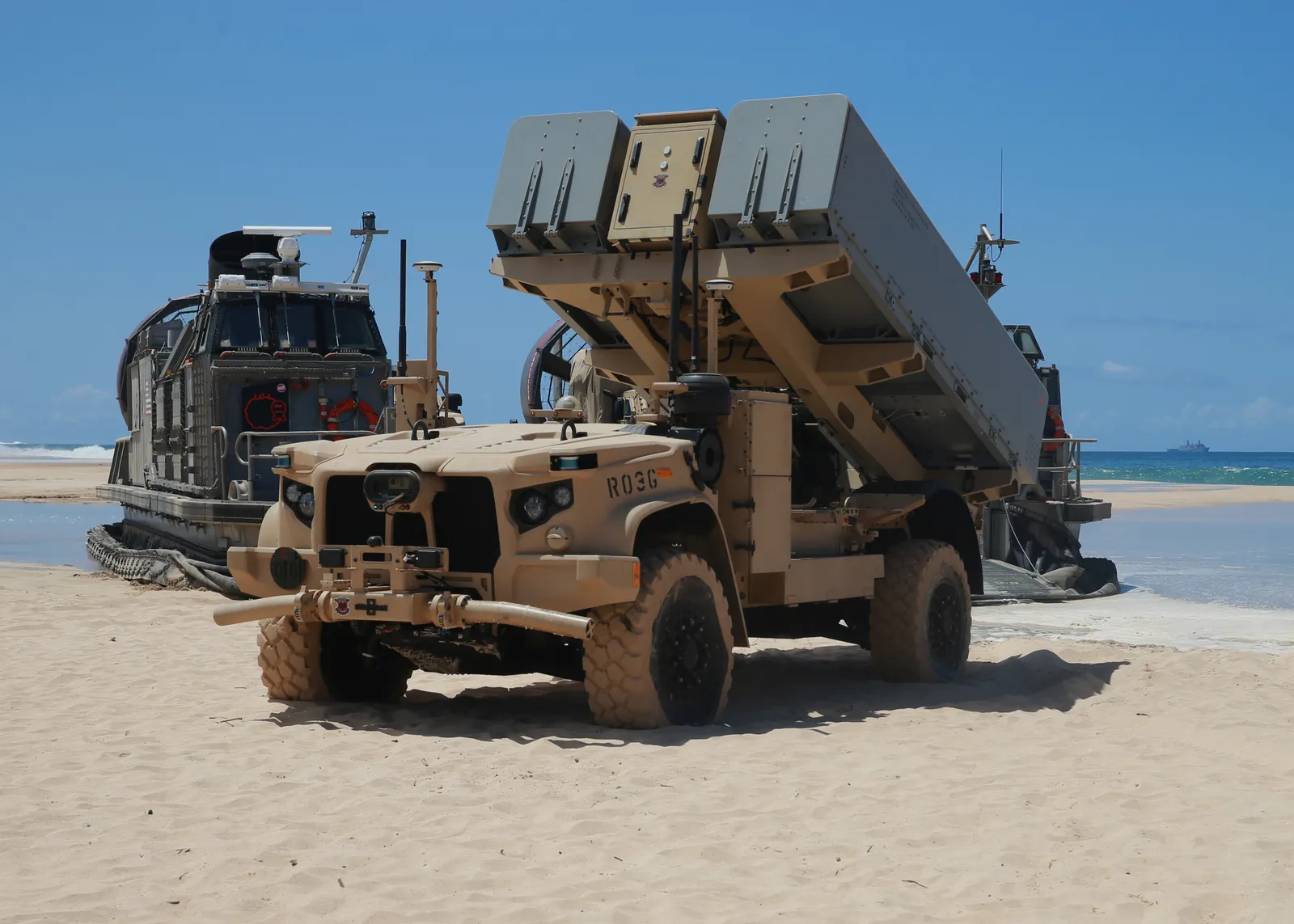
NMESIS is the U.S. Marine Corps land-based anti-ship missile system for expeditionary sea denial, combining a remotely operated ROGUE-Fires carrier with a two-round Naval Strike Missile launcher and external fire-control architecture.

Profile / Specs

Specifications

Role
Ground-based anti-ship missile capability for Marine littoral sea denial, sea control support, and stand-in-force maritime targeting
Launcher
ROGUE-Fires carrier with an NMESIS Naval Strike Missile launcher unit
Missile load
Two Naval Strike Missiles
Weapon-control layout
Weapon control system located externally in a command-and-control vehicle
Missile
Raytheon-produced Naval Strike Missile in U.S. Marine Corps service, based on the Kongsberg NSM design
Mobility
Uncrewed tactical vehicle derived from the Joint Light Tactical Vehicle family
Remote operation
ROGUE Fires can operate in teleoperator or leader-follower modes
Fire control
Uses the Fire Control System used by the U.S. Navy for Naval Strike Missile
Demonstrated transport
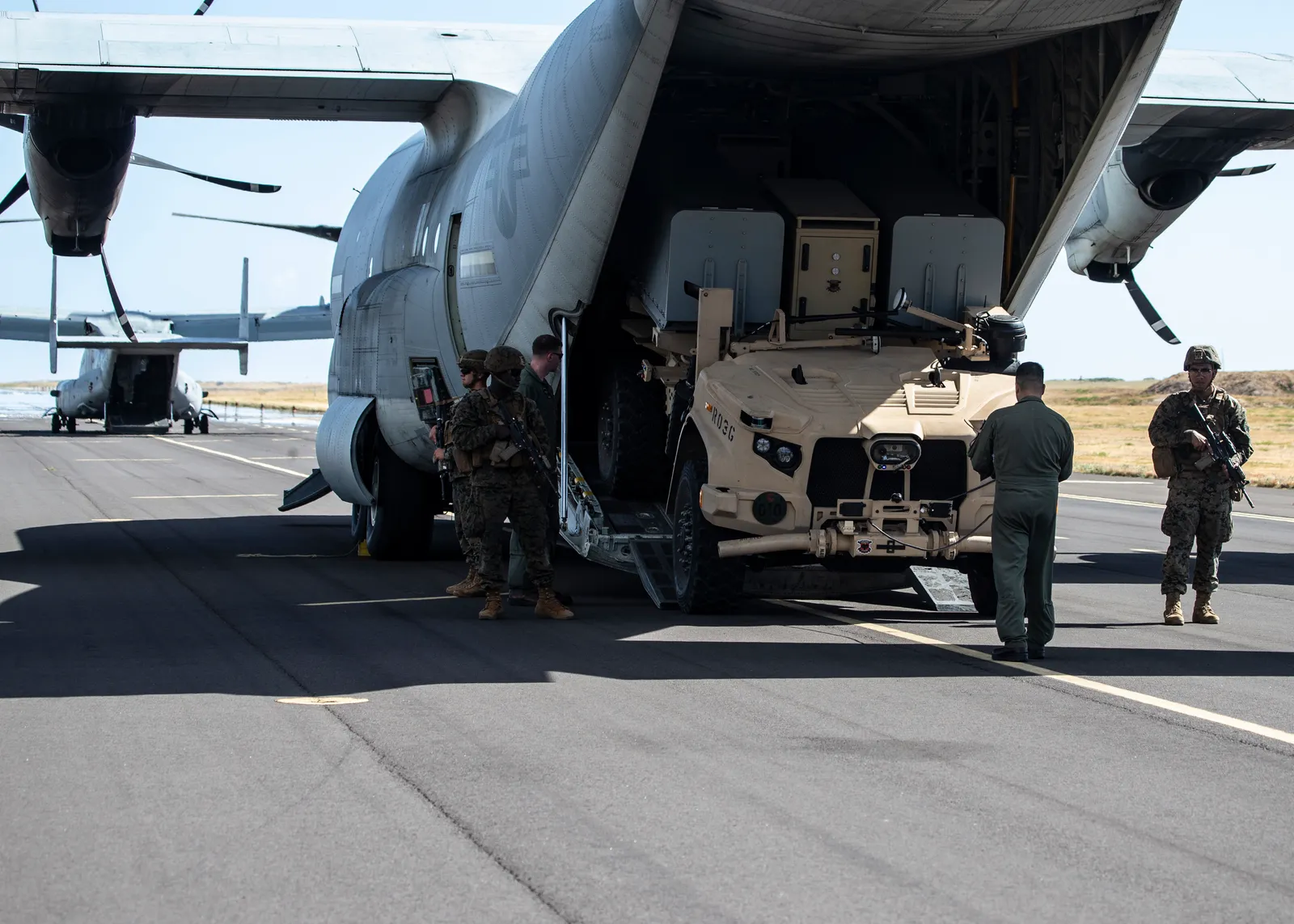
Marine Corps Systems Command reported C-130 and LCAC deployment demonstrations during Large Scale Exercise 2021
First fielded unit
3d Marine Littoral Regiment, with official receipt publicly marked on 2024-11-26
Battery objective
Marine Corps Force Design update states a medium-range missile system launcher battery builds toward 18 NMESIS launchers by FY33
Block 2
Oshkosh says ROGUE-Fires Block 2 adds next-generation autonomy and broader weapon-system integration
Launched Munition

Marine Corps and industry sources identify the system as a remotely operated launcher equipped with two Naval Strike Missiles.

Launched itemItem typeLaunch evidence
Naval Strike Missile, Long-range anti-ship and land-attack cruise missile, MunitionsNaval Strike MissileAnti-ship cruise missile

Marine Corps Systems Command describes NMESIS as a JLTV-based launcher outfitted with two Naval Strike Missiles; Kongsberg describes the system as combining the Raytheon-made NSM with Oshkosh's ROGUE Fires vehicle.

Sources: Marine Corps Long Range Fires, Kongsberg Marines Use New Ground-Based Anti-Ship System, Raytheon Naval Strike Missile

Vehicle Base

NMESIS uses Oshkosh's ROGUE Fires carrier, a remotely operated vehicle based on the Joint Light Tactical Vehicle family.

Compatible itemItem typeCompatibility evidence
Joint Light Tactical Vehicle (JLTV), 4x4 light tactical vehicle family, Armored VehiclesJoint Light Tactical Vehicle (JLTV)Light tactical vehicle chassis

Marine Corps Systems Command describes NMESIS as a remotely operated JLTV-based launcher, while Oshkosh describes the NMESIS launcher used at LSE 2021 as based on a ROGUE Fires chassis that leverages JLTV mobility and payload capacity.

Sources: Marine Corps Long Range Fires, Oshkosh ROGUE Fires LSE 2021

Timeline

Navy/Marine Corps Expeditionary Ship Interdiction System Key Events

  1. Large Scale Exercise live-fire demonstration

    Marine Corps Systems Command reported that NMESIS fired two Naval Strike Missiles during LSE 21, hit a sea-based target, and demonstrated transport by C-130 and LCAC while the system was still not fielded.

    Sources: Marine Corps NMESIS LSE 21 Demonstration

  2. Launcher and weapon-control production-representative models ordered

    The Defense Department announced a Raytheon contract for NMESIS Naval Strike Missile launcher-unit and weapon-control-system production-representative models, describing the external WCS and two-NSM launcher arrangement.

    Sources: DoD Contracts Dec. 22 2021 NMESIS NLU

  3. ROGUE-Fires carrier procurement contract

    Marine Corps Systems Command awarded Oshkosh a follow-on ROGUE-Fires carrier contract for NMESIS, documenting the carrier, Naval Strike Missile launcher unit, and two-missile load.

    Sources: DoD Contracts Sep. 29 2022 ROGUE-Fires

  4. First six launchers fielded to 3d MLR

    The Marine Corps' October 2025 Force Design update states that the service fielded the first six NMESIS launchers to 3d Marine Littoral Regiment in 2023.

    Sources: Force Design Update October 2025

  5. Additional carrier delivery order

    The Defense Department announced a $40.1 million Oshkosh delivery order for ROGUE-Fires carriers for use in NMESIS, funded by fiscal 2024 Marine Corps procurement.

    Sources: DoD Contracts Apr. 23 2024 ROGUE-Fires

  6. 3d Marine Littoral Regiment publicly receives NMESIS

    3d MLR marked official receipt of NMESIS from Marine Corps Systems Command, identifying the regiment as the first Marine Corps unit to field the system and assigning it to the Medium-Range Missile Battery.

    Sources: 3d MLR Receives NMESIS

  7. Force Design update sets battery growth target

    The Marine Corps described NMESIS as its premier land-based anti-ship platform, integrated with naval and joint C2 and targeting architectures, and said capacity is building toward 18 launchers per MMSL battery by FY33.

    Sources: Force Design Update October 2025

  8. Block 2 and carrier procurement awards

    An official contract notice announced a $70.6 million procurement delivery order and a $21.5 million related delivery order for ROGUE-Fires carriers for NMESIS, both with work expected through September 2028.

    Sources: DoD Contracts May 29 2026 ROGUE-Fires

  9. Oshkosh announces ROGUE-Fires Block 2 production

    Oshkosh said the Marine Corps placed two ROGUE-Fires Block 2 production delivery orders totaling $92 million, with Block 2 adding Forterra autonomy, modular architecture, and expanded weapon-system integration.

    Sources: Oshkosh ROGUE-Fires Block 2 Award

Procurement And Design Notes

NMESIS is documented in contract notices both as a Marine Corps anti-ship launcher and as a set of integrated subsystems: a ROGUE-Fires carrier, a Naval Strike Missile launcher unit, and an externally located weapon-control system. Marine Corps sources place the system inside littoral and stand-in-force roles, where dispersed Marines can contribute land-based maritime fires to naval and joint targeting networks.

Designation lane

Ground Based Anti-Ship Missile is the capability lane; NMESIS is the system name; ROGUE-Fires is the carrier; the Naval Strike Missile is the munition.

Fielding lane

Marine Corps Force Design material says six launchers went to 3d MLR in 2023, while 3d MLR publicly marked official receipt on 2024-11-26.

Procurement lane

Public contract notices show early production-representative launcher work in 2021, ROGUE-Fires carrier procurement in 2022 and 2024, and larger 2026 carrier and Block 2 orders.

Sources: Marine Corps Long Range Fires; DoD Contracts Dec. 22 2021 NMESIS NLU; DoD Contracts Sep. 29 2022 ROGUE-Fires; Force Design Update October 2025; 3d MLR Receives NMESIS; DoD Contracts May 29 2026 ROGUE-Fires; Oshkosh ROGUE-Fires Block 2 Award.
Media

Navy/Marine Corps Expeditionary Ship Interdiction System Images

Related Weapon Systems
F-35C Lightning II, Carrier-based stealth multirole fighter, Aircraft & UAVsAircraft & UAVsF-35C Lightning IICarrier-based stealth multirole fighterThe F-35C Lightning II is the carrier variant of the Joint Strike Fighter, built for catapult launches and arrested landings with larger wings, folding wingtips, strengthened landing gear, internal fuel for long-range carrier operations, and a sensor suite intended for strike, air-to-air, reconnaissance, and electronic-warfare missions. U.S. Marine Corps F-35Cs made the variant's first documented combat strikes against Houthi targets in Yemen in 2024, and an F-35C was later reported shooting down an Iranian Shahed-139 drone near USS Abraham Lincoln in 2026.
Evolved Sea Sparrow Missile, Ship self-defense missile, MunitionsMunitionsEvolved Sea Sparrow MissileShip self-defense missileThe Evolved Sea Sparrow Missile is a NATO-cooperative ship self-defense missile family built by Raytheon for surface combatants and carrier self-defense. U.S. Navy, RTX, and NATO Seasparrow sources describe it as a medium-range guided weapon for anti-ship cruise missiles, aircraft, drones, and maneuvering surface threats; documented combat use includes USS Mason's 2016 Yemen self-defense engagement and Red Sea crisis firings against Houthi threats.
AV-8B Harrier II, V/STOL light attack and close-air-support aircraft, Aircraft & UAVsAircraft & UAVsAV-8B Harrier IIV/STOL light attack and close-air-support aircraftThe AV-8B Harrier II is a second-generation Harrier built around vectored-thrust V/STOL light attack missions: expeditionary close air support, armed reconnaissance, interdiction, shipboard strike, and dispersed forward-base operations. Developed by McDonnell Douglas with British Aerospace participation, it added a larger composite wing, improved Pegasus-powered performance, and later Night Attack and Harrier II Plus radar configurations. The U.S. Marine Corps formally sundowned the type at Cherry Point on June 3, 2026, while Italian and Spanish naval Harriers remained a separate service caveat.
Harpoon, Anti-ship cruise missile family, MunitionsMunitionsHarpoonAnti-ship cruise missile familyHarpoon is a U.S.-origin anti-ship cruise missile family used from aircraft, surface ships, submarines, and coastal launchers. The family combines sea-skimming flight with active radar terminal homing, while Block II adds GPS-aided inertial navigation for littoral anti-ship and land-attack missions and Block II+ adds a network-enabled upgrade path. Cataloged conflict use ranges from Iranian and Saudi naval launches in the late Cold War and Gulf War period to truck-mounted RGM-84 coastal defense missiles supplied for Ukraine's Black Sea defense.

Sources