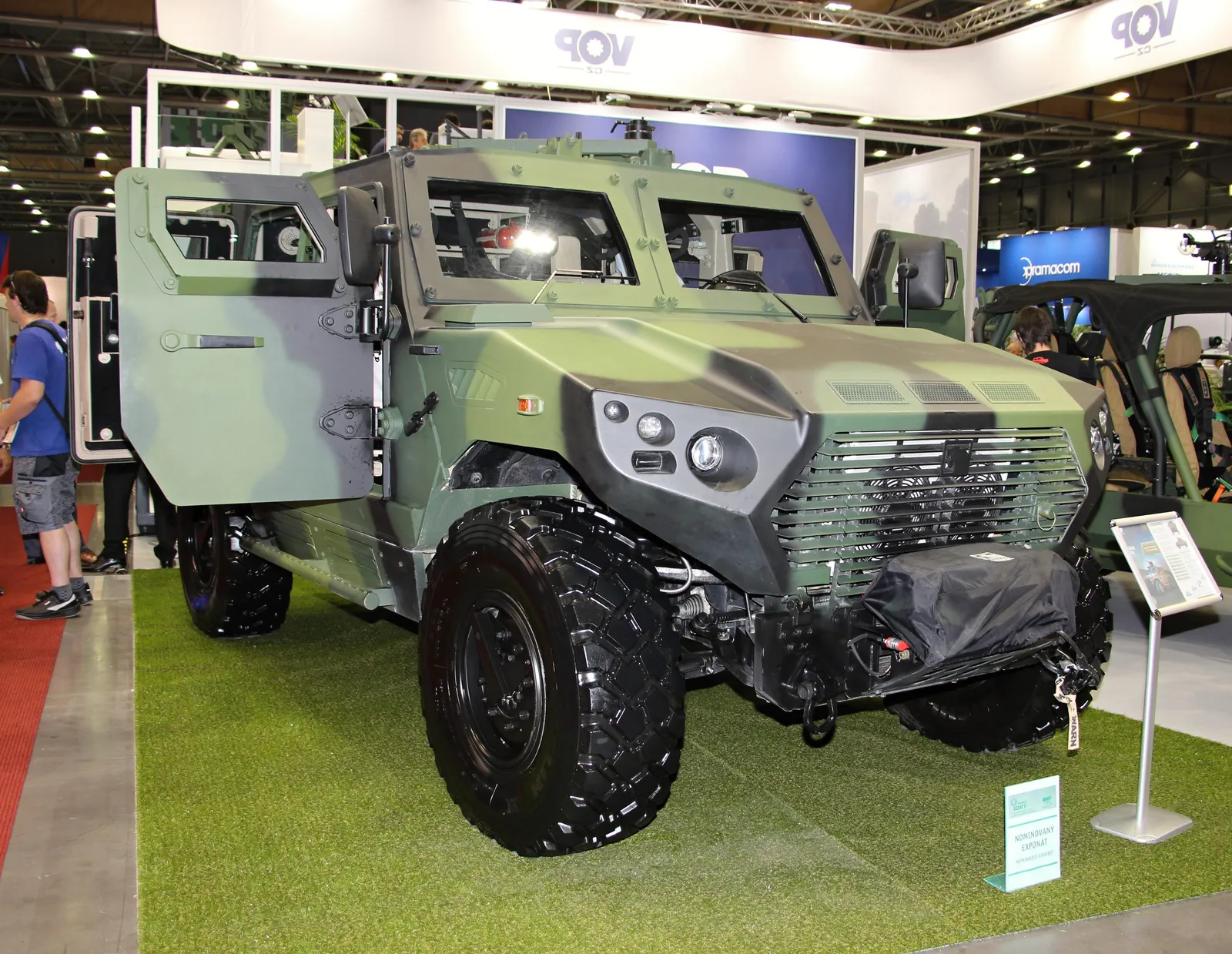

Oryx documented one Nimr infantry mobility vehicle among the LNA vehicles captured when GNA forces took Tarhuna in June 2020, so this entry treats Libyan use narrowly as LNA protected mobility rather than a broad fleet claim.
Armored Vehicles
NIMR AJBAN
Also known as
- Ajban
- AJBAN 440A
- AJBAN MK2
- AJBAN 441A
- AJBAN 441AE
- AJBAN ISV
- Nimr Ajban APC
- Nimr infantry mobility vehicle
The NIMR AJBAN is a UAE-built 4x4 protected tactical vehicle family used for patrol, escort, reconnaissance, logistics, and armoured personnel-carrier roles. Open-source evidence ties the family to LNA equipment captured during the 2020 Tarhuna collapse in Libya, UAE-backed ground operations in Yemen, and RSF-operated vehicles documented in Sudan with French-designed Galix defensive systems.
Role in Conflicts

Washington Institute reporting described March 2016 ground operations around Aden by Yemeni personnel mounted in UAE-supplied Nimr tactical vehicles, and Carnegie separately identifies the NIMR Ajban 440A in the UAE's Yemen train-and-equip effort; this row is scoped to Yemeni government and coalition-aligned forces.
Role details
Amnesty International verified Nimr Ajban APCs in use by the RSF in Sudan, including vehicles destroyed or captured by the Sudanese Armed Forces with Galix defensive equipment visible; public sourcing does not establish exact unit assignment or delivery route.
Galix Defensive System Context
Amnesty International identified French-designed Galix defensive equipment on several UAE-made Nimr Ajban APCs used by the RSF in Sudan. The Galix finding is important because it ties the vehicle evidence to a defensive subsystem and to arms-transfer concerns, but it does not by itself identify the exact RSF unit or delivery route.
Documented vehicle context
Destroyed or captured Nimr Ajban APCs in Sudan showed Galix equipment visible in imagery verified by Amnesty International.
Subsystem role
Amnesty describes Galix as a land-forces defensive system that releases decoys, smoke, and projectiles against close-range threats.
Profile / Specs
Profile
- Origin
- United Arab Emirates
- Built by
- NIMR Automotive
- Type
- 4x4 protected light tactical vehicle
- Service note
- 2010s-present protected mobility vehicle
- Designer
- NIMR Automotive
- Designed
- AJBAN family developed before mid-2010s operational reporting
- Unit cost
- Not publicly disclosed
- Produced
- 2000s-present NIMR wheeled vehicle production family
- Number built
- NIMR reports more than 2,500 vehicles produced across its portfolio
Specifications
- Configuration
- 4x4 wheeled protected tactical vehicle family
- Crew capacity
- AJBAN MK2 variants range from 5 seats to driver, co-driver and up to 9 crew seats depending on configuration; AJBAN ISV lists 2+8 seats
- Maximum speed
- 110 km/h for current AJBAN MK2, 441A/441AE, and ISV variants
- Cruising range
- 700 km at 80 km/h for AJBAN MK2 and 441A/441AE variants; 600 km at 100 km/h for AJBAN ISV
- Engine power
- 268 kW / 360 hp for AJBAN MK2; 296 hp for AJBAN 441A/441AE and AJBAN ISV
- Protection
- Ballistic and blast-protected monocoque or armoured cabin designs with V-hull mine-blast protection on AJBAN MK2 and a military-grade armoured cabin on AJBAN ISV
- Payload
- Up to 4,300 kg on AJBAN MK2 432AU; up to 3,200 kg on AJBAN 441A; up to 1,500 kg on AJBAN ISV base vehicle
- Mission equipment
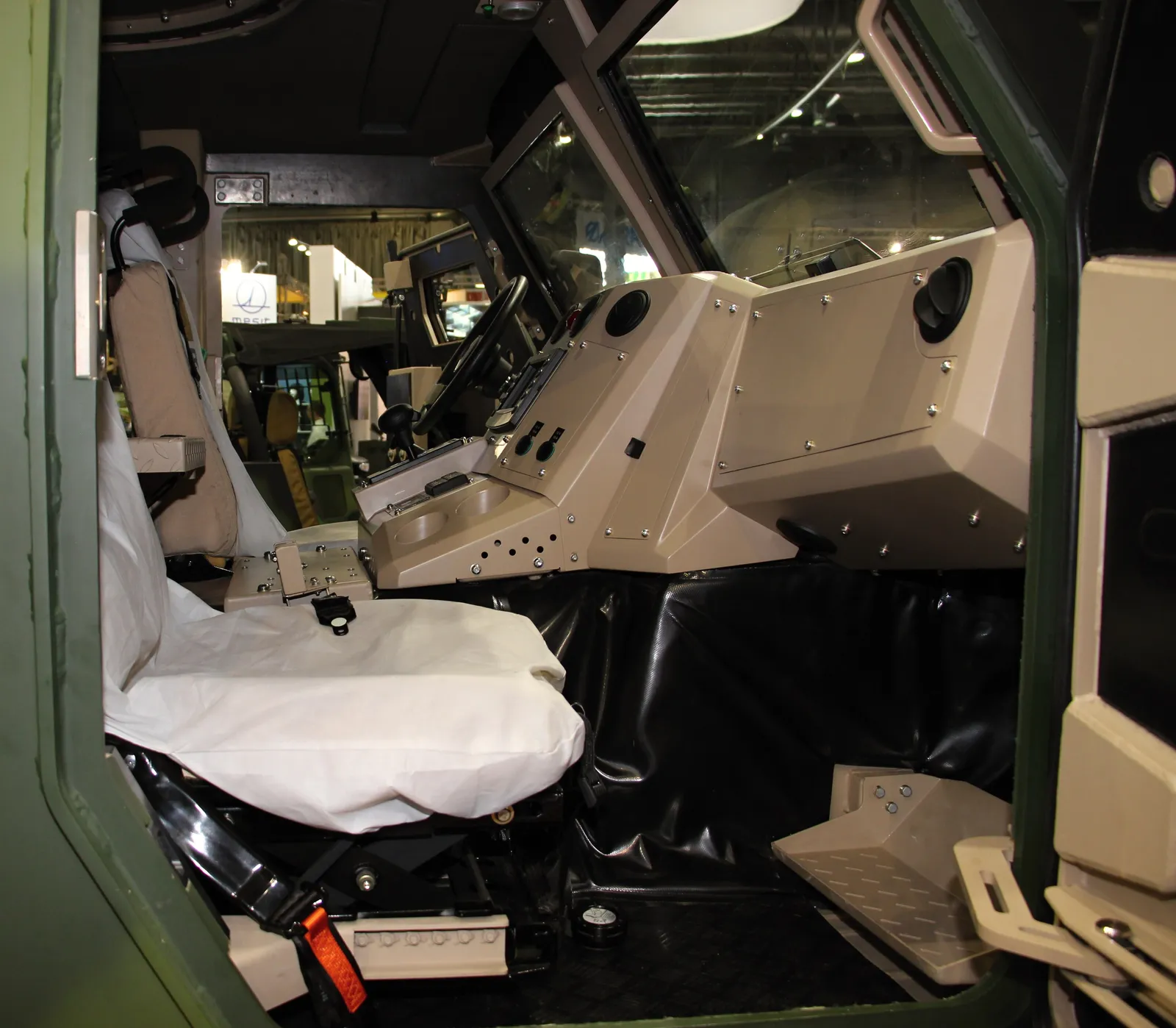
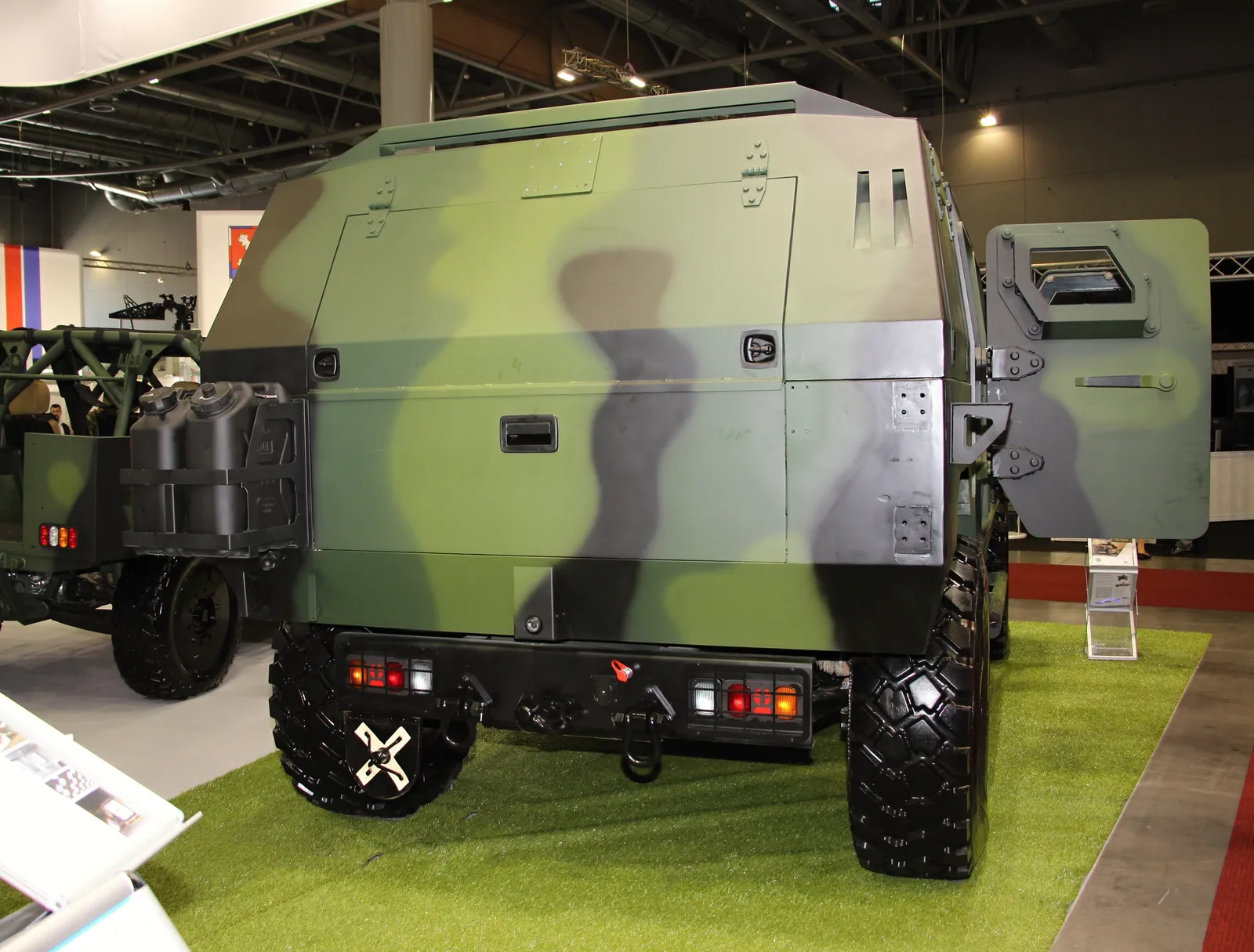
- Depending on variant, equipment can include roof-mounted weapon ring mount, smoke grenade launchers, communications racks, run-flat tyres, central tyre inflation, air filtration, cameras, winch, and internal-security equipment
Variants
AJBAN is NIMR's 4x4 protected-vehicle line; public brochures and defense-industry reporting distinguish older patrol variants from the newer Mark 2 family and longer-wheelbase 441A/441AE logistics-oriented vehicles.
| Variant | Configuration | Designation notes |
|---|---|---|
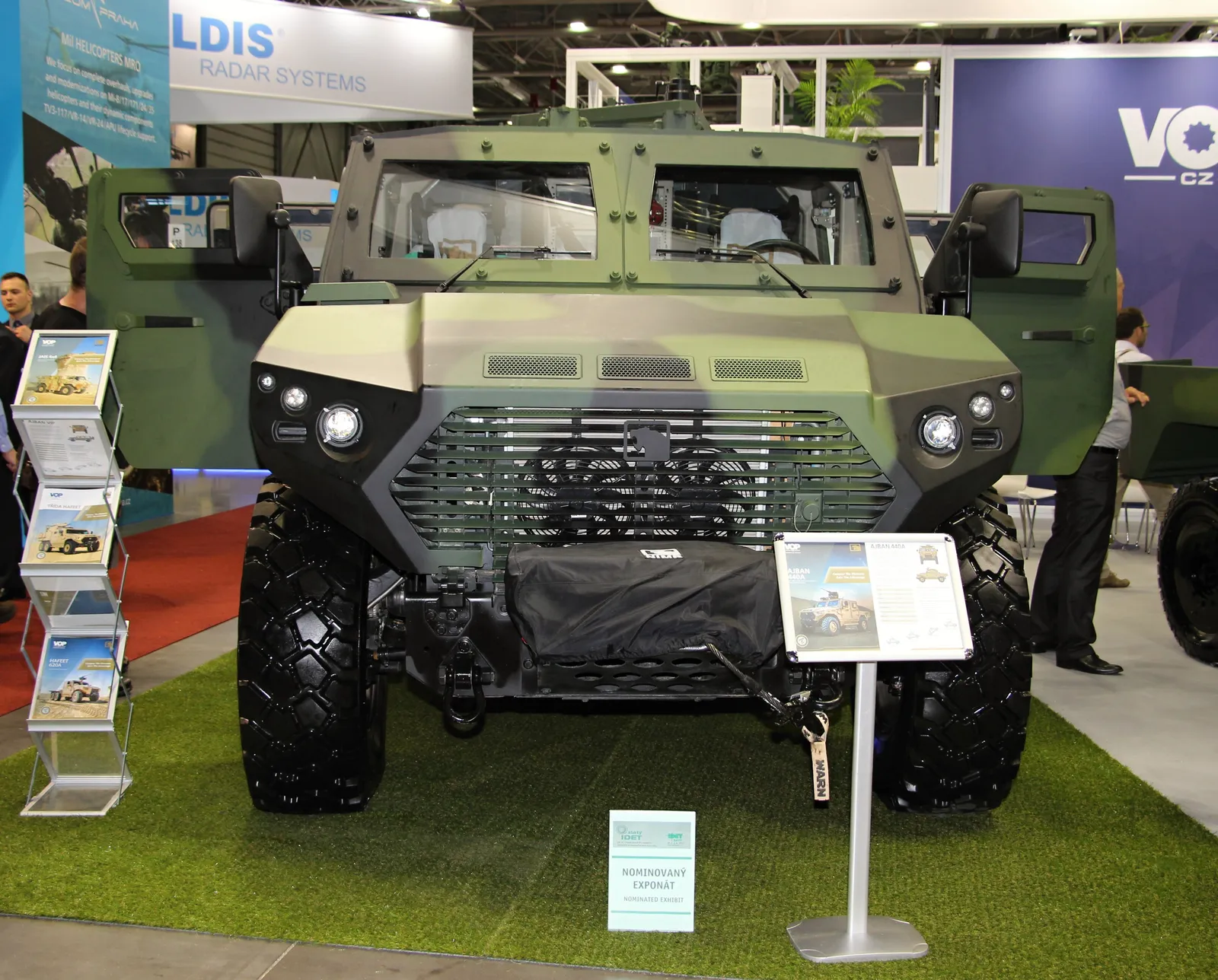
| AJBAN 440A | Protected patrol vehicle | Earlier protected 4x4 AJBAN variant listed with four crew, 1,200 kg payload, 110 km/h maximum road speed, 700 km range, CTIS, run-flat inserts, and self-recovery winch. Sources: Army Guide AJBAN 440A Product Page |
| AJBAN MK2 | Second-generation light tactical patrol vehicle | EDGE describes the MK2 as a 4x4 ballistic and blast-protected patrol vehicle with a V-hull, 360 hp engine, 110 km/h maximum speed, and 700 km cruising range. Sources: EDGE AJBAN MK2 Product Page, NIMR AJBAN MK2 Brochure |
| AJBAN 432AU | MK2 logistics, utility, shelter, or mortar-carrier configuration | The MK2 brochure lists the 432AU as a three-seat variant with up to 4,300 kg payload and logistics, cargo-box, shelter, or mortar-carrier roles. Sources: NIMR AJBAN MK2 Brochure |
| AJBAN 452A | MK2 larger crew and mission-body configuration | The MK2 brochure lists driver, co-driver, and up to nine crew seats, with internal-security, APC, artillery-observation, command-and-control, and ambulance applications. Sources: NIMR AJBAN MK2 Brochure |
| AJBAN 441A / 441AE | Longer-wheelbase protected logistics and mission platform | NIMR's 441A/441AE flyer describes 4x4 platforms for patrol, reconnaissance, convoy escort, logistics, resupply, and specialized configurations, with the 441AE using a longer wheelbase and modular interior. Sources: NIMR AJBAN 441A / 441AE Flyer |
| AJBAN ISV | Internal-security application | The ISV flyer describes a 4x4 internal-security vehicle for security, riot, and crowd-control personnel, with 2+8 crew capacity, run-flat tyres, central tyre inflation, and optional crowd-control equipment. Sources: NIMR AJBAN ISV Flyer |
Media
Related Weapon Systems


Sources
EDGE AJBAN MK2 Product PagePublisher: EDGE Group | Note: Supports AJBAN MK2 manufacturer, configuration, speed, range, engine, and V-hull protected patrol-vehicle background. | Accessed: 2026-06-22NIMR AJBAN MK2 BrochurePublisher: NIMR Automotive | Note: Supports AJBAN MK2 dimensions, crew-capacity range, protection architecture, mobility, payload, and optional mission equipment. | Accessed: 2026-06-22NIMR AJBAN 441A / 441AE FlyerPublisher: NIMR Automotive | Note: Supports AJBAN 441A/441AE protected mobility, patrol, reconnaissance, convoy escort, logistics, range, payload, and crew-capacity specifications. | Accessed: 2026-06-22NIMR Official SitePublisher: NIMR Automotive | Note: Supports manufacturer background, UAE location, product portfolio, and reported production scale across NIMR vehicles. | Accessed: 2026-06-22EDGE NIMR Entity PagePublisher: EDGE Group | Note: Supports NIMR as the UAE armoured-vehicle manufacturer, broad 4x4 and 6x6 platform context, modular mission-system integration, and the listed AJBAN brochure lines. | Accessed: 2026-07-02Armada AJBAN Mark 2 ProductionPublisher: Armada International | Note: Supports Mark 2 Ajban production context, the Ajban-Hafeet Mark 2 modernization framing, UAE Armed Forces customer context, and NIMR production-rate background. | Accessed: 2026-07-02Oryx Tarhuna Equipment CapturePublisher: Oryx | Note: Supports 2014 Second Libyan Civil War fielded by the Libyan National Army and captured by GNA forces at Tarhuna; the source lists one Nimr infantry mobility vehicle among captured LNA vehicles. | Accessed: 2026-06-22Washington Institute Gulf Coalition AQAP YemenPublisher: The Washington Institute for Near East Policy | Note: Supports 2014 Yemen Civil War use by Yemeni government and coalition-aligned forces; the report describes Yemeni personnel mounted in UAE-supplied Nimr tactical vehicles during March 2016 ground operations against AQAP around Aden. | Accessed: 2026-07-02Carnegie UAE Military Training Foreign PolicyPublisher: Carnegie Endowment for International Peace | Note: Supports 2014 Yemen Civil War use by describing the UAE train-and-equip effort in Yemen and identifying deployment of the NIMR Ajban 440A. | Accessed: 2026-07-02Amnesty Sudan Nimr Ajban InvestigationPublisher: Amnesty International | Note: Supports 2023 Sudan War used by the Rapid Support Forces; Amnesty verified Nimr Ajban APCs used by RSF, including several destroyed or captured by SAF with Galix systems visible. | Accessed: 2026-06-22NIMR AJBAN ISV FlyerPublisher: NIMR Automotive | Note: Supports AJBAN ISV internal-security role, crew capacity, dimensions, range, engine power, protected cabin, and optional security equipment. | Accessed: 2026-07-02Army Guide AJBAN 440A Product PagePublisher: Army Guide | Note: Supports AJBAN 440A protected tactical-vehicle role, crew, payload, speed, range, mobility, and standard or optional equipment claims. | Accessed: 2026-07-02Oryx Sudan Equipment LossesPublisher: Oryx | Note: Supports 2023 Sudan War direct-use evidence by documenting destroyed NIMR Ajban 440A infantry mobility vehicles in the 2023 Sudan conflict; side attribution is taken from Amnesty rather than this loss list. | Accessed: 2026-06-22Wikimedia Commons AJBAN 440A Image 1Publisher: Wikimedia Commons | Note: Supports image provenance for the primary AJBAN 440A gallery image; Karel Subrt photograph licensed CC BY-SA 4.0. | Accessed: 2026-06-22Wikimedia Commons AJBAN 440A Image 2Publisher: Wikimedia Commons | Note: Supports image provenance for an alternate AJBAN 440A gallery view; Karel Subrt photograph licensed CC BY-SA 4.0. | Accessed: 2026-06-22Wikimedia Commons AJBAN 440A Image 3Publisher: Wikimedia Commons | Note: Supports image provenance for an additional AJBAN 440A gallery view; Karel Subrt photograph licensed CC BY-SA 4.0. | Accessed: 2026-06-22Wikimedia Commons AJBAN 440A Image 4Publisher: Wikimedia Commons | Note: Supports image provenance for an additional AJBAN 440A gallery view; Karel Subrt photograph licensed CC BY-SA 4.0. | Accessed: 2026-06-22