Aircraft & UAVs

MQ-8C Fire Scout

Also known as
  • Northrop Grumman MQ-8C Fire Scout
  • MQ-8C
  • Fire Scout C
  • Fire-X

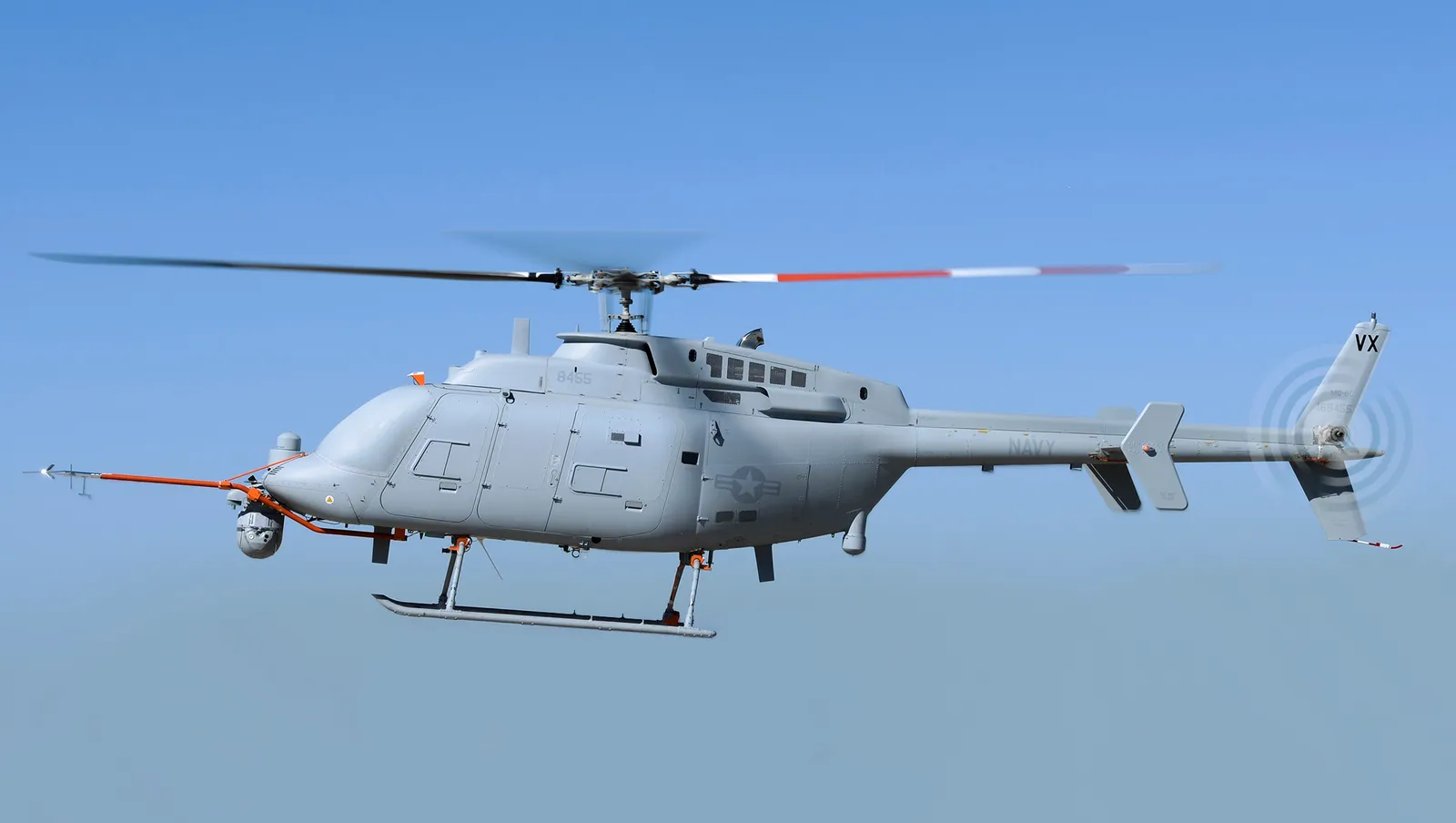
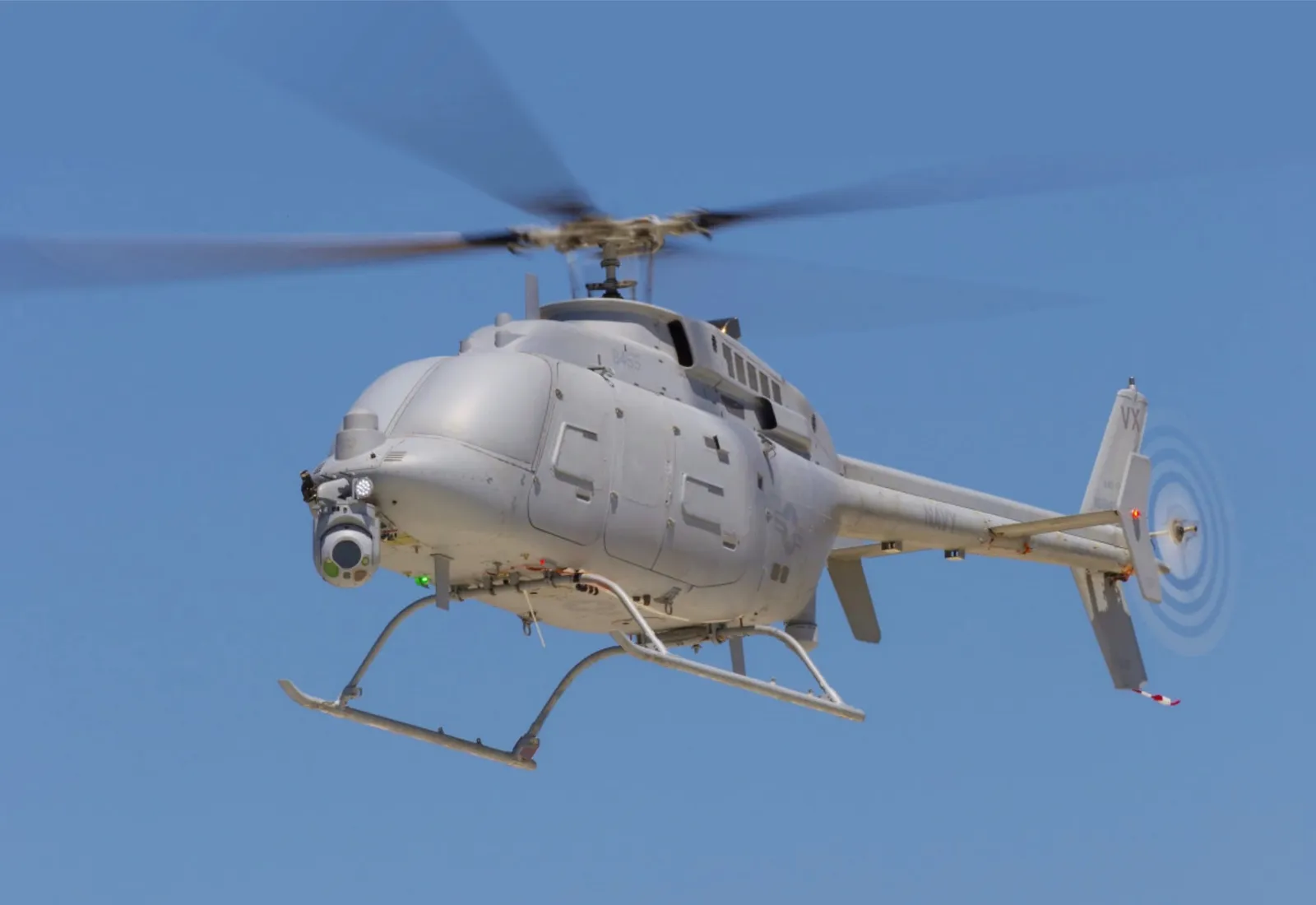
The MQ-8C Fire Scout is a U.S. Navy shipborne uncrewed helicopter built by Northrop Grumman around the Bell 407 airframe. It extends Fire Scout from the smaller MQ-8B into a longer-endurance ISR and targeting-support aircraft with Leonardo's AN/ZPY-8 Osprey radar, Littoral Combat Ship deployments, and expeditionary basing demonstrations rather than a publicly documented armed-conflict record in this catalog.

Profile / Specs

Profile

Origin
United States
Type
Uncrewed naval helicopter
Service note
2010s-present
Designer
Northrop Grumman, using the Bell 407 airframe and Fire Scout mission architecture
Designed
2010 Fire-X demonstrator; MQ-8C first flight in 2013
Produced
2010s-2020s
Number built
38 MQ-8C aircraft planned or delivered for the U.S. Navy, according to NAVAIR's 2019 IOC release

Specifications

Airframe basis
Bell 407 commercial helicopter
Role
Shipborne and expeditionary ISR&T, situational awareness, and precision targeting support
Operator
United States Navy
Contractor
Northrop Grumman Unmanned Systems
Range
150 nautical miles
Payload capacity
More than 700 lb
Overall length
34.7 ft
Zero-fuel weight
3,200 lb
Standard-day fuel and payload weight
6,000 lb
Maximum speed
135 kt
Cruise speed
115 kt
Service ceiling
16,000 ft
Maximum endurance
12 hr with 300 lb payload
Sensors
AN/AAQ-22D BRITE Star II EO/IR and laser range/designation; AN/ZPY-8 multimode AESA radar on the surface-warfare increment
Radar
Leonardo Osprey AN/ZPY-8 AESA radar in the deployed upgraded configuration
Shipboard integration
Autonomous launch and recovery from aviation-capable ships; demonstrated land and expeditionary shore-site control handoff
Mission System

The MQ-8C keeps Fire Scout's autonomous shipborne ISR role but shifts the air vehicle to a larger commercial-helicopter base. Navy and manufacturer sources frame the C model around longer endurance, heavier payload capacity, maritime radar, and sensor handoff to manned ships and aircraft rather than around onboard weapons.

Air vehicle

Bell 407-based uncrewed helicopter adapted for Navy autonomous shipboard and shore-site operations.

Sources: Northrop Grumman Fire Scout; NAVAIR MQ-8C IOC.

Sensor fit

Leonardo Osprey AN/ZPY-8 AESA radar supports target detection, tracking, weather detection, air-to-air targeting, and ground moving target indication modes.

Sources: NAVAIR MQ-8C radar deployment; Leonardo Osprey radar selection.

Deployment model

The aircraft has deployed from Littoral Combat Ships and demonstrated portable mission-control handoff for expeditionary shore operations.

Sources: NAVAIR EABO exercise; Northrop Grumman Indo-Pacific deployment.
Variants

The MQ-8C is the larger Bell 407-based branch of the Fire Scout family; the earlier MQ-8B is a smaller predecessor rather than a subvariant of the C model.

VariantConfigurationDesignation notes
Fire-XBell 407-based demonstrator

Northrop Grumman introduced the Fire-X demonstrator before the Navy's MQ-8C designation, using a Bell 407 airframe to prove a larger autonomous helicopter path.

Sources: Northrop Grumman Fire Scout

MQ-8C with AN/ZPY-8 radarOperational radar-equipped configuration

NAVAIR reported the deployed MQ-8C aboard USS Milwaukee with the Leonardo Osprey AN/ZPY-8 radar, adding target identification, detection, tracking, and additional digital radar modes.

Sources: NAVAIR MQ-8C radar deployment, Leonardo Osprey radar selection

Shipboard Deployment

Public Navy and Northrop Grumman releases document MQ-8C deployments from Freedom-variant Littoral Combat Ships.

CarrierCarrier typeCarriage evidence
Freedom-class Littoral Combat Ship, Freedom-variant littoral combat ship, Naval SystemsFreedom-class Littoral Combat ShipLittoral Combat Ship

MQ-8C deployed aboard the Freedom-variant USS Milwaukee in the Caribbean and later aboard USS Jackson in the Indo-Pacific, giving LCS crews longer-endurance shipborne ISR&T coverage.

Sources: NAVAIR MQ-8C radar deployment, SOUTHCOM USS Milwaukee return, Northrop Grumman Indo-Pacific deployment

Manned-Unmanned Teaming

The first MQ-8C operational deployment paired the uncrewed helicopter with a manned MH-60S detachment for maritime surveillance work.

Compatible itemItem typeCompatibility evidence
MH-60S Sea Hawk helicopter, Multi-mission maritime helicopter, Aircraft & UAVsMH-60S Sea Hawk helicopterShipboard helicopter

NAVAIR said HSC-22 Detachment 5 would employ Fire Scout and an embarked MH-60S during USS Milwaukee's counter-narcotics deployment, using MQ-8C to identify targets of interest and refine surveillance data.

Sources: NAVAIR MQ-8C radar deployment, SOUTHCOM USS Milwaukee return

Timeline

MQ-8C Fire Scout Key Events

  1. MQ-8C first flight

    NAVAIR reported the MQ-8C's first flight at Naval Base Ventura County, Point Mugu, with a seven-minute first sortie and a second flight reaching 500 feet.

    Sources: NAVAIR MQ-8C first flight

  2. Osprey AESA radar selected

    Leonardo announced that NAVAIR selected the Osprey AESA radar for MQ-8C testing and evaluation, with the Navy choosing a two-panel fit that provides a 240-degree instantaneous field of view.

    Sources: Leonardo Osprey radar selection

  3. Initial operational capability declared

    The Navy declared MQ-8C initial operational capability, clearing the type for fleet operations and training after more than 1,500 flight hours and over 700 sorties.

    Sources: NAVAIR MQ-8C IOC

  4. First operational deployment

    NAVAIR reported MQ-8C deployment aboard USS Milwaukee with HSC-22 Detachment 5 for U.S. 4th Fleet counter-illicit-drug-trafficking missions.

    Sources: NAVAIR MQ-8C radar deployment

  5. Indo-Pacific deployment

    Northrop Grumman reported MQ-8C's second operational deployment, and first Indo-Pacific deployment, aboard USS Jackson.

    Sources: Northrop Grumman Indo-Pacific deployment

  6. EABO exercise begins

    During Exercise Resolute Hunter, MQ-8C flew 23 hours, shifted control to a portable mission-control station on San Clemente Island, and demonstrated ship-to-shore expeditionary use.

    Sources: NAVAIR EABO exercise, Northrop Grumman EABO exercise

  7. Navy starts divestment

    DOT&E reported that the Navy initiated MQ-8C divestment in FY2024 and planned to complete it in FY2026, ending additional surface-warfare increment testing.

    Sources: DOT&E FY2024 MQ-8C Annual Report

Media
Related Weapon Systems
MQ-9 Reaper, Medium-altitude long-endurance unmanned combat aerial vehicle, Aircraft & UAVsAircraft & UAVsMQ-9 ReaperMedium-altitude long-endurance unmanned combat aerial vehicleThe MQ-9 Reaper is a General Atomics medium-altitude, long-endurance remotely piloted aircraft built for persistent intelligence collection and precision strike. Larger and more powerful than the MQ-1 Predator, it combines satellite control, electro-optical and infrared sensors, laser designation, and weapons such as Hellfire missiles and guided bombs, making it a recurring U.S. and coalition platform in counterterrorism, maritime-security, and regional-strike operations.
Sikorsky S-70UAS U-Hawk, Autonomous cargo utility helicopter UAS, Aircraft & UAVsAircraft & UAVsSikorsky S-70UAS U-HawkAutonomous cargo utility helicopter UASThe Sikorsky S-70UAS U-Hawk is a 2025 autonomous UH-60L Black Hawk conversion that removes the cockpit, adds clamshell doors and a rear ramp, and turns the helicopter into a cargo-first UAS. Sikorsky said it completed the redesign in 10 months and showed payload options ranging from palletized cargo to a HIMARS rocket pod and Naval Strike Missile loads; no direct conflict use or public first-flight confirmation was found in sources checked through July 4, 2026.
AV-8B Harrier II, V/STOL light attack and close-air-support aircraft, Aircraft & UAVsAircraft & UAVsAV-8B Harrier IIV/STOL light attack and close-air-support aircraftThe AV-8B Harrier II is a second-generation Harrier built around vectored-thrust V/STOL light attack missions: expeditionary close air support, armed reconnaissance, interdiction, shipboard strike, and dispersed forward-base operations. Developed by McDonnell Douglas with British Aerospace participation, it added a larger composite wing, improved Pegasus-powered performance, and later Night Attack and Harrier II Plus radar configurations. The U.S. Marine Corps formally sundowned the type at Cherry Point on June 3, 2026, while Italian and Spanish naval Harriers remained a separate service caveat.
AH-1Z Viper attack helicopter, Attack helicopter, Aircraft & UAVsAircraft & UAVsAH-1Z Viper attack helicopterAttack helicopterThe Bell AH-1Z Viper is a two-seat U.S. Marine Corps attack helicopter developed from the AH-1W Super Cobra for the H-1 upgrade program. NAVAIR describes it as the AH-1W replacement, with a four-bladed composite rotor, integrated fire-control system, six wing stores stations, and 85 percent parts commonality with the UH-1Y; official Marine Corps and Navy sources place AH-1Z-equipped elements in the 2016 Operation Inherent Resolve deployment.
AN/TPQ-37 Firefinder radar, Long-range counter-battery radar, Electronic WarfareElectronic WarfareAN/TPQ-37 Firefinder radarLong-range counter-battery radarThe AN/TPQ-37 Firefinder is a U.S. long-range weapon-locating radar built to detect artillery and rocket launches, compute firing points, and pass coordinates for counter-battery fire. Developed from the Army's Firefinder program and produced by Hughes Aircraft before later Raytheon/ThalesRaytheonSystems sustainment and upgrade work, the Q-37 complemented the shorter-range AN/TPQ-36, shaped Coalition counterbattery tactics in Desert Storm, and later appeared in Ukraine's partner-supplied artillery reconnaissance network.

Sources