Infantry Weapons

MPT-76 rifle

Also known as
  • MPT-76
  • MPT 76
  • Milli Piyade Tufegi
  • MPT 76 SH
  • MPT-76 SH
  • MPT-76H
  • MPT-76 MH
  • KNT-76

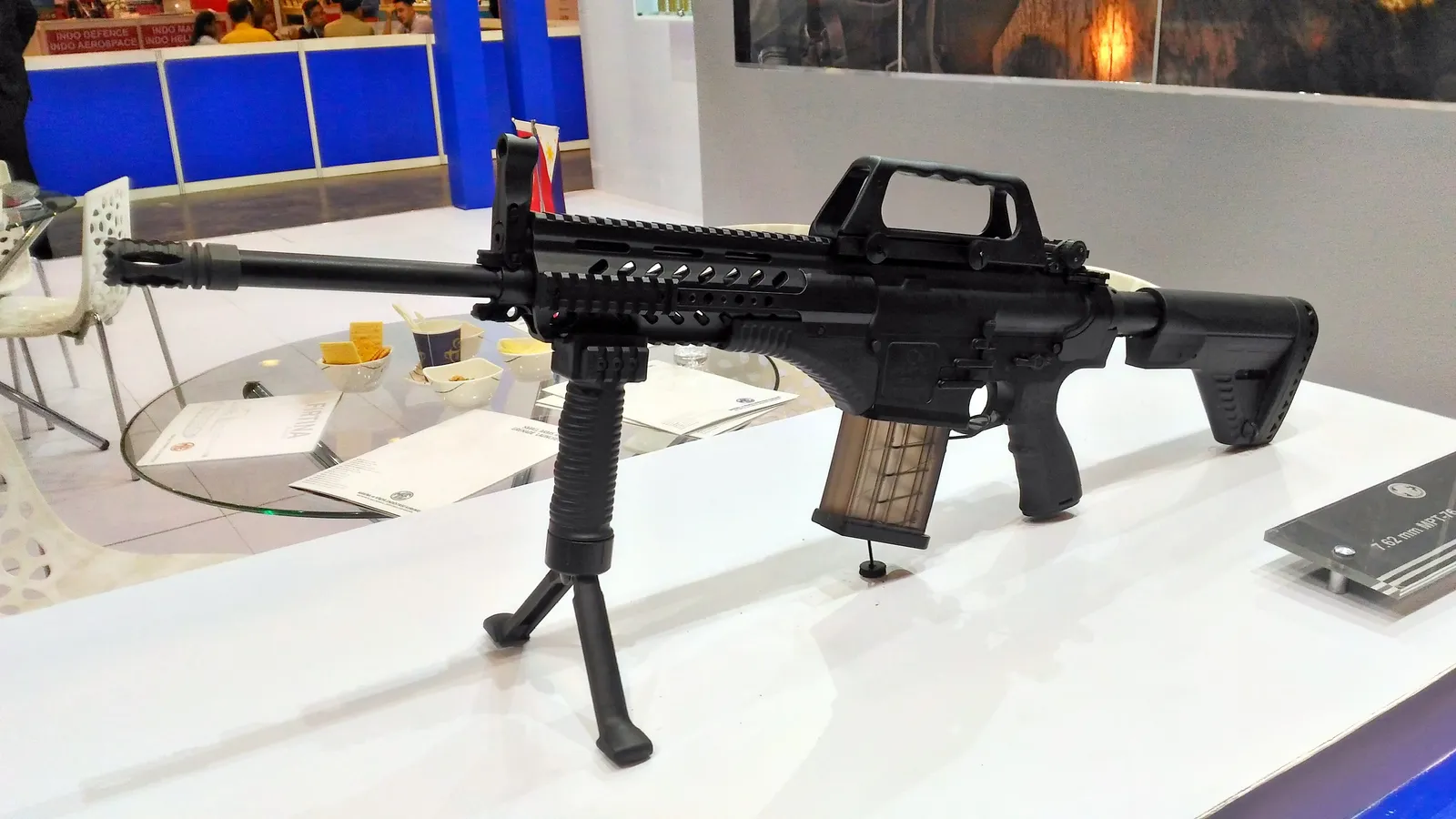
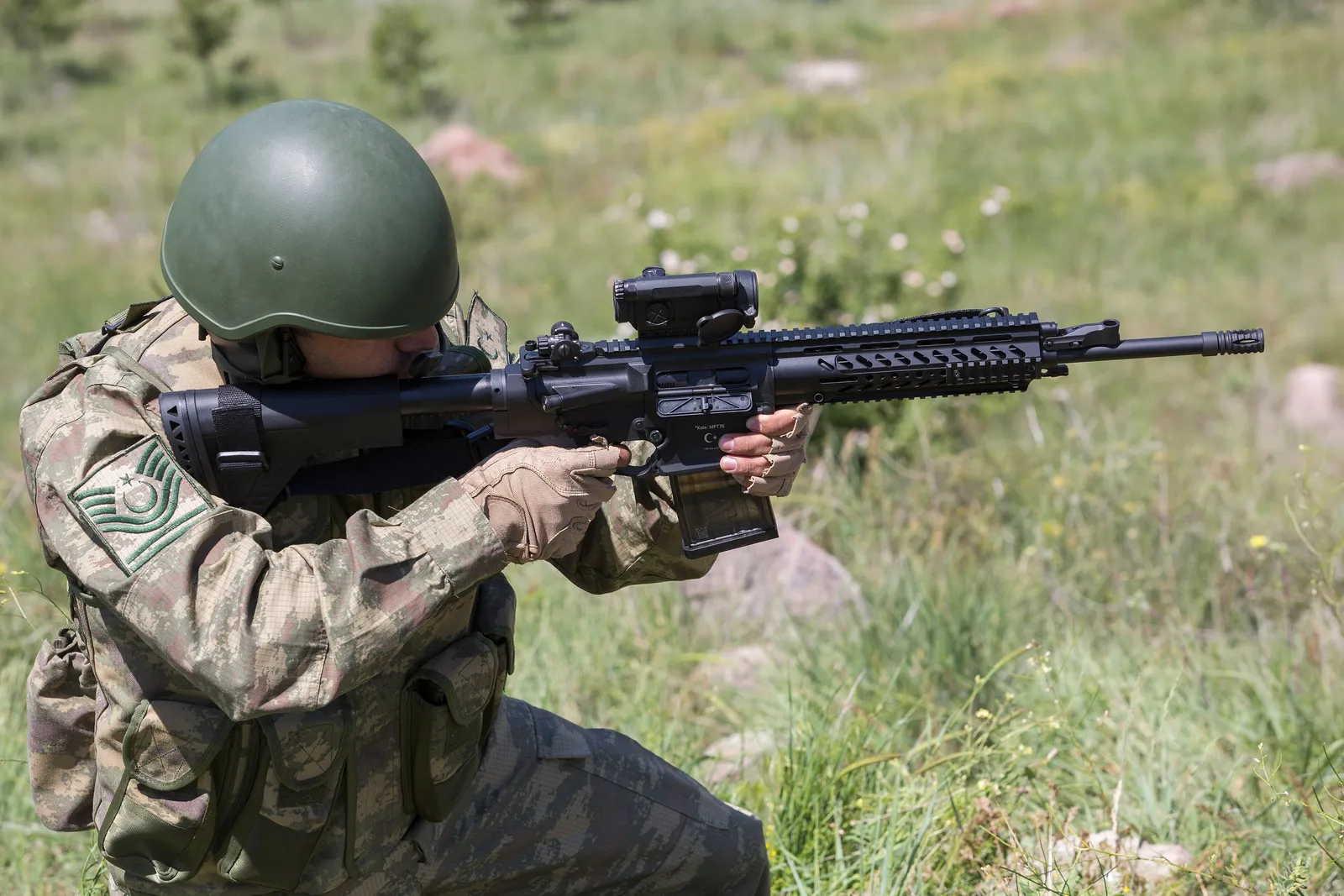
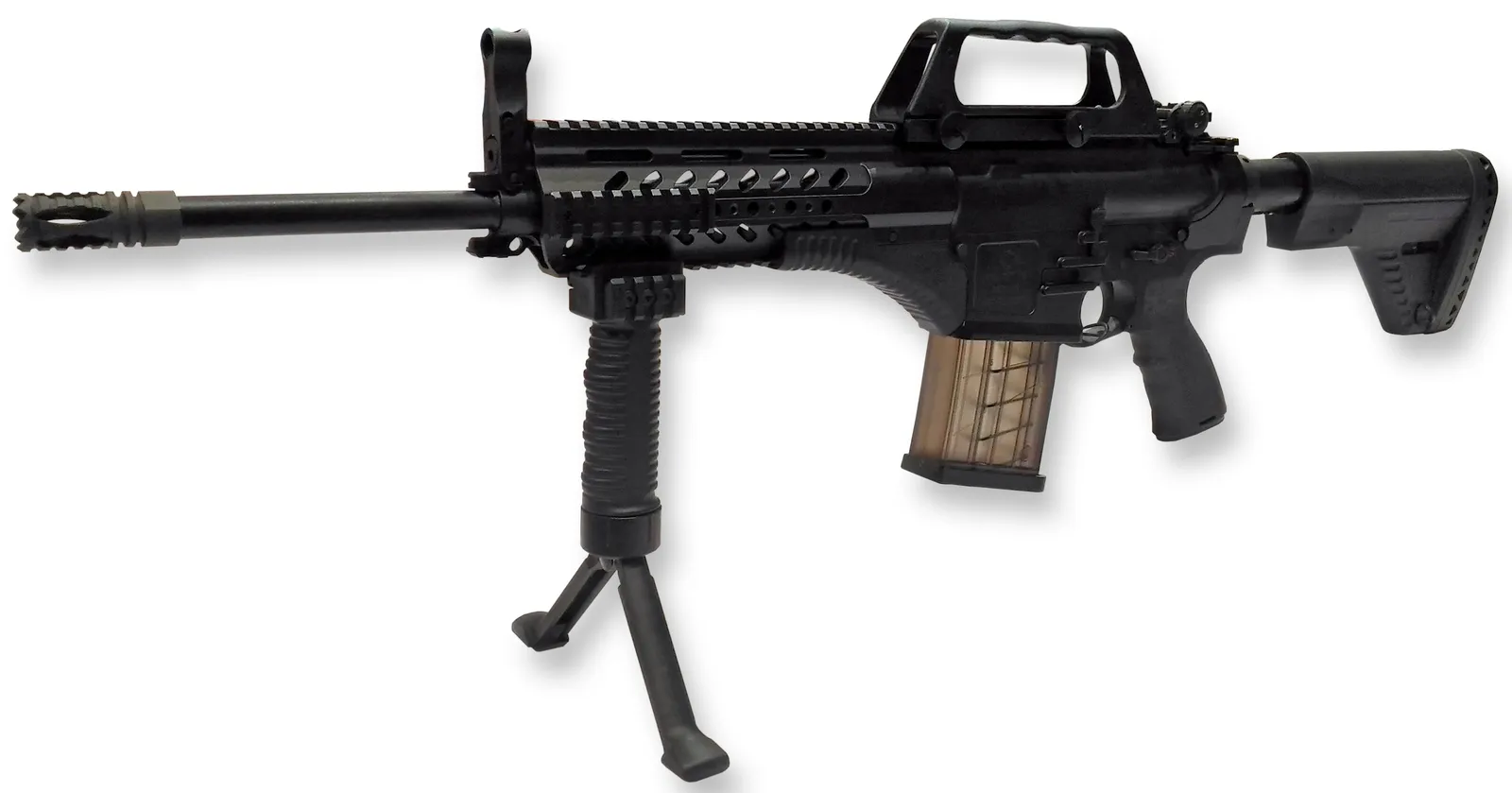
The MPT-76 is a Turkish 7.62x51 mm NATO battle rifle developed for the Turkish Armed Forces and security services as a domestic infantry weapon. Cataloged use is tied to Turkish forces in Operation Olive Branch in Syria and Operation Claw against PKK positions in northern Iraq, while manufacturer and defense-industry sources document the rifle's 600 m effective range, 20-round magazine, rail-equipped modular layout, and same-family KNT-76 marksman variant.

Role in Conflicts

Side
Turkey
Role in conflict
Infantry rifle for counter-PKK ground forces

Turkish land forces fielded MPT-76 rifles during Operation Claw in northern Iraq, where Turkish forces conducted ground operations against PKK positions in the Hakurk area.

Profile / Specs

Profile

Origin
Turkey
Type
7.62 mm battle rifle
Service note
Entered Turkish inventory in the 2010s; documented in Turkish operations in Syria and northern Iraq.
Designer
MKE
Designed
2009-2010s development period
Produced
Serial production for Turkish forces from 2017; production continued through at least 2019 reporting.

Specifications

Caliber
7.62x51 mm NATO
Operating system
Short-stroke gas-piston, rotating-bolt mechanism
Modes of fire
Semi-automatic and fully automatic
Magazine
20-round detachable magazine
Effective range
600 m
Muzzle velocity
800 m/s
Weight
About 3.89 kg without magazine for the Sarsilmaz MPT 76 SH variant
Barrel length
406 mm
Cyclic rate
About 700 rounds/min for the Sarsilmaz MPT 76 SH
Timeline

MPT-76 rifle Key Events

  1. Serial production for Turkish forces

    Anadolu Agency reported that MKEK had manufactured the MPT-76 infantry rifle for the Turkish Armed Forces since 2017.

  2. MPT-76 reported in Operation Olive Branch

    TRT Haber reported that domestically produced MPT-76 rifles were among the important weapons used by Turkish troops in Operation Olive Branch around Afrin.

  3. Operation Claw use reported

    Daily Sabah reported MPT-76 rifles in use by Turkish land forces during Operation Claw in northern Iraq.

  4. Production passed 40,000 rifles

    Anadolu Agency reported that locally produced MPT-76 rifles had passed 40,000 units, with MKEK, Kale Kalip, and Sarsilmaz tied to serial production.

Production And Fielding Notes

The MPT-76 record has two distinct public evidence lanes: official and manufacturer material for the rifle's design/specification baseline, and conflict reporting that places Turkish troops with the rifle in Syria and northern Iraq.

Evidence laneWhat it supportsSource labels
Official and manufacturer specifications7.62x51 mm chambering, short-stroke gas-piston operation, 20-round magazine, 600 m effective range, rail accessory support, and Turkish inventory context.MPT-76H Project; MPT 76 SH
Family configurationsSarsilmaz's MPT 76 SH product page supports the SH configuration; the SSB project page supports the lighter MPT-76H configuration; C4Defence identifies KNT-76 as a DMR version of the MPT-76 with 7.62x51 mm NATO ammunition, a 20-round magazine, and 800 m effective range.MPT 76 SH; MPT-76H Project; KNT-76 is More Ergonomic
Production reportingMKEK production from 2017, follow-on serial production with Kale Kalip and Sarsilmaz, and a public production count above 40,000 rifles by August 2019.Turkey's locally produced rifles outnumber 40,000
Conflict reportingTurkish use in Operation Olive Branch around Afrin and Operation Claw in northern Iraq.Yerli uretim MPT-76'lar, Mehmetcigin gucune guc katiyor; National defense platforms successful in Turkey's anti-terror operations
Media
Related Weapon Systems
AKM, 7.62x39mm assault rifle, Infantry WeaponsInfantry WeaponsAKM7.62x39mm assault rifleThe AKM is the stamped-receiver modernization of the Soviet Kalashnikov assault rifle, chambered for 7.62x39mm and built around a long-stroke gas piston and rotating bolt. Adopted in 1959, it reduced production burden compared with earlier milled-receiver AK rifles and became a widely licensed baseline for later 7.62mm Kalashnikov-pattern weapons. CAR and ARES field documentation continues to place AKM and AKM-pattern rifles in modern conflict stocks, from Islamic State recoveries in Iraq and Syria to Taliban captures in Afghanistan.
M76 sniper rifle, Semi-automatic designated marksman/sniper rifle, Infantry WeaponsInfantry WeaponsM76 sniper rifleSemi-automatic designated marksman/sniper rifleThe M76 is a Zastava-built Yugoslav semi-automatic marksman rifle originally chambered for 7.92x57 mm Mauser and built around an enlarged Kalashnikov-pattern action. Its catalog significance is twofold: it was a Yugoslav People's Army precision rifle with distinctive 8 mm ammunition and optic arrangements, and it later appears in Lake Chad Basin reporting as a Serbian-origin sniper rifle associated with Boko Haram factions.
M16 rifle, Assault rifle, Infantry WeaponsInfantry WeaponsM16 rifleAssault rifleThe M16 is a U.S.-origin 5.56x45mm assault-rifle family that evolved from 1955 Vietnam War service into the M16A1, M16A2 and M16A4 lineage. Current Army and FN references describe the M16A4 as a gas-operated, shoulder-fired, 20-inch-barrel rifle with rail and optics compatibility, while conflict-specific sources document continued use from Marawi and Afghanistan to Israeli wartime response teams, Iraqi partner-force training and Colombian FARC dissident seizures.
AK-47/AKM rifle family, Selective-fire assault rifle family, Infantry WeaponsInfantry WeaponsAK-47/AKM rifle familySelective-fire assault rifle familyAK-47/AKM-family rifles are Kalashnikov-pattern small arms derived from the Soviet AK-47 and 1959 AKM modernization, usually chambered in 7.62 x 39 mm. In the post-2015 catalog they appear with FARC dissidents in Colombia, gangs in Haiti, PKK fighters, GNA scouts in Libya, insurgents in Mali, Islamic State forces in Iraq and Syria, militants in Sinai, RSF units in Sudan, Hamas fighters in Gaza, Taliban fighters in Afghanistan, Boko Haram-linked militants in the Lake Chad basin, and Houthi-linked supply chains in Yemen.

Sources