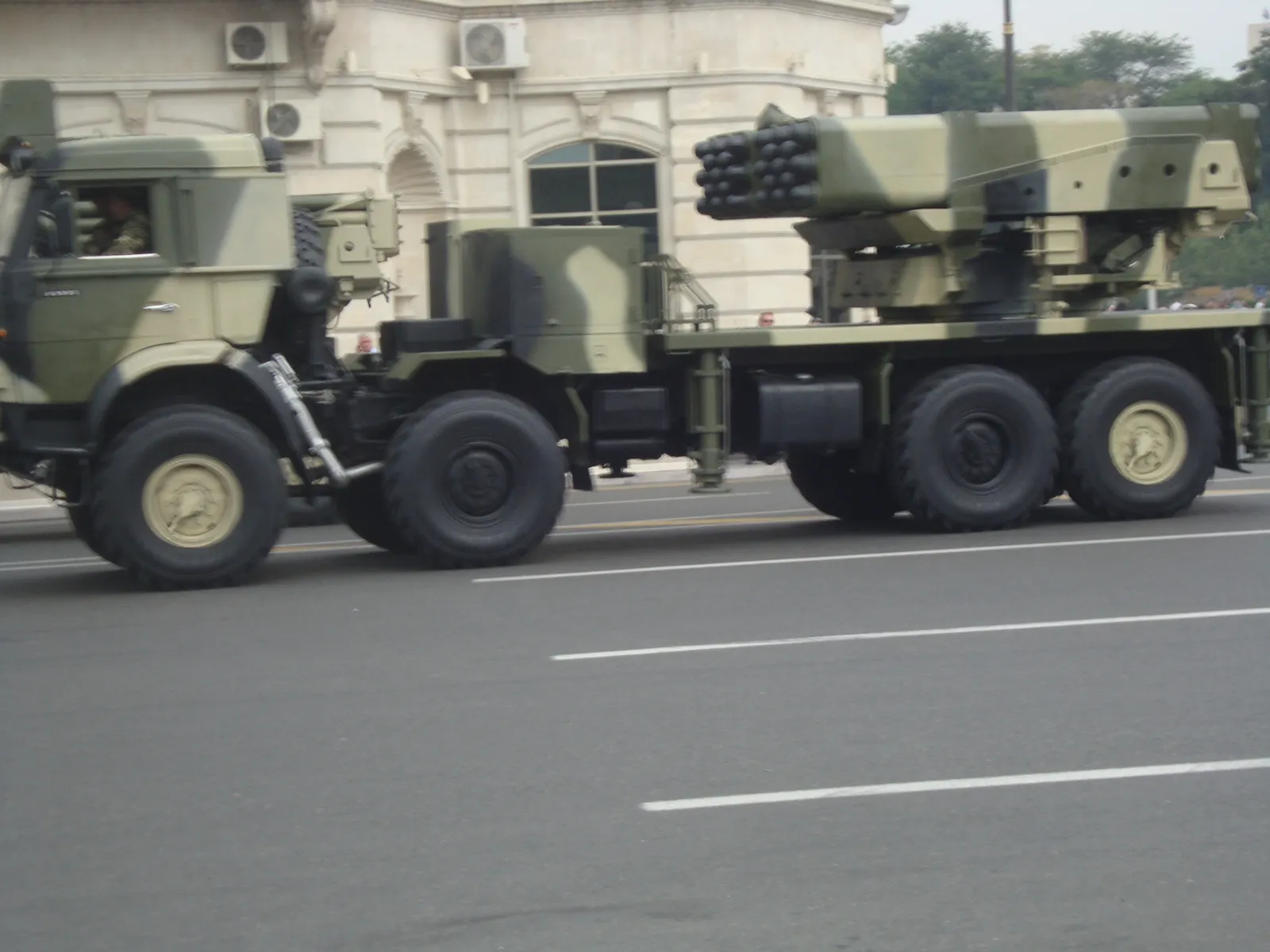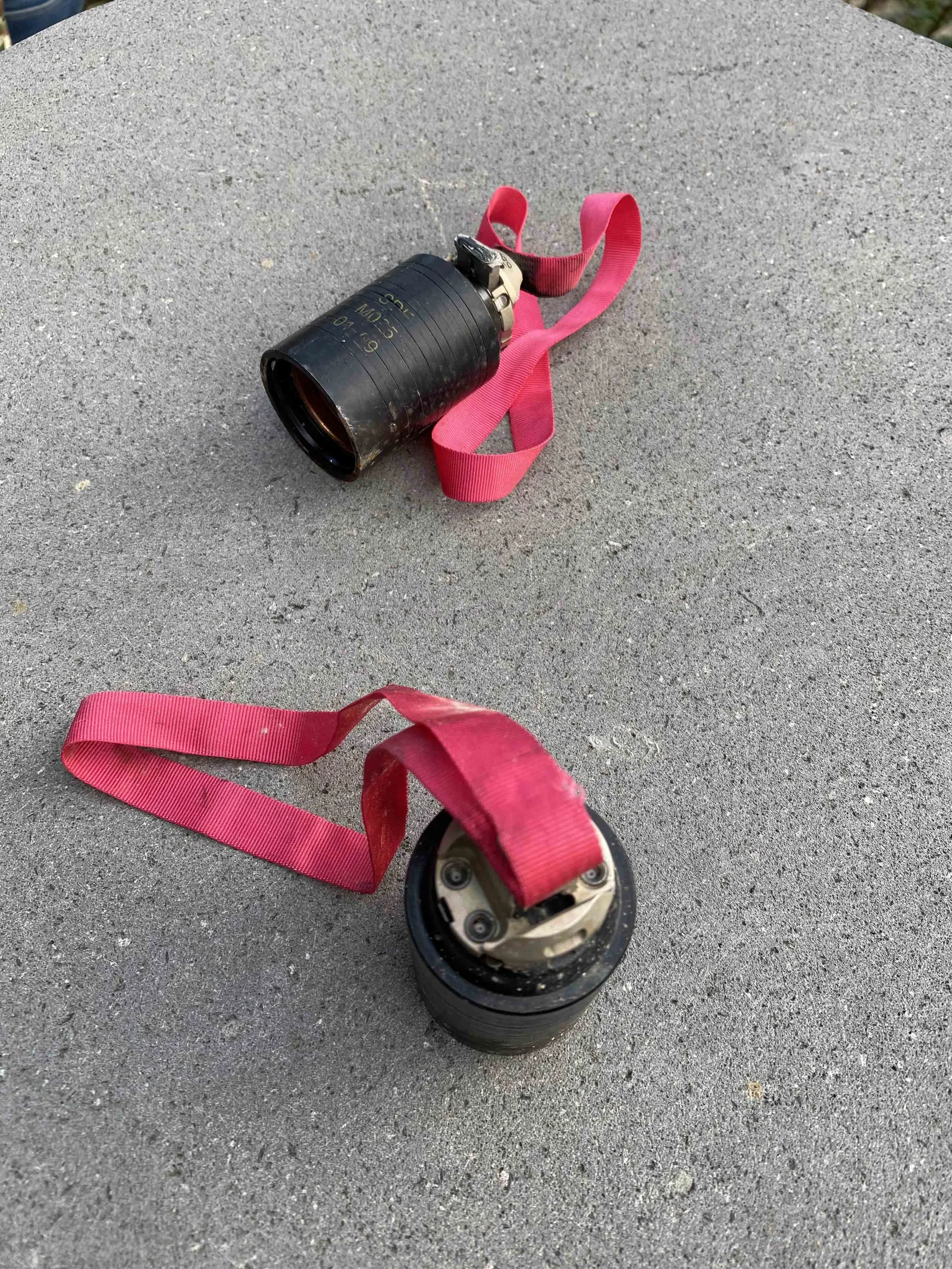
- Side
- Azerbaijan

Cluster Munition Monitor reported evidence of Azerbaijani cluster-munition use in April 2016, with LAR-160 remnants and about 200 unexploded M095 DPICM submunitions cleared near Mokhratagh and Nerkin Horatagh.
The M095 is an Israeli-made dual-purpose improved conventional munition submunition carried inside LAR-160 cluster rockets. Cluster Munition Monitor reporting ties M095 DPICM remnants to the April 2016 Nagorno-Karabakh clashes, and Human Rights Watch and Amnesty International documented M095 remnants, impact patterns, pink stabilization ribbons, and unexploded submunitions after Azerbaijani rocket attacks on Stepanakert and Hadrut in 2020.
Cluster Munition Monitor reported evidence of Azerbaijani cluster-munition use in April 2016, with LAR-160 remnants and about 200 unexploded M095 DPICM submunitions cleared near Mokhratagh and Nerkin Horatagh.
Human Rights Watch and Amnesty International identified M095 submunition remnants and duds from Azerbaijani LAR-160 rocket attacks in Stepanakert and Hadrut in 2020.
The M095 is dispersed by Israeli-produced LAR-160 series cluster rockets.
| Carrier | Carrier type | Carriage evidence |
|---|---|---|
 | Cluster munition rocket | Human Rights Watch identified M095 submunitions and unexploded duds inside LAR-160 series rockets used in Stepanakert and Hadrut; the technical briefing says each rocket carries 104 submunitions and a self-destruct mechanism. Sources: Technical Briefing Note: Cluster Munition Use in the Karabakh Conflict, Azerbaijan: Cluster Munitions Used in Nagorno-Karabakh |
Cluster Munition Monitor reported that HALO cleared LAR-160 rocket remnants and approximately 200 unexploded M095 DPICM submunitions near Mokhratagh and Nerkin Horatagh after the April 2016 clashes.
Sources: Azerbaijan Cluster Munition Ban Policy 2024
Human Rights Watch said attacks using cluster munitions began in Stepanakert on 27 September 2020, later finding M095 impacts, pink ribbons, and unexploded submunitions at multiple sites.
Sources: Azerbaijan: Cluster Munitions Used in Nagorno-Karabakh
Human Rights Watch reviewed photographs recorded on 3 October 2020 showing a LAR-160 rocket, M095 impacts, and dud submunitions in Hadrut.
Sources: Azerbaijan: Cluster Munitions Used in Nagorno-Karabakh
Human Rights Watch's technical briefing said each Israeli-produced LAR-160 series rocket carries 104 M095 submunitions and a self-destruct mechanism.
Sources: Technical Briefing Note: Cluster Munition Use in the Karabakh Conflict
Human Rights Watch matched the M095 to Stepanakert and Hadrut attacks through recurring physical markers found at impact sites and in unexploded rounds.
M095 stabilization ribbons appeared with impact marks and unexploded submunitions.
Source: Technical Briefing Note: Cluster Munition Use in the Karabakh Conflict.
Ring-shaped pre-formed fragments were associated with detonated M095 submunitions.
Source: Azerbaijan: Cluster Munitions Used in Nagorno-Karabakh.
LAR-160 rocket remnants were recorded near the same documented attack areas.
Source: Azerbaijan: Cluster Munitions Used in Nagorno-Karabakh.
Human Rights Watch also noted dud submunitions that failed to function after impact, reinforcing the identification.