Naval Systems

Iranian submarines

Also known as
  • Iranian submarine force
  • IRIN submarine force
  • Tareq-class submarine
  • Project 877EKM Kilo
  • Kilo-class submarine
  • Fateh-class submarine
  • Ghadir-class submarine
  • Nahang-class submarine

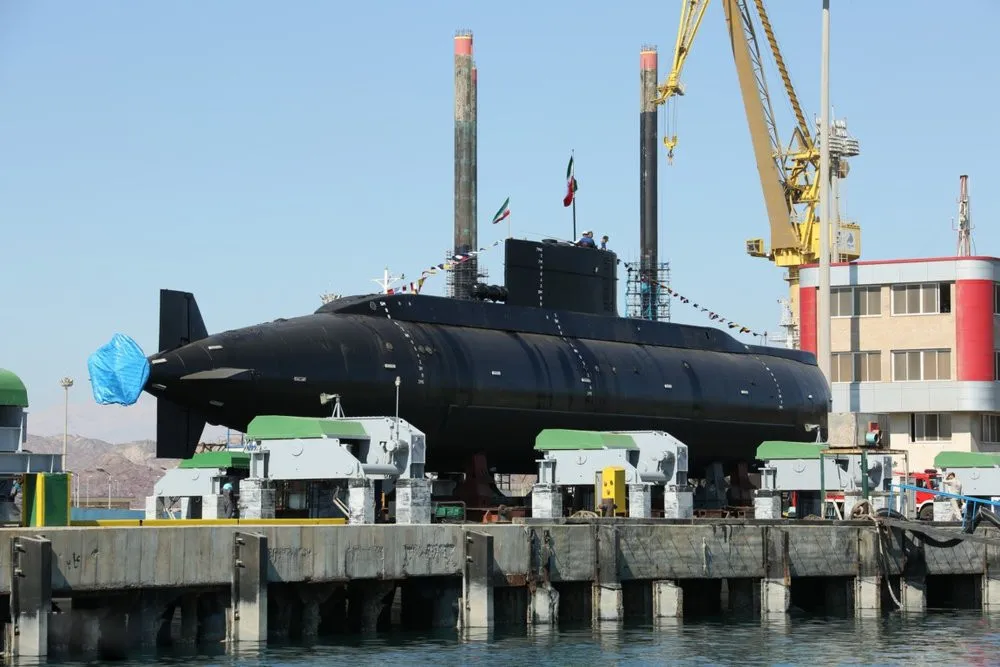
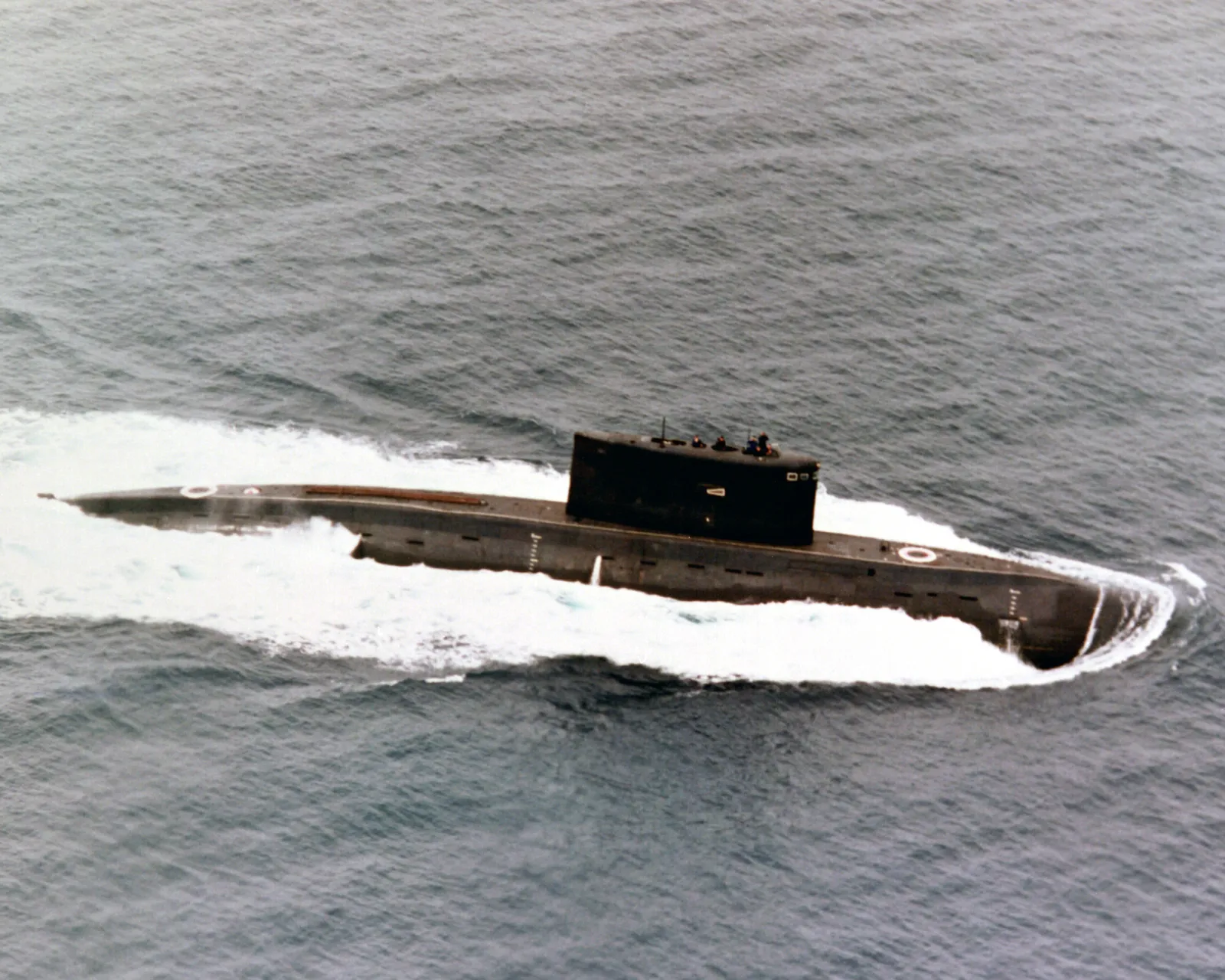
Iranian submarines are the Islamic Republic of Iran Navy's mixed diesel-electric submarine force, combining Russian-built Tareq/Kilo boats with domestically built Fateh, Ghadir, and smaller midget-submarine classes. Centered on Bandar Abbas and the Strait of Hormuz, the fleet supports coastal sea denial, mine warfare, and anti-ship strike; during Operation Epic Fury, CENTCOM listed Iranian Navy ships and submarines among vessels damaged or destroyed.

Role in Conflicts

Side
Iran
Role in conflict
Subsurface sea-denial and coastal-defense force

Iran fielded its submarine force as part of its naval order of battle in the 2020 United States-Iran Conflict; CENTCOM's Operation Epic Fury fact sheet lists Iranian Navy ships and submarines among vessels damaged or destroyed, and follow-on reporting identified a Fateh-class boat at Bandar Abbas among the losses.

Submarine Classes And Roles

Iran's submarine force mixes a few larger imported attack submarines with more numerous indigenous coastal and midget designs. That split matters because the Kilo/Tareq boats provide endurance and heavier torpedo capacity, while Fateh and Ghadir-type boats are better matched to restricted Persian Gulf operating areas.

Class familyBuild pathRole in the force
Tareq / KiloRussian-built Project 877EKM boatsLargest diesel-electric attack submarines in Iranian service, used for longer-endurance patrol, torpedo, mine, and anti-ship missions.
FatehIranian-built coastal submarineIndigenous diesel-electric class between the Kilo and midget-boat tiers, with an AIP development path displayed publicly in 2024.
GhadirIranian-built midget submarineNumerous shallow-water boats suited to Persian Gulf coastal patrol, mine warfare, and short-range attack tasks.
Nahang and smaller boatsIranian-built midget and special-purpose designsSpecialized small submarines that broaden Iran's restricted-water submarine options.
Profile / Specs

Profile

Origin
Iran / Russia
Type
Diesel-electric submarine force
Service note
1992-present, expanded with indigenous boats in the 2000s and 2020s
Designer
Russian and Iranian naval shipbuilders
Designed
1990s-present
Produced
1992-present
Number built
More than 20 submarines reported across imported Kilo boats and indigenous Fateh, Ghadir, and smaller midget-submarine classes

Specifications

Force composition
Russian-built Tareq/Kilo submarines plus Iranian-built Fateh, Ghadir, Nahang, and smaller midget-submarine classes
Largest submarine element
Tareq / Project 877EKM Kilo diesel-electric attack submarines
Indigenous coastal submarine
Fateh-class diesel-electric submarine, with an AIP version publicly displayed in 2024
Midget-submarine element
Ghadir-class and smaller boats optimized for shallow Persian Gulf operating areas
Armament
533 mm torpedoes, naval mines, and anti-ship cruise missiles or missile-launch capability on selected classes
Primary missions
Subsurface sea denial, coastal patrol, mine warfare, and maritime strike
Basing
Bandar Abbas and operating areas around the Persian Gulf and Strait of Hormuz
Variants

This page covers Iran's submarine force as a family record rather than one hull class; the main classes differ sharply in displacement, endurance, and coastal role.

VariantConfigurationDesignation notes
Tareq / Project 877EKM KiloImported diesel-electric attack submarine

Russian-built Kilo boats are Iran's largest submarines and provide the fleet's long-endurance diesel-electric attack-submarine component.

Sources: Iran Submarine Capabilities

Fateh-classIranian-built coastal attack submarine

Fateh gives Iran a larger indigenous submarine than the Ghadir midget boats; Naval News reported that an air-independent-propulsion version was displayed at DIMDEX 2024.

Sources: Iran Submarine Capabilities, Naval News on Fateh AIP version

Ghadir-classMidget submarine

Ghadir boats form the numerous shallow-water element of the force and are associated with coastal patrol, mine warfare, and short-range attack roles.

Sources: Iran Submarine Capabilities

Nahang-class and smaller boatsSpecialized midget-submarine family

Iran has also developed smaller submarine designs that complement the larger Kilo, Fateh, and Ghadir classes in restricted-water operations.

Sources: Iran Submarine Capabilities

Timeline

Iranian submarines Key Events

  1. Tareq enters Iranian service

    Iran commissioned the Russian-built Tareq, its first Kilo-class submarine, establishing the fleet's imported diesel-electric attack-submarine element.

    Sources: Iran Submarine Capabilities, AP on Tareq commissioning

  2. Ghadir class enters operational service

    Iran began deploying Ghadir-class and Nahang-class mini submarines for shallow-water Persian Gulf operations, broadening the fleet beyond the larger Kilo boats.

    Sources: Iran Submarine Capabilities, ODIN Ghadir class

  3. Fateh class joins the fleet

    Iran introduced the Fateh-class submarine as a larger indigenous diesel-electric design bridging the gap between Kilo boats and midget submarines.

    Sources: Iran Submarine Capabilities, Naval News on Fateh commissioning

  4. AIP Fateh variant displayed

    Naval News reported that Iran displayed an air-independent-propulsion version of the Fateh-class submarine at DIMDEX 2024.

    Sources: Naval News on Fateh AIP version

  5. Operation Epic Fury hits Iranian submarines

    CENTCOM's Operation Epic Fury fact sheet listed Iranian Navy ships and submarines among vessels damaged or destroyed, while follow-on reporting identified a Fateh-class submarine struck at Bandar Abbas.

    Sources: Operation Epic Fury fact sheet, TWZ on Fateh submarine loss

Media
Related Weapon Systems
Iranian small attack boats, Small attack boat / fast attack craft, Naval SystemsNaval SystemsIranian small attack boatsSmall attack boat / fast attack craftIranian small attack boats are a mixed Islamic Revolutionary Guard Corps Navy fast attack craft and fast inshore attack craft force used for swarm harassment, mine laying, anti-ship missile attack, and littoral sea denial around the Persian Gulf and Strait of Hormuz. The family covers domestically produced speedboats and named classes such as Ashura/Ashoora, Tareq, Zolfaghar/Peykaap, Thondor/Houdong, Boghammar-derived craft, and Bladerunner-derived craft rather than a single standardized design.
Iranian naval surface vessels, Naval surface vessels, Naval SystemsNaval SystemsIranian naval surface vesselsNaval surface vesselsIranian naval surface vessels in this catalog cover two overlapping fleets: the regular Islamic Republic of Iran Navy's larger frigates, corvettes, and missile boats, and the IRGC Navy's missile boats, patrol craft, fast-attack craft, small boats, and newer missile catamarans. The fleet is usually described as a Strait of Hormuz and Gulf littoral force, combining anti-ship missiles, swarm tactics, boarding pressure, mine-capable boats, and limited larger-combatant presence rather than a peer blue-water surface fleet.
Iranian mine-laying vessel, Mine-laying vessel, Naval SystemsNaval SystemsIranian mine-laying vesselMine-laying vesselIranian mine-laying vessels are auxiliaries or converted landing ships used to seed naval mines in the Strait of Hormuz and nearby waters. The best-documented example, Iran Ajr, was a Japanese-built landing ship formerly called Arya Rakhsh that U.S. helicopters and SEALs intercepted while it was laying mines in September 1987, and in March 2026 U.S. officials said CENTCOM was still hunting and striking mine-laying vessels and mine-storage facilities during Operation Epic Fury.
Tareq / Boghammar speedboat, Armed speedboat / fast inshore attack craft, Naval SystemsNaval SystemsTareq / Boghammar speedboatArmed speedboat / fast inshore attack craftThe Tareq or Boghammar speedboat family covers Swedish Boghammar high-speed patrol boats and Iranian-built or Iranian-modified descendants used by the IRGC Navy as lightly armed fast inshore attack craft. The type became prominent during the Tanker War phase of the 1980 Iran-Iraq War, when Revolutionary Guard crews used small armed speedboats for harassment and attacks on shipping, and later remained part of Iran's broader small-boat swarm and coastal-denial force.
Iranian coastal surveillance radar sites, HF over-the-horizon 3D phased-array early-warning and coastal surveillance radar, Air DefenseAir DefenseIranian coastal surveillance radar sitesHF over-the-horizon 3D phased-array early-warning and coastal surveillance radarIranian coastal surveillance radar sites cover fixed early-warning and maritime-monitoring radars used around the Persian Gulf, Strait of Hormuz, and wider Iranian air-defense network. Public sources identify Ghadir/Qadir as a reported HF over-the-horizon 3D phased-array radar family, while CENTCOM's 2026 strike releases identify coastal radar sites at Goruk, Qeshm Island, and later Iranian coastal locations without publicly naming every radar model.
IRIS Shahid Sayyad Shirazi / Shahid Soleimani-class corvette, Missile catamaran corvette, Naval SystemsNaval SystemsIRIS Shahid Sayyad Shirazi / Shahid Soleimani-class corvetteMissile catamaran corvetteIRIS Shahid Sayyad Shirazi is a Shahid Soleimani-class Iranian missile catamaran corvette built for the IRGC Navy's littoral strike, escort, and air-defense missions. The 2024-commissioned ship combined a compact wave-piercing hull with anti-ship missiles, vertical-launch air-defense weapons, a flight deck, and boat-carrying capacity before U.S. forces struck it during Operation Epic Fury in March 2026.

Sources