- Side
- Iran

During the 2026 Iran War, Iranian sea mines previously laid by the IRGC in the Strait of Hormuz prompted U.S. mine-clearance operations there in April 2026.
Iranian naval mines are a mixed family of contact, influence, limpet, bottom, and rising sea mines tied to Iran's Strait of Hormuz area-denial posture. Open sources describe stocks ranging from old moored contact mines such as the Sadaf/M-08 family to more difficult bottom and rising mines such as the reported Chinese EM-52, with delivery options that include IRGCN small boats, larger minelayers, submarines, helicopters, and frogmen.
During the 2026 Iran War, Iranian sea mines previously laid by the IRGC in the Strait of Hormuz prompted U.S. mine-clearance operations there in April 2026.
Iran's mine threat is best understood as a layered inventory rather than a single standardized weapon. Legacy contact mines can be laid cheaply in shallow approaches, bottom influence mines complicate detection and sweeping, and reported rising mines such as the EM-52 extend the threat into deeper channels.
Sadaf and M-08-style mines are moored weapons that detonate on contact, with the 1987-1988 Tanker War showing that old designs can still cause strategic disruption.
Bottom and influence mines rely on target signatures such as acoustic, magnetic, or pressure cues, making clearance slower than for simple visible moored mines.
DIA and ONI describe a dispersed delivery model built around larger vessels, submarines, and especially IRGCN small craft such as Ashoora boats fitted with mine rails.
Iranian mine names are uneven in open sources: some refer to legacy Soviet-pattern contact mines, some to Iranian Sadaf designations, and others to imported or suspected Chinese and Russian influence mines. The rows below keep named examples separate from broader mine classes where the public evidence is less precise.
| Variant | Configuration | Designation notes |
|---|---|---|
| Sadaf-02 | Moored contact mine | CIA's account of Earnest Will intelligence support describes Sadaf-02 as an Iranian-made spherical contact mine with about 114 kg of explosive, distinct from a direct M-08 copy and found near Iran Ajr and later minefields. Sources: CIA Fighting Iran |
| M-08 / Sadaf II | Legacy moored contact mine | Specialist and academic sources identify the M-08 as a Russian-designed contact mine associated with Iranian Sadaf/Sadaf II references and with Tanker War-era mine warfare. Sources: USNI Crisis in Mine Countermeasures, Iranian Military Capabilities and Hormuz Strait |
| Sadaf-01 | Moored contact mine designation | EOD reference material lists an Iranian Sadaf-01 designation alongside a Soviet MYAM contact mine entry, supporting the name as a smaller contact-mine example rather than a full performance profile. Sources: Iraq Naval Mines EOD Guide |
| EM-52 | Rocket-propelled rising mine | The Strauss Center and Covert Shores report persistent open-source claims that Iran obtained Chinese EM-52 rising mines, which sit on the bottom and launch a rocket-propelled warhead upward after detecting a target. Sources: Strauss Center Strait of Hormuz Mines, Covert Shores Iranian Naval Mines |
| Bottom and influence mines | Acoustic, magnetic, or pressure influence mines | DIA and think-tank assessments describe Iran's inventory as including contact and influence mines, while specialist sources describe bottom mines as harder to detect than moored contact mines. |
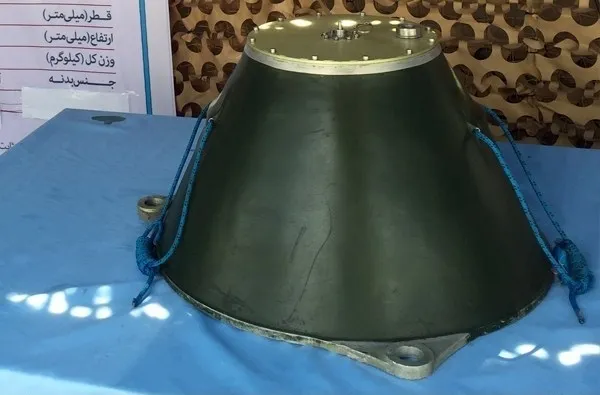
| Limpet mines | Manually attached sabotage mines | Iranian exhibits and regional incident reporting connect limpet-style devices to Iran's naval mine ecosystem, but they are distinct from seeded minefields laid by minelayers or submarines. Sources: Wikimedia Iranian Limpet Mine Photo, Stimson Iranian Minelaying |
Iranian naval mines can be laid from several platform types; DIA specifically documents an IRGC small-boat mine fit.
| Carrier | Carrier type | Carriage evidence |
|---|---|---|
 | Small attack boat family | DIA says Iran modified small boats to deliver naval mines rapidly and equipped many Ashoora small boats with mine rails capable of holding at least one mine. Sources: Iran Military Power |
 | Mine-laying small boat | DIA identifies Iranian naval mines as a loadout carried by Ashoora small boats fitted with mine rails. Sources: Iran Military Power |
CIA assessed that Iran was expanding mine-warfare training, minelaying techniques, and acquisition of naval mines and related technology.
Sources: CIA Iranian Mine Warfare Threat
The reflagged tanker Bridgeton struck an Iranian-laid mine during the first Operation Earnest Will convoy, forcing greater U.S. attention to Persian Gulf mine countermeasures.
Sources: USNI Crisis in Mine Countermeasures, Center for Maritime Strategy Gulf Mine Warfare
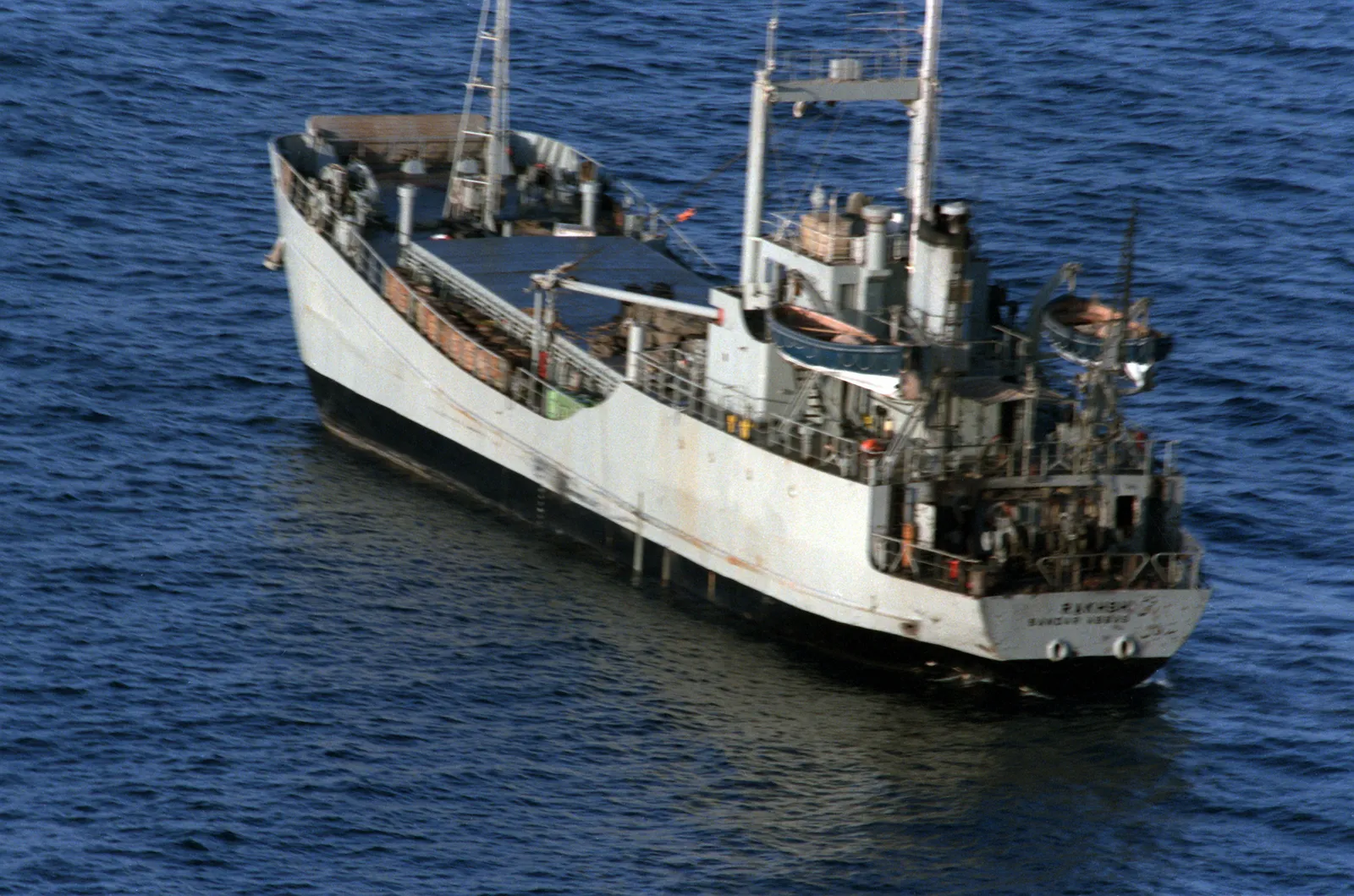
U.S. forces intercepted Iran Ajr after helicopter crews observed mine-like objects being dropped; later exploitation found Iranian-made Sadaf-02 moored contact mines aboard.
Sources: CIA Fighting Iran
USS Samuel B. Roberts struck an Iranian mine in the central Persian Gulf; later technical work tied Sadaf-02 mines to Iranian minefields in the Gulf.
Sources: USNI Samuel B. Roberts Mine Strike, CIA Fighting Iran
The Office of Naval Intelligence described mines as a critical element of IRGCN Strait of Hormuz strategy and noted Ashoora small boats fitted with mine rails.
Sources: Iran's Naval Forces
DIA assessed Iran's mine inventory at more than 5,000 mines, including contact and influence types, and described IRGCN use of smaller, faster vessels for rapid minelaying.
Sources: Iran Military Power