Armored Vehicles

GT-MU

Also known as
  • GAZ-73
  • GTMU
  • ГТ-МУ

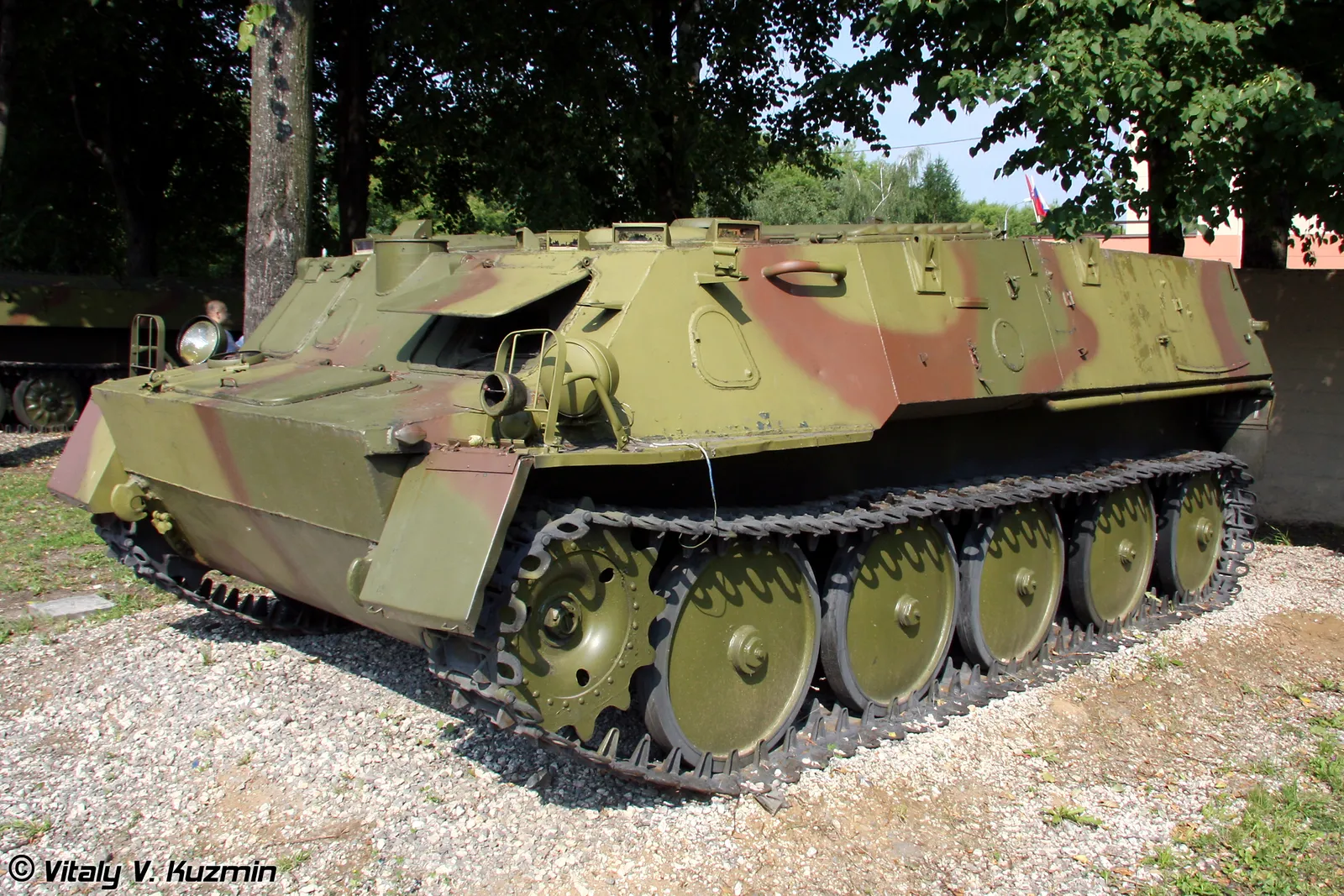
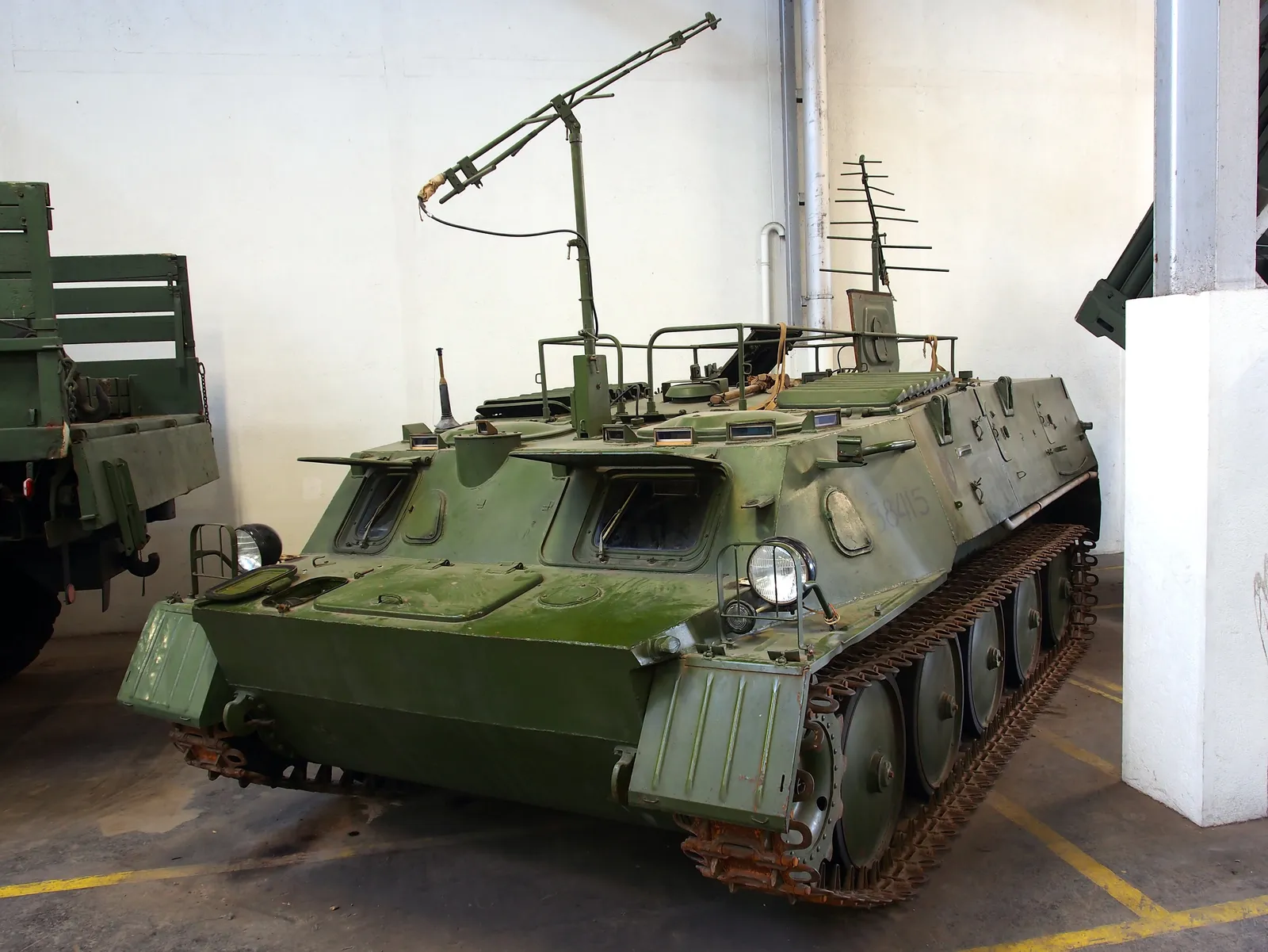
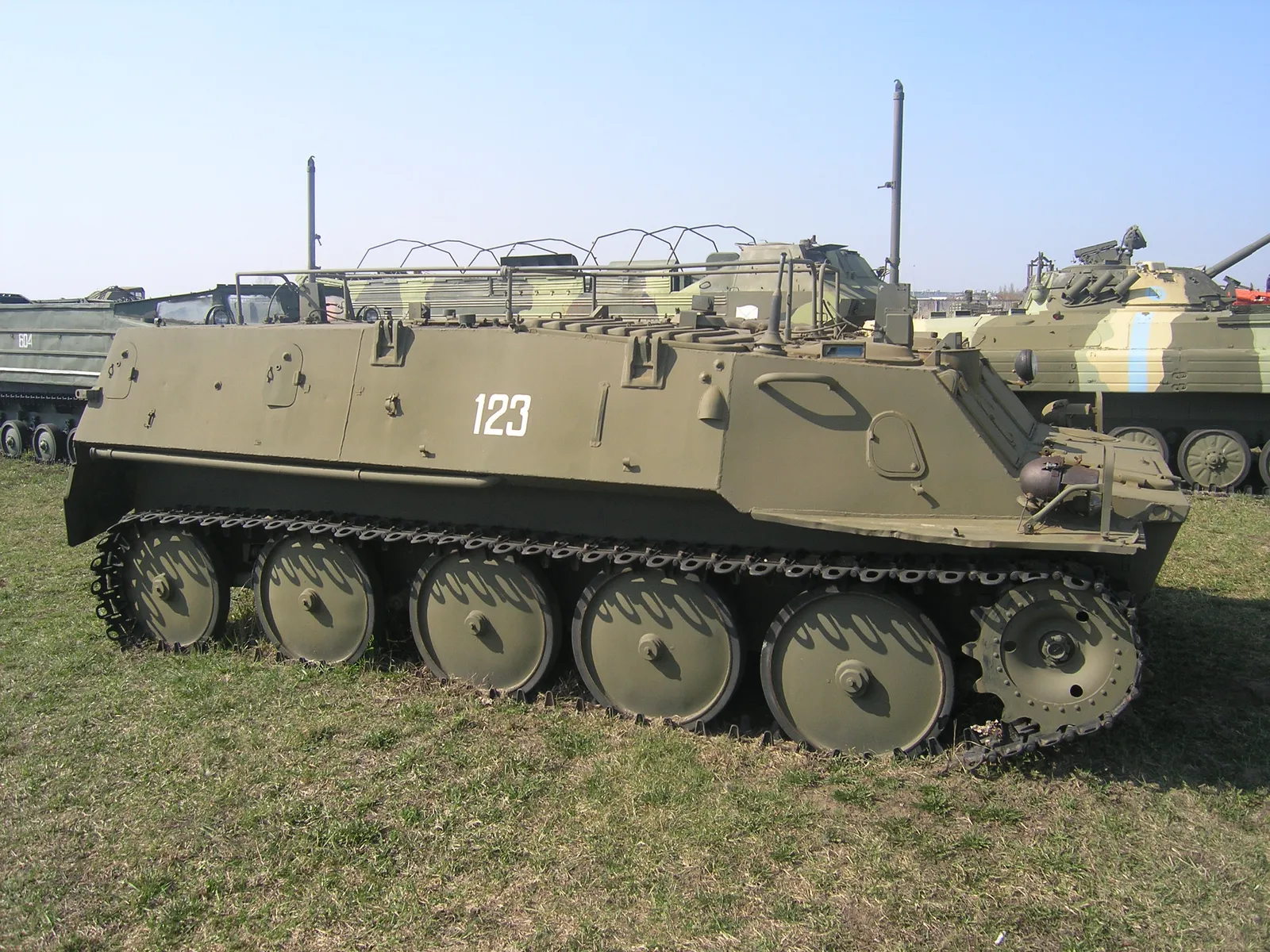
The GT-MU is a Soviet light amphibious tracked armored carrier derived from the GT-SM transport line and used for troop movement, cargo, towing, and specialist mission bodies. This record tracks the rare Ukrainian GT-MU converted as an APC and visually documented as captured during the full-scale Russian invasion.

Role in Conflicts

Profile / Specs

Profile

Origin
Soviet Union
Type
Amphibious tracked armored personnel and utility carrier
Service note
Cold War Soviet light tracked carrier documented in Ukrainian service during the 2022 full-scale invasion
Designer
Gorky Automobile Plant design lineage
Designed
1960s development from the GT-SM transport vehicle
Produced
Serial production reported from 1971
Developed from
GT-SM tracked transport vehicle

Specifications

Crew and passengers
Crew of 2 with space for about 8 to 10 passengers or mission payload
Payload and towing
Civil technical listing gives about 1 t payload capacity and 2 t maximum trailer weight for GAZ-73/GTMU
Armament
Normally unarmed as a carrier; documented conversions include Ukrainian APC use and Transnistrian SPG-9 fire-support vehicles
Weight
About 5.8 tonnes
Dimensions
Approximately 5.15 m long, 2.47 m wide, and 1.7 m high
Ground clearance
About 350 mm according to a GAZ-73/GTMU technical listing
Powertrain
Original GAZ-73 gasoline engine reported around 113-115 hp; GT-MU-1D uses a 173 hp GAZ-5441.10 supercharged diesel
Mobility
Tracked amphibious vehicle with about 55-60 km/h road speed, 5-6 km/h water speed, and roughly 500 km range
Suspension
Torsion-bar suspension with five large road wheels per side; tracks provide propulsion in water
Protection
Light welded steel armor, commonly described as about 6 mm all around
Design And Layout

The GT-MU was designed as a compact tracked support vehicle rather than as a heavily armed infantry fighting vehicle. Its value came from low weight, amphibious movement by track action, internal space for troops or equipment, and enough armor to protect against fragments and small-arms fire.

AreaVehicle detailDesign effect
HullWelded armored body with about 6 mm all-round protection.Gave the GT-SM transport lineage a protected carrier body while keeping the vehicle light.
LayoutDriver and commander sit forward, with the engine compartment behind them and the cargo or troop compartment aft.Left the rear volume available for dismounts, cargo, towing support, or specialist mission equipment.
MobilityTracked amphibious drive, torsion-bar suspension, front drive sprocket, and rear road wheel used for track tensioning.Prioritized off-road and water-obstacle mobility over armor thickness or integral armament.
Mission growthThe same chassis appears in chemical reconnaissance, radio-fuze jamming, command, and SPG-9 fire-support conversions.Shows the GT-MU as a small specialist-vehicle base as much as an armored personnel carrier.
Variants

Public references use GT-MU for the base light armored tracked carrier and for a small family of specialist vehicles built on the same chassis.

VariantConfigurationDesignation notes
GT-MU-1DDiesel-engined carrier variant

References distinguish the GT-MU-1D by its supercharged GAZ-5441.10 diesel engine, replacing the earlier gasoline engine fit.

Sources: Nashi Avto GT-MU GAZ-73 profile

RChM-2Chemical reconnaissance vehicle

Listed in GT-MU family references as a chemical reconnaissance adaptation of the carrier chassis.

Sources: Nashi Avto GT-MU GAZ-73 profile

SPR-1 (1L21/1)Radio-fuze jamming station

The RWD technical catalogue identifies SPR-1 as a Soviet radio-fuze jammer on a GT-MU/GTMU-26 Taiga base vehicle, introduced in East German service in 1987.

Sources: RWD SPR-1 technical catalogue

Transnistrian GT-MU fire-support conversionSPG-9 armed field conversion

Tank Encyclopedia documents at least three Transnistrian GT-MU vehicles converted with 73 mm SPG-9 recoilless rifles and first observed during 2018 firing exercises.

Sources: Tank Encyclopedia GT-MU fire support vehicle

Mounted Weapons

Some GT-MU conversions used the small tracked chassis as a carrier for crew-served fire-support weapons.

Carried itemItem typeCarriage evidence
SPG-9, 73 mm tripod-mounted recoilless gun, Infantry WeaponsSPG-973 mm recoilless gun

Tank Encyclopedia describes a Transnistrian GT-MU fire-support conversion with an SPG-9 recoilless gun mounted over the open troop compartment.

Sources: Tank Encyclopedia GT-MU fire support vehicle

Timeline

GT-MU Key Events

  1. Armored derivative of GT-SM developed

    GT-MU references trace the vehicle to the unarmored GT-SM/GAZ-71 transport line, with a shorter armored body for airborne and specialist support roles.

    Sources: Tank Encyclopedia GT-MU fire support vehicle

  2. Serial production reported

    Tank Encyclopedia places GT-MU production from 1971 and identifies GAZ-73 as the manufacturer's designation for the vehicle.

    Sources: Tank Encyclopedia GT-MU fire support vehicle

  3. SPR-1 entered East German service

    The RWD technical catalogue lists 1987 as the introduction period for the SPR-1 radio-fuze jamming station and identifies GT-MU/GTMU-26 Taiga as its base vehicle.

    Sources: RWD SPR-1 technical catalogue

  4. Transnistrian fire-support conversion observed

    Tank Encyclopedia reports that three Transnistrian GT-MU fire-support conversions with SPG-9 recoilless rifles appeared during November 2018 firing exercises.

    Sources: Tank Encyclopedia GT-MU fire support vehicle

Media
Related Weapon Systems
MT-LBu, Amphibious tracked armored carrier and specialist chassis, Armored VehiclesArmored VehiclesMT-LBuAmphibious tracked armored carrier and specialist chassisThe MT-LBu is a Soviet amphibious tracked armored carrier and specialist chassis derived from the MT-LB family. Its higher hull, longer seven-road-wheel chassis, and 300 hp YaMZ diesel engine gave armies more internal volume and payload margin for command posts, artillery fire-control vehicles, radar carriers, electronic-warfare systems, and later battlefield conversions in conflicts such as the 2014 Russia-Ukraine War.
GAZ-3937 Vodnik, 4x4 amphibious armored mobility and reconnaissance vehicle, Armored VehiclesArmored VehiclesGAZ-3937 Vodnik4x4 amphibious armored mobility and reconnaissance vehicleThe GAZ-3937 Vodnik is a Russian 4x4 amphibious armored vehicle family built around a modular front-and-rear body concept for troop transport, reconnaissance, convoy escort, ambulance, and utility roles. The GAZ-39371 production variant is associated with Military Industrial Company and Arzamas Machine-Building Plant sourcing, can carry mission modules or turreted armament, and appears in the Ukraine-war catalog as rare captured Russian armored mobility equipment.
BTR-MDM Rakushka, Airborne amphibious tracked armored personnel carrier, Armored VehiclesArmored VehiclesBTR-MDM RakushkaAirborne amphibious tracked armored personnel carrierThe BTR-MDM Rakushka is the Russian Rakushka-M airborne amphibious tracked armored personnel carrier, with this entry also covering the earlier BTR-MD Rakushka designation because public sources treat it as the direct predecessor in the same family. It carries a small crew plus an airborne assault party, ammunition, fuel, spares, or casualties, and has been visually documented among Russian equipment destroyed, damaged, abandoned, and captured during the full-scale phase of the 2014 Russia-Ukraine War.
APE-5 command post, Mobile automated command-post module, Support EquipmentSupport EquipmentAPE-5 command postMobile automated command-post moduleThe APE-5 is a Russian automated mobile command-post module built by RusBITech for field work and rest by a 9-11-person planning group. Open Russian references describe the system on a KamAZ-63501 chassis with an expandable KK6.3.32 container body, networked workstations, GLONASS navigation, protected videoconferencing, life-support equipment, and a 600 km road range. During the 2014 Russia-Ukraine War, open-source loss trackers have identified Russian APE-5 command posts destroyed in Ukraine, making the system a documented command-and-communications target rather than only a peacetime staff vehicle.
BTR-50, Tracked amphibious armored personnel carrier, Armored VehiclesArmored VehiclesBTR-50Tracked amphibious armored personnel carrierThe BTR-50 is a Soviet tracked amphibious armored personnel carrier based on the PT-76 light tank chassis. Designed to move infantry and light weapons across rivers and broken terrain, it carried a small crew plus a large troop compartment behind light welded steel armor. Its record spans Arab-Israeli wars, the Iran-Iraq War, Syria, and Russia's Ukraine deployment of stored vehicles, including photographed and loss-documented BTR-50PK carriers fitted with BPU-1 turrets.
RKhM Kashalot, CBRN reconnaissance vehicle, Support EquipmentSupport EquipmentRKhM KashalotCBRN reconnaissance vehicleThe RKhM Kashalot is a Soviet chemical, biological, radiological, and nuclear reconnaissance vehicle built on the MT-LB light armored tracked chassis. It carried a small crew, a 7.62 mm PKT machine gun, and reconnaissance equipment for radiation, chemical, and nonspecific biological hazards rather than a troop-carrier or direct-fire role. Ukrainian RKhM Kashalot vehicles appear in the Russia-Ukraine War through visually documented loss records, Ukrainian Support Forces training imagery from 2022, and 3rd Tank Brigade imagery reported in 2023.

Sources