
Lake Chad Basin weapons reporting identifies Galil rifles among assault rifles used by Boko Haram, while later reporting documented IWI Galil ACE 21 and ACE 32 rifles in ISWAP propaganda material, likely captured from regional security forces.
Infantry Weapons
Galil assault rifle
Also known as
- IMI Galil
- IWI Galil
- Galil AR
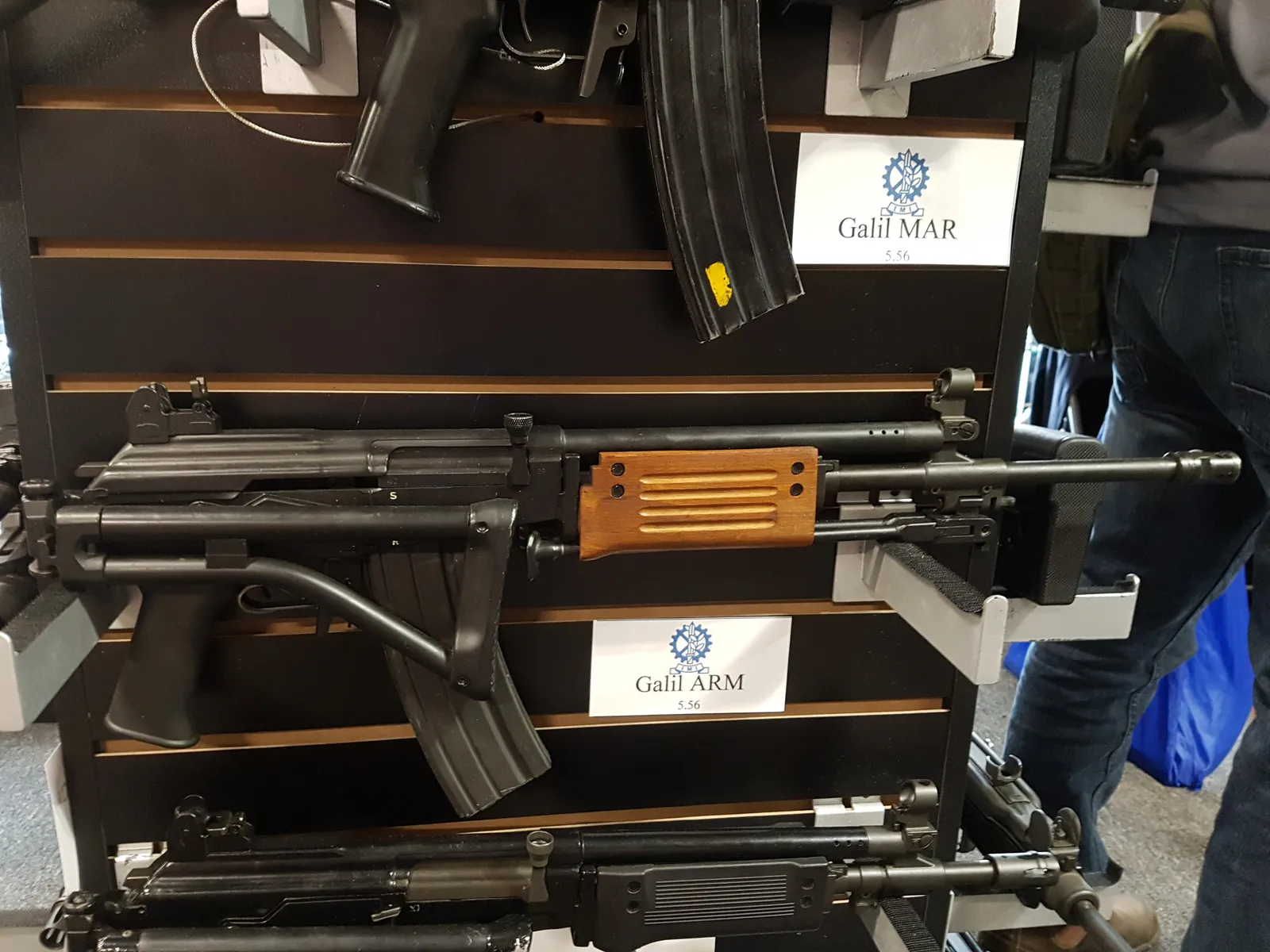
- Galil ARM
- Galil SAR
- Galil ACE
- Galil ACE 21
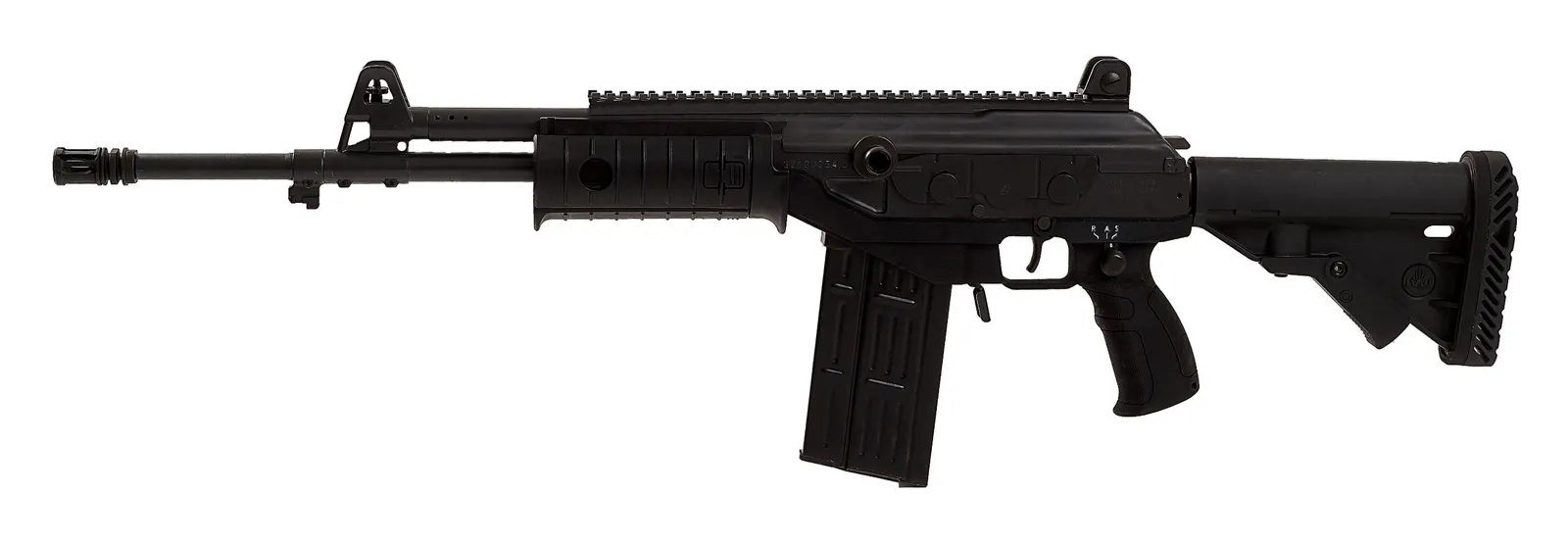
- Galil ACE 32
The Galil is an Israeli Kalashnikov-derived assault rifle family originally produced by Israel Military Industries and later modernized by Israel Weapon Industries as the Galil ACE line. Recent conflict reporting places Galil or Galil ACE rifles in irregular small-arms stocks from the Lake Chad Basin to FARC dissident operations in Colombia and trafficked gang arsenals in Haiti, where they appear as portable infantry weapons rather than heavy support systems.
Role in Conflicts

Colombian Army reporting documented a 7.62 mm Galil rifle, magazines, and ammunition seized during a 2026 operation against a Structure 36 FARC dissident commander in Antioquia, showing the rifle in dissident small-arms stocks.
- Side
- Armed gangs
UNODC reporting on Haiti's current gang violence identifies Israeli Galil assault rifles among sophisticated weapons trafficked into Haiti since 2021, within a broader pattern of gang arsenals outgunning police forces.
Profile / Specs
Profile
- Origin
- Israel
- Type
- Selective-fire assault rifle family
- Service note
- Introduced in the 1970s; modern Galil ACE variants remain in service and circulation
- Designer
- Yisrael Galili and Yakov Lior
- Designed
- Late 1960s
- Produced
- 1970s to present in original and derivative variants
Specifications
- Caliber
- Original Galil variants: 5.56x45 mm NATO or 7.62x51 mm NATO; Galil ACE line also includes 7.62x39 mm
- Operating system
- Gas-operated, selective-fire action with Kalashnikov-pattern lineage
- Unloaded weight
- About 3.67-4.35 kg across original Galil and close-derivative variants
- Barrel length
- About 280-535 mm across original Galil and close-derivative variants; ACE 21 uses a 216 mm barrel and ACE 32 uses a 409 mm barrel
- Feed system
- Detachable box magazines; Small Arms Survey lists 25-, 35-, or 50-round magazines for original Galil variants
- Sights
- Post front sight and flip-aperture rear sight on original variants; ACE variants add modern rails and tritium night sights
- Muzzle velocity
- About 825-950 m/s across the complete original Galil and close-derivative series
Design Lineage
The Galil sits between Israel's 1960s service-rifle replacement problem and later ACE modernization. It kept a Kalashnikov-pattern operating lineage while changing the package around Israeli service requirements, then reappeared as a modernized ACE family for export and licensed production.
Replacement driver
Israeli reporting and later specialist summaries connect the program to dissatisfaction with FAL performance and handling after the 1967 war.
Mechanical lineage
Small Arms Survey identifies the Galil as Kalashnikov-pattern, while American Rifleman describes Valmet M62 influence in the service-rifle trials.
ACE branch
IWI presents the ACE as a next-generation Galil line using 5.56x45 mm, 7.62x39 mm, and 7.62x51 mm ammunition with modern rails and night sights.
Variants
The Galil page covers original Israeli AR, ARM, and SAR models, South African licensed close derivatives, and later Galil ACE modernization variants.
| Variant | Configuration | Designation notes |
|---|---|---|
| Galil AR | Standard rifle variant | Small Arms Survey distinguishes the AR as the long-barrel Galil model without the ARM carry handle and bipod. Sources: Galil (& close derivatives) Weapons Identification Sheet |
| Galil ARM | Automatic rifle / support variant | Small Arms Survey identifies the ARM by the long barrel, carry handle, and under-folding bipod. Sources: Galil (& close derivatives) Weapons Identification Sheet |
| Galil SAR | Short assault rifle | Small Arms Survey lists the SAR as the short-barrel Galil variant. Sources: Galil (& close derivatives) Weapons Identification Sheet |
| Vektor R4 / LM4 | South African close derivative | Small Arms Survey treats the Vektor R4 and LM4 as Galil close derivatives manufactured under licence in South Africa. Sources: Galil (& close derivatives) Weapons Identification Sheet |
| Galil ACE 21 | Modern 5.56x45 mm ACE carbine | IWI lists the ACE 21 as a 5.56x45 mm flattop assault rifle/carbine with Galil magazines and a 216 mm barrel. Sources: GALIL ACE |
| Galil ACE 32 | Modern 7.62x39 mm ACE carbine | IWI lists the ACE 32 as a 7.62x39 mm flattop assault rifle/carbine with a 409 mm barrel. Sources: GALIL ACE |
Compatible Cartridges
The Galil family is documented in multiple chamberings, including NATO rifle rounds and the 7.62x39mm option used by Galil ACE variants.
| Compatible item | Item type | Compatibility evidence |
|---|---|---|
 | Assault rifle cartridge | Small Arms Survey lists the Galil and close derivatives in 5.56x45 mm chambering, documenting this cartridge as a Galil-compatible round. Sources: Galil (& close derivatives) Weapons Identification Sheet |
 | Assault rifle cartridge | Small Arms Survey lists the Galil and close derivatives in 7.62x51 mm chambering, documenting this cartridge as a Galil-compatible round. Sources: Galil (& close derivatives) Weapons Identification Sheet |
 | Assault rifle cartridge | IWI says the Galil ACE line, described as the next generation of the Galil assault rifle, uses standard 7.62x39mm ammunition. Sources: GALIL ACE |
 | Assault rifle cartridge | IWI US lists Galil ACE Gen II rifles in 5.45x39mm, documenting this cartridge as compatible with the modern ACE branch of the Galil family. Sources: Galil Ace Gen II |
Timeline
Galil assault rifle Key Events
Israeli service-rifle replacement work begins
American Rifleman describes the Galil program as a post-Six-Day War effort to replace the FAL with a domestically produced service arm better suited to Israeli conditions.
Sources: The Israeli Galil: Then & Now
IMI Galil publicly unveiled
The 5.56 mm gas-operated, select-fire IMI Galil was unveiled in 1973 as Israel's new service rifle, with the ARM using a folding stock, bipod, and high-capacity magazines.
Sources: The Israeli Galil: Then & Now
Galil ACE modernization enters the family
IWI markets the ACE line as the next generation of the Galil assault rifle, retaining Galil lineage while adding modern rails, night sights, ergonomics, and multiple chamberings.
Sources: GALIL ACE
Indumil details Colombian Galil ACE production
Indumil reported Colombian production and improvement work on Galil ACE 21, ACE 22, and ACE 23 models under an Israeli-Colombian technology-transfer program.
Sources: Galil, el Israelita mas Colombiano
Media
Galil assault rifle Videos
Galil assault rifle Images

Related Weapon Systems


Sources
Galil (& close derivatives) Weapons Identification SheetPublisher: Small Arms Survey | Note: Supports Galil background, assault-rifle classification, variants, operating system, caliber, weight, barrel-length, magazine, and sight specifications. | Accessed: 2026-07-04GALIL ACEPublisher: Israel Weapon Industries | Note: Supports manufacturer background and Galil ACE variant specifications, including ACE 21 and ACE 32 caliber and barrel-length details. | Accessed: 2026-07-04Galil Ace Gen IIPublisher: IWI US | Note: Supports Galil ACE Gen II lineage, 5.45x39 mm compatibility, and commercial Gen II rifle technical data. | Accessed: 2026-07-04The Israeli Galil: Then & NowPublisher: American Rifleman | Note: Supports design-history context, post-1967 service-rifle replacement drivers, Valmet and AK lineage, and the 1973 Galil public unveiling. | Accessed: 2026-07-04Galil, el Israelita mas ColombianoPublisher: Indumil | Note: Supports Colombian Galil ACE production and improvement context for ACE 21, ACE 22, and ACE 23 models. | Accessed: 2026-07-04Weapons and Ammunition Dynamics in the Lake Chad BasinPublisher: United Nations Department of Peace Operations and United Nations Office for Disarmament Affairs / Lake Chad Basin Commission | Note: Supports 2009 Boko Haram Insurgency direct-use context: Galil rifles are listed among assault rifles used by Boko Haram, with weapons typically acquired by battlefield capture or illicit-market diversion. | Accessed: 2026-07-04Propaganda Material Shows Continued Threat From ISIS Franchise In Nigeria, Lake ChadPublisher: HumAngle | Note: Supports 2009 Boko Haram Insurgency direct-use context: IWI Galil ACE 32 and 21 rifles were used by ISWAP militants in propaganda footage and assessed as likely seized from Chadian forces. | Accessed: 2026-07-04Lake Chad: A Large Part Of Insurgents' Weaponry Are From Regional State ArsenalsPublisher: HumAngle | Note: Supports 2009 Boko Haram Insurgency direct-use context: an ISWAP commander is described holding an ex-Chadian Galil ACE 32, and the article frames insurgent weapons as captured or diverted from regional arsenals. | Accessed: 2026-07-04En Antioquia, Ejercito neutraliza importante cabecilla de las disidencias de las FARCPublisher: Ejercito Nacional de Colombia | Note: Supports 2016 Colombian FARC Dissident Conflict direct-use context: a 7.62 mm Galil rifle was fielded by a FARC dissident Structure 36 commander and seized by Colombian Army troops in Antioquia. | Accessed: 2026-06-22Haiti: Gangs have more firepower than the policePublisher: United Nations Office on Drugs and Crime | Note: Supports 2022 Haitian Gang Conflict direct-use context: Israeli Galil assault rifles were used by armed gangs as part of trafficked arsenals that UN reporting says outgun Haitian police forces. | Accessed: 2026-07-04Galil ARM 5.56 mm.jpgPublisher: Wikimedia Commons | Note: Image provenance for the primary Galil ARM image; the file page identifies an IMI Galil ARM in 5.56 mm and lists a CC0 public-domain dedication. | Accessed: 2026-07-04Galil.jpgPublisher: Wikimedia Commons | Note: Image provenance for a Galil-type assault rifle image; the file page lists GFDL and CC BY-SA 3.0 licensing. | Accessed: 2026-07-04Galil ACE 32.jpgPublisher: Wikimedia Commons | Note: Image provenance for a Galil ACE 32 image; the file page identifies a Galil ACE 32 assault rifle and lists CC BY-SA 4.0 licensing. | Accessed: 2026-07-04IWI ACE 52.jpgPublisher: Wikimedia Commons | Note: Image provenance for an IWI Galil ACE image sourced to Israel Weapon Industries public relations and listed under CC BY 4.0 licensing. | Accessed: 2026-07-04