Profile
- Origin
- Soviet Union
- Built by
- Soviet
- Type
- Soviet intermediate rifle cartridge
- Service note
- Developed from the mid-1960s to early 1970s; entered service in 1974
- Designed
- Mid-1960s to early 1970s
- Produced
- 1974-present
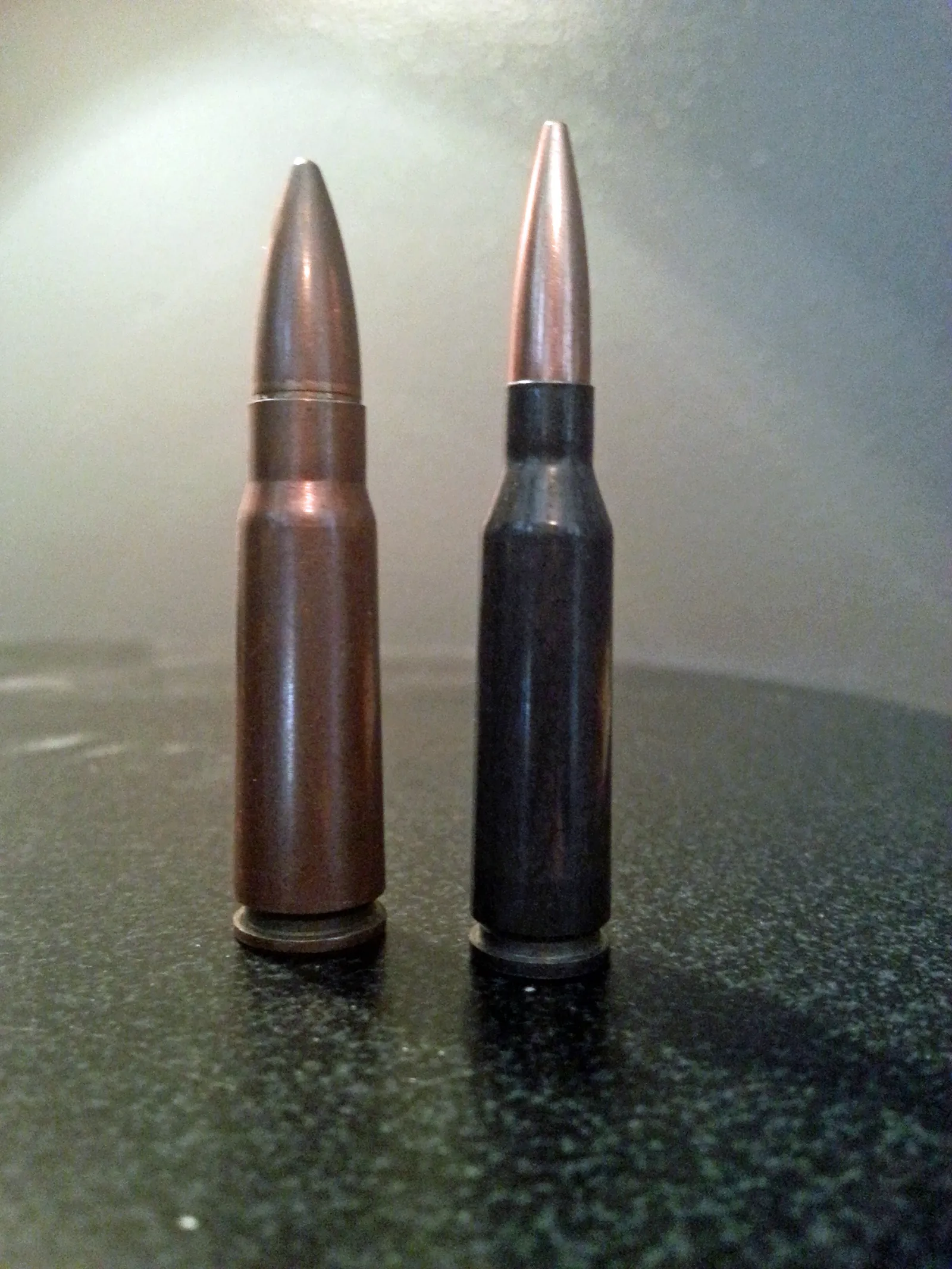
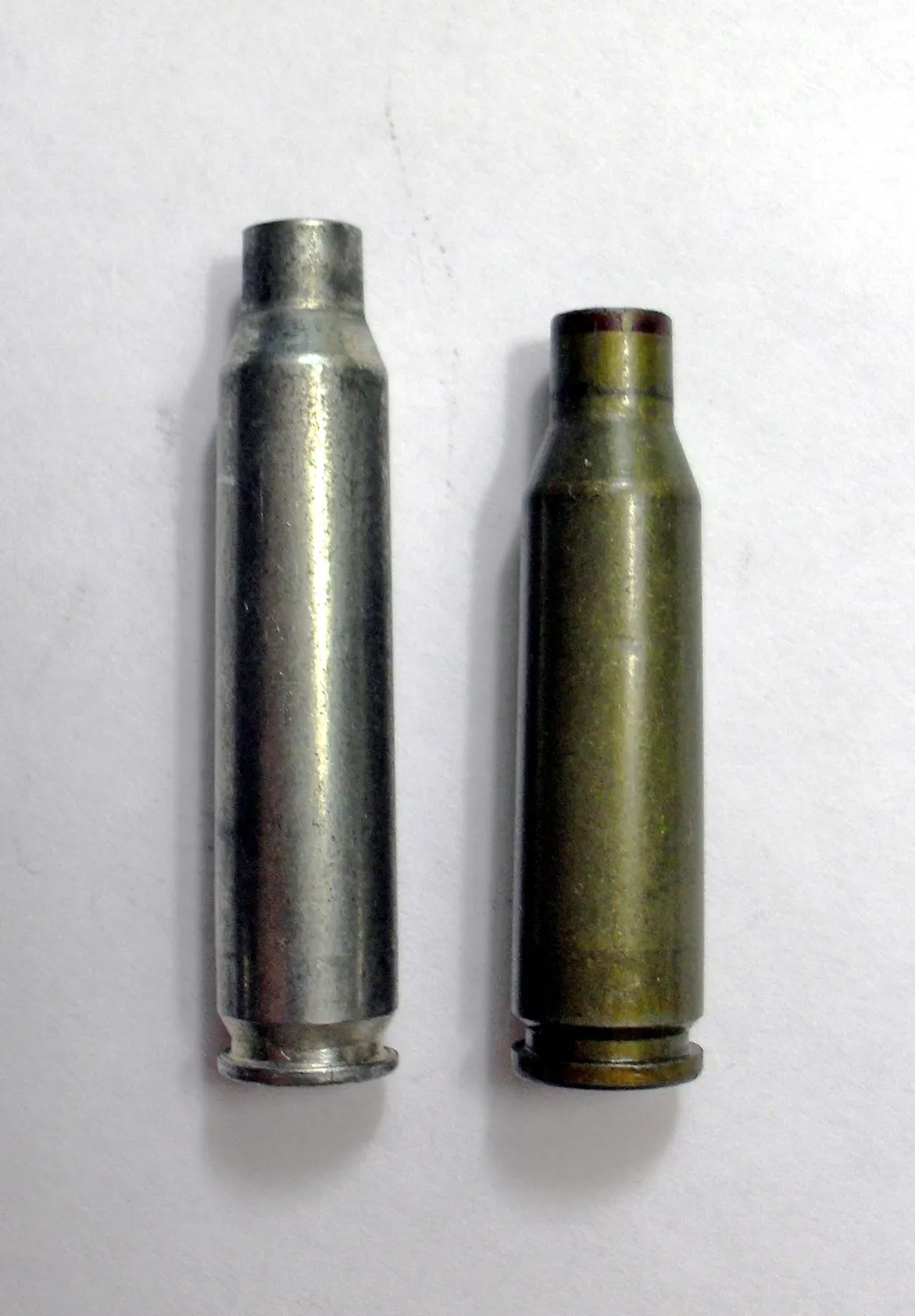
The 5.45×39 mm cartridge is a Soviet intermediate rifle round developed for the AK-74 family and adopted in 1974 as the smaller-caliber successor to the 7.62×39 mm Kalashnikov ammunition line. This relationship-only entry covers official C.I.P. dimensions, service-load variants, and cataloged rifles or squad automatic weapons that fire the cartridge without inheriting conflict-use claims from those parent weapons.
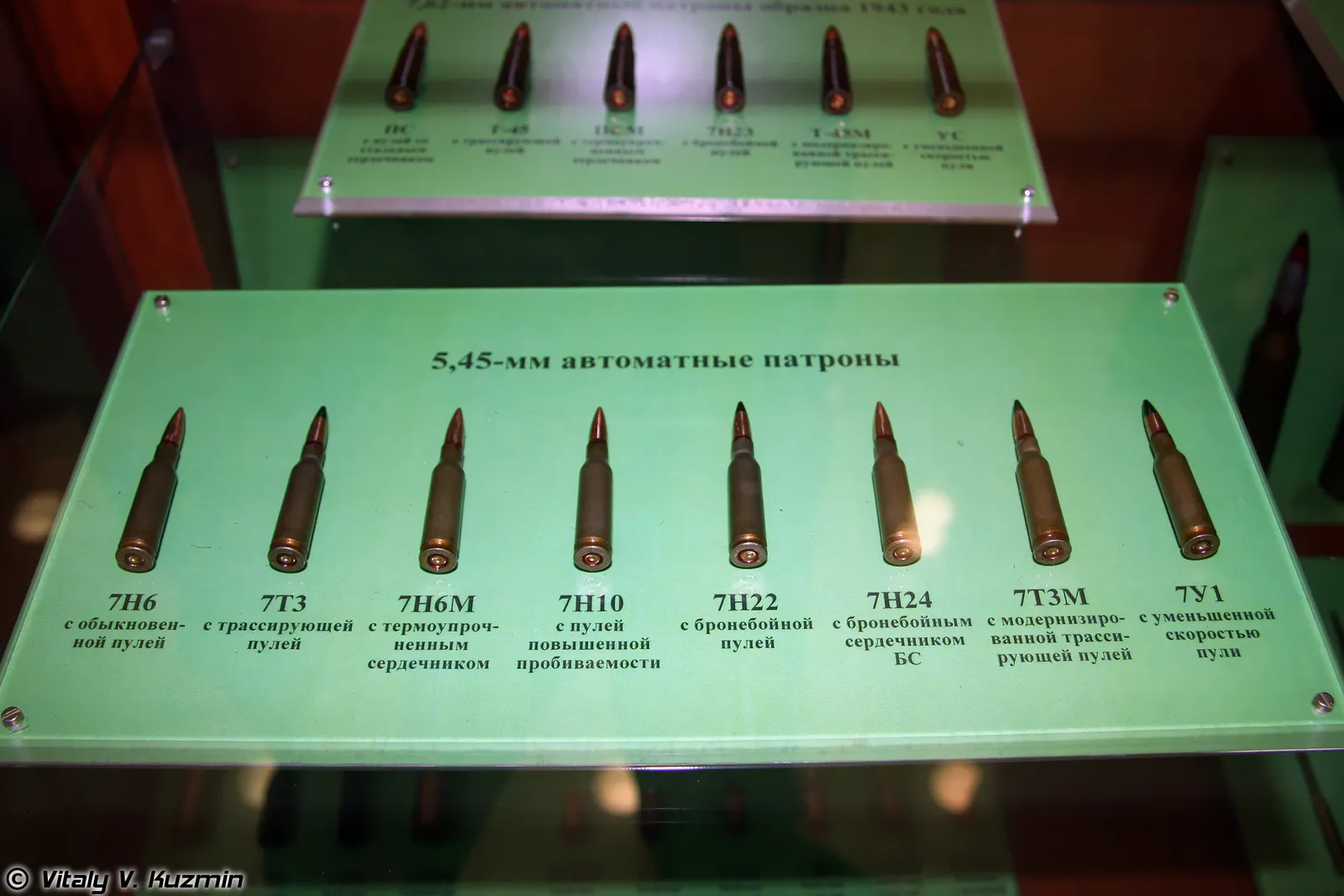
The military 5.45×39 mm family moved from the original 7N6 ball load into hardened-core, improved-penetration, armor-piercing, tracer, blank, dummy, and subsonic branches.
| Load | Role | Source-backed note |
|---|---|---|
| 7N6 | Original ball | Original 1974 Soviet service cartridge for the AK-74 line. |
| 7N6M | Hardened-core ball | 1987 hardened-core improvement over 7N6. |
| 7N10 | Improved penetration | 1992 enhanced-penetration load with a 3.62 g projectile listed by Modern Firearms. |
| 7N22 | Armor-piercing | 1998 hardened-steel-core armor-piercing branch. |
| 7N24 / 7N24M | Higher-end armor-piercing | More expensive armor-piercing branch listed separately from 7N22 by WeaponSystems.net. |
| 7U1 | Subsonic | Subsonic load for silenced AKS-74UB compact rifles. |
| Variant | Configuration | Designation notes |
|---|---|---|
| 7N6 | Original Soviet ball load | Modern Firearms identifies 7N6 as the original 1974 Soviet service cartridge, while WeaponSystems.net describes it as the first 5.45×39 mm round and notes its earlier 5N7 naming. Sources: 5.45x39 7N6 7N10 7N22 7N24, 5.45x39mm Soviet |
| 7N6M | Hardened-core ball load | WeaponSystems.net dates the hardened-core 7N6M improvement to 1987. Sources: 5.45x39mm Soviet |
| 7N10 | Improved-penetration load | Modern Firearms lists 7N10 as a 3.62 g enhanced-penetration load at about 880 m/s; WeaponSystems.net dates the variant to 1992. Sources: 5.45x39 7N6 7N10 7N22 7N24, 5.45x39mm Soviet |
| 7N22 | Armor-piercing load | Modern Firearms describes 7N22 as an armor-piercing hardened-steel-core load, and WeaponSystems.net dates its introduction to 1998. Sources: 5.45x39 7N6 7N10 7N22 7N24, 5.45x39mm Soviet |
| 7N24 / 7N24M | Higher-end armor-piercing load | WeaponSystems.net lists 7N24 and 7N24M as more expensive armor-piercing cartridges in the military 5.45 mm family. Sources: 5.45x39mm Soviet |
| 7U1 | Subsonic suppressed-weapon load | Modern Firearms lists 7U1 as a 5.2 g subsonic cartridge at about 303 m/s for silenced AKS-74UB use. Sources: 5.45x39 7N6 7N10 7N22 7N24 |
Cataloged 5.45 mm Kalashnikov-pattern rifles and squad automatic weapons document the cartridge's main firing platforms without transferring those weapons' conflict-use rows to this ammunition page.
| Firing weapon | Weapon type | Firing evidence |
|---|---|---|
 | 5.45 mm assault rifle family | Modern Firearms describes the AK-74 family as chambered for 5.45×39 mm ammunition, and WeaponSystems.net identifies the cartridge as developed for the AK-74 family. Sources: AK-74 / AK-74M Rifle, 5.45x39mm Soviet |
 | 5.45 mm assault rifle | Kalashnikov Group lists the AK-74M as a 5.45 mm rifle and identifies 5.45×39 mm as its used cartridge. Sources: AK74M capabilities |
 | 5.45 mm assault rifle | Kalashnikov Group identifies the AK-12 as a 5.45 mm rifle and lists 5.45×39 mm as its used cartridge. |
 | 5.45 mm squad automatic weapon branch | WeaponSystems.net lists the RPK-74 family among platforms for the 5.45×39 mm cartridge, and the RPK/RPK-74 catalog record documents the RPK-74 branch as the 5.45 mm squad automatic weapon line. Sources: 5.45x39mm Soviet, RPK-74M |
 | Ukrainian bullpup assault rifle | InterProInvest lists a 5.45×39 mm chambering for the Malyuk/Vulcan rifle family. Sources: Vulcan / Malyuk Rifle |
 | Ukrainian Fort-221/Fort-224 chambering | The Armourers Bench documents Ukrainian Fort-221 and Fort-224 Tavor-pattern rifles offered in 5.45×39 mm as well as 5.56×45 mm, so the relationship is limited to those Fort-series variants rather than the whole Israeli X95 family. |
Modern Firearms places initial development in the mid-1960s, while WeaponSystems.net describes the cartridge as a Soviet answer to lighter high-velocity intermediate ammunition.
Sources: 5.45x39 7N6 7N10 7N22 7N24, 5.45x39mm Soviet
Modern Firearms identifies the original 7N6 service load as adopted in 1974, and WeaponSystems.net places the cartridge's service entry in the same year.
Sources: 5.45x39 7N6 7N10 7N22 7N24, 5.45x39mm Soviet
WeaponSystems.net describes 7N6M as a 1987 hardened-core improvement over the original 7N6 ball cartridge.
Sources: 5.45x39mm Soviet
WeaponSystems.net dates the 7N10 improved-penetration load to 1992, and Modern Firearms lists it with a heavier 3.62 g projectile than the original 7N6.
Sources: 5.45x39 7N6 7N10 7N22 7N24, 5.45x39mm Soviet
WeaponSystems.net dates the 7N22 and 7N24 armor-piercing loads to 1998, distinguishing them from ball and improved-penetration variants.
Sources: 5.45x39mm Soviet
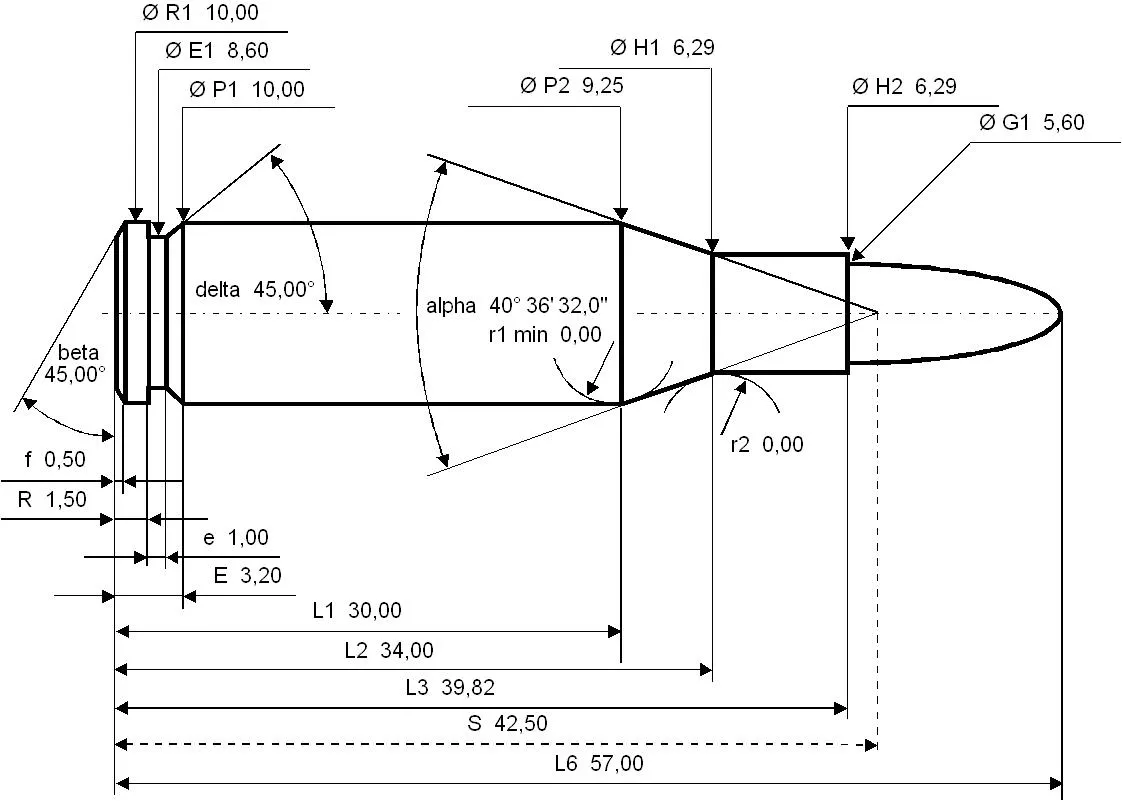
C.I.P.'s 5,45 x 39 TDCC sheet lists the 2019 revision used for the current official dimensions and pressure values in this entry.
Sources: C.I.P. 5,45 x 39
C.I.P.'s TDCC sheet supplies the official dimensional and pressure baseline used for the cartridge specifications above.
39.82 mm case length and 57.00 mm overall cartridge length.
5.60 mm projectile diameter, with C.I.P. proof-barrel land and groove diameters listed as 5.40 mm and 5.60 mm.
3550 bar Pmax by transducer method.