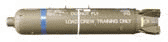
Direct proof of use
The CBU-87 cluster munition was used by U.S. air forces during Operation Desert Storm in the 1990 Gulf War. GAO's Operation Desert Storm air-campaign evaluation lists CBU-87 under unguided cluster munitions and records 10,035 weapons expended.
Human Rights Watch independently reported the same 10,035-CBU-87 total for the 1991 Persian Gulf War, describing the CBU-87 as an air-dropped bomb with 202 BLU-97 submunitions. A Human Rights Watch Gulf War cluster-bomb table also lists CBU-87 use by the U.S. Air Force and records a separate Royal Air Force CBU-87 figure within coalition use.
Sources: GAO Operation Desert Storm Air Campaign, HRW Iraq Cluster Munition Hazard Briefing, HRW Gulf War Cluster Bomb Table
Timeline
The documented CBU-87 use belongs to Operation Desert Storm's air campaign, which GAO describes as running from January 17 to February 28, 1991. GAO's munitions appendix later placed the CBU-87 in the unguided-cluster category and listed 10,035 expended weapons.
Human Rights Watch's 1999 cluster-munitions reporting reproduced a Gulf War air-delivered cluster-bomb table that attributed 10,035 CBU-87s to the U.S. Air Force and 387 CBU-87s to the Royal Air Force. HRW's 2003 briefing again used the 10,035 U.S. figure while discussing Persian Gulf War cluster-munition contamination in Iraq and Kuwait.
Sources: GAO Operation Desert Storm Air Campaign, HRW Gulf War Cluster Bomb Table, HRW Iraq Cluster Munition Hazard Briefing
Narrative
In Gulf War public accounting, the CBU-87 appears as a U.S. Air Force unguided cluster munition used at large scale during the air campaign that preceded and supported the coalition ground offensive. The sources establish campaign-level expenditure, not named strike incidents or individual aircraft sorties for each CBU-87 release.
The munition's role was area-effect air attack against military targets rather than precision point strike. HRW's technical appendix describes the CBU-87 as a combined-effects munition with antiarmor, antipersonnel, and incendiary effects, and states that each weapon carried 202 BLU-97/B bomblets.
Postwar reporting treated CBU-87 use as part of the Gulf War's wider cluster-munition legacy. HRW said the United States and allied coalition used about 61,000 air-dropped cluster munitions in Iraq and Kuwait between January 17 and February 28, 1991, releasing about twenty million submunitions, and that roughly fifteen percent of those air-dropped cluster munitions were CBU-87s.
Sources: GAO Operation Desert Storm Air Campaign, HRW Iraq Cluster Munition Hazard Briefing, HRW Gulf War Cluster Bomb Table