Munitions

B61-12 Life Extension Program

Also known as
  • B61-12
  • B61-12 LEP
  • B61 Mod 12
  • B61 Mod 12 LEP
  • B61-12 nuclear gravity bomb
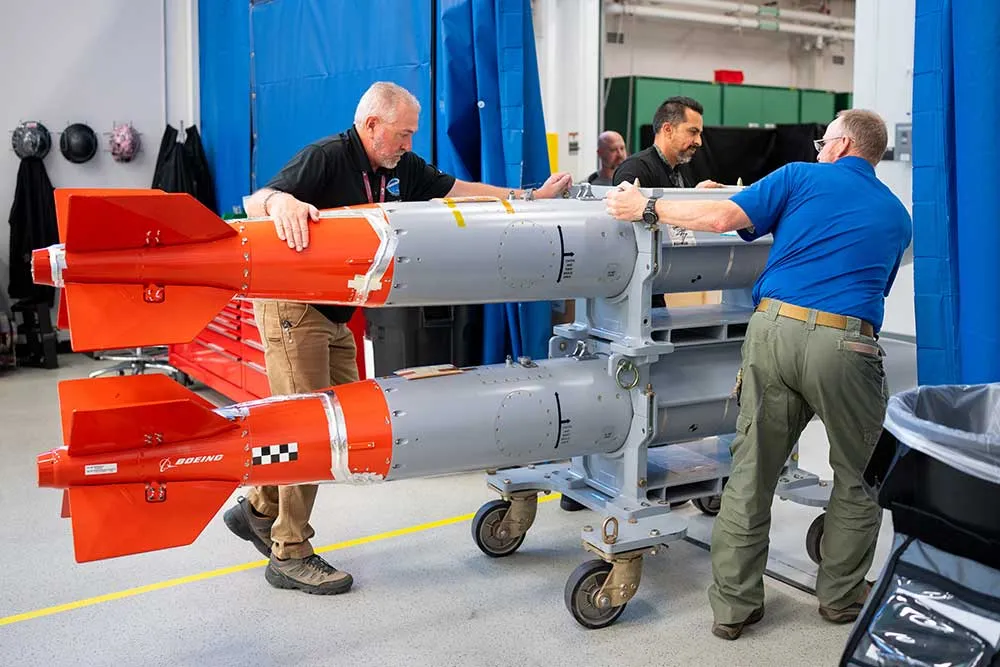
  • B61-12 Tail Kit Assembly

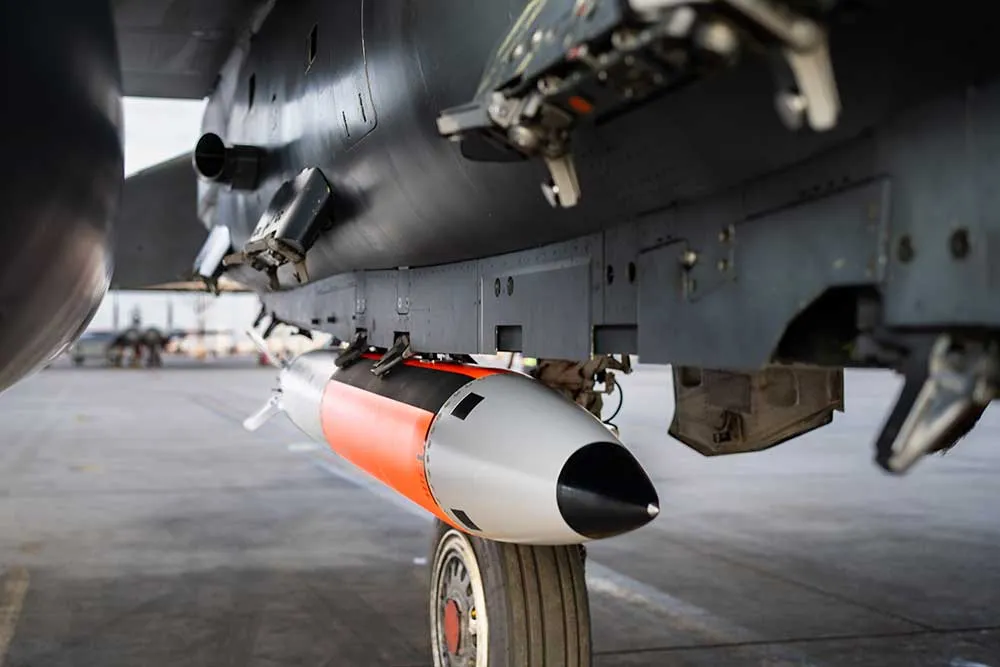
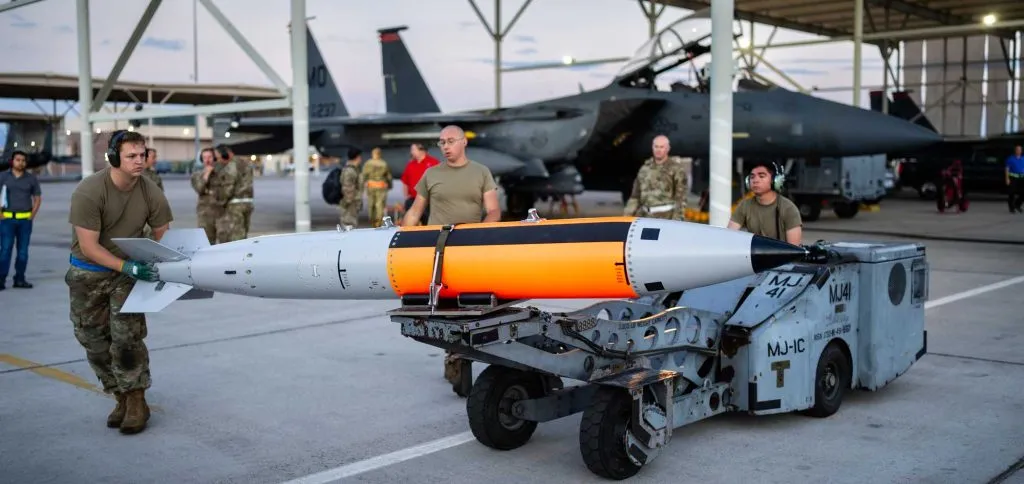
The B61-12 Life Extension Program is the U.S. modernization program that turned the B61 nuclear gravity bomb family into a single Mod 12 configuration for continued air-delivered deterrence. It mates an NNSA bomb assembly with an Air Force tail kit for guided or ballistic delivery, consolidated older B61 variants, completed its last production unit on December 18, 2024, and moved into stockpile sustainment and surveillance.

Profile / Specs

Specifications

Weapon family
B61 nuclear bomb family
Program purpose
Extends service life by at least 20 years by refurbishing, reusing, or replacing nuclear and non-nuclear components
Tail kit
U.S. Air Force guided tail kit assembly integrated with the NNSA bomb assembly
Delivery modes
System 1 analog/ballistic mode and System 2 digital/guided mode
Approximate length
12 feet
Approximate weight
825 pounds
AFNWC-listed aircraft
B-2A, B-21, F-15E, F-16C/D, F-16 MLU, F-35, and PA-200
Program outcome
Last Production Unit completed December 18, 2024; sustainment and surveillance continued
Program Structure

The B61-12 page is relationship-only because public sources support program, platform, and stockpile context rather than conflict-specific use.

ElementLead organizationCatalog relevance
Bomb assemblyNNSA and nuclear security enterprise sitesRefurbishes, reuses, or replaces nuclear and non-nuclear components to extend the B61 family service life.
Tail kit assemblyU.S. Air Force and BoeingAdds the guided delivery path and supports all-up-round integration with certified aircraft.
Flight-test articlesSandia and Air Force test organizationsNon-nuclear joint test assemblies support compatibility checks and stockpile-surveillance flights.

Sources: NNSA completes B61-12 Life Extension Program; B61 Mod 12 LEP Tailkit Assembly Selected Acquisition Report; B61-12 system production ends, sustainment begins.
Variants

The B61-12 is a single Mod 12 configuration that official program sources describe as consolidating and replacing earlier B61 variants rather than a combat-use variant family.

VariantConfigurationDesignation notes
B61-3Legacy B61 variant

NNSA identifies the Mod 3 as one of the older B61 variants consolidated and replaced by the B61-12 LEP.

Sources: NNSA completes B61-12 Life Extension Program

B61-4Legacy B61 variant

Program sources describe the Mod 4 as part of the B61 set consolidated into the Mod 12.

Sources: NNSA completes B61-12 Life Extension Program

B61-7Legacy B61 variant

NNSA lists the Mod 7 among the earlier designs consolidated and replaced by the B61-12.

Sources: NNSA completes B61-12 Life Extension Program

B61-10Legacy B61 variant

NNSA completion material and the Air Force selected acquisition report include Mod 10 in the broader consolidation history.

Sources: NNSA completes B61-12 Life Extension Program, B61 Mod 12 LEP Tailkit Assembly Selected Acquisition Report

Carrier Aircraft

Official program and test sources identify both strategic bomber and dual-capable fighter aircraft for B61-12 carriage or integration testing.

CarrierCarrier typeCarriage evidence
B-2 Spirit, Low-observable strategic heavy bomber, Aircraft & UAVsB-2 SpiritStealth strategic bomber

Air Force reporting says B61-12 tail kit flight tests demonstrated compatibility with the B-2, and AFNWC later listed the B-2A among compatible aircraft.

Sources: Nuclear bomb tail kit reaches major milestone for production phase, Inert nuclear gravity bomb passes first F-16 flight test

B-21 Raider, Stealth strategic bomber, Aircraft & UAVsB-21 RaiderStealth strategic bomber

The DOE fact sheet identifies the B-21 as a future delivery platform for the B61-12, and AFNWC includes the B-21 in its compatible-aircraft list.

Sources: B61-12 LIFE EXTENSION PROGRAM - Department of Energy, Inert nuclear gravity bomb passes first F-16 flight test

F-15E Strike Eagle, Dual-role strike fighter, Aircraft & UAVsF-15E Strike EagleDual-role strike fighter

Sandia reported F-15E full-weapon system demonstrations at Tonopah Test Range to show B61-12 compatibility with the Strike Eagle.

Sources: Flight tests show B61-12 compatible with F-15E Strike Eagle

F-16 Fighting Falcon, Multirole fighter aircraft, Aircraft & UAVsF-16 Fighting FalconDual-capable fighter

AFNWC reported the first F-16 flight test with an inert B61-12 and identified F-16C/D and F-16 MLU aircraft in its compatible-aircraft list.

Sources: Inert nuclear gravity bomb passes first F-16 flight test

F-35 Lightning II, Fifth-generation stealth multirole fighter, Aircraft & UAVsF-35 Lightning IIFifth-generation strike fighter

Sandia and AFNWC sources document F-35A B61-12 flight-test work, including 2020 drop testing and 2025 stockpile flight tests with joint test assemblies.

Sources: Flight tests to show B61-12 will work on Air Force's newest fighter jet, B61-12 flight tests yield positive results

Panavia Tornado, Twin-engine variable-sweep wing multirole strike aircraft, Aircraft & UAVsPanavia TornadoDual-capable strike aircraft

AFNWC lists the PA-200 among B61-12 compatible aircraft, matching the Panavia Tornado family used by NATO dual-capable aircraft operators.

Sources: Inert nuclear gravity bomb passes first F-16 flight test

Test And Surveillance Articles

The production weapon is accompanied by non-nuclear joint test assemblies used for flight testing and stockpile-surveillance work.

Compatible itemItem typeCompatibility evidence
B61-12 Joint Test Assembly, non-nuclear nuclear-gravity-bomb test assembly, MunitionsB61-12 Joint Test AssemblyNon-nuclear test article

Sandia describes B61-12 joint test assemblies in post-production stockpile flight tests, including F-35 sorties at Tonopah Test Range in August 2025.

Sources: B61-12 flight tests yield positive results

Timeline

B61-12 Life Extension Program Key Events

  1. Tail kit enters production phase

    The Air Force announced Milestone C approval for the B61-12 tail kit assembly, moving that component into production qualification.

    Sources: Nuclear bomb tail kit reaches major milestone for production phase

  2. F-15E compatibility demonstration reported

    Sandia reported that full-weapon system demonstrations at Tonopah Test Range showed B61-12 compatibility with the F-15E Strike Eagle.

    Sources: Flight tests show B61-12 compatible with F-15E Strike Eagle

  3. F-35A flight test conducted

    A supersonic F-35A released a non-nuclear and mock-nuclear B61-12 test article over Tonopah Test Range.

    Sources: Flight tests to show B61-12 will work on Air Force's newest fighter jet

  4. First production unit achieved

    NNSA announced completion of the B61-12 LEP first production unit, the first war reserve Mod 12 accepted for Air Force use.

    Sources: NNSA completes first production unit of B61-12 Life Extension Program

  5. Last production unit completed

    NNSA completed the B61-12 LEP last production unit, closing the production phase and shifting the program toward sustainment.

    Sources: NNSA completes B61-12 Life Extension Program, B61-12 system production ends, sustainment begins

  6. F-35 stockpile flight tests begin

    Sandia says August 19-21, 2025 stockpile flight tests carried and dropped inert B61-12 joint test assemblies from F-35 aircraft.

    Sources: B61-12 flight tests yield positive results

Media
Related Weapon Systems
B61-12 Joint Test Assembly, non-nuclear nuclear-gravity-bomb test assembly, MunitionsMunitionsB61-12 Joint Test Assemblynon-nuclear nuclear-gravity-bomb test assemblyThe B61-12 Joint Test Assembly is a U.S. non-nuclear test article that represents the B61-12 nuclear gravity bomb for flight testing, certification, and stockpile surveillance. Sandia, NNSA, and Air Force reporting document B-2A and F-35A JTA releases at Tonopah Test Range, including telemetry checks, operationally realistic flight envelopes, and annual surveillance work after B61-12 production moved into sustainment.
W80-4 Life Extension Program, Nuclear warhead life-extension program, MunitionsMunitionsW80-4 Life Extension ProgramNuclear warhead life-extension programThe W80-4 Life Extension Program is the National Nuclear Security Administration modernization path for extending the W80-1 cruise-missile warhead into the U.S. Air Force Long Range Standoff Weapon. Official NNSA, Sandia, LLNL, GAO, and congressional-budget sources frame it as a stockpile life-extension program rather than a conflict-use weapon: the design moved into Phase 6.4 production engineering in March 2023, a first canned subassembly was certified at Y-12 in September 2025, and full-warhead first production remains scheduled for 2027.
GBU-57A/B Massive Ordnance Penetrator, Air-delivered deep-penetration guided bomb, MunitionsMunitionsGBU-57A/B Massive Ordnance PenetratorAir-delivered deep-penetration guided bombThe GBU-57A/B Massive Ordnance Penetrator is a Boeing-built U.S. Air Force GPS-guided bunker-buster bomb for hardened and deeply buried facilities. Developed from a Defense Threat Reduction Agency technology demonstration and integrated for B-2 Spirit employment, it became operationally documented in June 2025 when U.S. B-2s used 14 weapons against Iranian nuclear target areas during Operation Midnight Hammer, an event tracked in both the catalog's U.S.-Iran and 2025 Israel-Iran conflict scopes.
Paveway laser-guided bomb, Laser-guided bomb guidance-kit family, MunitionsMunitionsPaveway laser-guided bombLaser-guided bomb guidance-kit familyPaveway is a U.S.-origin family of laser-guided bomb kits that turns conventional gravity bombs into precision air-to-surface weapons by adding a seeker, computer-control group, and airfoil surfaces. Raytheon traces production to 1968, while later Raytheon, Lockheed Martin, and Raytheon UK lines cover Paveway II, Paveway III, dual-mode Enhanced Paveway, Paveway IV, and Paveway II Plus kits documented in combat-use and transfer records from the Falklands and Gulf War through Afghanistan, Iraq, Libya, Ukraine, and Yemen.

Sources