Munitions

W80-4 Life Extension Program

Also known as
  • W80-4
  • W80-4 LEP
  • W80-4 warhead
  • W80-4 nuclear warhead
  • W80-4 canned subassembly

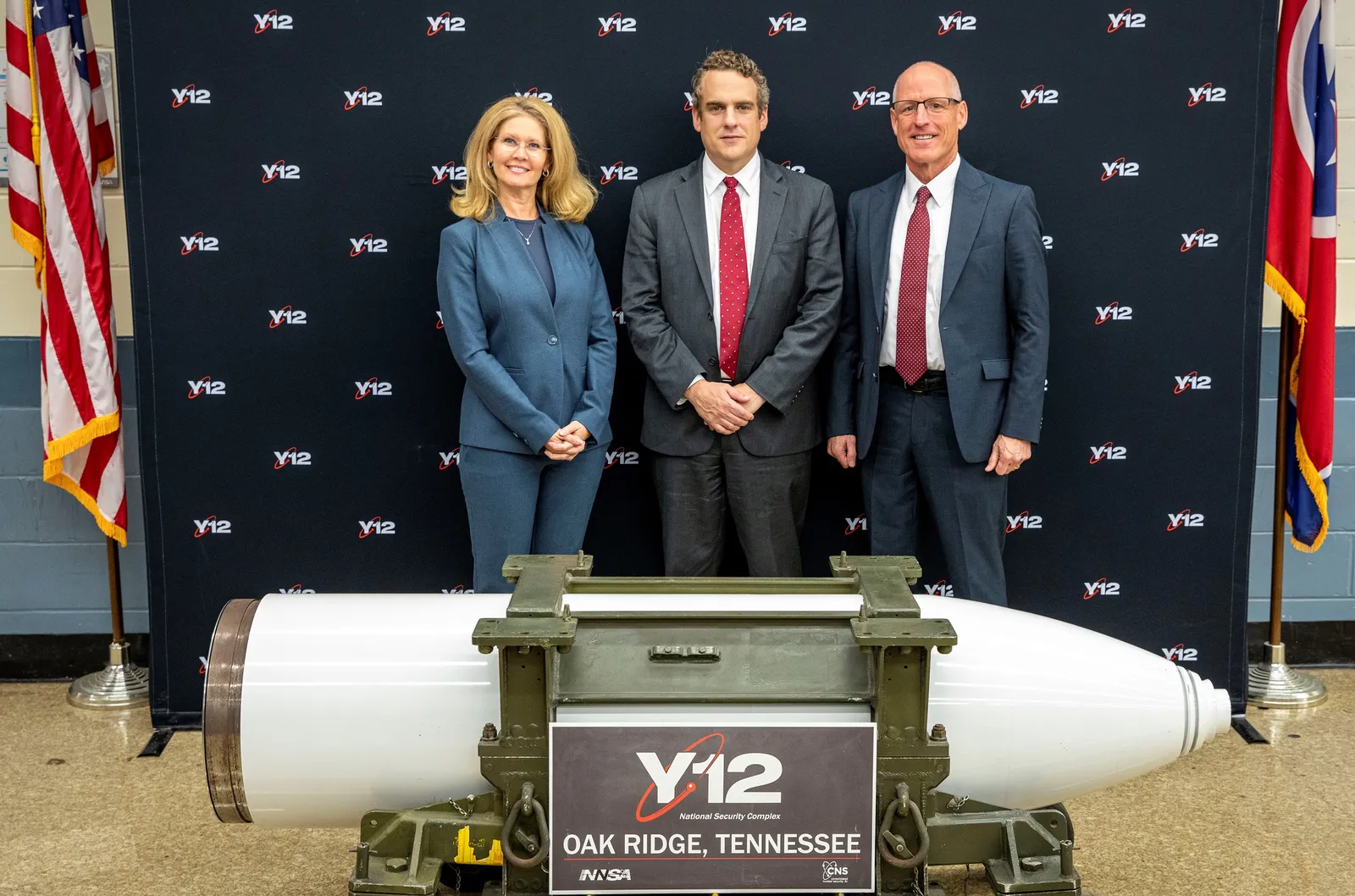
The W80-4 Life Extension Program is the National Nuclear Security Administration modernization path for extending the W80-1 cruise-missile warhead into the U.S. Air Force Long Range Standoff Weapon. Official NNSA, Sandia, LLNL, GAO, and congressional-budget sources frame it as a stockpile life-extension program rather than a conflict-use weapon: the design moved into Phase 6.4 production engineering in March 2023, a first canned subassembly was certified at Y-12 in September 2025, and full-warhead first production remains scheduled for 2027.

Profile / Specs

Profile

Origin
United States
Type
Nuclear warhead life-extension program
Service note
2010s-2020s modernization program
Produced
Phase 6.4 production engineering approved in March 2023; first W80-4 canned subassembly certified September 2025; full-warhead first production scheduled for 2027
Developed from
W80-1 warhead
Developed into
Long Range Standoff Weapon warhead package

Specifications

Program role
Life-extension and modernization program for the W80-1 cruise-missile warhead
Associated delivery system
U.S. Air Force Long Range Standoff cruise missile
Stockpile context
Modernization program for the bomber leg of the U.S. nuclear triad
Development phase
Phase 6.4 production engineering after Nuclear Weapons Council Phase 6.3 approval in February 2019
First production unit schedule
NNSA and DOE sources identify a 2027 full-warhead first-production-unit schedule
Certified component milestone
First W80-4 canned subassembly certified at Y-12 in September 2025, reported as 18 months ahead of schedule
Component context
NNSA describes the canned subassembly as the secondary stage of a modern two-stage thermonuclear weapon
Current public status
LLNL's FY 2025 annual report describes W80-4 as still in Phase 6.4 production engineering, with nearly all component product-realization-team final design reviews completed by the end of FY 2025
Design approach
Uses the existing insensitive high-explosive design, modern components and safety features, non-nuclear component technology from other LEPs, and parallel engineering with the Air Force on the warhead-missile interface
Design and engineering labs
Lawrence Livermore National Laboratory and Sandia National Laboratories
Production enterprise roles
Kansas City produces major non-nuclear component assemblies; Los Alamos produces detonators and classified components; Pantex handles high explosives, W80-1 pit requalification, and final assembly; Savannah River supports gas-transfer-system work; Y-12 manufactures uranium components
Delivery System

Official NNSA, Sandia, and Air Force sources tie W80-4 modernization to the Long Range Standoff missile program and its warhead-missile interface work.

Compatible itemItem typeCompatibility evidence
Long Range Standoff Weapon, Nuclear air-launched cruise missile, MunitionsLong Range Standoff WeaponNuclear air-launched cruise missile

NNSA says the W80-4 first-production-unit schedule supports the U.S. Air Force Long Range Standoff cruise missile's operational-capability schedule, while Sandia describes joint flight tests with the Air Force and Raytheon to pair the warhead with the missile.

Sources: W80-4 Life Extension Program Enters Phase 6.4, Sandia W80-4 production engineering

Program And Enterprise Context

The W80-4 page is structured as a support record for the LRSO warhead package. Public sources describe engineering, production, and certification milestones inside the U.S. nuclear security enterprise, but they do not document combat use for the W80-4 itself.

Warhead lineage

NNSA describes W80-4 as the life-extension path for the W80-1 warhead, which LLNL's Science & Technology Review ties to the Air-Launched Cruise Missile lineage.

Design agencies

Lawrence Livermore and Sandia are the W80-4 design and engineering labs; Sandia is also responsible for custom electronics, including neutron generators.

Production network

The public NNSA fact sheet assigns component and assembly roles across Kansas City, Los Alamos, Pantex, Savannah River, Y-12, Sandia, and LLNL.

FY 2025 status

LLNL reported W80-4 in Phase 6.4 production engineering, with component teams approaching final design and production-development milestones.

Sources: W80-4 Life Extension Program Fact Sheet; LLNL S&TR legacy warhead article; Sandia W80-4 production engineering; LLNL FY 2025 Strategic Deterrence.

Timeline

W80-4 Life Extension Program Key Events

  1. W80-4 selected for LRSO

    Sandia reported that the Nuclear Weapons Council selected W80-4 as the warhead for the Long Range Standoff missile, the Air Force's successor to the Air Launched Cruise Missile.

    Sources: Sandia W80-4 feasibility phase

  2. Feasibility phase approved

    The Nuclear Weapons Council approved Phase 6.2 for the W80-4 LEP, moving the effort from early concept work into feasibility-study activity.

    Sources: Sandia W80-4 feasibility phase

  3. Weapon design and cost report completed

    NNSA's public fact sheet says the program completed its Weapon Design and Cost Report in December 2018 before Nuclear Weapons Council approval for Phase 6.3.

    Sources: W80-4 Life Extension Program Fact Sheet

  4. Development engineering approved

    The Nuclear Weapons Council approved transition into Phase 6.3 development engineering for the W80-4 LEP.

    Sources: W80-4 Life Extension Program Fact Sheet

  5. GAO flags schedule constraints

    GAO reported that NNSA had adopted a fiscal-year 2025 first-production-unit date at an estimated program cost of about $11.2 billion, while recommending schedule-risk discipline for major milestones.

    Sources: GAO W80-4 schedule constraints

  6. Production engineering approved

    NNSA approved the W80-4 Life Extension Program to transition into Phase 6.4 production engineering after design-review and pre-production engineering gates.

    Sources: W80-4 Life Extension Program Enters Phase 6.4

  7. Sandia describes joint flight-test work

    Sandia said the W80-4 team conducted joint flight tests with the Air Force and Raytheon Missiles & Defense to pair the warhead with the LRSO delivery system.

    Sources: Sandia W80-4 production engineering

  8. First canned subassembly certified

    NNSA certified the first W80-4 warhead canned subassembly at the Y-12 National Security Complex, describing it as a key part of the warhead's nuclear explosive package.

    Sources: NNSA certifies first W80-4 warhead canned subassembly

  9. Phase 6.4 work continues

    LLNL's FY 2025 annual report described the W80-4 LEP as still in Phase 6.4 production engineering, with product-realization teams approaching final design and production-development milestones.

    Sources: LLNL FY 2025 Strategic Deterrence

  10. Full-warhead schedule reaffirmed

    DOE-NNSA testimony to the Senate Armed Services Committee said the W80-4 canned-subassembly FPU had been achieved 18 months ahead of schedule and that the full warhead remained on schedule for FPU in 2027.

    Sources: DOE-NNSA FY 2026 SASC testimony

Media

W80-4 Life Extension Program Videos

Related Weapon Systems
Kh-22, Air-launched supersonic anti-ship cruise missile, MunitionsMunitionsKh-22Air-launched supersonic anti-ship cruise missileThe Kh-22, NATO reporting name AS-4 Kitchen, is a large Soviet air-launched cruise missile designed by Raduga for attacks on carrier groups, radar-contrast surface targets, and major fixed targets. Its liquid-propellant rocket motor, supersonic flight profile, and roughly one-ton conventional or nuclear warhead made it a heavy standoff weapon for Tu-22, Tu-22M, and modified Tu-95K-22 bomber variants. Russia has repurposed Kh-22-family missiles for land attack in the 2014 Russia-Ukraine War, where the missile's naval-targeting heritage, large warhead, and high terminal speed have produced severe urban-strike risks and a difficult air-defense problem.
BGM-109 Tomahawk Land Attack Missile, Ship- and submarine-launched land-attack cruise missile, MunitionsMunitionsBGM-109 Tomahawk Land Attack MissileShip- and submarine-launched land-attack cruise missileThe BGM-109 Tomahawk Land Attack Missile, often abbreviated TLAM, is a U.S. long-range subsonic cruise missile used for deep precision strikes from naval surface ships and submarines, with newer variants also adding maritime-strike and warhead modernization paths. Documented combat use spans the 1991 Gulf War through Libya, Syria, Yemen, the Red Sea Crisis, Operation Inherent Resolve, and U.S. strikes on Iranian targets during the 2020 United States-Iran Conflict and 2025 Israel-Iran Conflict.
B61-12 Joint Test Assembly, non-nuclear nuclear-gravity-bomb test assembly, MunitionsMunitionsB61-12 Joint Test Assemblynon-nuclear nuclear-gravity-bomb test assemblyThe B61-12 Joint Test Assembly is a U.S. non-nuclear test article that represents the B61-12 nuclear gravity bomb for flight testing, certification, and stockpile surveillance. Sandia, NNSA, and Air Force reporting document B-2A and F-35A JTA releases at Tonopah Test Range, including telemetry checks, operationally realistic flight envelopes, and annual surveillance work after B61-12 production moved into sustainment.
Next Generation Interceptor (NGI), Ground-launched ballistic missile interceptor, Air DefenseAir DefenseNext Generation Interceptor (NGI)Ground-launched ballistic missile interceptorNext Generation Interceptor (NGI) is Lockheed Martin's planned homeland ballistic missile interceptor for the U.S. Missile Defense Agency's Ground-based Midcourse Defense system. The program moved from competing 2021 development awards to a 2024 Lockheed Martin downselect and a 2026 Courtland production facility, with public sources emphasizing multiple kill vehicles, solid-rocket propulsion, in-flight communications upgrades, and schedule risk around the original 2028 fielding target.

Sources