Support Equipment

1B77 Ulybka-M

Also known as
  • 1B77
  • 1Б77
  • Ulybka-M
  • Улыбка-М

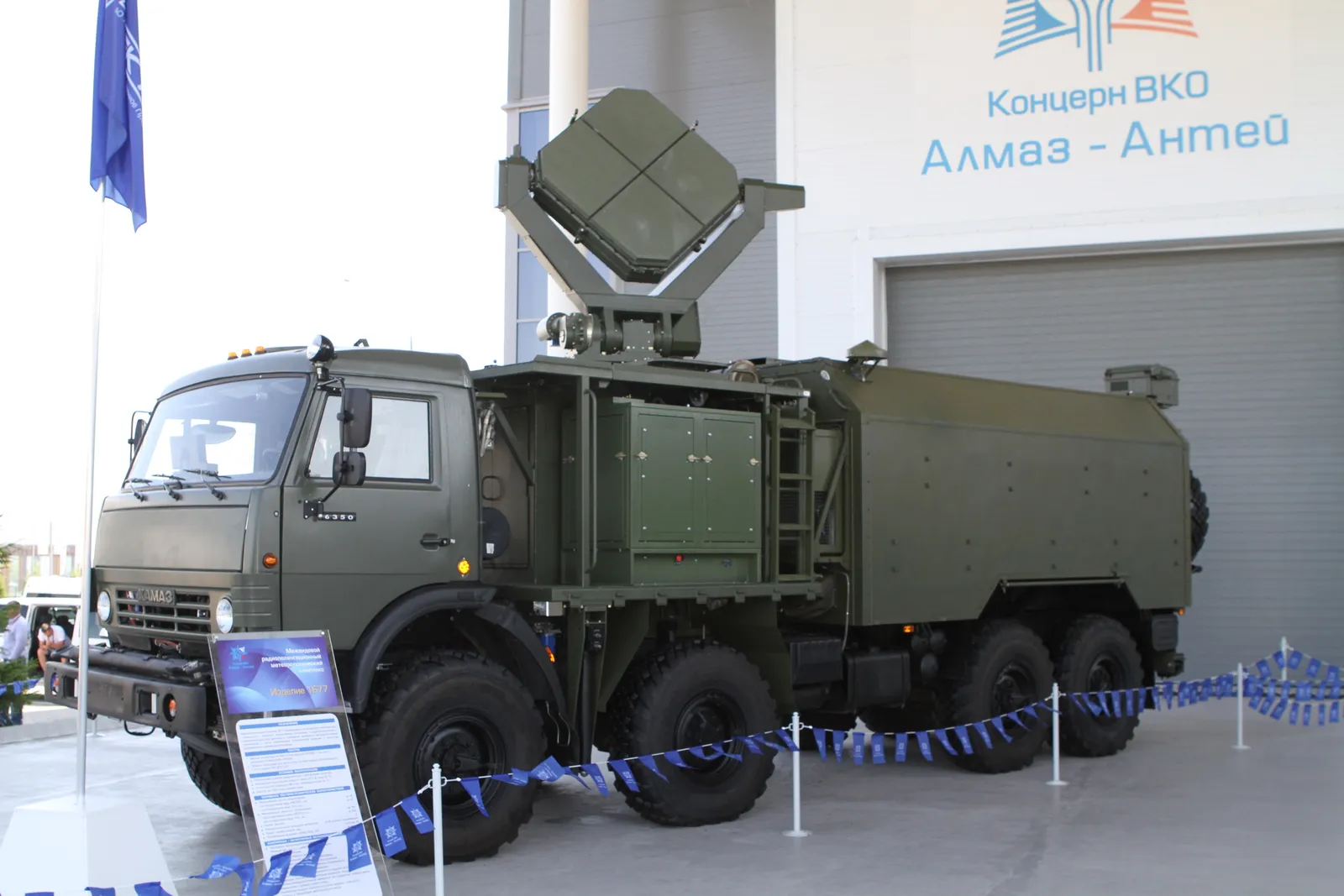
The 1B77 Ulybka-M is a Russian mobile radio-direction meteorological complex in the Ulybka military weather-support family. Public sources tie the system to OKB Peleng development work, UPP Vector supply activity, and a KamAZ-6350 apparatus vehicle with a light-gas trailer. Its role is to collect upper-air and surface meteorological data for artillery, rocket, missile, aviation, airborne, and CBRN users rather than to act as a strike system itself.

Profile / Specs

Profile

Origin
Russia
Built by
OKB Peleng
Type
Mobile radio-direction meteorological complex
Service note
Documented as an OKB Peleng development program in 2014 and reported in Russian service by 2017
Designer
OKB Peleng; UPP Vector is also identified in public references for the Ulybka-M complex
Designed
2011-2015 development and test period documented in OKB Peleng reporting
Produced
Army-2017 supply agreement reported in August 2017; Eastern Military District delivery reported in December 2017
Developed from
1B44 / RPMK-1 Ulybka meteorological complex

Specifications

Primary role
Temperature, humidity, and wind sounding plus surface meteorological observation for military users
Configuration
KamAZ-6350-based apparatus vehicle with K5350D-11 van body and 1-P-2.5 light-gas trailer
Crew
3
METEO sounding height
Up to 30 km
KN sounding height
Up to 40 km
METEO sounding range
Up to 150 km
KN sounding range
Up to 200 km
Deployment time
No more than 20 minutes
Carried consumables
Enough expendable materials for 50 standard soundings
Electrical load
No more than 8 kW at 220 V / 50 Hz
Supported outputs
METEO-11, METEO-44, METEO-ZVUK, SLOY, SHTORM, METEO-DEYSTVITELNY, KN-04, and surface-layer products depending on operating mode
Radiosonde compatibility
Radio-direction mode lists 1B74, 1B74-1, and MRZ-5; radar mode lists 1B72, 1B72-1, 1B73, 1B73-1, MRZ-3, and MRZ-4
Compact-design rationale
Patent material for a mobile aerological complex identifies the older two-vehicle-plus-trailer Ulybka layout as the predecessor and describes reducing preparation workload and time
Deployability
Reported as mounted on one KamAZ vehicle instead of the older two-vehicle and semitrailer layout
Operating conditions
-40°C to +50°C, 98% relative humidity at +25°C, wind up to 25 m/s, and elevations up to 3000 m
Meteorological Support Role

Ulybka-M belongs on the catalog as support equipment: its public mission is to generate meteorological data used by other military systems, not to deliver effects on a target directly. The stronger sources describe a weather-data chain for fires, missiles, aviation, airborne operations, and CBRN calculations while keeping combat-use claims separate from the older 1B44/RPMK-1 record.

Fires support

Russian reporting says Ulybka-M data can support tube artillery, rocket artillery, operational-tactical missile systems, and tactical missile systems.

Measured environment

The published technical list covers surface temperature, wind, humidity, visibility, pressure, near-surface stability, and upper-air wind, density, temperature, cloud-base, humidity, and pressure values.

Operating modes

The same report separates radio-direction and radar modes, with different radiosonde sets and output documents for each mode.

Compact successor

Patent material identifies RPMK-1 Ulybka as the predecessor and describes a mobile aerological design aimed at reducing the work and time needed to prepare radiosonde operations.

Industrial chain

OKB Peleng disclosure material supports development work, while TASS identifies AO UPP Vector and Almaz-Antey context for the 2017 Ministry of Defence supply agreement.

Sources: Sdelanounas Ulybka-M Delivery Report; RU2634486C2 Mobile Aerological Complex Patent; OKB Peleng 2014 Annual Report; TASS Army-2017 Ulybka-M Agreement.

Variants

Public sources treat 1B77 Ulybka-M as the later KamAZ-based Ulybka-family successor to the older RPMK-1 / 1B44 arrangement.

VariantConfigurationDesignation notes
1B44-1 RPMK-1 Ulybka radiosonde weather radar, Mobile radiosonde weather radar complex, Support Equipment1B44-1 RPMK-1 Ulybka radiosonde weather radarEarlier Ulybka-family radiosonde weather-radar complex

The 2017 delivery report says Ulybka-M replaced the older 1B44 Ulybka layout, while the RU2634486C2 patent treats RPMK-1 Ulybka as the predecessor arrangement for a more compact mobile aerological complex.

Sources: Sdelanounas Ulybka-M Delivery Report, RU2634486C2 Mobile Aerological Complex Patent

Timeline

1B77 Ulybka-M Key Events

  1. OKB Peleng reports Ulybka-M development work

    OKB Peleng's 2014 annual report says the bureau performed Ulybka-M development work and notified the customer that the prototype was ready to resume preliminary tests.

    Sources: OKB Peleng 2014 Annual Report

  2. Vector supply agreement reported at Army-2017

    TASS reported that AO UPP Vector, part of Almaz-Antey, signed an agreement with Russia's Ministry of Defence to manufacture and supply the Ulybka-M interservice radiometeorological complex.

    Sources: TASS Army-2017 Ulybka-M Agreement

  3. Eastern Military District delivery reported

    A report based on Russian Ministry of Defense material said a Ulybka-M complex entered an Eastern Military District artillery formation in Buryatia and replaced the earlier 1B44 Ulybka arrangement.

    Sources: Sdelanounas Ulybka-M Delivery Report

Related Weapon Systems
1B44-1 RPMK-1 Ulybka radiosonde weather radar, Mobile radiosonde weather radar complex, Support EquipmentSupport Equipment1B44-1 RPMK-1 Ulybka radiosonde weather radarMobile radiosonde weather radar complexThe 1B44-1 is the radar and operator vehicle of the RPMK-1 Ulybka mobile radiosonde meteorological complex, an automated support system that tracks free-flight radiosondes and distributes upper-air data for artillery, rocket, missile, aviation, and contamination-area calculations. Rosoboronexport lists the 1B44 set as a three-part complex with 40 km altitude and 200 km range limits, while visual-loss tracking and Ukrainian reporting document both Russian and Ukrainian Ulybka equipment destroyed during the 2014 Russia-Ukraine War.
48Ya6-K1 Podlet-K1, Mobile three-coordinate low-altitude air-surveillance radar, Air DefenseAir Defense48Ya6-K1 Podlet-K1Mobile three-coordinate low-altitude air-surveillance radarThe 48Ya6-K1 Podlet-K1 is a Russian mobile three-coordinate radar complex built to detect and track low-altitude air targets for air-defense units. Public reporting describes the system as a multi-vehicle package with a radar/antenna vehicle, command or operator-control vehicle, and power-support vehicle on KamAZ chassis, while Rosoboronexport markets the export Podlet-K1KE for automated detection, tracking, identification, and flight-information tasks in air-defense and air-force radio-engineering units. Ukraine-war reporting documents Russian Podlet-K1 losses and strikes tied to the S-300 and S-400 air-defense network.
PNGK-1 mobile navigation-geodetic complex, Mobile navigation-geodetic support complex, Support EquipmentSupport EquipmentPNGK-1 mobile navigation-geodetic complexMobile navigation-geodetic support complexPNGK-1 is a Russian mobile navigation-geodetic complex for topogeodetic support rather than a direct combat weapon. Public product data and technical reporting describe a KamAZ-4350 based system that determines horizontal coordinates and elevations while moving or stopped, transfers coordinates to surveyed points, and supports troop movement routes, geodetic-network recovery, and operational navigation-geodetic support. Russian-state reporting also names PNGK-1 among systems used by Russian military topographers in the 2022 phase of the 2014 Russia-Ukraine War.
BRM-1K, Tracked armored reconnaissance vehicle, Armored VehiclesArmored VehiclesBRM-1KTracked armored reconnaissance vehicleThe BRM-1K is a Soviet tracked armored reconnaissance vehicle derived from the BMP-1 chassis, combining amphibious mobility with battlefield surveillance equipment and a 73 mm 2A28 cannon. Russia later modernized the type as the BRM-1KM/BRM-1K Model 2021 with a BTR-82A-style combat compartment, 30 mm 2A72 armament, updated communications, and newer reconnaissance equipment; both legacy and modernized vehicles are visually documented in post-Soviet conflicts.
1K148 Yastreb-AV, Self-propelled counter-battery artillery reconnaissance radar complex, Electronic WarfareElectronic Warfare1K148 Yastreb-AVSelf-propelled counter-battery artillery reconnaissance radar complexThe 1K148 Yastreb-AV is a Russian self-propelled counter-battery radar complex attributed to the Almaz-Antey industrial group and Tula-based NPO Strela. Open reporting describes it as a phased-array artillery reconnaissance system on a BAZ-6910-025 8x8 chassis, built to track incoming shells or rockets and calculate artillery firing positions for counter-battery fire. Russian state-linked reporting announced its use with Russian artillery units in Ukraine in January 2024, while Ukrainian military, government-linked, and independent news coverage later documented the destruction of multiple Russian Yastreb-AV systems.

Sources