Electronic Warfare

1RL257 Krasukha-4

Also known as
  • Krasukha-4
  • Krasuha-4
  • Krasukha-S4
  • Krasukha-C4
  • 1RL257
  • 1RL257E
  • 1RL257E Krasukha-4
  • 1РЛ257 Красуха-4
  • Красуха-4

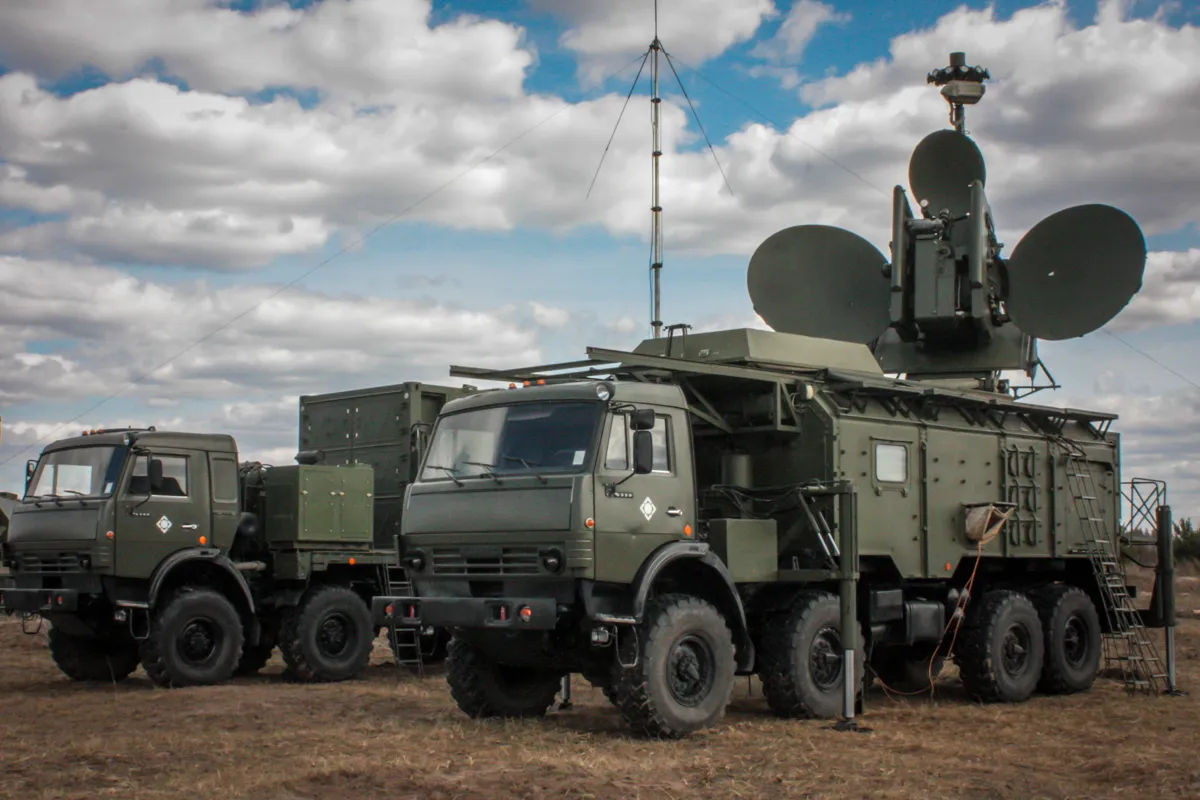
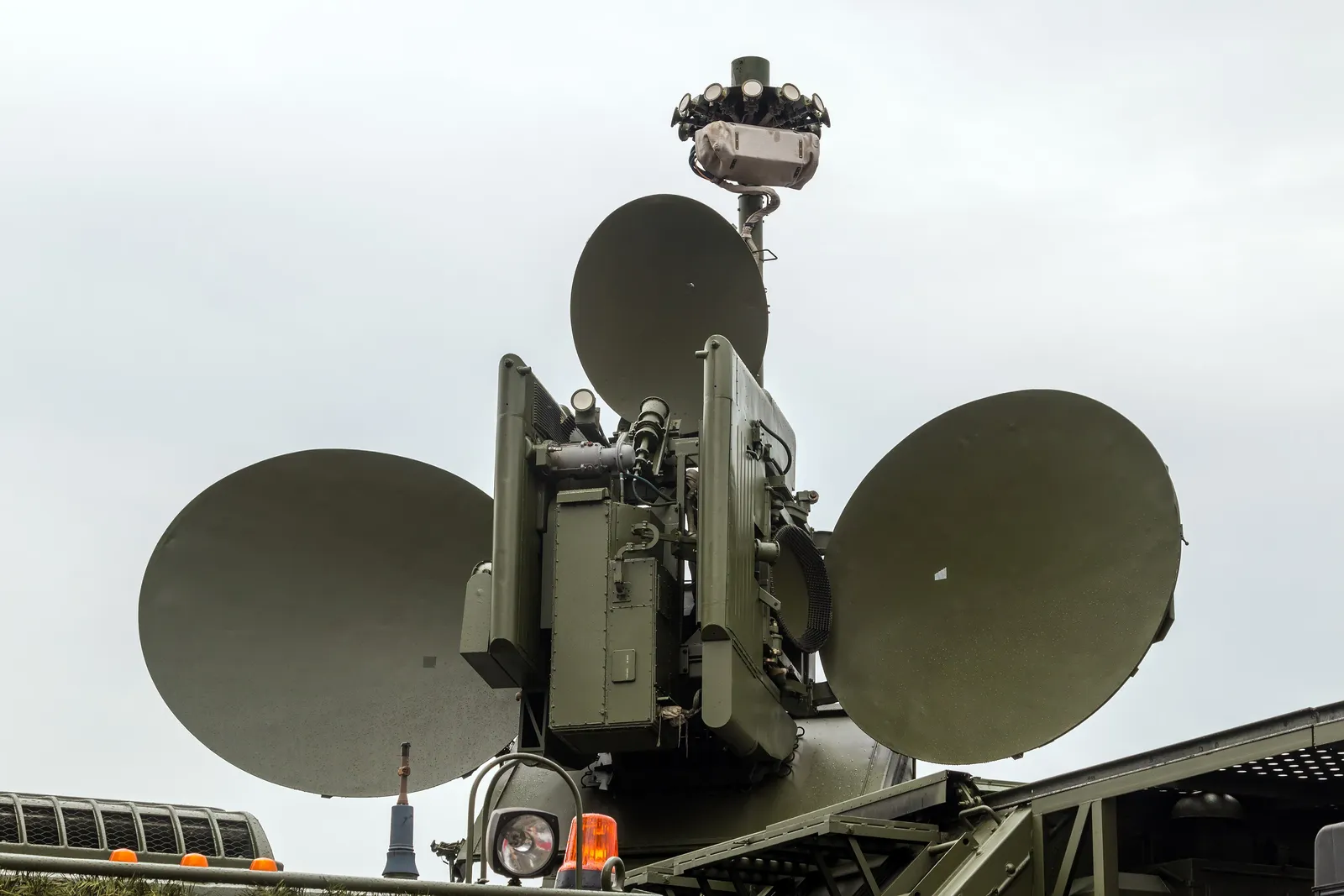
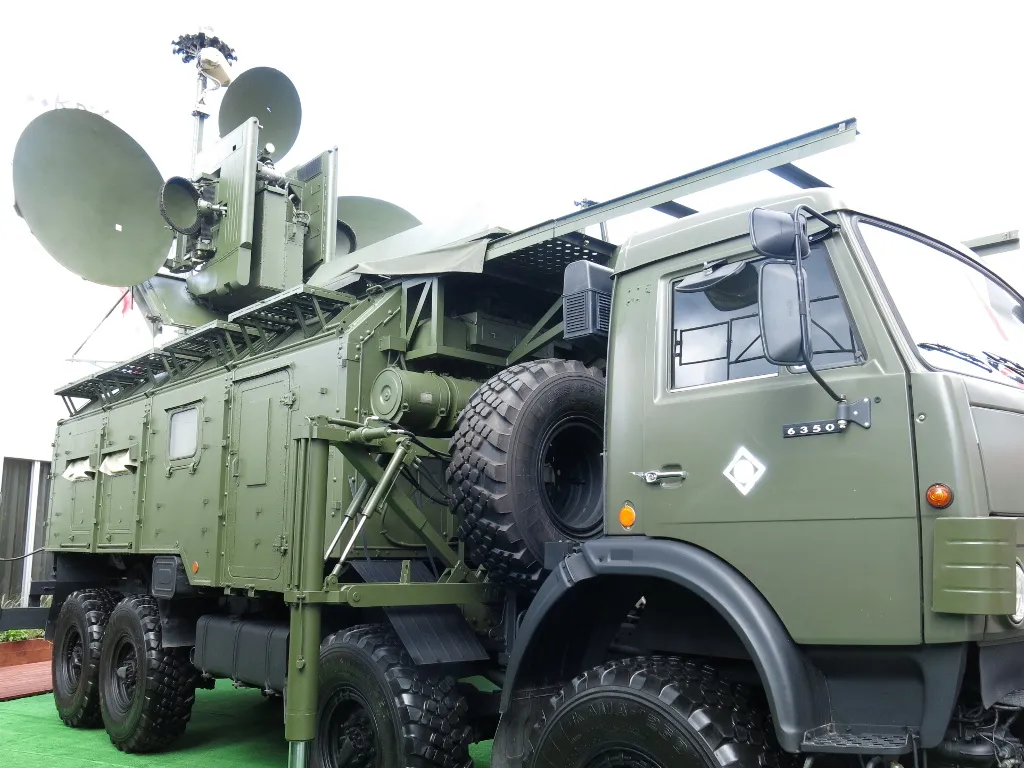
The 1RL257 Krasukha-4 is a Russian mobile ground-based electronic-warfare system built to detect and jam airborne, ground, and satellite-linked radar systems. Public references identify it as the Krasukha family member focused on X/Ku-band fire-control and surveillance radars, with open-source range claims commonly presented as a 150 to 300 km class capability.

Role in Conflicts

Side
Russia

Russian forces used Krasukha-4 electronic-warfare systems during the full-scale invasion phase: Ukrainian forces captured a 1RL257 Krasukha-4 command-post module near Kyiv in March 2022, later reporting documented a Russian Krasukha-4 destroyed in Zaporizhia region in November 2023, and March-April 2024 reporting described Krasukha-4 use in Donbas and southern Ukraine for radar, missile, UAV, and communications disruption.

Role details
Profile / Specs

Profile

Origin
Russia
Type
Mobile electronic warfare jammer
Service note
Entered Russian service in the early 2010s; reported in Russian service from 2014 onward.
Designer
Rostov Research Institute Gradient / KRET industrial network
Designed
Development reported from the mid-1990s
Produced
Serial production reported from 2011; Russian state defense-order deliveries documented in 2013

Specifications

System type
Truck-mounted broadband multifunctional electronic-warfare jamming station
Primary role
Detects, analyzes, and jams radar and other radio-emitting systems
Target set
Airborne radars, ground-based radars, AWACS/JSTARS-class aircraft sensors, radar reconnaissance satellites, and UAV-related surveillance targets in public descriptions
Public range class
Open references commonly cite a 150 to 300 km radar-jamming range class; some target-specific public figures are lower
Radar-band focus
X/Ku-band fire-control radar jamming in the ICDS equipment table
Vehicle configuration
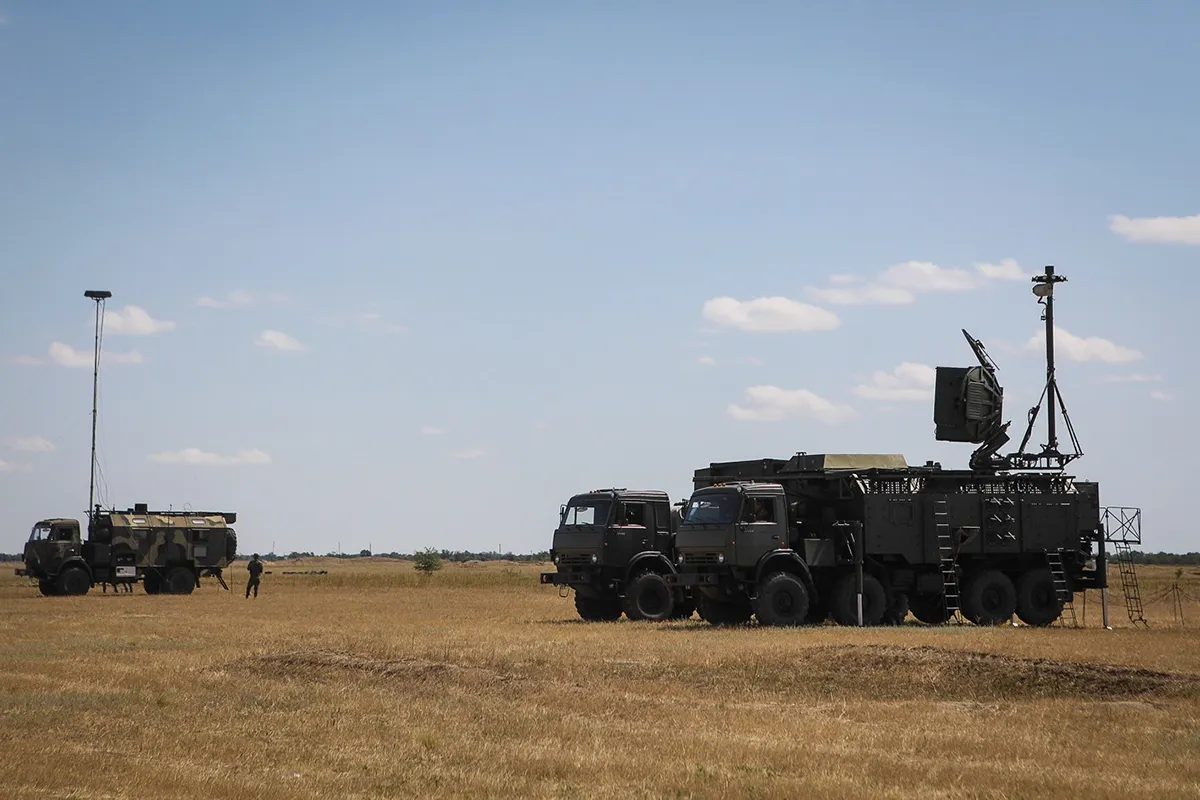
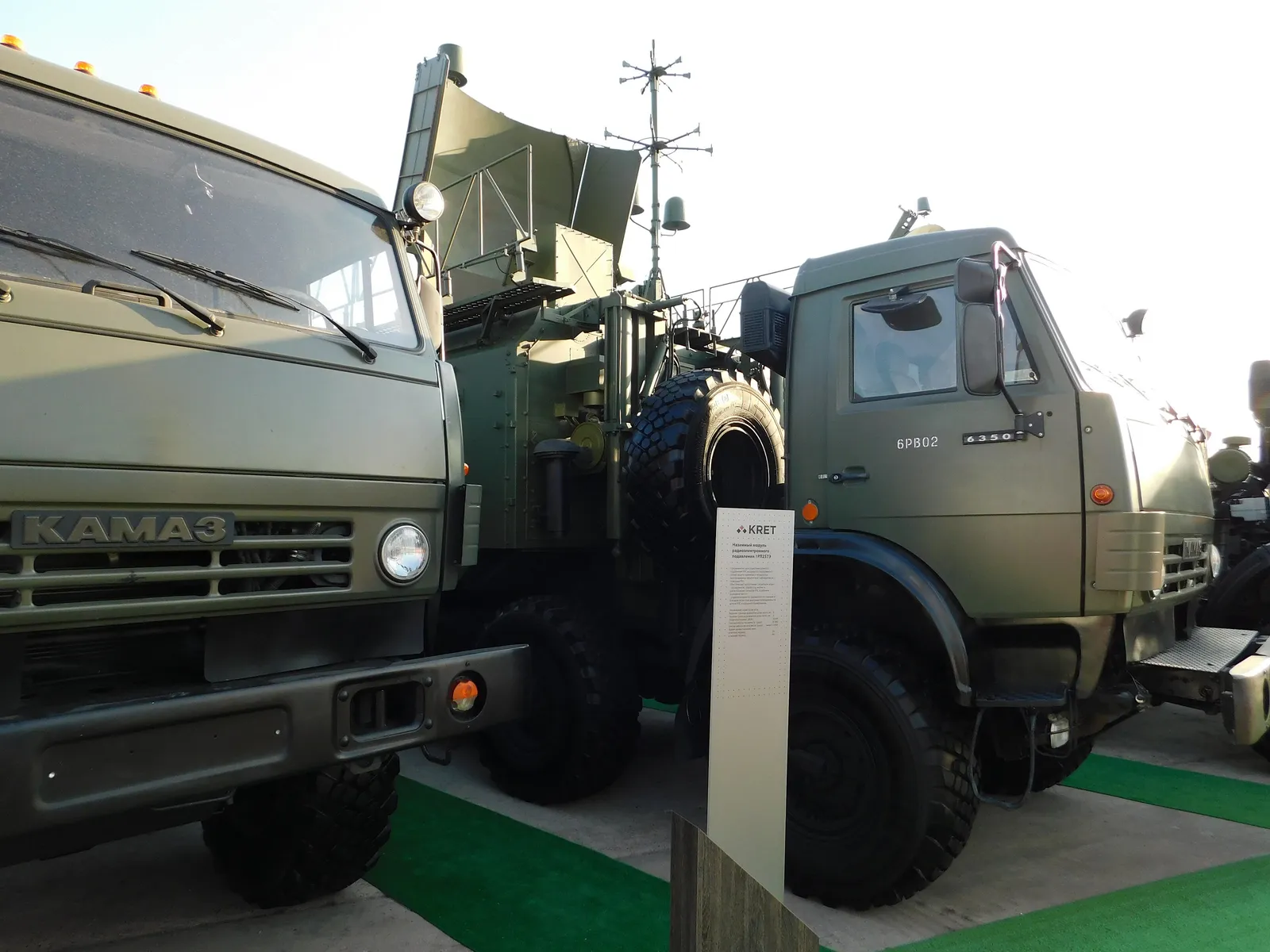
Two-vehicle KAMAZ-6350 complex in VPK.name reporting; other public references describe an 8x8 truck-mounted system
Production facility
Rostec's 2013 release identifies Bryansk Electromechanical Plant as the handover site and production facility for Krasukha-4 complexes completed under that year's state defense order
Crew
3 to 7 personnel in VPK.name technical data; Army Recognition lists a crew of 3
Deployment time
VPK.name reports 20 minutes in summer and 40 minutes in winter, with 3-minute readiness time
Power consumption
30 kW in VPK.name technical data
Mobility
Army Recognition lists a 95 km/h maximum road speed and 1,000 km road range for its truck data
Family And Designation Notes

Open sources describe Krasukha as a family rather than a single vehicle. This record keeps the 1RL257 Krasukha-4 scope separate from Krasukha-2/1L269 because the public descriptions give the two systems different radar-band targets and configurations.

1RL257 Krasukha-4

ICDS lists 1RL257 Krasukha-C4 as designed to jam X/Ku-band fire-control radars, while VPK.name describes Krasukha-4 as a two-vehicle KAMAZ-6350 complex.

Krasukha-2 / 1L269

ICDS separately lists 1L269 Krasukha-2-O as an S-band radar jammer, so this page treats it as an adjacent family branch rather than a Krasukha-4 variant row.

Manufacturer attribution

Public sources point to Bryansk Electromechanical Plant, KRET, Gradient, and Kvant in the program chain. The catalog uses its Rostec-affiliated Russian defense-industry facet because the sourced chain runs through KRET and BEMZ rather than one standalone public builder profile.

Production And Operator Context

Krasukha-4 is best documented in open sources as a Russian state-defense-order electronic-warfare system with later export exposure. Rostec's 2013 release ties production and handover work to KRET and Bryansk Electromechanical Plant, while U.S. Army ODIN identifies the 1RL257E as an 8x8 mobile multifunctional jammer.

Russian production chain

Rostec reported that KRET completed a 2013 Ministry of Defense contract and that BEMZ finished two Krasukha-4 complexes as part of that year's state-defense-order production.

Serbian public display

Defense reporting from Serbia's 2025 Belgrade parade identified elements of the 1RL257 Krasukha-4 among Russian-supplied electronic-warfare systems shown alongside Krasukha-2 and Moskva-1 equipment.

Iranian evidence caution

A 2024 CNS report placed a Russian 1RL257 Krasukha-4 in commercial satellite imagery at Bandar Abbas and discussed Iranian Cobra V8 comparisons, while warning that reverse-engineering claims remain unproven.

Export caution

TASS reported a first Krasukha export contract in 2021 and unnamed later orders in Southeast Asia and Eastern Europe. This page treats those reports as export background, not conflict-use evidence.

Timeline

1RL257 Krasukha-4 Key Events

  1. Krasukha family development begins

    VPK.name reports that work on the Krasukha-2 and Krasukha-4 complexes began in the mid-1990s, with Gradient, Kvant, Bryansk Electromechanical Plant, and KRET entities tied to the development and production chain.

    Sources: VPK Krasukha electronic warfare complexes

  2. Serial production reported

    GlobalSecurity reports serial production of Krasukha-family electronic-warfare systems beginning in 2011, while VPK.name places Krasukha-4 serial production at Bryansk Electromechanical Plant.

    Sources: GlobalSecurity Krasukha, VPK Krasukha electronic warfare complexes

  3. First Krasukha-4 delivery reported

    Rostec reported that KRET completed its 2013 state-defense-order contract for Krasukha-4 complexes, including two completed at Bryansk Electromechanical Plant to finish that year's production program.

    Sources: Rostec KRET Krasukha-4 2013 state order

  4. Russian service entry reported

    VPK.name reports that Krasukha-2 and Krasukha-4 complexes began arriving in the Russian Army in 2014.

    Sources: VPK Krasukha electronic warfare complexes

  5. Krasukha-4 deployed to Khmeimim

    ICDS and Jamestown report that Russia deployed Krasukha-4 to its Khmeimim airbase near Latakia in October 2015, tying the system to base protection and air-defense support in Syria.

    Sources: ICDS Russia's Electronic Warfare Capabilities to 2025, Jamestown Russian EW military thought

  6. Krasukha-4 module reportedly captured near Kyiv

    TWZ reported that Ukrainian troops captured what appeared to be a containerized command-post module from a Krasukha-4 system near Kyiv during Russia's full-scale invasion.

    Sources: TWZ Ukraine captured Krasukha-4 module

  7. Zaporizhzhia Krasukha-4 strike reported

    Army Recognition reported that Ukrainian forces destroyed a Russian Krasukha-4 system in Zaporizhzhia region using JDAM-guided bombs.

    Sources: Army Recognition Krasukha-4 JDAM strike report

  8. Ongoing Donbas and southern Ukraine use reported

    The Kyiv Independent reported that Krasukha-4 was being used by Russian forces in Donbas and southern Ukraine, while Army Recognition separately described active Russian use in Ukraine for airspace scanning and UAV radar disruption.

    Sources: Kyiv Independent Ukraine electronic warfare arms race, Army Recognition Krasukha Ukraine analysis

Media
Related Weapon Systems
Pantsir-S1, Self-propelled short-range surface-to-air missile and anti-aircraft gun system, Air DefenseAir DefensePantsir-S1Self-propelled short-range surface-to-air missile and anti-aircraft gun systemThe Pantsir-S1 is a Russian mobile point-defense system that combines 57E6-family command-guided surface-to-air missiles, twin 30 mm 2A38M automatic cannon, target-acquisition radar, engagement radar, and electro-optical fire control on a wheeled combat vehicle. It is designed to protect military units, air-defense sites, infrastructure, and longer-range air-defense formations against aircraft, helicopters, cruise missiles, precision weapons, and UAVs, with documented or reported conflict relevance in Ukraine, Syria, Libya, Yemen, and Sudan.
Mi-8/Mi-17, Medium twin-turbine utility transport helicopter, Aircraft & UAVsAircraft & UAVsMi-8/Mi-17Medium twin-turbine utility transport helicopterThe Mi-8/Mi-17 is a Soviet-designed medium utility helicopter family used for troop lift, cargo transport, evacuation, search-and-rescue, electronic-warfare, and armed support roles. Its large production run, 4,000 kg payload class, current Mi-8AMT/Mi-8MTV-1/Mi-171/Mi-172 production branches, and wide export base make it a recurring rotary-wing platform across conflicts from Afghanistan and Syria to the 2014 Russia-Ukraine War.
MT-LB with ZU-23 anti-aircraft gun, Improvised tracked self-propelled anti-aircraft gun, Air DefenseAir DefenseMT-LB with ZU-23 anti-aircraft gunImprovised tracked self-propelled anti-aircraft gunThe MT-LB with ZU-23 anti-aircraft gun is an improvised tracked fire-support and short-range air-defense vehicle that combines the Soviet MT-LB multipurpose armored tractor with a twin 23 mm ZU-23 gun mount. Public records show the configuration in Iraqi, Russian, Ukrainian, Syrian, and Armenian or Artsakh service contexts, with documented examples ranging from an Iraqi wreck in Baghdad to vehicles destroyed, damaged, or captured in later wars.
Project 1164 Atlant / Slava-class guided-missile cruiser, Guided-missile cruiser, Naval SystemsNaval SystemsProject 1164 Atlant / Slava-class guided-missile cruiserGuided-missile cruiserThe Project 1164 Atlant / Slava-class guided-missile cruiser is a Soviet-designed surface-strike cruiser class built at the 61 Kommunara yard in Mykolaiv. Its large angled anti-ship missile battery, S-300F Fort area air defense, Osa-M point defense, AK-130 gun, and helicopter deck made the class a Russian fleet flagship type, with Moskva documented in the 2008 Russo-Georgian War, Russia's Syria operation, and the 2022 phase of the Russia-Ukraine War before its sinking in the Black Sea.
1L271 Aistyonok, Portable mortar locating reconnaissance radar, Electronic WarfareElectronic Warfare1L271 AistyonokPortable mortar locating reconnaissance radarThe 1L271 Aistyonok is a Russian portable mortar-locating and artillery-reconnaissance radar built for battalion-to-brigade fire support. Rosoboronexport describes the export system as a modular radar for detecting 81-120 mm mortar positions, tracking shell bursts for artillery correction, and observing moving ground targets out to 20 km; specialist radar references describe a 135 kg J-band set, while open-source conflict reporting documents Russian-linked use in Syria and Ukraine plus Armenian/Artsakh wartime fielding problems in the 2020 Nagorno-Karabakh conflict.

Sources