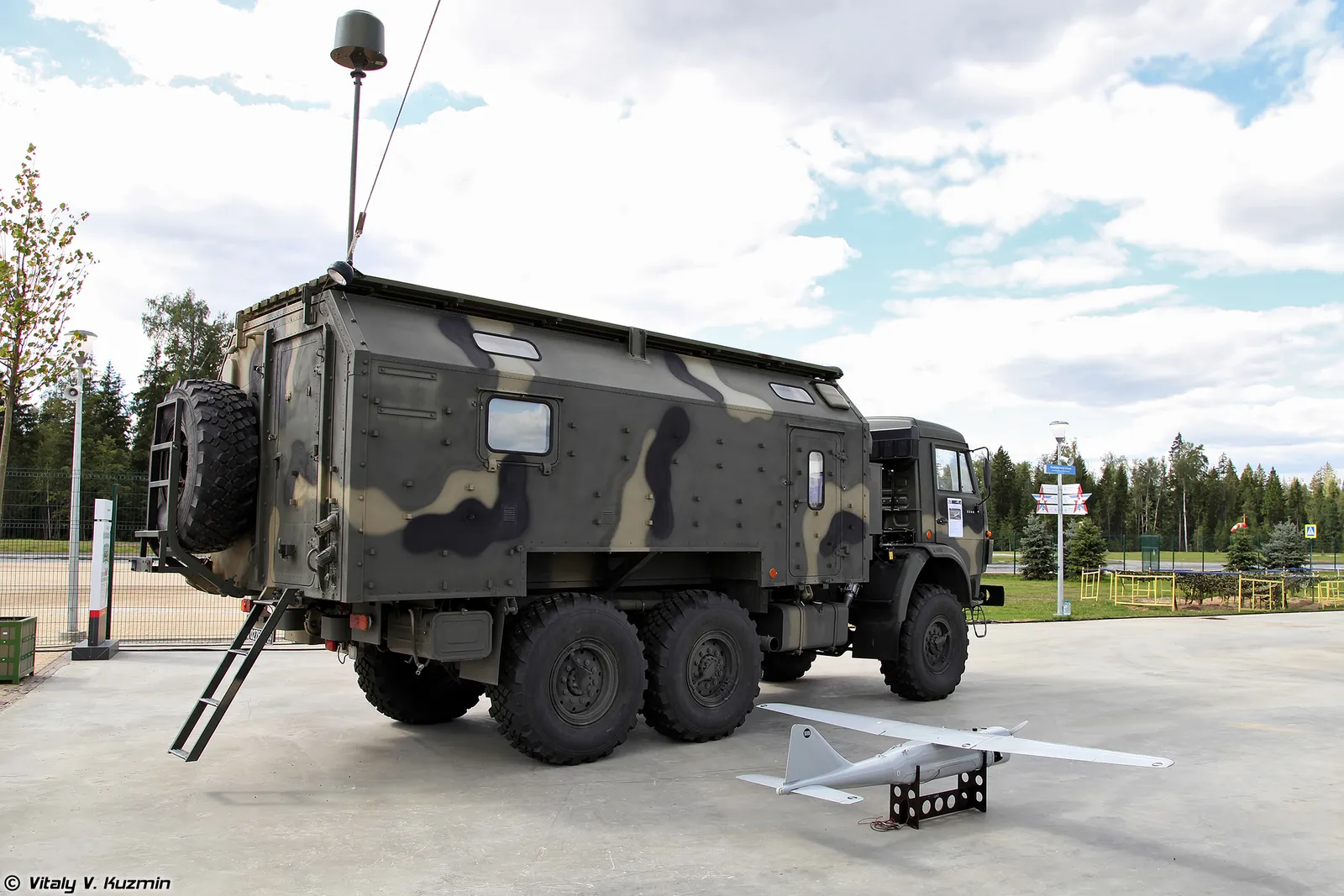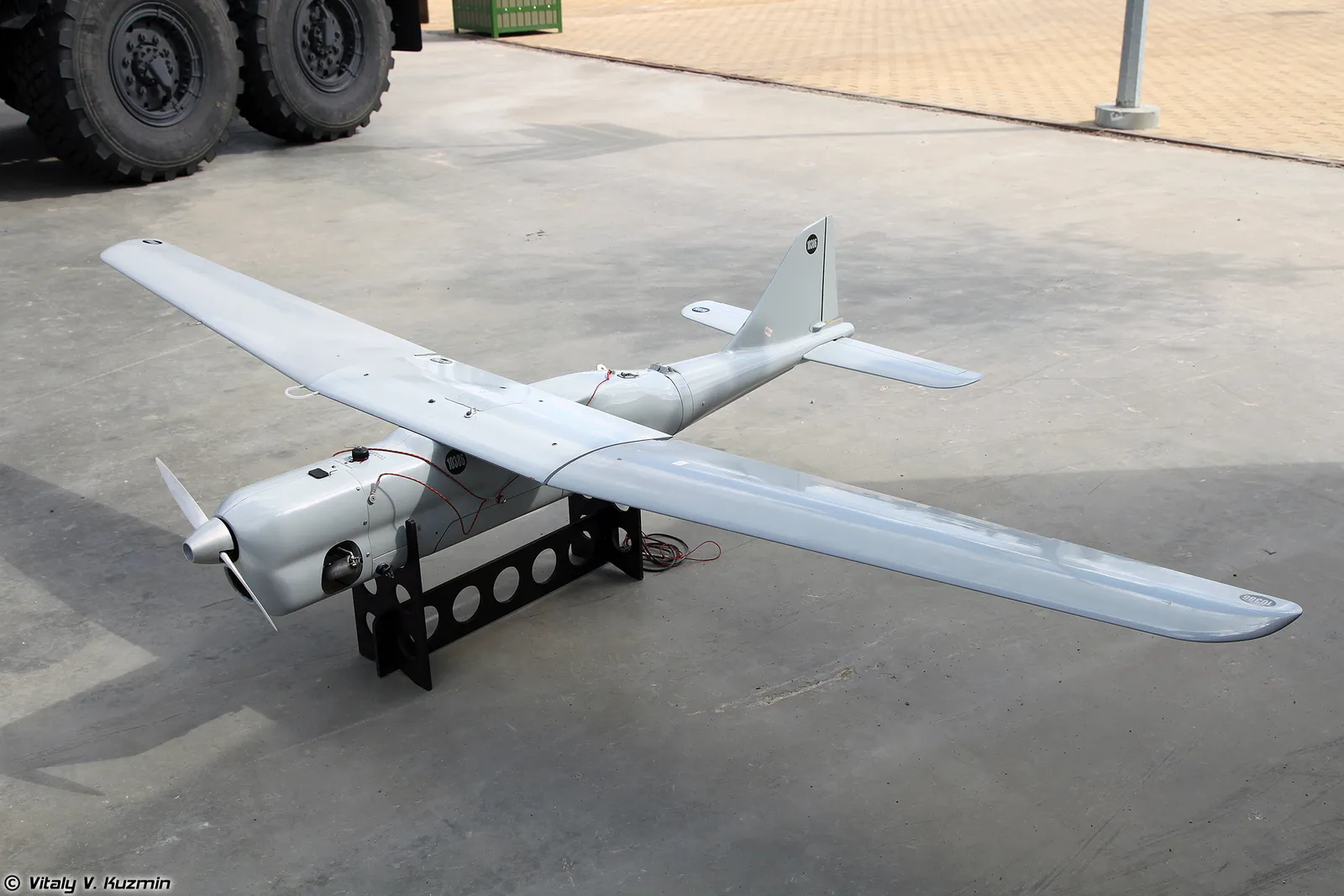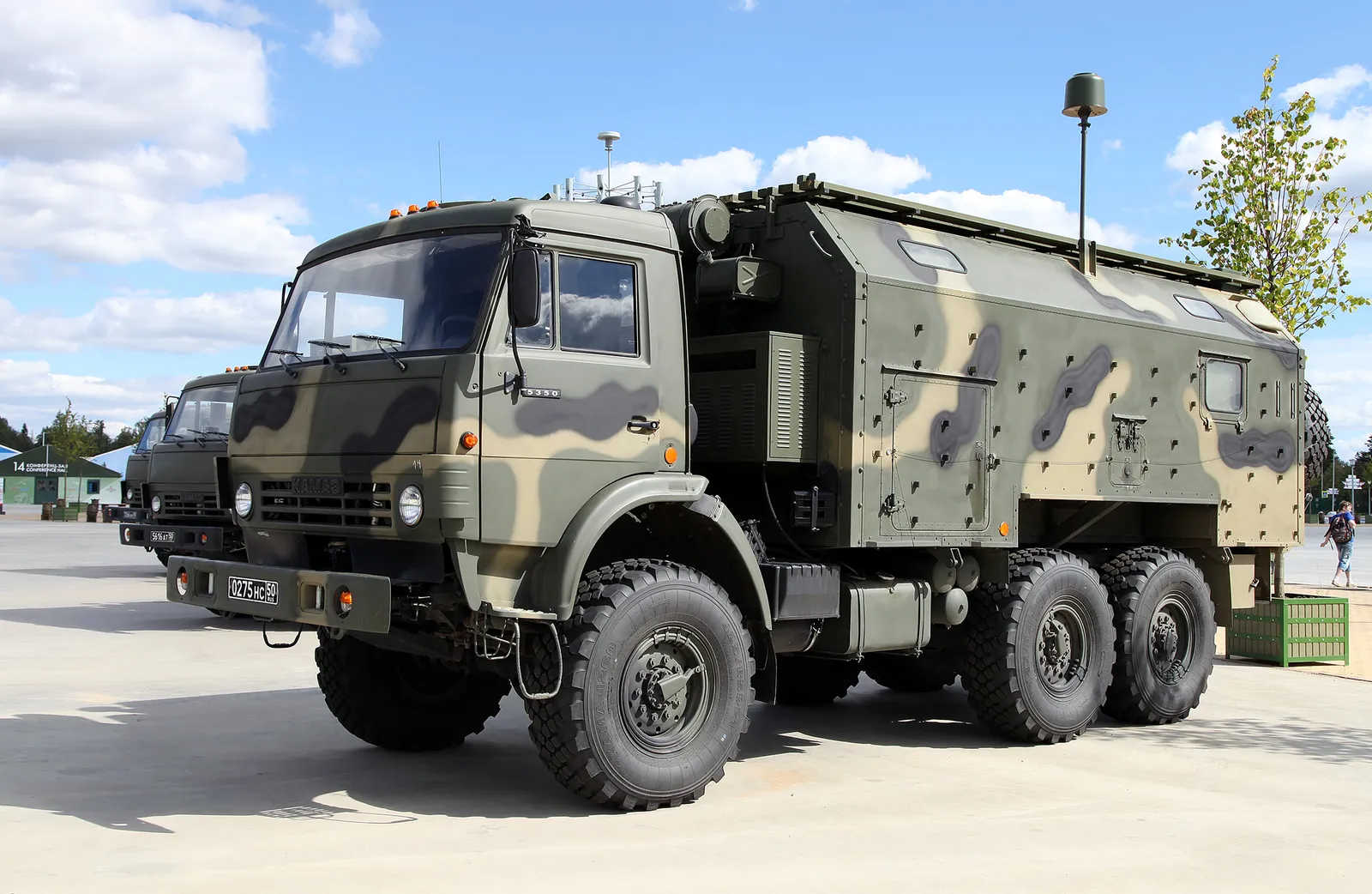
- Side
- Russia

OSCE monitors spotted Leer-3 RB-341V systems in non-government-controlled Luhansk Oblast in 2018 and 2020, while later reporting during the full-scale phase documented Ukrainian forces destroying a Russian RB-341V Leer-3.
Role detailsThe Leer-3 is a Russian drone-based electronic-warfare system that pairs a KamAZ-5350 command post with Orlan-10 unmanned aircraft carrying cellular-network jamming and deception payloads. Public sources describe it as a GSM-focused electronic-attack and signals-intelligence complex used by Russian forces in Ukraine to disrupt, locate, and exploit mobile communications.
OSCE monitors spotted Leer-3 RB-341V systems in non-government-controlled Luhansk Oblast in 2018 and 2020, while later reporting during the full-scale phase documented Ukrainian forces destroying a Russian RB-341V Leer-3.
Role detailsLeer-3 is most often described as an electronic-attack system against mobile-phone networks. ICDS lists GSM jamming, SMS transmission, and a reported 6 km jamming radius, while Hudson Institute analysis describes Russian use of the system in eastern Ukraine to hijack local cellular networks for propaganda or false orders and to support targeting workflows.
Leer-3 extends a ground electronic-warfare crew by putting the cellular-network payload on Orlan-10 unmanned aircraft. That architecture lets the system work above terrain and front-line clutter while the command post remains on a KamAZ truck.
ODIN describes the system as a KamAZ-5350 command-and-control post connected to the UAV element.
ICDS and ODIN describe up to three Orlan-10 UAVs fitted with jammers; the cataloged Orlan-10 is the aircraft family linked to the system.
Public reporting focuses on cellular-network jamming, false SMS delivery, signal collection, and geolocation support rather than kinetic effects from the system itself.
Public sources normally treat RB-341V and Leer-3 as the same system designation rather than separate variants; the main configuration distinction is the command post working with Orlan-10 aircraft and exchangeable electronic-warfare payloads.
| Variant | Configuration | Designation notes |
|---|---|---|
| RB-341V Leer-3 | Baseline Russian electronic-warfare complex | ICDS and ODIN describe the RB-341V / Leer-3 as a command-post-and-UAV system built around Orlan-10 aircraft fitted with jamming payloads. Sources: ODIN Leer-3 Worldwide Equipment Guide, Russia's Electronic Warfare Capabilities to 2025 |
| 3G/4G-capable upgrade | Reported cellular-network expansion | ICDS notes reporting that some Leer-3 systems were apparently upgraded beyond GSM to work against 3G and 4G networks, while treating that claim as not fully verified. |
ICDS reports that Russian Western Military District electronic-warfare troops received the Leer-3 UAV system in 2015 as part of a broader modernization of Russian EW units.
Sources: Russia's Electronic Warfare Capabilities to 2025
The OSCE Special Monitoring Mission reported that a mini-UAV spotted a Leer-3 RB-341V near Chornukhyne in non-government-controlled Luhansk Oblast, alongside several other Russian electronic-warfare systems.
Sources: OSCE SMM 10 August 2018 Report
Defense Express reported that Ukrainian service members destroyed a Russian RB-341V Leer-3 during the early full-scale invasion period, citing the AFU Task Force East press service.
Sources: Defense Express Leer-3 Destroyed
A U.S. Army T2COM G2 public-domain ThreatMinutes video on cellular-network exploitation listed the Leer-3 ODIN profile among its source material.
Sources: Death by Telephone ThreatMinutes