METIS recorded a March 19, 2025 Kantchari-area Burkina Faso event in which JNIM militants used a China-made 120 mm Type W86 mortar with DHTL-1 HERA rocket-assisted mortar bombs against Burkina Faso Army forces.
Artillery
120mm Type W86
Also known as
- 120 mm Type W86
- 120-mm Type W86 mortar
- 120mm W86
- 120 mm W86
- Type W86 mortar
- Type 86 mortar
- W86 120 mm mortar
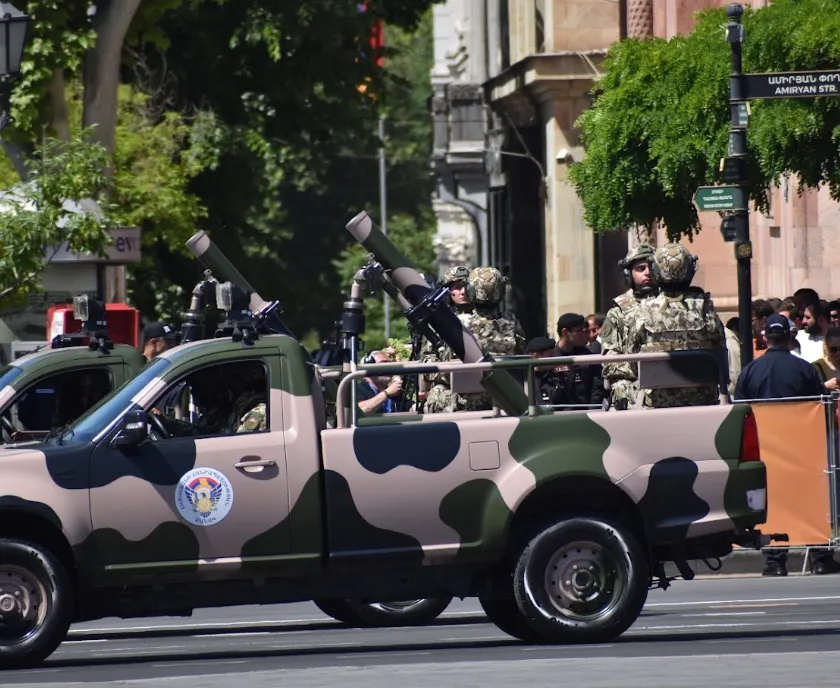
The 120mm Type W86 is a Chinese smoothbore heavy mortar developed by Norinco as a longer-ranged replacement for older Type 55-pattern 120 mm mortars. It uses a conventional tube, bipod, baseplate, sight, and two-wheel carriage, with public sources documenting Chinese origin, export service, vehicle-mounted installations, W86-pattern ammunition, and a 2025 Sahel conflict event involving jihadist use of a Type W86 mortar with rocket-assisted ammunition.
Role in Conflicts
Profile / Specs
Profile
- Origin
- China
- Built by
- Norinco
- Type
- 120 mm towed heavy mortar
- Service note
- Late Cold War Chinese design; entered service in the late 1980s and remains documented in export and conflict reporting
- Designer
- Norinco
- Designed
- Early to mid-1980s
- Unit cost
- Not publicly confirmed; one 2004 reporting example described a $15 million package for 150 W86 mortars and associated equipment
- Produced
- Late-1980s service and production entry in specialist reporting; later export and service sightings documented into the 2010s
- Number built
- Not publicly confirmed; open sources document Chinese origin plus Jordanian, Algerian, Cambodian, and Sahel non-state sightings
- Developed from
- Chinese service requirement to replace older 120 mm Type 55 heavy mortars
Specifications
- Caliber
- 120 mm smoothbore mortar
- Crew
- 7-9
- Weight
- 206 kg in firing position; 291 kg on two-wheel carriage
- Component weights
- 88 kg tube, 91 kg baseplate, 27 kg bipod assembly in WeaponSystems.net data
- Barrel length
- 1.54 m
- Ammunition
- HE-fragmentation, HE-RA, smoke, illumination, and older Soviet/Chinese 120 mm patterns depending on source and range
- W86 HE shell example
- Jing An/CJAIE lists DRP11W or MP-8 fuzes, 13.8 kg flying weight, at least 7,700 m maximum range on charge no. 4, 15-year storage life, and -40 C to +50 C operation for a Mortar HE Shell Type W86
- Range
- 400 m minimum; 7.7 km conventional maximum; MCIA appendix lists 13 km extended range
- Rate of fire
- 20 rounds per minute maximum / normal figure in open references
- Elevation
- +40 to +80 degrees in WeaponSystems.net data; MCIA lists +45 to +80 degrees
- Traverse
- About 5 degrees left and right on the bipod; 360 degrees on the baseplate
- Transport
- Separate two-wheel carriage; light-truck towing over longer distances and short-distance manhandling on the carriage
- Known users and sightings in open sources
- China, Cambodia, Algeria, and Jordan as state-user or operator context; JNIM use in Burkina Faso is documented as a specific 2025 Sahel conflict event
Design And Mobility
The Type W86 keeps the familiar heavy-mortar layout of a 120 mm smoothbore tube, bipod, triangular baseplate, indirect-fire sight, and separate two-wheel transport carriage. Public data points to a seven- to nine-person crew, a 206 kg firing-position weight, and a 291 kg carriage weight, putting it above man-portable infantry mortars but within the short-distance manhandling and light-vehicle towing class.
Replacement role
U.S. Marine Corps intelligence appendices and specialist references treat the W86 as a successor to the older Chinese Type 55 120 mm mortar, with longer range and lower weight than the older system.
Ammunition envelope
Conventional 120 mm rounds are listed to 7.7 km in multiple sources, while the MCIA appendix lists a 13 km extended-range figure for HE-RA ammunition.
W86 HE shell data
Jing An/CJAIE lists the Mortar HE Shell Type W86 for the 120 mm Mortar W86 with DRP11W or MP-8 fuzes, 13.8 kg flying weight, at least 7,700 m maximum range on charge no. 4, and a -40 C to +50 C operating-temperature envelope.
Sources: WeaponSystems.net 120mm Type W86; MCIA China Handbook Appendices; Military Periscope Type W86 Mortar; Jing An Mortar HE Shell Type W86.
Variants
Public sources mainly distinguish the baseline towed Type W86, associated W86-family ammunition, and vehicle-mounted installations rather than a long list of separate mortar marks.
| Variant | Configuration | Designation notes |
|---|---|---|
| Towed Type W86 | Baseline ground mortar | WeaponSystems.net and Military Periscope describe the Type W86 as a smoothbore 120 mm mortar with tube, bipod, baseplate, and towing cart components. Sources: WeaponSystems.net 120mm Type W86, Military Periscope Type W86 Mortar |
| W86 120 mm HE mortar bomb | Associated high-explosive ammunition | METIS identifies a Norinco-produced W86 120 mm high-explosive mortar bomb fired by the W86 120 mm mortar tube, with rocket-assisted ammunition also documented in the Sahel event source. Sources: METIS W86 HE Mortar Bomb, METIS Kantchari Mortar Bomb Event |
| Vehicle-mounted W86 installations | Self-propelled or quick-emplacement mounting | WeaponSystems.net describes a turntable mount for vehicles such as the YW-531H, Army Recognition photographed a Jordanian Toyota Land Cruiser carrier, and DefenceWeb reported an Algerian Mercedes G-Class W86 installation with hydraulic deployment and onboard targeting aids. Sources: WeaponSystems.net 120mm Type W86, Army Recognition SOFEX 2008 Type W86 Toyota Carrier, DefenceWeb New Mortars for Algeria |
Ammunition Fired
The W86 fires 120 mm mortar ammunition, including W86-family high-explosive and rocket-assisted rounds where sources identify them by model.
| Ammunition | Ammunition type | Firing evidence |
|---|---|---|
 | 120 mm mortar ammunition class | WeaponSystems.net lists new 120 mm shells for the W86 and says older Soviet and Chinese 120 mm shells can also be fired at shorter ranges; METIS identifies W86 120 mm HE and rocket-assisted mortar bombs connected to the W86 tube. Sources: WeaponSystems.net 120mm Type W86, METIS W86 HE Mortar Bomb, METIS Kantchari Mortar Bomb Event |
Timeline
120mm Type W86 Key Events
W86 design replaces older 120 mm mortars
Open sources place W86 development in the early or mid-1980s as China sought a longer-ranged replacement for older 120 mm mortars.
Sources: WeaponSystems.net 120mm Type W86, Military Periscope Type W86 Mortar
Late-1980s service entry
WeaponSystems.net dates Type W86 entry into service and production to the late 1980s.
Sources: WeaponSystems.net 120mm Type W86
Jordanian Type W86 carrier displayed at SOFEX
Army Recognition's SOFEX 2008 coverage showed Jordanian Special Forces with a Toyota Land Cruiser mortar carrier mounting a Chinese 120 mm Type W86 mortar.
Sources: Army Recognition SOFEX 2008 Type W86 Toyota Carrier
Jordanian service reported in China-Jordan coverage
Army Recognition later reported that Jordan's army already used Chinese-made 120 mm Type W86 mortars when covering a China-Jordan military-equipment grant.
Sources: Army Recognition Jordan China Equipment
Algerian vehicle-mounted W86 inspected
DefenceWeb reported that Algeria had taken W86 120 mm mortar systems into service and described a Norinco W86 mounted on a Mercedes G-Class vehicle inspected at Blida.
Sources: DefenceWeb New Mortars for Algeria
Kantchari-area Sahel event logged
METIS logged a Burkina Faso Kantchari-area event in which JNIM militants used a Type W86 mortar with DHTL-1 HERA rocket-assisted mortar bombs.
Sources: METIS Kantchari Mortar Bomb Event
Related Weapon Systems


Sources
WeaponSystems.net 120mm Type W86Publisher: WeaponSystems.net | Note: Supports Type W86 identity, Chinese origin, Norinco developer and producer attribution, late-1980s service and production context, Type 55 replacement background, users, dimensions, crew, range, rate of fire, carriage, mobility, and ammunition compatibility. | Accessed: 2026-07-13MCIA China Handbook AppendicesPublisher: Marine Corps Intelligence Activity via Public Intelligence | Note: Supports 120-mm Towed Mortar Type W86 ammunition types, conventional and extended range figures, rate of fire, elevation and traverse limits, travel weight and dimensions, and Type 55 replacement context. | Accessed: 2026-07-13Military Periscope Type W86 MortarPublisher: Military Periscope | Note: Supports Chinese origin, Type 86 alternate naming, mid-1980s development context, smoothbore design, tube/bipod/baseplate/towing-cart layout, and seven- to nine-person crew. | Accessed: 2026-07-13METIS W86 HE Mortar BombPublisher: METIS by Fenix Insight | Note: Supports W86 120 mm high-explosive mortar bomb identity, Chinese manufacture, Norinco production attribution, firing by the W86 120 mm mortar tube, 7,700 m maximum range, and related rocket-assisted ammunition context. | Accessed: 2026-07-13METIS Kantchari Mortar Bomb EventPublisher: METIS by Fenix Insight | Note: 2012 Sahel Insurgency direct use: records a March 19, 2025 Kantchari-area Burkina Faso event in which JNIM militants used a China-made 120 mm Type W86 mortar with DHTL-1 HERA rocket-assisted mortar bombs against Burkina Faso Army forces. | Accessed: 2026-07-13Army Recognition Jordan China EquipmentPublisher: Army Recognition | Note: Supports Jordanian army use of Chinese-made 120 mm Type W86 mortars in a 2013 China-Jordan military-equipment cooperation report; this is operator background, not conflict-use evidence. | Accessed: 2026-07-13Army Recognition SOFEX 2008 Type W86 Toyota CarrierPublisher: Army Recognition | Note: Supports Jordanian Special Forces display context for a Toyota Land Cruiser mortar carrier with a Chinese 120 mm Type W86 mounted at the rear; this is operator and vehicle-mount background, not conflict-use evidence. | Accessed: 2026-07-13DefenceWeb New Mortars for AlgeriaPublisher: DefenceWeb | Note: Supports Algerian service context for W86 120 mm mortar systems and a Norinco W86 mounted on a Mercedes G-Class vehicle with hydraulic deployment, ammunition stowage, and navigation/communications targeting aids; this is operator and vehicle-mount background, not conflict-use evidence. | Accessed: 2026-07-13Jing An Mortar HE Shell Type W86Publisher: Jing An / CJAIE | Note: Supports Mortar HE Shell Type W86 ammunition specifications including fuzes, flying weight, maximum range, storage life, operating temperature, packing, and applied 120 mm Mortar W86 compatibility. | Accessed: 2026-07-13Wikimedia Commons 120mm Mortar Armenia ImagePublisher: Wikimedia Commons | Note: Image provenance and licensing for the representative 120 mm mortar gallery image; the file is licensed CC BY-SA 4.0 and is not treated as a confirmed Type W86 photograph. | Accessed: 2026-07-13