Direct proof of use
Human Rights Watch documented ZP-39 submunitions in the 2014 Yemen Civil War after an April 29, 2015 incident near Baqim in Saada governorate. Local residents and medical staff told HRW that four civilians, including a 10-year-old boy, were wounded when unexploded submunitions detonated after villagers picked them up.
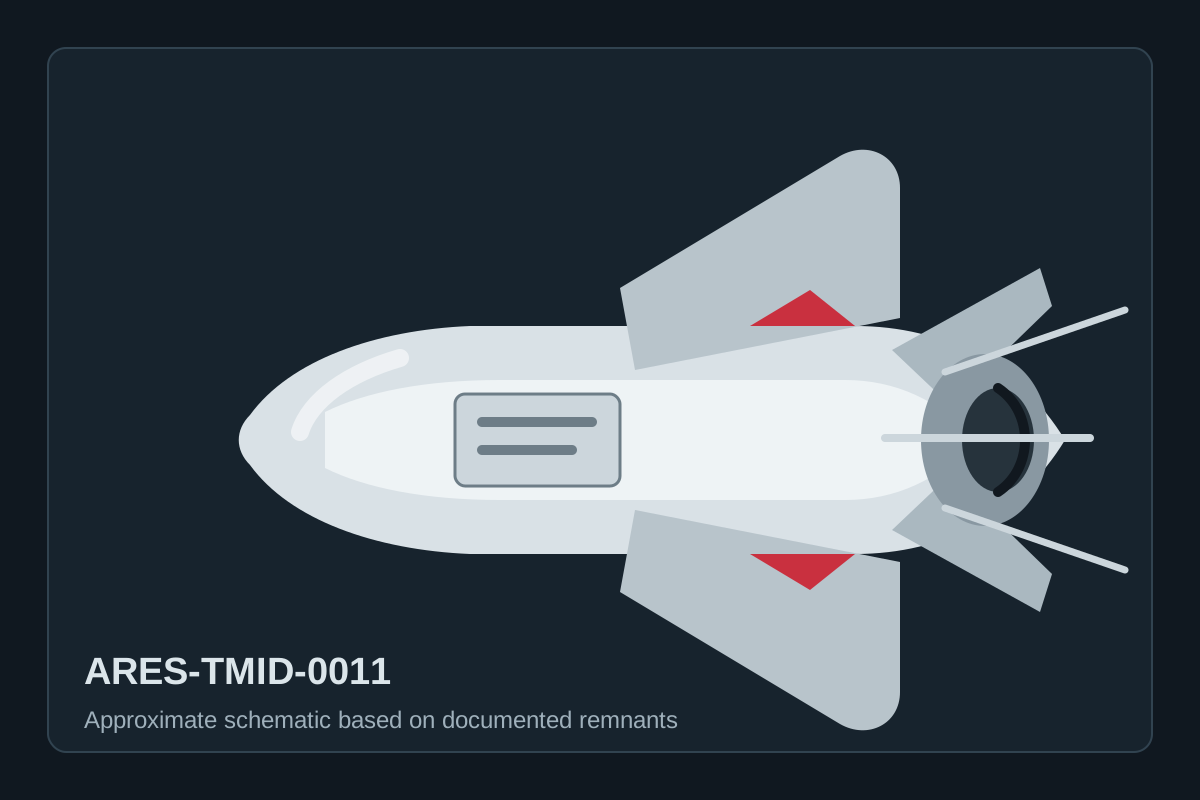
HRW identified photographed cylindrical submunitions with bright red ribbons as dual-purpose improved conventional munition submunitions and linked the type to the ZP-39 designation previously documented in Syria. Its later Yemen technical briefing listed Baqim, Saada, April 29, 2015, with an unknown cluster-munition delivery system and ZP-39 DPICM submunitions.
Sources: Yemen: Cluster Munitions Harm Civilians, Technical Briefing Note: Cluster Munition Use in Yemen
Attribution and delivery
The Baqim attack was documented in Houthi-controlled territory near the Saudi border. HRW wrote that the location, prior coalition attacks in the area, and range from Saudi artillery suggested Saudi forces fired the cluster munition, but it could not conclusively establish responsibility because both Saudi and Houthi forces had rocket launchers or tube artillery capable of delivering this kind of ground-fired submunition.
The Monitor's Yemen cluster-munition profile repeats that HRW could not determine who used the ground-launched cluster munition containing ZP-39 DPICM submunitions in Saada in April 2015. For that reason, this record treats the documented event as ZP-39 use in the Yemen conflict while keeping the firing side qualified.
Sources: Yemen: Cluster Munitions Harm Civilians, Yemen Cluster Munition Ban Policy
Role in the conflict
The ZP-39 evidence fits the wider 2015 pattern of cluster-munition use in northern Yemen, especially Saada governorate after the Saudi-led coalition began operations against Houthi forces in March 2015. HRW's technical briefing listed the ZP-39 entry separately from known air-dropped CBU-series weapons and from M26 and ASTROS II rockets because both the delivery system and country of origin were unknown.
The weapon's documented effect in Baqim came from unexploded submunitions rather than an observed immediate battlefield strike. HRW described the photographed ZP-39-type item as a spin-armed DPICM submunition designed for anti-material and antipersonnel effects, with aircraft delivery unlikely because this type requires spin from a ground-fired projectile or rocket.
Sources: Technical Briefing Note: Cluster Munition Use in Yemen, Yemen: Cluster Munitions Harm Civilians
Remnant hazard
The Baqim casualties illustrate the post-strike hazard that cluster submunitions created in northern Yemen. HRW reported that villagers found the small unexploded devices near a road the next day, and one exploded when they were picked up.
Amnesty International later reported that demining officials and residents continued to see civilians injured by unexploded ordnance and cluster submunitions in Saada and Hajja governorates, including areas along the border such as Baqim. Its Yemen report described the broader contamination problem rather than adding a separate confirmed ZP-39 firing event.
Sources: Yemen: Cluster Munitions Harm Civilians, Airstrikes and Cluster Munitions