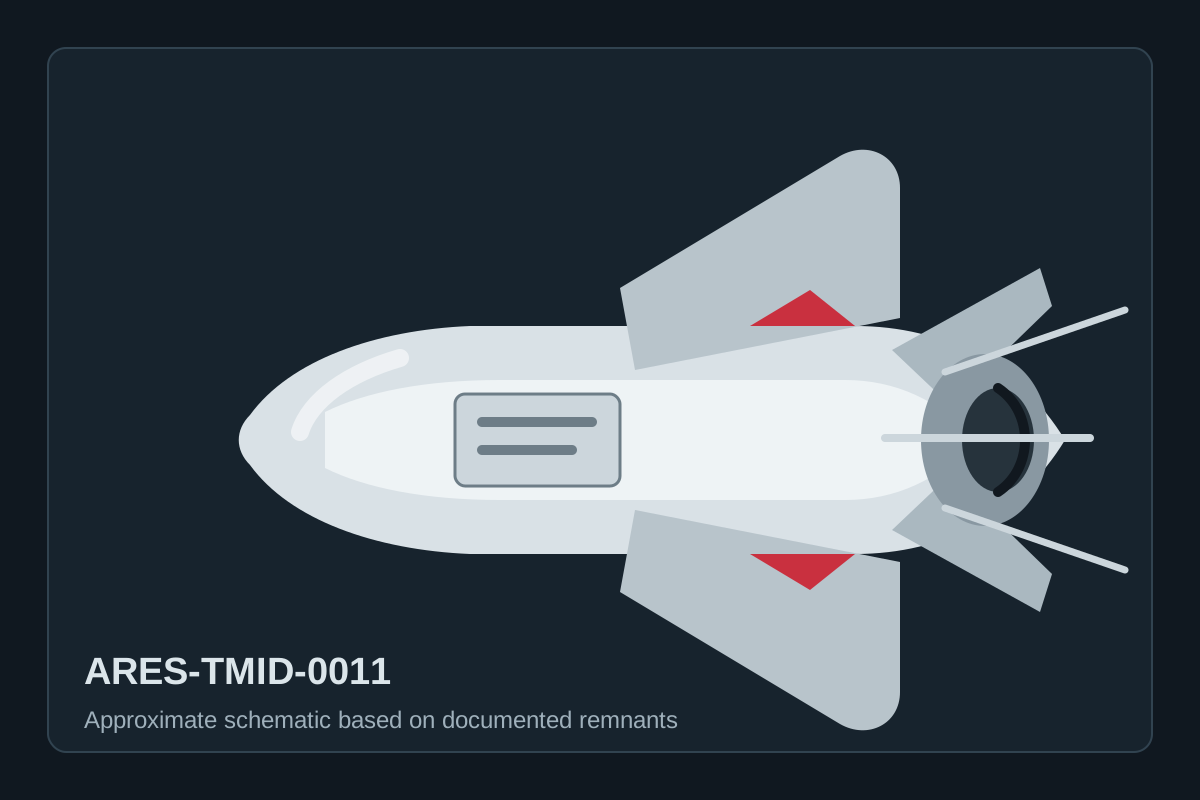
2011 Syrian Civil War

ZP-39 submunition in the 2011 Syrian Civil War

Human Rights Watch said photographs and Kurdish local information strongly indicated Islamic State use of ZP-39 submunitions near Ayn al-Arab/Kobani in July and August 2014, including red-ribbon ZP-39 remnants photographed outside Cevi.

Evidence Map

ClaimEvidenceSources
ZP-39 submunitions were used in the 2011 Syrian Civil War near Ayn al-Arab/Kobani.HRW identified photographed red-ribbon submunitions outside Cevi as ZP-39 and tied them to August 2014 Islamic State attacks in the Kobani area.

Sources: HRW Islamic State Cluster Munition Use

The documented user was assessed as Islamic State forces.HRW attributed the July and August 2014 Kobani-area cluster-munition attacks to Islamic State forces based on local Kurdish information, the absence of Syrian government troops and known airstrikes in the area, and the YPG denial of possessing cluster munitions.

Sources: HRW Islamic State Cluster Munition Use

The delivery system, supplier, and acquisition path remained unresolved.HRW said the producer and delivery system were not publicly known; Bellingcat described an unclear country of origin and suggested, without confirming, an unidentified 122 mm cluster rocket as a possible delivery path.

Sources: HRW Islamic State Cluster Munition Use, Bellingcat Islamic State Cluster Munition Claims

Later monitoring kept Islamic State cluster-rocket use in the Syria record.The Monitor stated that the Islamic State used cluster munition rockets in Syria in 2014 and may have used them since.

Sources: Monitor Syria Cluster Munition Policy

Timeline

ZP-39 submunition In 2011 Syrian Civil War

  1. Reported Kobani-area attack

    A Kurdish official told Human Rights Watch that four YPG combatants died in an Islamic State attack involving the same type of submunitions; HRW said it could not corroborate the attack or the fatality count.

    Sources: HRW Islamic State Cluster Munition Use

  2. Cevi attack reported

    Human Rights Watch reported that Islamic State forces used cluster munitions in an attack on Cevi, south of Ayn al-Arab/Kobani.

    Sources: HRW Islamic State Cluster Munition Use

  3. Red-ribbon ZP-39 remnants photographed

    Kobani authorities provided photographs of more than a dozen red-ribbon ZP-39 submunitions from the field outside Cevi, after a child was killed and another wounded while handling one of the remnants.

    Sources: HRW Islamic State Cluster Munition Use, Bellingcat Islamic State Cluster Munition Claims

  4. Monitor summarizes Islamic State cluster-rocket use

    The Monitor's Syria profile stated that the Islamic State used cluster munition rockets in Syria in 2014 and may have used them since.

    Sources: Monitor Syria Cluster Munition Policy

Documented Use

Direct proof of use

Human Rights Watch documented the ZP-39 in the 2011 Syrian Civil War through photographs and local Kurdish information from the Ayn al-Arab/Kobani area of northern Aleppo governorate. HRW reported that Islamic State forces used ground-fired cluster munitions during fighting around Kobani on July 12 and August 14, 2014, and that photographs from the field outside Cevi showed more than a dozen small cylindrical submunitions with bright red nylon ribbons.

HRW identified the photographed submunitions by their markings as the type known as ZP-39. It said the producer and delivery system were not publicly known, but that dual-purpose improved conventional munition submunitions of this kind rely on spin from a ground-fired artillery projectile or rocket and would not arm properly if delivered from aircraft.

Sources: HRW Islamic State Cluster Munition Use

Timeline

The first reported ZP-39 incident in the Kobani area was a July 12, 2014 attack. A Kurdish official told HRW that four YPG combatants died in an Islamic State attack involving the same type of submunitions, while HRW stated that it could not corroborate whether the attack took place or confirm the fatality figure.

The better documented Cevi incident followed on August 14 and 15, 2014. HRW reported an Islamic State attack on Cevi on August 14, and said that the next day two boys handled a small cylindrical red-ribbon submunition that detonated, killing the 11-year-old and wounding the eight-year-old. The Monitor later summarized the conflict record by stating that the Islamic State used cluster munition rockets in Syria in 2014 and may have used them since.

Sources: HRW Islamic State Cluster Munition Use, Monitor Syria Cluster Munition Policy

Operational context

The ZP-39 evidence belongs to fighting between Islamic State forces and Kurdish YPG-held areas around Ayn al-Arab/Kobani, rather than to the Syrian government's larger air-delivered cluster-munition campaign. HRW noted that Syrian government forces did not have troops in the Kobani region and that there were no known government airstrikes there, while the Kurdish official told HRW that the YPG did not possess cluster munitions.

Open-source identification work at Bellingcat, published before HRW's September report, linked local Kurdish claims and ANHA images to the red-ribbon submunition then known as ZP-39. Bellingcat described the red ribbon as part of the arming mechanism and noted that the munition's origin was unclear; it suggested a possible unidentified 122 mm cluster rocket delivery path but did not establish a specific launcher or supplier.

Sources: HRW Islamic State Cluster Munition Use, Bellingcat Islamic State Cluster Munition Claims

Sources